Concrete vs. Pavers vs. Composite: Choosing Your Patio Surface
Debating between a concrete patio, pavers, or a composite deck? Learn how each surface stacks up for Northern California homes and what factors really matter.
Thinking about a new patio space? The surface you choose—concrete, paver, or composite decking—will define how your backyard looks and feels for years. Let’s break down each option so you can make a smart decision for your outdoor living in our region.
Concrete Patios: The Local Standard
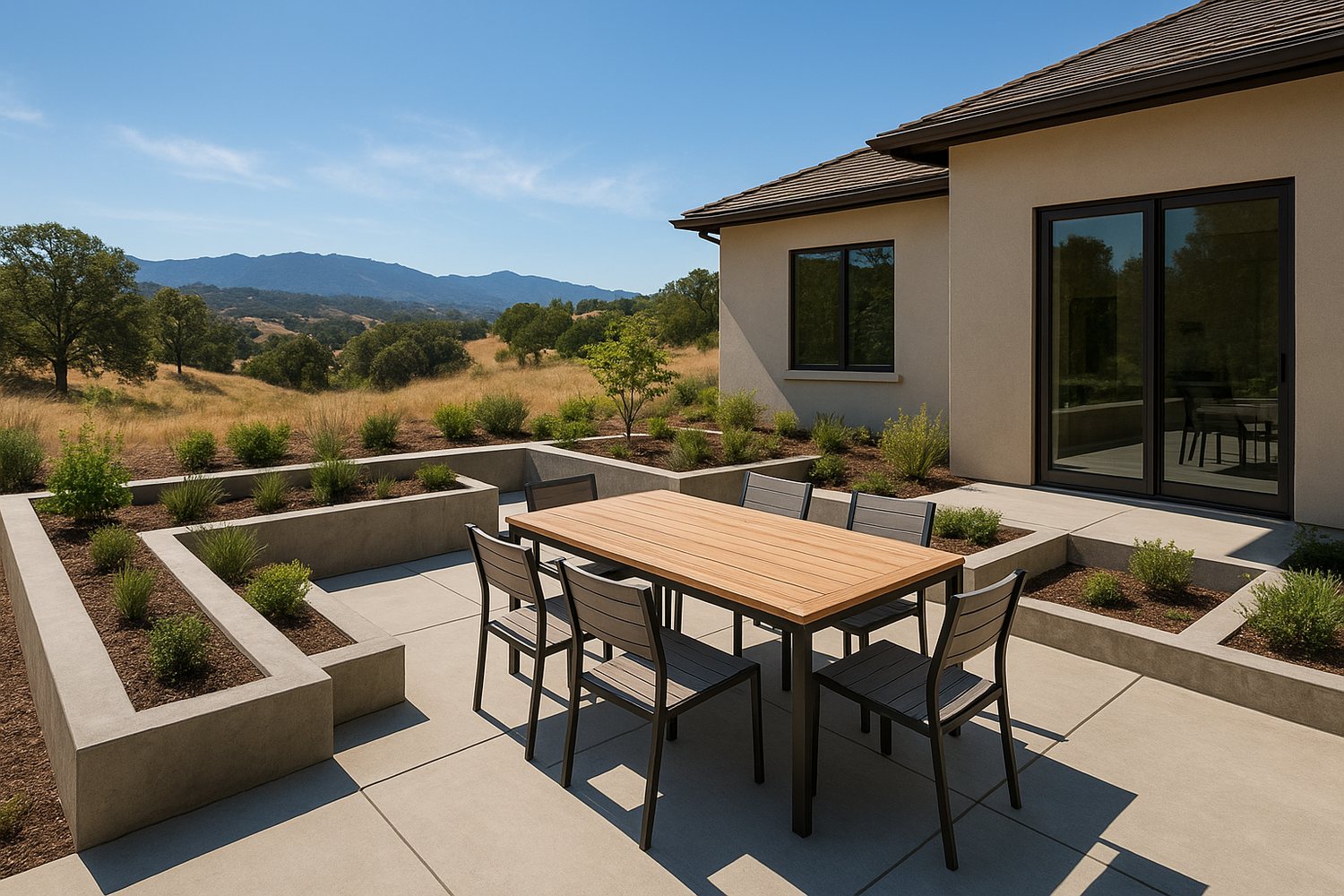
In Placer and Sacramento county neighborhoods, concrete patios are a practical and durable choice. Poured-in-place, they handle our hot summers and occasional rain well. Concrete’s flexibility with shapes and finishes—from broom to stamped or stained—offers homeowners plenty of design freedom.
Concrete excels in areas where stability counts. With proper grading and compaction, it resists shifting, even on our region’s common clay soils. It’s strong enough to support heavy furniture, outdoor kitchens, and high foot traffic.
Regional factors are important. Our local sun and heat can sometimes result in minor cracking or color fade, but these are usually simple to patch or refresh. Maintenance is generally low: regular cleaning and resealing every few years keeps patios looking sharp.
Advantages of concrete patios:
For a deeper dive into styles and finishing options, visit ourConcrete patiospage.
Paver Patios: Versatility and Flex Appeal
Paver patios bring detail and visual interest to outdoor spaces. Their modular nature lets you create patterns or borders that concrete can’t easily match. In areas like Granite Bay or Folsom, pavers can boost curb appeal thanks to their high-end appearance.
Unlike solid concrete, pavers flex slightly with the ground, helping them resist surface cracking. If a paver chips or stains, you can replace just those pieces. Many paver varieties also handle local temperature swings well.
Installation on a stable, compacted base is critical—Placer County’s soil moves, so skipping this step means future shifting or weeds. Maintenance includes sweeping joints, checking for settling, and resealing every few years to protect color.
Paver patio upsides:
Composite Decks: Low Maintenance, Elevated Style
Composite decking has become a favorite for homeowners who want a wood look without the fuss of annual staining or worrying about rot. In hilly Auburn or on sloped backyard lots, a composite deck can let you create a level, usable outdoor space above grade.
Composites aren’t just for decks attached to houses—they’re sometimes used for freestanding patio spaces, too. Modern products resist fading and mildew, which suits our region’s sun and winter fog alike.
Installation and support matter here: composites need a strong subframe, especially on clay or expansive soils. They’re comfortable underfoot and cool quickly after hot afternoons, but can be slippery when wet and scratch more easily than pavers or concrete.
Composite deck features:
| Material | Durability | Appearance | Typical Maintenance | Flexibility for Local Soils |
|---|---|---|---|---|
| Concrete Patio | Excellent, some cracking possible | Many color/finish options | Sweep, wash, reseal | Good with proper prep |
| Paver Patio | Very good, easy repairs | High-end texture & patterns | Resand joints, reseal | Best for shifting soils |
| Composite Deck | Resists rot, may scratch | Wood look, color variety | Wash only | Strong if sub-frame is well-built |
Comparing Costs, Care, and Climate Suitability
Material choice impacts both your upfront spend and long-term costs. Maintenance requirements and how well your patio ages under the Central Valley sun should factor in as well. Local soil, shade, and how you plan to use the space—entertaining, relaxing, barbecuing—play a role.
Here’s a quick side-by-side look at concrete patios, paver patios, and composite decks on key factors. Remember, local expertise in design and installation helps you get the most from whichever surface you select.
Think carefully about how you’d use your outdoor area and how much effort you’d put into long-term care. No single option is perfect for every homeowner, but with the right planning, all three materials can deliver years of enjoyment.
Durability: Withstanding Local Conditions
In the Rocklin-Folsom area, sun and soil movement are patio enemies. Concrete is known for its durability, surviving the squeeze of shrink-swell clay soils with professional prep and joints. Cracks can develop, but spot repairs are inexpensive when caught early.
Pavers have an edge in flexibility. If the ground shifts, pavers usually settle instead of cracking. They’re easy to re-level or patch if roots or soil heave a few stones. In shaded yards with leaf debris or moisture, the joints between pavers may harbor moss—nothing a stiff broom can’t fix.
Composites withstand sun and sloppy winter weather without splintering or rotting, making them well-suited for covered or uncovered patios alike. Beware of scratches from pet claws or dragged furniture, and check for structural movement if your deck is elevated or on unsteady ground.
See how hardscape and landscape materials combine beautifully on ourConcrete options overview.
Maintenance: Real-World Demands
No patio is zero-maintenance, but concrete leads for hands-off care. Occasional pressure washing and sealing keep stains and fading at bay. For high-traffic party spots, a quick wet mop refreshes the surface.
Pavers need regular attention to sanded joints—sweep in new sand as it wears out, keep weeds at bay, and power wash to refresh. Sealing every few years helps preserve colors, especially on patios exposed to persistent sun.
Composite decks only need periodic washing to clear off pollen, leaves, or dirt. They shed water easily, but watching for mildew in shadier yards is wise. Damaged planks can be swapped out, but deep scratches stand out more than on stone or concrete.
Style and Customization Options
When it comes to matching your landscape and home, all three surfaces offer different aesthetics. Concrete shines for wide color, stain, and finish choices: broom, salt, stamped, or smooth. Borders and scoring patterns let you mimic stone or tile.
Pavers come in many shapes, colors, and textures. You can create old-world cobble paths, sleek geometric grids, or vibrant mosaics. The modular look fits Mediterranean, contemporary, or farmhouse styles found in our local neighborhoods.
Composite decks channel a classic wood-plank appearance. They come in hues from cool grays to warm brown tones. While trimming and railing styles are mainly for raised decks, you can still layer in built-in benches, planters, or lighting for ground-level composites.
Making Your Decision: What Matters Most
Start by listing your biggest priorities for your backyard patio—longevity, looks, comfort, or lowest maintenance. In the local climate, harsh sun exposure and winter rains are worth factoring in for any surface.
Consult a professional familiar with our region’s soils and weather before finalizing your plans. An expert can help spot site-specific challenges, like yard slope or heavy shade, that influence material selection or installation technique.
Whatever you choose—concrete, paver, or composite—careful design and a quality installation are key. Your patio should blend seamlessly with your landscape and give you years of practical, stylish outdoor living.
Ready to make your vision real?Request a consultationwith our team today.
Planning a concrete project?
Call or text 916-741-0633, or email sales@californiahardscapes.com with your address, a short description and a few photos, and we will arrange a consultation.