Retaining Walls Built Right for Greater Sacramento Homes
From dramatic terracing to subtle garden borders, retaining walls shape and protect your outdoor spaces. Discover premium solutions, each tailored for stability and striking curb appeal.
Retaining Walls: Foundation for Landscape Success
Retaining walls aren’t just about holding back earth—they are the backbone of safe, beautiful, and usable yards across Rocklin, Granite Bay, Roseville and neighboring communities. Whether you’re contouring steep slopes, leveling pads for patios or gardens, or adding definition to front yard landscaping, each wall is a crucial part of your home’s structure and style.
At California Hardscapes, retaining walls mean more than stacking materials. With decades of concrete and construction expertise, every project is planned and built as if it were our own home. Our philosophy is simple: we don’t compete on being the cheapest, but on quality, integrity, and results that exceed expectations—with no corners cut, ever.
From the first conversation to the last load of gravel, you’ll see the difference: honest advice, clear planning, and a focus on your property’s long-term beauty and safety. Whether you need to repair a failing wall, create new terraces, or build eye-catching planters, we’ve got every wall solution covered—and the know-how to guide you.

Retaining Wall Types and Solutions
Choosing the right retaining wall makes all the difference: material, structure, and design influence not just appearance but stability and longevity. Below you’ll find the major wall types we handle, from block and boulder to contemporary poured concrete, plus specialized solutions for slopes, drainage, and repairs. Each option has its own strengths—explore the summaries below to find the best fit, or dive deeper on each dedicated page.

Segmental block retaining walls
Segmental block retaining walls: The modern standard for durability and design flexibility. Reinforced interlocking blocks resist movement, offer a clean look, and perform well on everything from garden beds to tall engineered walls.
Explore Block walls →
Natural stacked stone walls
Natural stacked stone walls: Timeless and visually rich, these walls blend seamlessly into landscape settings. Best for classic aesthetics or where a natural look complements plantings and architecture.
Explore Stacked stone →
Boulder retaining walls
Boulder retaining walls: Large boulders, carefully placed, anchor slopes and add bold visual impact. Ideal for rustic or woodland sites, especially where a rugged look or extra mass is needed.
Explore Boulder walls →
Poured concrete retaining walls
Poured concrete retaining walls: Crafted for maximum strength and design freedom. Poured concrete forms seamless curves, crisp lines, and enduring support for higher walls or those facing extra pressure.
Explore Poured concrete →
Stone and stucco veneer walls
Stone and stucco veneer walls: The best of both—structural core strength with a refined, upscale face of natural stone or smooth stucco. Adaptable to many spaces, delivering a custom finish.
Explore Veneer walls →
Terraced walls for sloped yards
Terraced walls for sloped yards: Multiple retaining tiers step gracefully down slopes, improving usability and controlling erosion. Great for making steep yards functional with accessible plantable spaces.
Explore Terraced slopes →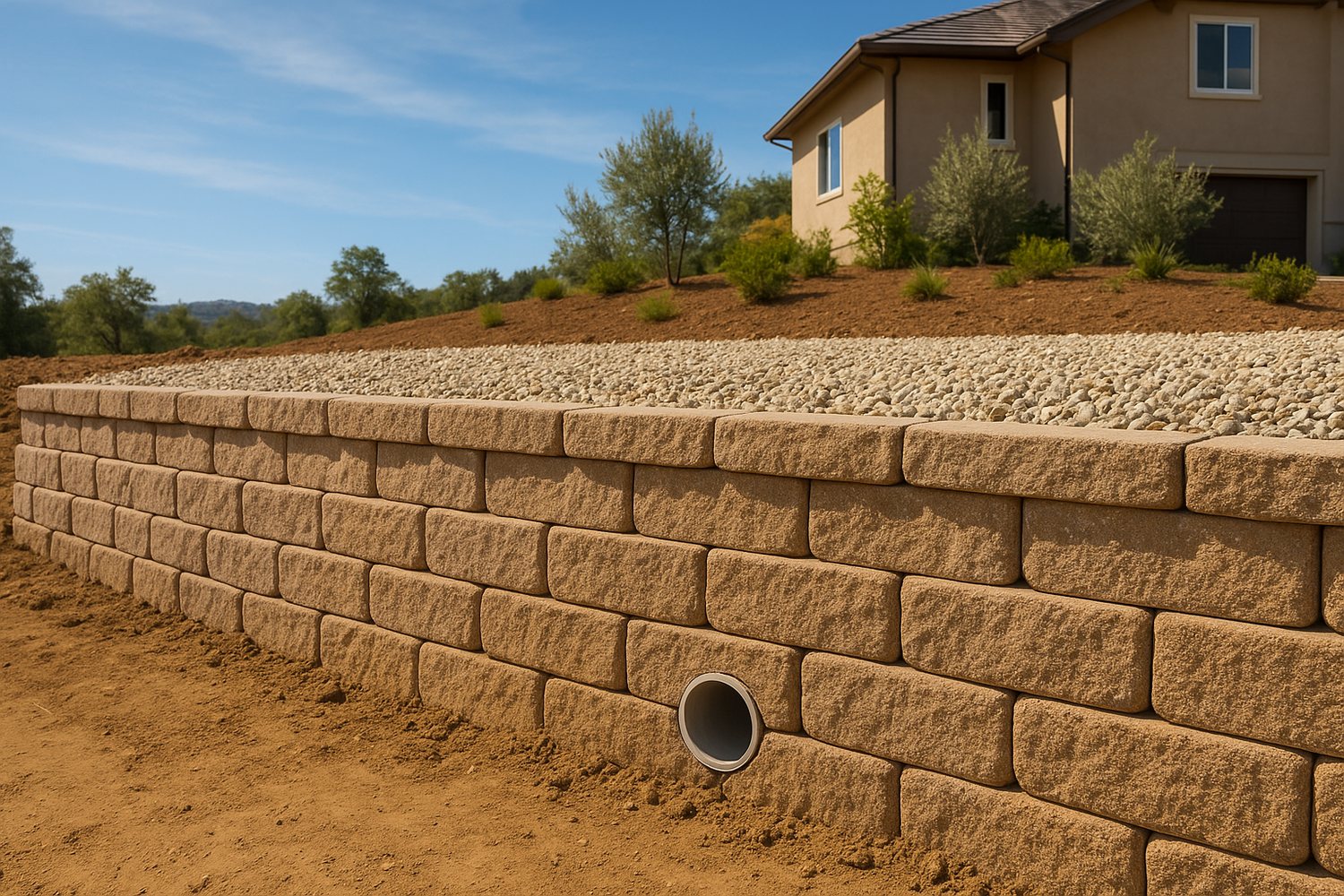
Retaining wall drainage
Retaining wall drainage: Hidden but essential. Integration of gravel backfill, drains, or weep holes prevents water buildup and extends wall life—especially in clay soils or at the bottom of slopes.
Explore Drainage →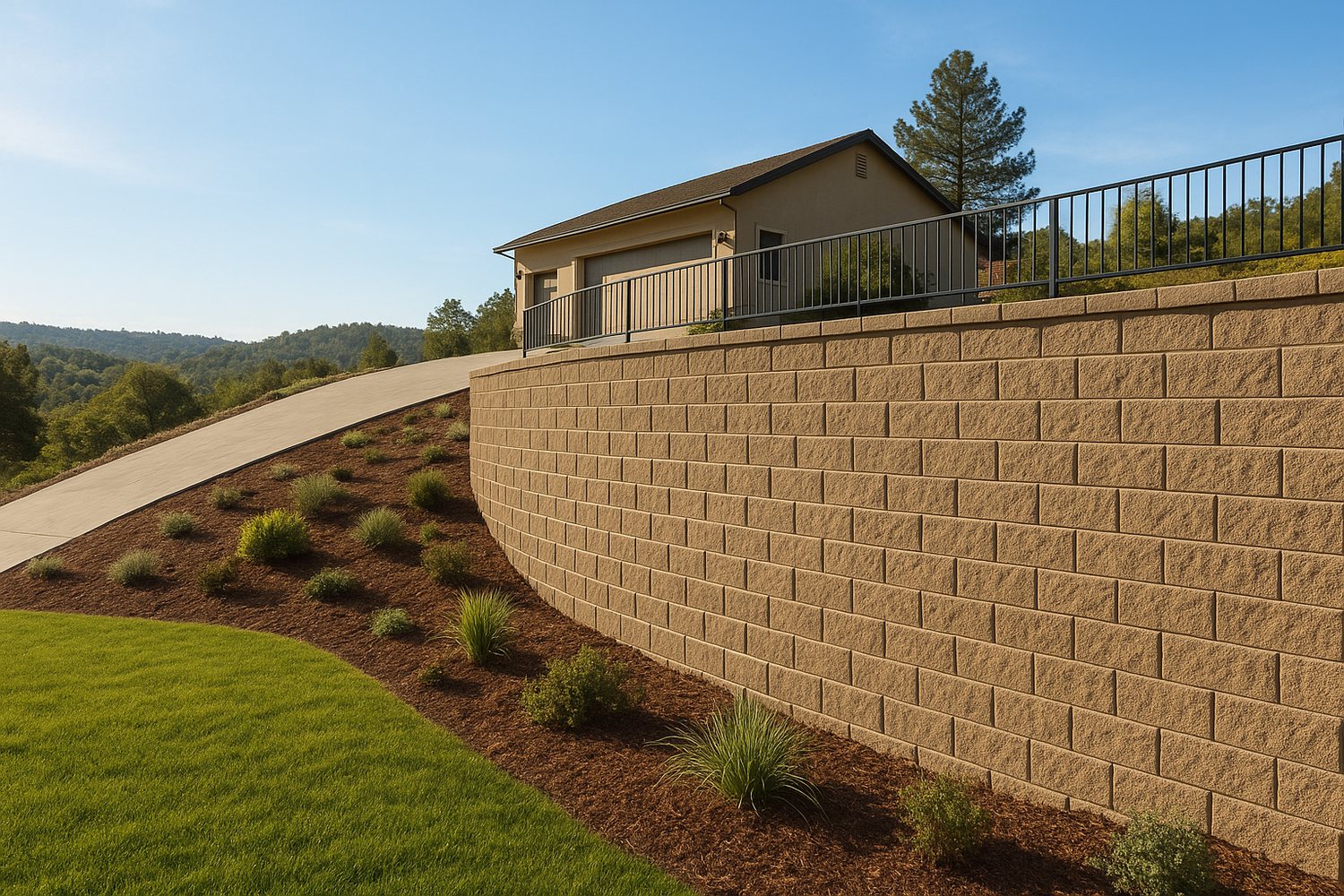
Tall and engineered retaining walls
Tall and engineered retaining walls: When walls exceed typical heights or retain heavy loads, expert design and construction ensure essential stability and safety.
Explore Engineered walls →
Retaining wall repair and replacement
Retaining wall repair and replacement: Solutions for failing, cracked, leaning, or bulging walls. Assessment and tailored remedies restore integrity, safety, and appearance.
Explore Repair →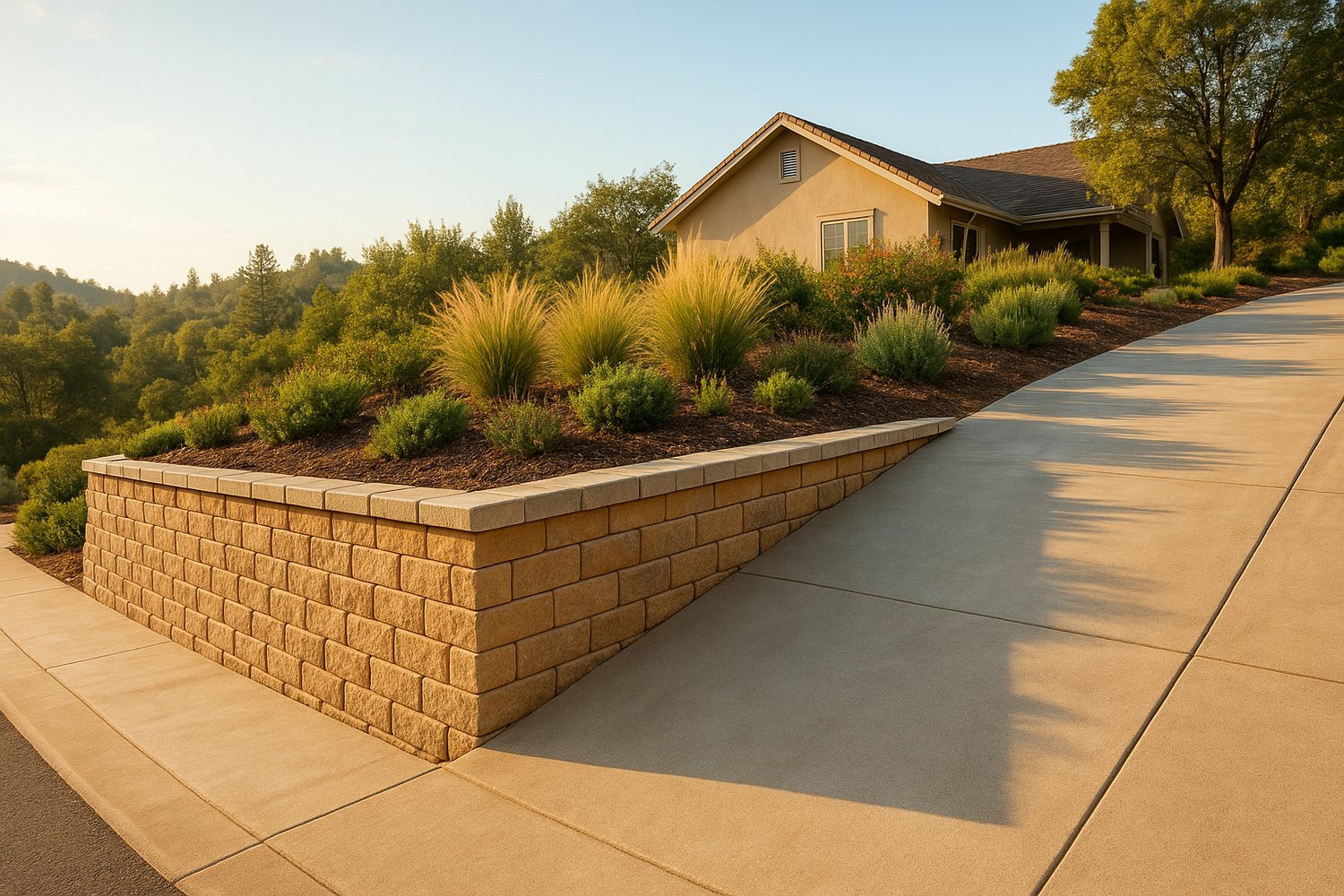
Driveway and front yard walls
Driveway and front yard walls: These walls manage grade transitions and add curb appeal, while standing up to vehicle loads and daily foot traffic.
Explore Driveway walls →
Raised planters and garden walls
Raised planters and garden walls: Scaled-down walls for gardens and beds, blending beauty with function by improving drainage and defining outdoor space.
Explore Raised planters →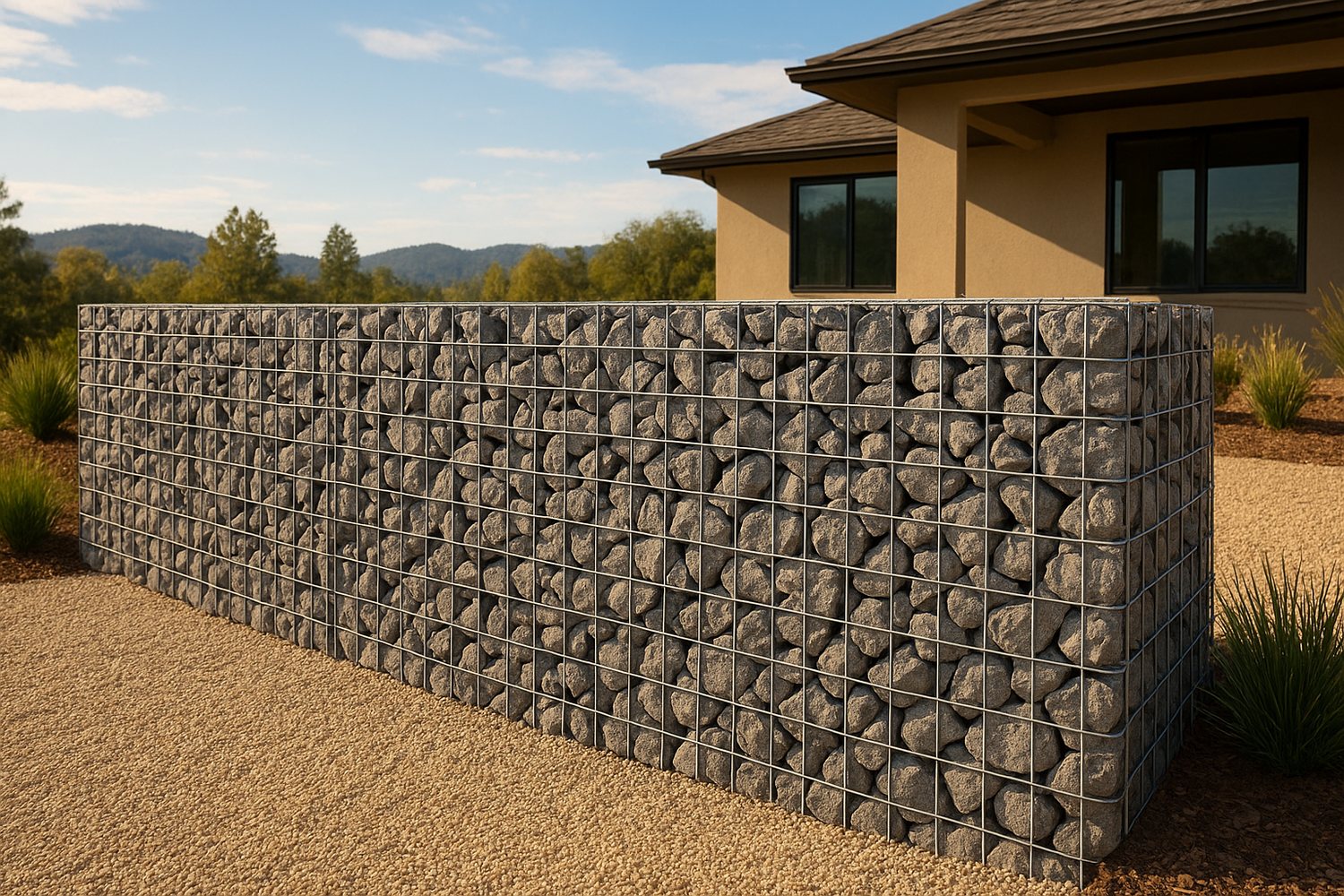
Gabion walls
Gabion walls: Steel baskets filled with rock or stone, offering industrial style and strong erosion control—excellent for modern landscapes or areas with unstable slopes.
Explore Gabion →Retaining Wall Options at a Glance
| Option | Look | Durability | Maintenance | Relative cost | Best for |
|---|---|---|---|---|---|
| Segmental block retaining walls | Clean, uniform, versatile | High | Low | $$ | Versatile walls; curves; engineered heights |
| Natural stacked stone walls | Aged, natural, classic | Medium-High | Moderate | $$$ | Traditional landscape appearance |
| Boulder retaining walls | Bold, rustic, natural | High | Low | $$$ | Woodland or informal settings, big slopes |
| Poured concrete retaining walls | Modern, seamless, strong | Very High | Low | $$$ | Tall, curve, or heavy-load walls |
| Stone and stucco veneer walls | Upscale, custom, textured | High | Moderate | $$$ | High-end finishes, custom homes |
| Terraced walls for sloped yards | Layered, structured | Depends on material | Low-Moderate | $$$ | Made-for-use sloped yards |
| Retaining wall drainage | NA (behind wall) | Critical to wall durability | Low (if designed well) | $ | All wall types, problem soils |
| Tall and engineered retaining walls | Varies (structural focus) | Highest (with correct design) | Low | $$$$ | Walls over 4ft, high load sites |
| Retaining wall repair and replacement | Restored, varies by fix | Restored | Depends on repair | $$$ | Fixing lean, cracks, bulges |
| Driveway and front yard walls | Stylish, strong, visible | High | Low | $$$ | Entry landscapes, transitions |
| Raised planters and garden walls | Functional, attractive | Medium | Low | $$ | Gardens, bed borders |
| Gabion walls | Industrial, textured, unique | High | Low | $$$ | Erosion-prone, modern yards |
Walls built from the footing up
We don’t compete on being the cheapest. We compete on quality, integrity, and results that exceed expectations.
California Hardscapes is managed by Marty, who has worked in concrete and construction since he was 17, spent many years in concrete and landscape materials, and has contracted and overseen retaining walls, patios, landscaping and complete outdoor living environments.
That means excavation, footings, drainage, finishes and planting are planned together, and every project is built as if it were our own home.

Regional Factors for Retaining Walls in Placer, Sacramento, and El Dorado Counties
Soil Types and Compaction
Soil in this part of Northern California varies from rocky Sierra foothill clay to alluvial valley loam. Clay and fill soils often expand and contract with moisture changes, which can threaten wall stability if not addressed. Proper compaction and foundation preparation are critical to keeping walls from settling or shifting as ground conditions change seasonally.
Drainage and Rainfall Intensity
While Mediterranean summers are dry, our winters bring intense storms. Standing water behind a wall is one of the leading causes of failure, especially in dense or poorly draining soils. Integrating drainage solutions—like gravel backfill, perforated pipes, or weep holes—extends wall life and protects surrounding structures from water damage.
Seismic Considerations
The Sacramento region is occasionally subject to seismic forces from nearby fault zones. Well-built retaining walls should be stable and flexible enough to handle soil shifts caused by minor tremors. Material choice and expert construction go a long way toward resilience and safety.
Slope and Erosion Challenges
Many local properties are built on or near slopes, especially at the edge of the foothills. Retaining walls play a major role in preventing soil movement, protecting structures above or below, and managing water runoff. Terracing and engineered solutions are often necessary for steeper sites.
Fire-Resistant Construction
Areas near open space or wildlands—common in El Dorado and Placer Counties—benefit from retaining wall materials like block, concrete, or stone that are non-combustible. These choices increase property resilience during wildfire season and meet defensible space guidelines where they apply.
Neighborhood Style and HOA Guidelines
Homes in master-planned communities such as Roseville or Granite Bay may have strict aesthetic standards. Matching wall style, height, and finish to existing architecture—or following HOA rules—helps keep your project streamlined while maximizing curb appeal and resale value.
Our Retaining Wall Process
Site Evaluation and Dialogue
Every project starts with a careful review of your property, slopes, existing grading, and any old walls. We walk the yard together, discuss possible wall types, and review your ideas and needs for support, drainage, and aesthetics.
Material and System Selection
Based on site and soil, we guide you through suitable materials—block, boulder, poured concrete, or others. For walls with height or load concerns, we recommend targeted solutions like engineered walls or integrated drainage.
Precision Layout and Planning
We mark wall lines, steps, curves, and terraces with you, confirming function and looks. This step ensures the finished wall fits perfectly into your landscaping and meets both functional and aesthetic needs.
Site Preparation and Foundation
Proper excavation to solid ground and compacted bases are set. Materials are staged for safe access and cleanliness, while steps are taken to limit disturbance to the rest of your landscape.
Wall Construction and Drainage Integration
Walls are built precisely to specs, with each block, stone, or form aligned and secured. Drainage components—such as gravel, drains, or weep holes—are installed at the right stages to prevent future water issues.
Final Grading and Cleanup
When building is complete, we shape soil, replant disturbed areas, and clean up the job site. The finished retaining wall becomes a seamless, functional feature that upgrades your property’s stability and beauty.
Choosing the Right Retaining Wall: Common Questions
How do I pick the best retaining wall material for my property?
The right material depends on several factors: style, wall height, soil conditions, and budget. Block walls excel in versatility and engineered strength, stone blends beautifully in natural settings, boulders handle steep grades with a rustic feel, while poured concrete offers modern looks and top-end durability. Our approach is to match the wall type to your property’s needs, local geology, and visual goals.
Do I need drainage behind my retaining wall?
Yes, proper drainage is important behind nearly every retaining wall, especially in clay-heavy or poorly draining soils. Water buildup can cause wall movement or failure over time. Integrated gravel backfill, drainpipes, or weep holes help ensure long-term performance and can often be tailored to each wall type and location.
What’s the difference between segmental block and poured concrete walls?
Segmental block walls use interlocking, pre-cast concrete blocks for strength and design flexibility, including curves and color choices. Poured concrete walls are formed in place for unmatched strength and clean, monolithic lines—often preferred for higher or specialty walls. Each system has pros in cost, speed, and style, with block usually favored for gardens and moderate slopes, and poured concrete for taller, engineered installations.
How do I know if my wall needs repair or total replacement?
If you see significant leaning, bulging, large cracks, or separation from the soil, those are signs of failure that usually need more than cosmetic repair. Minor cracks or shifting may be fixable with targeted repair, drainage upgrades, or localized rebuilding. A thorough site evaluation is the best first step.
Can retaining walls be built on hillsides or steep slopes?
Absolutely. Many local yards require retaining walls to carve usable terrace levels on hillsides. The key is proper engineering, secure foundations, and materials suited to the grade—with boulders, block, or terraced systems all common choices for sloped sites around Rocklin, Auburn, and beyond.
What are gabion walls and when are they recommended?
Gabion walls consist of heavy-gauge steel baskets filled with stone or rock. They’re strong, free-draining, and uniquely suited to controlling erosion, especially where runoff or unstable slopes are a problem. Their look is contemporary and industrial, often used in modern gardens or where a bold, textured appearance is desired.
Are raised planter walls different from regular retaining walls?
Raised planter and garden walls are essentially scaled-down retaining walls: they retain soil, but in small volumes for planting beds or landscape borders. These walls are typically lower and built for aesthetics and gardening ease, but remind that proper drainage is still important, and material choice should harmonize with the rest of your landscape.
Do driveway retaining walls require special construction?
Yes. Driveway and front yard walls are subject to heavy vehicle and foot traffic, requiring higher strength and impact resistance. Material choice and installation methods must handle both load and curb appeal, often calling for stronger block systems or reinforced concrete. Each case is evaluated for local site stress and function.
Start Your Retaining Wall Transformation
Ready to protect your yard and unlock new landscape potential? Email sales@californiahardscapes.com with your address, a short description, and a few photos, and we’ll help you plan the best next step.