Concrete Cracks: Which Ones Matter and How to Address Them
Concrete cracks are common, but not all demand attention. Here’s what homeowners should know about crack types, repairs, and protecting your investment.
Not all concrete cracks are created equal—some are just cosmetic, while others can lead to larger problems. Knowing the difference is key to maintaining your home’s value and safety.
Why Concrete Cracks in Our Region
Concrete is a durable material, but here in Placer, Sacramento, and El Dorado counties, we experience large temperature shifts, clay-heavy soils, and occasional drought-flood cycles. These local conditions put extra stress on driveways, patios, and walkways.
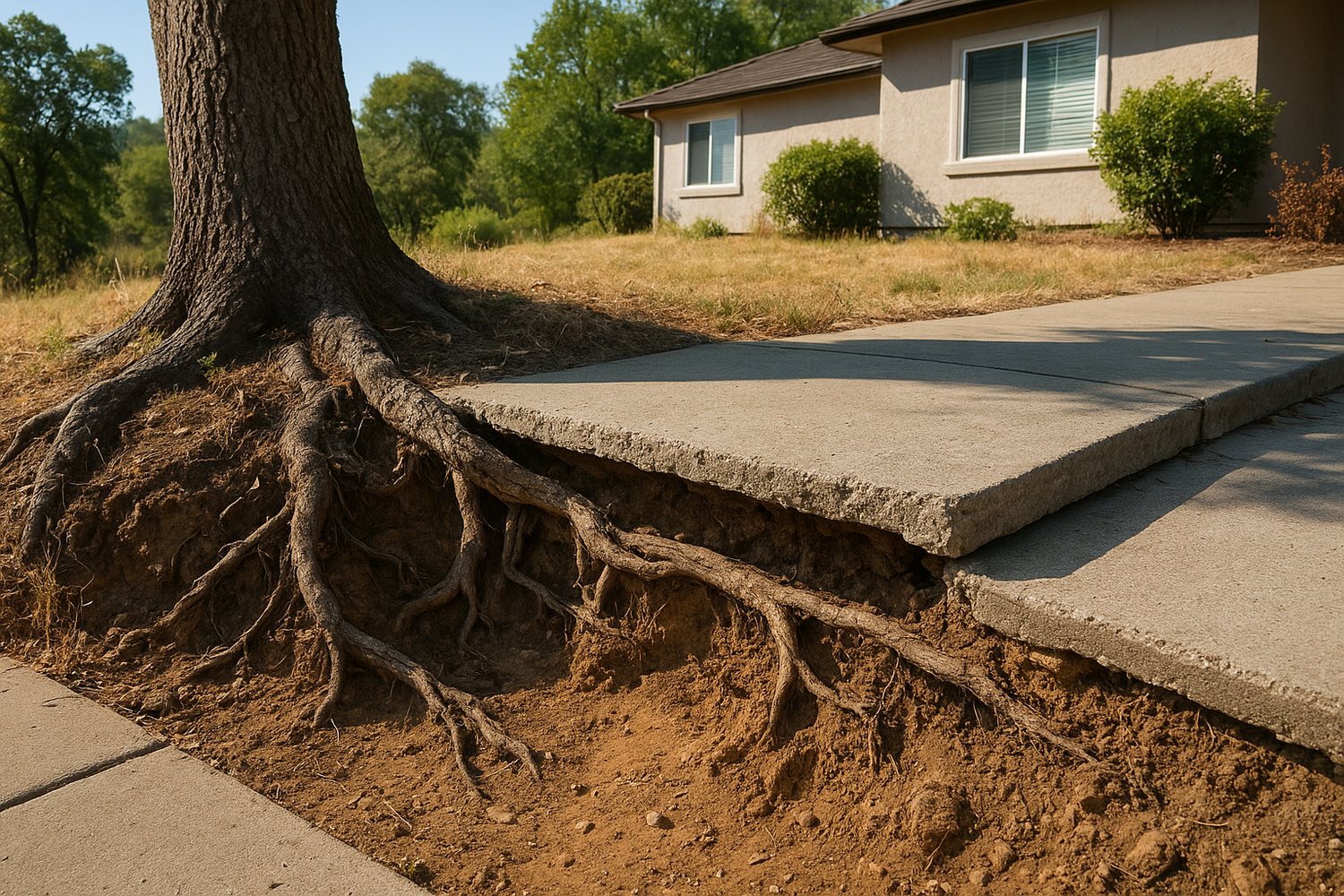
Cracking typically results from shrinkage during curing, soil movement beneath the slab, or external forces like tree roots. While some cracks are simply the expected byproduct of concrete’s natural settling, others may point to deeper structural concerns.
Homeowners should keep an eye on older concrete, especially if you notice changes after storms, irrigation adjustments, or earthquakes. Understanding the origin of a crack often determines whether it needs monitoring, sealing, or a more significant repair.
- Hot, dry summers and chilly winters expand and contract concrete.
- Heavy, clay-rich soils in Rocklin and Granite Bay can cause shifting.
- Nearby trees and landscaping may exert upward or lateral pressure.
Learn more about repair, sealing, and replacement services on ourConcrete repair, sealing and replacementpage.
Cracks: Cosmetic or Structural?
Hairline or narrow surface cracks, often less than 1/8 inch wide, are usually cosmetic. They don’t affect the slab’s strength but can allow water to seep in, leading to future problems if ignored.
Wider cracks, especially those that are uneven, deeper, or continue to spread with time, may signal ongoing movement or settling below the surface. These are the cracks that matter and deserve attention.
Before deciding on a repair, it’s important to measure the width of the cracks and monitor changes over weeks or months. Keeping a simple log or taking photos can help you track progression and determine urgency.
- Hairline cracks: usually surface-level, often non-structural.
- Wide, irregular cracks: may indicate soil or structural issues.
- Cracks with elevation changes: higher risk of tripping or further movement.
Proper Repair Methods for Lasting Results
Concrete repair isn’t just about filling a gap and hoping for the best. For effective repairs, the underlying cause must be diagnosed. This ensures that repairs last, rather than just masking symptoms.
Small, non-moving cracks are typically cleaned and filled with professional-grade sealants. Wider or dynamic cracks may be routed and backfilled with flexible, UV-stable caulks to accommodate minor movement caused by seasonal changes.
If settlement or significant movement is present, partial or complete slab replacement, or even subsurface stabilization, may be needed. A knowledgeable contractor will explain your options and provide durable solutions based on the type and extent of the cracking.
- Clean cracks thoroughly before any repair.
- Use materials suited for local climate cycles.
- Consider structural repairs if cracks worsen or become tripping hazards.
| Crack Type | Is It Serious? | Repair Method | Recommended Action |
|---|---|---|---|
| Hairline (under 1/8” wide) | Usually not | Clean & seal | Monitor, seal if needed |
| Wide, straight crack | Sometimes | Rout & flexible filler | Repair, observe for spread |
| Irregular with height change | Often yes | Potential relevel or replacement | Consult professional |
| Multiple network cracks | Likely structural | Full replacement | Assess for subgrade issues |
| Shallow surface (crazing) | Rarely | Surface treatment | Aesthetic choice |
Sealing: Protection that Pays Off
Sealing concrete is like adding a weather-resistant jacket: it helps block water, stains, and free-thaw damage, especially crucial in Northern California where moisture and temperature swings are common.
Penetrating sealers are often recommended because they soak into the concrete, preventing water and chemical intrusion without leaving a glossy surface. Topical sealers, which sit on the surface and create a sheen, are sometimes used on patios or decorative areas.
Sealing should be done after repairs or with new concrete installations. A good sealer not only lengthens the life of your concrete, but also maintains its appearance and reduces maintenance costs over time.
- Seal after completing repairs or replacement.
- Most sealers need reapplication every few years.
- Clean regularly to keep the surface in good shape.
When Is Replacement the Smarter Choice?
Sometimes, repairing cracks isn’t enough—especially if the slab is heavily pitted, severely settled, or has a network of wide or shifting cracks. In these cases, replacement may be the best investment long-term.
Full replacement involves removing the old material, assessing and often improving subgrade conditions, and pouring new, properly reinforced concrete. This is your opportunity to address drainage, soil compaction, or improve finishes and patterns.
Families considering new driveways, walkways, or patios often weigh the cost of continual patchwork versus the value and curb appeal of a new, crack-free surface. An experienced contractor can help you compare options and make an informed choice.
- Heavy pitting, large potholes, or poor drainage—replacement may be best.
- Extensive cracking across an area indicates a failing pour.
- Replacement can improve safety, looks, and property value.
Explore all your options for new and existing surfaces on ourConcreteoverview.
Concrete in Placer, Sacramento, and El Dorado Counties
Local geology matters. Our area’s seasonal soil shifts and tree-lined neighborhoods present unique challenges—and opportunities—for well-built residential concrete.
Building codes and climate adaptation strategies here call for the use of expansion joints, proper subgrade preparation, and reinforcement methods to help slabs handle movement and moisture.
Choosing concrete mixes, finishes, and treatments that work best for Rocklin, Roseville, Granite Bay, Auburn, Folsom and beyond ensures your surfaces resist the region’s cycles of drought, rain, and temperature extremes.
- Subgrade prep is key in areas with clay soils.
- Rebar or mesh reinforcement prevents most large cracks.
- Expansion joints reduce unpredictable slab movement.
Maintenance Tips for Concrete Longevity
Well-maintained concrete is less likely to crack prematurely. Sweep or rinse off debris regularly, and avoid letting water pool along slab edges, especially after irrigation or storms.
Protect slabs from aggressive deicing chemicals and oil leaks. These not only stain concrete but can accelerate breakdown and encourage cracks.
After professional sealing, inspect annually for new cracks or signs of wear. Attend to small cracks right away to keep them from widening or deepening over time.
- Divert downspouts away from concrete.
- Clean up spills quickly to prevent stains.
- Keep tree roots trimmed back from edges.
Choosing the Right Help for Repairs and Replacement
With over 30 years of concrete expertise, including extensive local knowledge, Marty leads California Hardscapes with a practical, no-nonsense approach to flatwork, patios, walkways, and more.
Work with a team that diagnoses the root of cracking, explains options plainly, and prioritizes lasting results. Local experience means we understand the soils, climate, and standards that influence every project here.
If you’re seeing new or worsening cracks, or if you want to protect your investment with professional sealing, bring in someone who will give you honest, regional-specific guidance—not just a quick fix.
- Seek advice from contractors familiar with our local soils and weather.
- Ask for clear explanation of repair or replacement recommendations.
- Value experience in both installation and ongoing maintenance.
Not sure what your concrete needs?Request a consultationwith California Hardscapes to get practical advice.
Planning a concrete project?
Call or text 916-741-0633, or email sales@californiahardscapes.com with your address, a short description and a few photos, and we will arrange a consultation.