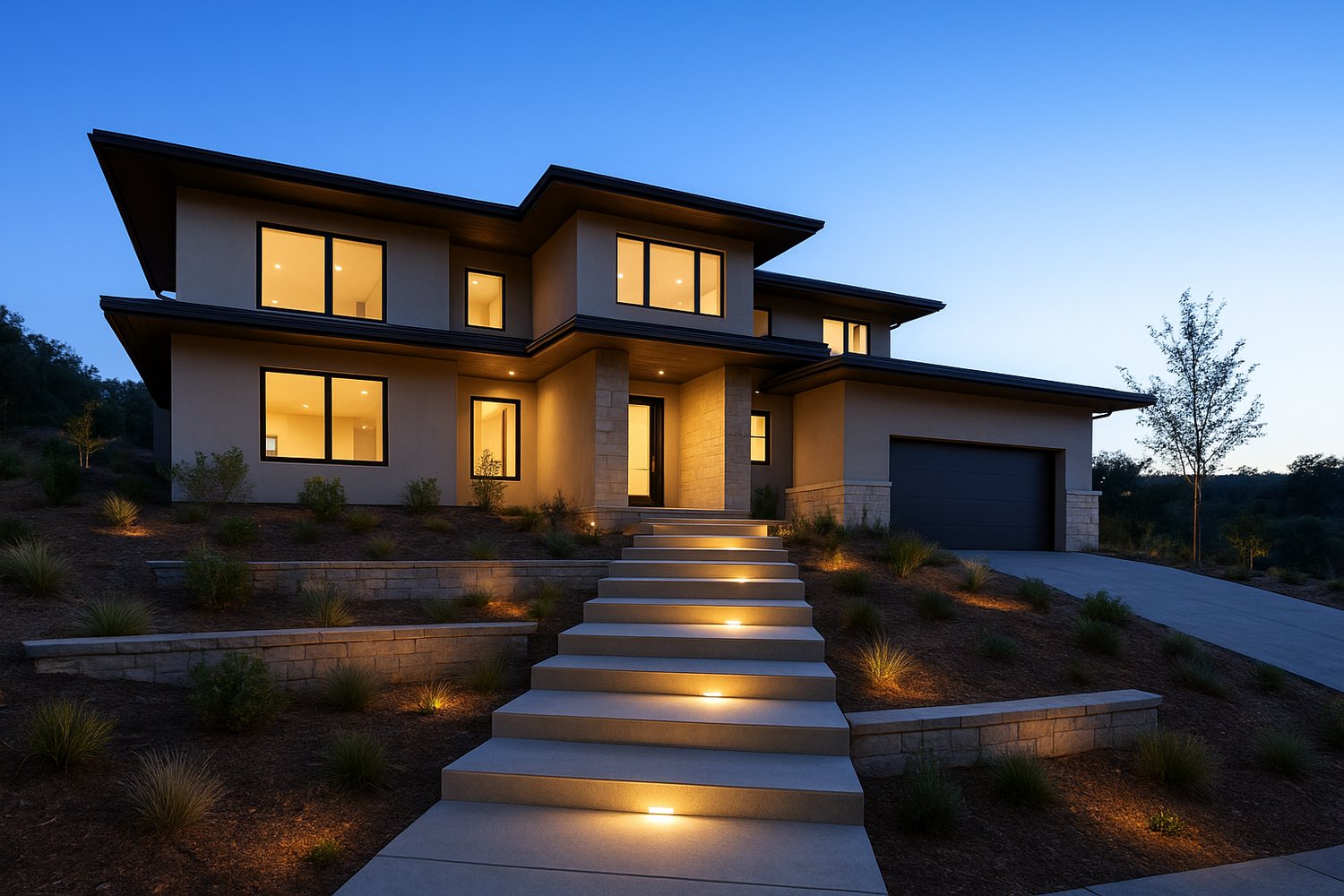
Smart Design for Step, Wall, and Deck Lighting
Learn how to incorporate step, wall, and deck lighting into your outdoor living spaces for improved safety, style, and comfort built for local conditions.
Outdoor lighting is more than an afterthought. Integrating step, wall, and deck lights from the start strengthens both design and functionality.
Why Integrate Lighting With Hardscapes?
Blending lighting right into your steps, walls, and decks avoids tacked-on fixes and leads to a more inviting space. Lighting fixtures designed for hardscapes don’t just provide illumination—they help define the shape and beauty of your outdoor environment. The right placement highlights textures, colors, and lines while minimizing glare.
This approach is safer, too. Good lighting reduces trip hazards on steps and decks after the sun sets, especially in communities where outdoor living is year-round. Pathways and vertical surfaces come alive and function sensibly, so you don’t need to guess where to place solar spikes later.
With an integrated plan, the wiring and fixtures are installed as the project takes shape. That means less disruption, neater results, and long-term reliability—very important when you want both curb appeal and peace of mind for years to come.
- Less visible wiring, fewer tripping hazards
- Neatened, built-in appearance
- Simpler future maintenance
Read more about hardscape-integrated lighting options on ourStep, wall and deck lightingpage.
Hardscape Lighting That Works in Our Region
Northern California brings hot, dry summers and some chilly winter mornings, so outdoor lighting components need to stand up to dust, temperature swings, and corrosion. Look for LED fixtures with weatherproof housings and gaskets, and opt for finishes that hold up against sun exposure.
Step and wall lights need to be watertight. Placement low on vertical surfaces helps keep rain and irrigation away from sensitive parts, but materials matter too—consider powder-coated aluminum or stainless steel when appropriate.
For decks, direct sunlight is a factor. Recessed lighting or underside-mounted fixtures can cut down on UV damage, and choosing reputable brands with proven track records helps avoid premature replacements. Ask your contractor for products known to last when faced with our region’s summers and winter storms.
- Water- and corrosion-resistant fixtures
- LED options for energy savings and longevity
- Appropriate finishes for sun, dust, and temperature swings
Placement: Getting It Right the First Time
A well-lit step doesn’t mean floodlighting. Tread lights placed at riser height—or deck lights integrated into the face of steps—cast a soft, glide-worthy glow without overwhelming the eyes. The trick is even spacing and consistent brightness.
Wall lights work best when installed just above seating or ledges. This provides task lighting for outdoor dining, reading, and relaxing, while preventing distracting shadows or dark corners. Tucking fixtures under capstones keeps the light soft and subtle.
On decks, consider where foot traffic is heaviest and where people gather. If you’re planning future features, like a hot tub or outdoor kitchen, now is the time to stub in extra wiring and empty boxes. Designing ahead prevents the need to retrofit or run surface cords later.
- Tread lights at step risers for safety
- Wall lighting just above seating zones
- Future-proof with empty wiring for later additions
| Fixture Type | Best Use | Material | Mounting Location |
|---|---|---|---|
| Recessed Step Light | Stair treads and risers | Aluminum or stainless steel | Built into steps |
| Linear Wall Light | Retaining walls, seat walls | Powder-coated aluminum | Under capstones |
| Puck Light | Accent wall features | Stainless steel | Evenly spaced along walls |
| Deck Rail Light | Deck perimeters and posts | Resin or metal | Under railings or on posts |
| Undermount Spread | Deck stairs and platforms | Aluminum | Below edges or stair nosing |
Choosing the Best Fixtures for Each Surface
Every outdoor surface calls for a different kind of fixture. Low-profile, recessed step lights won’t catch toes or trap leaves, making them great for stairways and patios with foot traffic. On retaining walls, slim linear lights or pucks can wash surfaces evenly without jutting out.
Decks benefit from downward-facing fixtures tucked under railings, as well as flush-mounted post lights for edge definition. The goal is to mark changes in elevation and perimeter without creating uncomfortable hotspots or glare during gatherings.
All fixtures should be easy to access for cleaning or lamp replacement. Local experts can recommend options that can be serviced without tearing into concrete or masonry, keeping upkeep simple down the line.
- Recessed lights: unobtrusive for steps and walls
- Linear or puck lights: ideal for retaining walls
- Undermount and post lights: best for deck perimeters
Energy Efficiency and Controls
Modern step, wall, and deck lighting use low-voltage LED tech for reliable, energy-saving performance. This means you can safely run lights for hours without driving up your utility bill—a smart fit for homeowners who value both safety and sustainability.
Consider adding simple timers or dusk-to-dawn sensors to automate your system. Controls can be hidden in a weatherproof enclosure near the main panel, out of sight but always accessible. The more you integrate these features during construction, the less fuss and fewer wires later.
Smart lighting options, with app-based controls, are available for those wanting to adjust zones or dim lights. For most projects, though, a basic timer and transformer setup is both practical and cost-effective.
- Low-voltage LED saves energy
- Timers and sensors for automation
- Smart controls for flexible lighting options
See details for every style and application on ourOutdoor Lightingoverview.
Maintenance for Long-Lasting Results
Properly installed hardscape-integrated lighting can run for years with minimal attention, but all outdoor fixtures need a little routine care. Dust and dirt buildup is common in the Sacramento Valley, especially through summer and after high winds.
A quick wipe-down with a damp cloth removes debris. Inspect lenses and housings for cracks; replacing worn gaskets prevents water from seeping in. Always turn off power before servicing, or call a professional for help with electrical tasks.
If an area stops working, check the transformer and see if any circuit breakers have tripped. Local experts know how to diagnose wiring and fixture issues specific to outdoor hardscapes, so don’t hesitate to reach out if a fix goes beyond simple cleaning.
- Wipe fixtures twice a year
- Check and replace worn gaskets
- Call a pro for electrical repairs
Design Tips Straight From the Field
Look for opportunities to highlight what makes your space unique—a curved garden wall, the landing between stairs, or a dramatic change in elevation are all prime spots for subtle accent lighting. Lighting should direct the eye, reveal textures, and help guests navigate.
Balance is more important than brightness. Using fixtures with a range of outputs avoids an overly lit or shadowy result. It’s better to have more lights running at lower outputs than a few powerful glare sources.
Finally, match fixture colors and finishes with existing hardscape and architectural features. This helps lighting blend in during the day and adds cohesion after dark, complimenting both traditional and modern spaces found across local neighborhoods.
- Light curved walls for drama
- Balance fixture brightness
- Match finishes to hardscape colors
Consulting Local Experts: Making Confident Choices
Every property, from the oaks of Granite Bay to the hilltops of Auburn and the patios of Folsom, presents different demands. An experienced hardscape contractor brings perspective on what works for our local soils, sun, and rainfall—as well as which products perform year after year.
Licensed, insured contractors follow best practices for wiring, code requirements, and fixture placement, so you know your lighting is safe as well as attractive. With expertise in concrete, masonry, and outdoor living, local pros can coordinate lighting with every element of your project.
Partnering early with a contractor means your lighting is part of the overall plan instead of an afterthought. This leads to cohesive results, fewer headaches, and a finished space ready for evening gatherings and quiet nights alike.
- Start lighting design early in the project
- Tap local knowledge for best results
- Rely on licensed, bonded, and insured teams
Reach out to request a tailored consultation with our team using thecontact form.
Planning an outdoor lighting project?
Call or text 916-741-0633, or email sales@californiahardscapes.com with your address, a short description and a few photos, and we will arrange a consultation.