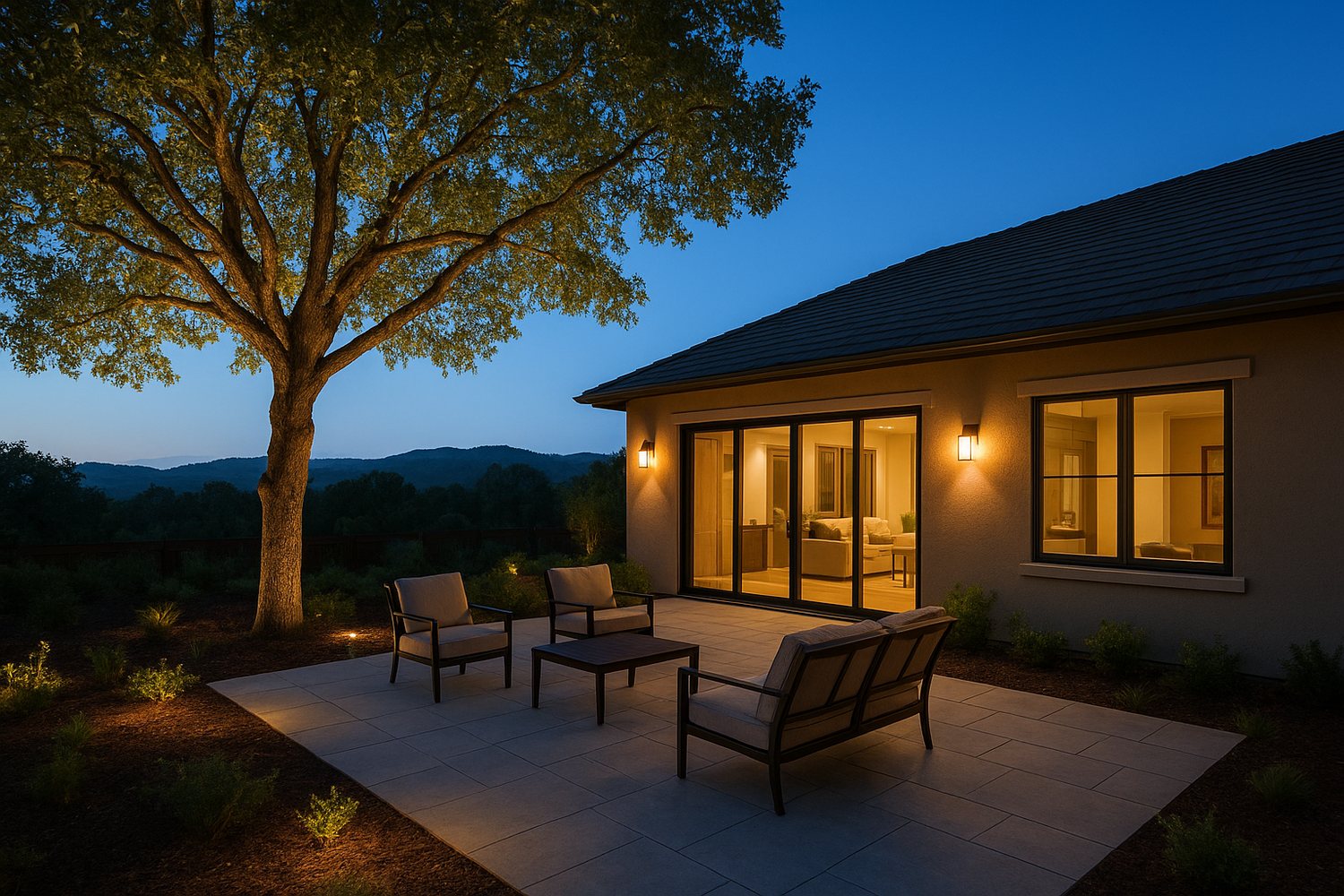
Uplighting vs. Moonlighting: Tree & Landscape Lighting Compared
Choosing between uplighting and moonlighting affects how your landscape looks and feels at night. Learn which outdoor lighting is right for your trees and yard.
Outdoor lighting transforms a backyard—but the right technique matters. Comparing uplighting and moonlighting can help you make the best call for your landscape.
What Is Uplighting?
Uplighting is a technique where light fixtures are placed on the ground and aimed upwards to illuminate trees, plants, or architectural features. This approach creates bold, dramatic highlights and deep shadows, perfect for emphasizing textures of foliage or bark. It’s popular for adding vertical interest and showcasing landscape elements after the sun goes down.
In the Rocklin, Roseville, and surrounding areas, mature oaks and ornamental trees often make ideal uplighting candidates. The distinct contrast produced by uplighting works well with sculptural tree trunks and multi-stem shrubs commonly found in Northern California yards. Uplighting can help increase curb appeal and create striking nighttime views, ideal for both front and back yard spaces.
Proper placement of uplighting is essential for a clean, professional look. Fixtures should be positioned to avoid glare and ensure even distribution of light. Selecting the right lumens and beam angle ensures the effect isn’t too harsh or too dim, especially given the varied tree heights and planting styles seen in local landscapes.
- Highlights dramatic features
- Works well for focal-point trees
- Requires attention to placement
For more about fixtures, aiming, and options for trees, explore ourTree and landscape uplightingpage.
What Is Moonlighting?
Moonlighting takes a different approach: lights are mounted high in trees or structures, casting gentle illumination downward. The goal is a soft, cool wash that mimics the effect of a full moon scattered through branches. This technique creates natural shadows and broad, ambient coverage, making outdoor spaces feel inviting and peaceful.
In the shaded yards of Auburn or the mature neighborhoods of Folsom, moonlighting blends with the signature canopy and landscaping. The filtered light patterns look especially attractive on paths, patios, and seating areas. Moonlighting works well for people who want subtle lighting that feels as close to natural as possible—even on moonless nights.
Installation is a bit more complex, since fixtures need secure attachment high up. It’s important to consider mature tree structure, routine maintenance, and access. Careful selection of color temperature can keep the look cool and comforting, rather than artificial or clinical.
- Soft, natural feel
- Great for pathways and patios
- Requires fixtures high above ground
Pros and Cons: Uplighting
Uplighting immediately draws attention to landscape features, making it a favorite for property entrances and specimen trees. The results are striking and can make a big impact on nighttime curb appeal. In neighborhoods like Granite Bay, uplighting can help a signature oak or Japanese maple stand out, even from the street.
However, uplighting’s dramatic effect may not work for every yard. Too many lights or poor placement can lead to unwanted shadows or glare. In areas with stricter dark-sky rules, uplighting may also need careful control to avoid excess upward spillage that could affect neighbors.
Maintenance is minimal since fixtures are accessible at ground level. However, keep in mind that landscape changes—growing plants, shifting mulch—can block fixtures or change the effect. Regular adjustment and cleaning help maintain the crisp, designed appearance uplighting is known for.
- Easy to maintain fixtures
- Bold highlight effect
- Possible glare or over-lighting if not designed carefully
| Technique | Effect | Best For | Maintenance | Installation |
|---|---|---|---|---|
| Uplighting | Dramatic, highlights upward | Standalone trees, architectural features | Easy, ground-level adjustments | Simple, ground install |
| Moonlighting | Subtle, mimics moonlight | Patios, seating, pathways under trees | Annual tree/fixture checks | Complex, fixture high in trees |
| Combined | Layered, flexible effects | Large or multi-use yards | Both fixture types to maintain | Mix of installs, needs planning |
Pros and Cons: Moonlighting
Moonlighting stands out for its understated, natural ambiance. It creates a calm environment, ideal for outdoor dining areas or places where you want guests to linger after sunset. The light patterns flickering through leaves can add movement and depth, with a softness that feels gentle on the eyes.
Installing moonlighting often takes extra planning. Wiring and mounting lights high in mature trees means precision and safe ladder work, so professional handling is preferred. There’s also a need to check periodically for branch growth or fixture movement due to wind or animals.
Moonlighting rarely creates glare or harsh contrast, so it’s a good fit for close neighbors or sensitive areas. Still, tree health must be a priority—careful attachment and regular review ensure longevity for both the light and the living structure supporting it.
- No harsh glare for neighbors
- Creates a welcoming mood
- Needs professional installation and periodic tree checks
Which Technique Fits Your Yard?
Whether you live in sun-drenched Folsom or the treed hills near Auburn, your landscape’s layout will guide your lighting choices. Uplighting works best for homeowners seeking a strong, eye-catching look—showcasing a single tree, accent wall, or a pathway entry.
Moonlighting is ideal for those prioritizing softer, more natural lighting. If your main areas of use are patios, winding garden paths, or fire pit spaces, the subtle wash from above blends outdoor spaces with the night sky and brings calm, even coverage. Properties with established trees are particularly suited for moonlighting techniques.
Some homeowners use both methods together. For example, dramatic uplighting at your home’s entrance and gentle moonlighting over backyard living zones. The right balance comes down to property features, personal taste, and how you use each space.
See our fullOutdoor Lightingoverview for other ways to enhance your yard at night.
Seasonal and Regional Considerations
Our local climate—hot summers, damp winters, and extended shoulder seasons—means durability for outdoor fixtures is key. Uplighting components need to handle irrigation overspray and shifted mulch; moonlighting fixtures must withstand wind and occasional branch growth.
Tree species common to the region, like valley oaks and crape myrtles, may hold or shed leaves at different times. This changes the amount and style of light filtering for moonlighting, or what’s highlighted with uplighting. Flexible adjustment of fixtures throughout the year keeps results consistent.
Local codes may influence placement and brightness, especially in denser areas like Roseville and Rocklin. Opt for shielded, low-voltage options and consider planning for access (for bulb changes or pruning) as you design your lighting approach.
- Choose weather-resistant fixtures
- Adjust for changing leaf cover
- Check local lighting ordinances
Installation Tips from Local Pros
Drawing from decades in landscaping and outdoor construction, our experience shows that well-planned lighting saves headaches. Always start with a lighting plan: map major trees, features, and use zones. This avoids over-lighting or wasted spots.
For uplighting, dig or stake fixtures into stable soil to keep them upright through wind or rain. Use adjustable heads for fine-tuning and shielded bulbs to limit upward glare. Group lights on simple timers or smart controls to manage run times and simplify maintenance.
With moonlighting, double-check all electrical connections for moisture protection. Use stainless hardware to avoid rust in tree mounts. Plan annual tree health checks to make sure fixtures remain stable and contribute positively to both plant life and nighttime beauty.
- Draft a lighting sketch before placing fixtures
- Use shielded and adjustable lights
- Include fixture access in your plans
Making the Final Choice
Choosing between uplighting and moonlighting (or both) depends on your property’s best features, lifestyle, and personal taste. If you want bold, architectural effects, uplighting may suit you best. For relaxing, natural-style light that feels like a summer moon, moonlighting stands out.
Professional installation ensures safety, durability, and a polished outcome. Homeowners in the Rocklin, Granite Bay, and Roseville area often combine approaches for unique, layered effects that suit their gatherings and curb appeal. Consider consulting an expert to help tailor a plan to your home and landscape.
If you’d like advice on transforming your yard after dark, reach out to a local specialist who understands regional tree species, climate, and construction methods. The right lighting elevates your outdoor enjoyment—night after night.
If you’re ready to discuss the best lighting strategy for your yard, pleaserequest a consultationtoday.
Planning an outdoor lighting project?
Call or text 916-741-0633, or email sales@californiahardscapes.com with your address, a short description and a few photos, and we will arrange a consultation.