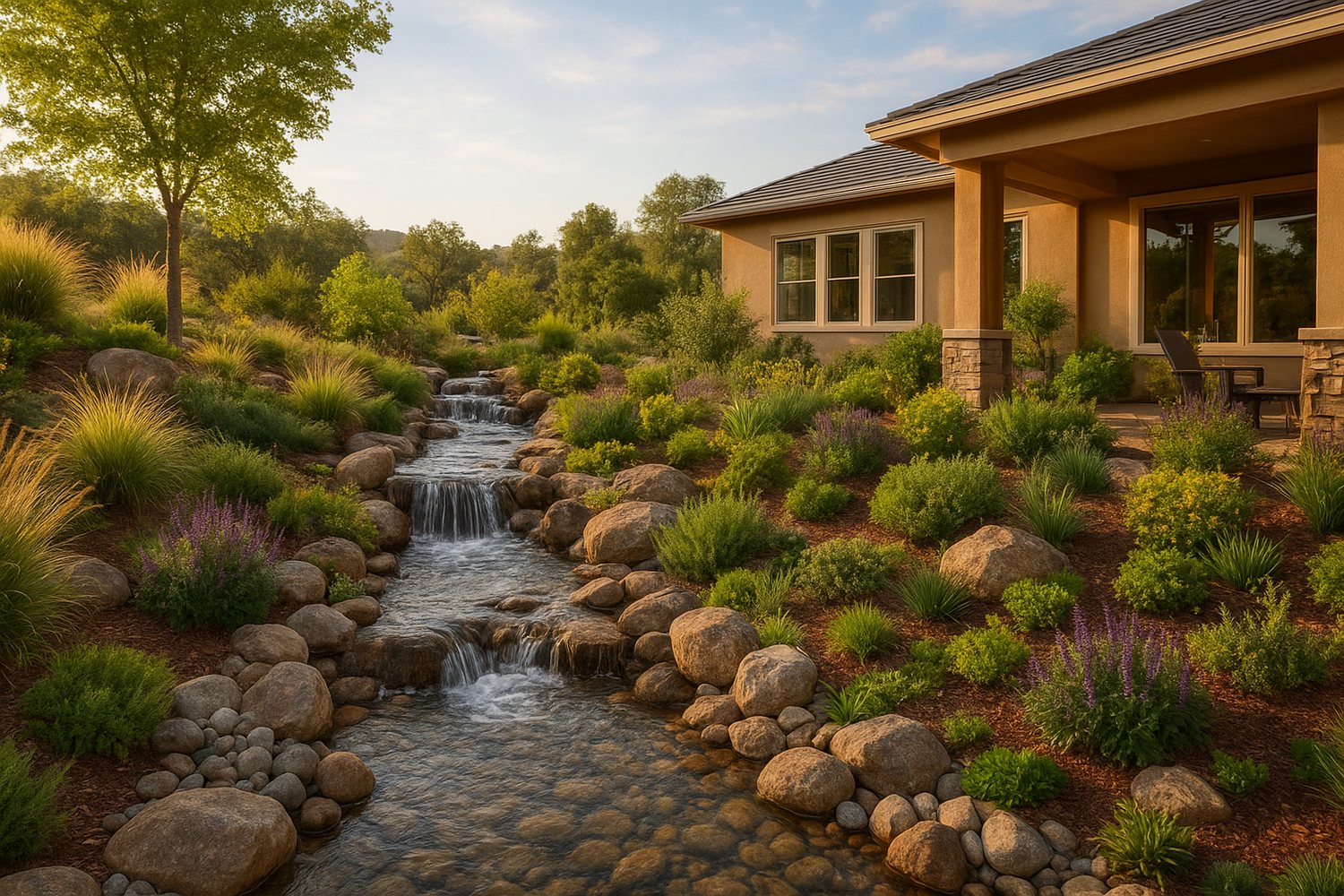
How to Size a Pondless Waterfall for the Perfect Backyard Sound
Learn practical ways to size a pondless waterfall so it delivers the sound you want in your Northern California backyard.
A pondless waterfall sets the tone in your outdoor living space—but the right size makes all the difference for relaxing sound or lively energy.
Why Sound Matters in a Pondless Waterfall
A pondless waterfall isn’t just for looks. The sound it provides sets the mood for your yard, whether you want subtle background trickle or a bold, energizing splash. In our region, year-round outdoor living is common, so the sounds from your water feature often blend with daily life—dinners outside, reading on the patio, and family gatherings.
Getting the right sound depends first on what you enjoy. Some homeowners want to mask street noise, while others are looking for a gentle ambiance. In neighborhoods like Rocklin and Granite Bay, backyard noise dynamics can differ a lot based on lot size, proximity to traffic, and home orientation.
Choosing the ideal sound is about finding balance: it should suit your space, not overwhelm conversation or feel too faint to notice over natural sounds. Knowing your personal preference is the best starting point before discussing size and structure with your hardscape builder.
Explore more about local pondless waterfalls on ourPondless Waterfallspage.
How Size Affects Splash and Sound Volume
The volume and character of your pondless waterfall’s sound depend most on the stream length, drop height, and total water flow. Taller or longer waterfalls with higher water flow make more noise, which is perfect for masking nearby traffic or pool pumps. Shorter, more subtle waterfalls create a tranquil setting but may not cut through everyday background sounds.
If your backyard is close to neighbors, a waterfall with modest height and moderate water flow may fit best, ensuring privacy without creating a constant roar. The size and configuration of the rocks and spillways also play a part, affecting both the tone and carry of the sound.
Building with sound in mind means combining your goal—like relaxing ambiance or energetic water music—with the scale of your yard. The right choices ensure the waterfall’s presence is always comfortable, not overwhelming for gatherings or quiet time.
- Stream length influences fullness of sound
- Drop height impacts both splash and volume
- Water flow determines how noticeable the sound will be
Planning Waterfall Placement for Optimal Effects
Where you place your pondless waterfall will impact how you experience the sound—and how much you (and your neighbors) hear it. Ideally, the waterfall is positioned along a patio, pathway, or near outdoor seating, making its sound part of daily outdoor living.
Placing the feature beside a fence or structure can reflect sound, increasing perceived volume. This can help if you want extra sound but can also create echoes if not planned well. For wide, open yards in Auburn or Folsom, strategic placement becomes key to making every part of your space feel inviting.
Take note of wind direction, surrounding vegetation, and nearby structures. All these features will shape how sound travels through your backyard, so discuss placement carefully with your contractor at the start of your project.
- Position near favorite outdoor spaces
- Use fences or structures to bounce sound where wanted
- Account for wind and existing landscaping
| Feature Size | Approx. Sound Level | Water Use | Best Suited For |
|---|---|---|---|
| Small (3-5 ft stream) | Soft, subtle trickle | Low | Small patios, reading nooks |
| Medium (6-10 ft stream) | Noticeable, gentle cascade | Moderate | Entertaining areas, gardens |
| Large (12+ ft stream) | Bold, masking sound | Higher | Noisy streets, large yards |
Deciding on Flow Rate: Pump Size and Waterfall Width
The right pump size is crucial for reliable operation and the sound profile you want in your pondless waterfall. More gallons per minute means a louder, stronger flow, but also higher energy use and potential for splash outside your desired area.
Wider waterfalls generally create a softer, sheet-like sound, while narrower falls produce a sharper, concentrated splash. A balance between width, drop height, and pump size will help achieve a full, natural sound that complements, rather than overwhelms, patios and gardens.
Your designer should help you match desired sound to pump performance and stream width so maintenance remains straightforward and energy use stays sensible in our warm, dry climate.
- Higher flow rate = louder, more robust sound
- Wider falls create a gentler, washing tone
- Narrower falls highlight splashing and bubbling
Natural Landscaping and Rocks: Shaping the Sound
Rocks aren’t just for appearance in a pondless waterfall—they control how water sounds and flows. Differently sized rocks, boulders, and smaller gravel affect the water’s movement, breaking it into splashes or letting it cascade smoothly.
Plant selection can also fine-tune your sound profile. Hardy regionally adapted shrubs or groundcover near the waterfall edge help absorb or diffuse unwanted noise, keeping the ambiance natural.
In Placer and Sacramento County yards, using existing oak trees or mature shrubs alongside your waterfall lets you soften the overall sound and minimize evaporation—a practical bonus in our dry summers.
- Large rocks split water for dramatic splashes
- Smooth boulders allow gentler cascades
- Tough local plants help with sound control
Review all the creative options on ourWater Featuresoverview.
Local Climate and Water Use Considerations
Our region’s hot, dry summers mean water features must be both efficient and matched to your lifestyle. Excessively large or exposed cascades can raise water loss by evaporation—important to consider when picking your waterfall size and drop height.
Selecting a slightly smaller feature or adding shade with landscape design can preserve more water and keep the project low-maintenance. Efficient pumps and modern pondless basin designs also limit water waste and make upkeep easier.
Always work with a builder who understands both the sound and water balance needed for local conditions. That means healthy living spaces and responsible water use in the long term.
- Evaporation increases with wind and sun
- Shaded or partially sheltered features lose less water
- Higher-volume falls require more topping up in summer
Working with Your Designer: Questions to Ask
A good hardscape designer will walk you through the decisions on waterfall size, sound, and practicality. But it pays to know what to ask. Start by clarifying your goals: masking sound, creating a specific mood, or matching a pool or patio design.
Request mockups or even temporary sound tests when possible. Ask about expected water usage, maintenance, and the energy demand of different pump sizes. Bring up where you and your guests usually spend time outdoors to help with placement decisions.
Experience with regional soils, climate, and outdoor living patterns makes a genuine difference. Confirm that your contractor is familiar with the microclimates and practical realities of backyards in this part of Northern California.
- Ask for sample sound comparisons
- Clarify expectations for water use and maintenance
- Ensure contractor experience fits your local climate
Next Steps: Finding Your Ideal Outdoor Water Feature
Once you identify your preferred waterfall sound and general size, it’s time to collaborate with your builder on the practical details. Combining your preferences with professional expertise ensures you’ll end up with a water feature that truly fits your lifestyle.
At California Hardscapes, every project is managed by licensed, bonded, and insured professionals. Our deep knowledge of concrete, landscaping, and outdoor construction helps homeowners achieve a result that’s both functional and beautiful.
Remember: It all starts with planning. Take time to weigh all sizing and sound factors up front, and you’ll set the stage for years of outdoor enjoyment in your California backyard.
- Define your ideal sound profile
- Discuss water and energy efficiency
- Design for both beauty and practicality
Ready to talk about your backyard soundscape?Request a consultationtoday.
Planning a water features project?
Call or text 916-741-0633, or email sales@californiahardscapes.com with your address, a short description and a few photos, and we will arrange a consultation.