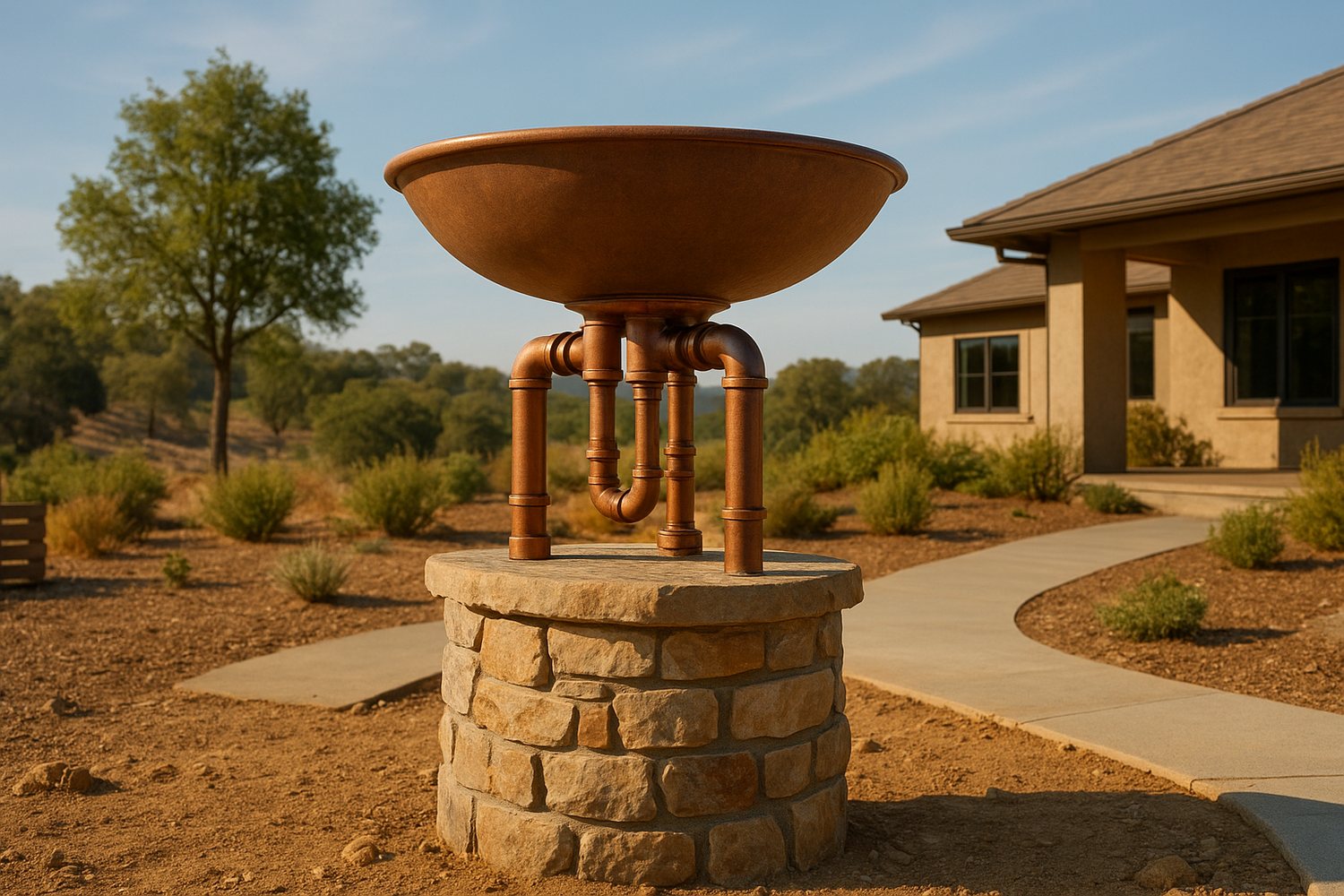
Copper vs Concrete Spillway Bowls: Make the Right Choice
Not sure if copper or concrete spillway bowls are right for your water feature? We break down the pros, cons, and what works best for homeowners in Placer, Sacramento, and El Dorado County.
Water features offer a visual and auditory focal point for any outdoor space. Spillway bowls and scuppers have become highly requested upgrades in the Rocklin, Roseville, and Granite Bay area. If you’re considering one, choosing between copper and concrete bowls can make a major difference.
Why Homeowners Choose Spillway Bowls and Scuppers
Spillway bowls and scuppers bring a unique, sophisticated element to pools, patios, and garden spaces. These water features work by allowing water to flow smoothly from a bowl or spout, creating gentle cascades and a soothing ambiance. Their visual appeal and calming sound are welcome additions to outdoor living areas.
Beyond aesthetics, spillway bowls and scuppers are practical upgrades. They help circulate water, which can contribute to healthier pond or pool environments. Plus, many homeowners appreciate how they can be installed as stand-alone accents or integrated into existing hardscape projects for a tailored look.
Homeowners in the Placer, Sacramento, and El Dorado County communities often seek water features that hold up well in the area’s climate. Durability, maintenance needs, and how the feature looks with established landscaping all factor into the decision. Let’s look closer at the two most popular material options.
- Modern aesthetic profile
- Improves water movement
- Works as a stand-alone or part of a larger design
For more details on available options, visit our mainSpillway bowls and scupperspage.
Distinctive Look: Copper Spillway Bowls
Copper bowls are striking, making them a focal point even before the water starts flowing. Over time, copper develops a natural patina, shifting from bright metallic to deeper browns and classic green hues. This aging process creates a unique look for each piece.
Because copper is a premium metal, it imparts a sense of luxury and craftsmanship. Homeowners use copper bowls to elevate the feel of modern, Mediterranean, or transitional landscapes. Their character only increases with age, matching local preferences for outdoor spaces that feel like extensions of the home.
It’s important to keep in mind that copper can react with water chemistry. You may notice slight color changes over the years, which most see as a bonus. Regular gentle cleaning and checking for buildup help maintain their beauty—but copper isn’t for everyone.
- Natural patina forms over time
- Distinct metallic shine early, elegant green/bronze later
- Best for standout focal points
Classic Appeal: Concrete Spillway Bowls
Concrete spillway bowls are versatile and durable, making them a mainstay in outdoor water features. They can be cast in a range of shapes, sizes, and finishes—from smooth and modern to textured and traditional—offering exceptional flexibility in design.
Their neutral tones blend seamlessly into California landscapes. With proper sealing and occasional maintenance, concrete stands up well to the area’s hot summers and occasional winter frost. The finish on concrete can also be colored or stained to match patio materials, pool decking, or nearby retaining walls.
Unlike copper, concrete bowls do not develop a patina. If you want a consistent appearance year after year, concrete is an excellent choice. It’s also tough enough for high-activity spaces where durability and stability matter most.
- Shaped and finished to fit any style
- Color can be matched to surroundings
- Easily holds up to daily use
Copper vs Concrete: What Really Matters in Our Region
Placer, Sacramento, and El Dorado Counties have their share of hot, dry spells and occasional winter chills. Both copper and concrete bowls can handle these conditions, but their appearance and care requirements differ. Copper ages gracefully but needs occasional checks for lime or mineral buildup—especially with hard water.
Concrete bowls perform well outdoors and are often more forgiving if you’d rather minimize ongoing maintenance. However, if not sealed, harsh weather or irrigation overspray can lead to staining or minor surface cracks. Routine inspection and simple cleaning protect their surface and function.
Consider your outdoor space’s overall style, willingness to do light upkeep, and the type of water (pool, pond, or recirculating fountain). The best choice fits both your practical needs and design vision—and blends comfortably with the existing materials around your home.
- Copper needs rare but regular care
- Concrete offers low maintenance when sealed
- Both work well in our regional climate
| Feature | Copper Bowls | Concrete Bowls |
|---|---|---|
| Durability | Excellent, may develop patina | Excellent, highly resistant to weather |
| Maintenance | Occasional gentle cleaning needed | Minimal if sealed, easy to clean |
| Customization | Limited shapes, unique aging | Highly customizable shapes and finishes |
| Aesthetics | Bright to patinaed, attention-grabbing | Neutral to bold, blends with hardscapes |
| Best For | Elegant accents, statement pieces | Matching patio or pool, versatility |
Comparing Key Features of Copper and Concrete Bowls
Making an informed choice is easier with a side-by-side comparison of copper and concrete spillway bowls. Let’s break down durability, maintenance, customization, and how each material weathers in local conditions.
Remember, the right bowl is about what serves your household best—whether that’s a bold patina over decades or a neutral, lasting statement that supports other landscape elements. This simple glance can help solidify your decision.
Here’s how copper and concrete spillway bowls stack up in important categories for Northern California homeowners.
Explore more choices by viewing our overview of allWater Featuresoptions.
Installation Realities: What to Know Before You Order
Spillway bowls must be properly installed for long-lasting enjoyment. Copper bowls are lighter, which can simplify handling, but require non-corrosive plumbing and a solid, level base. Their fittings should match the water flow and chemistry expected in this region.
Concrete bowls, due to their weight and customizable size, need careful placement and robust support—especially if installed on raised walls or columns. Choose an installer who understands how weather changes, irrigated landscapes, and shifting soils affect the underlying concrete.
Regardless of material, professional installation ensures the bowl’s water flow, angle, and integration work as intended. Experienced contractors also select appropriate sealants and anchor points, reducing future issues tied to local climate and soils.
- Copper is lighter, easier to move
- Concrete requires strong support on walls
- Both need correct plumbing for water quality
Maintenance Tips for Spillway Bowls in Northern California
Routine maintenance keeps your water feature attractive and functional. For copper bowls, rinse with fresh water occasionally to avoid buildup from Placer County’s mineral-rich supply. Avoid harsh cleaners that could strip the finish or interfere with the natural patina.
Concrete bowls benefit from light cleaning too. If the surface is sealed, washing or brushing off organic debris is usually all that’s needed. Reapply sealant every few years for the best protection, especially where irrigation spray or pool chemicals are present.
Watch for clogs in scuppers or spillways, especially during oak leaf drop or after high winds. Remove leaves and debris to maintain a steady flow and avoid unsightly streaking. Most routine care can be done during regular yard upkeep.
- Use gentle cleaners and fresh water
- Reseal concrete bowls periodically
- Clear leaves from spillways often
How to Choose: A Practical Guide
If bold color and one-of-a-kind aging are priorities, copper bowls stand out—and show off their character over time. If you prefer uniform color and a versatile fit, concrete offers more options and reliable performance in active outdoor settings.
Factor in the look of your home, pool, hardscaping, and landscaping. Many local homeowners appreciate bowls that coordinate with these elements instead of standing apart. Your maintenance preferences, and how hands-on you want to be, will also help tip the scales.
If you’re still weighing your options, reach out to a qualified local contractor who specializes in water features, patios, and materials that work well in our climate. With the right advice, your outdoor space will benefit from a feature that’s as practical as it is beautiful.
- Copper: high impact, unique patina
- Concrete: subtle, blends in, highly customizable
- Look, upkeep, and setting all matter
If you’d like guidance tailored to your home,request a consultationwith California Hardscapes today.
Planning a water features project?
Call or text 916-741-0633, or email sales@californiahardscapes.com with your address, a short description and a few photos, and we will arrange a consultation.