How to Get Broom-Finish Concrete Done Right
Broom-finish concrete is classic for patios and walkways, but getting a tough and attractive surface is all about skill and timing. Learn how it’s done right.
A broom finish remains the gold standard for patios, driveways, and walkways throughout Rocklin, Roseville, and neighboring communities. The key to performance and looks is in the details—especially with our climate. Here’s what goes into a proper broom-finish concrete installation.
What Is Broom-Finish Concrete?
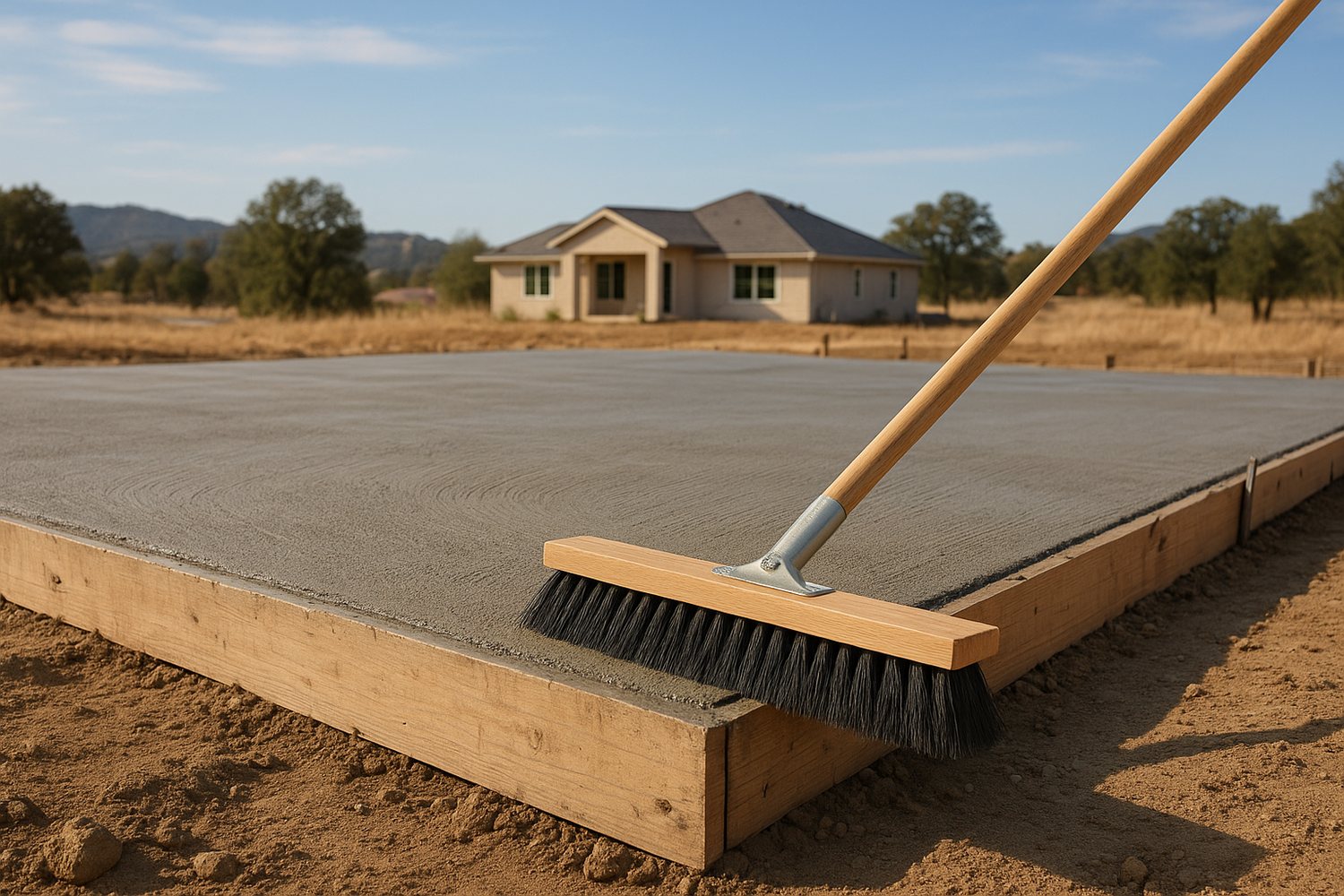
Broom-finish concrete is exactly what its name suggests: after the surface is smoothed with a trowel, a concrete broom is run across it to create a subtle texture. This finish is prized for its slip-resistance, traditional look, and resilience. For most homeowners in places like Rocklin and Granite Bay, it’s the go-to choice for patios, walkways, pool decks, and driveways.
Beyond its functionality, the light grooves created by a broom make surfaces safer, especially when wet during rainy Sacramento winters or around swimming pools in Folsom. The finish also works well with the landscape styles across the Sacramento Valley—clean, classic, and practical.
Done right, broom-finish concrete can last decades with minimal care. But attention to every step makes all the difference. Let’s look at what separates a durable, attractive broom finish from one that flakes, scales, or collects dust early on.
For a deeper dive, see ourbroom-finish concretepage with specific advantages and frequently asked questions.
Timing is Everything
The secret to great broom-finish concrete is timing. The broom should never be dragged too soon when the slab’s surface is still wet, nor too late after it’s hardened. The ideal window is when the concrete supports weight without sinking, but still accepts the broom’s bristles. This can vary in Placer and El Dorado counties as temperature and humidity levels shift between spring and fall.
A well-timed application gives crisp texture and prevents surface tearing. If the broom is used before the slab starts to set, the grooves will collapse; if it’s too late, the result is faint lines and possible micro-cracking. Professionals rely on practical touch: pressing a fingertip or boot gently into the surface helps gauge readiness.
Local climate matters—cool mornings, hot afternoons, and the Sierra foothill breezes all change concrete’s setting speed. Understanding this comes from real-world experience, not just reading a chart. Timing is one area where experienced, licensed, bonded, and insured contractors truly shine.
- Broom too early: mushy, weak surface
- Broom too late: barely visible pattern, risk of cracks
- Watch sun, shade, wind—they all affect setting
Texture Depth and Direction
A quality broom finish needs the right groove depth—not too shallow, not so deep the surface is rough. Depth is controlled by broom type, bristle stiffness, and the pressure used. For walkways and patios in neighborhoods like Roseville or Auburn, most pros aim for a gentle but distinct texture that balances slip-resistance with easy cleaning.
Texture direction should suit the layout. For driveways, grooves go perpendicular to vehicle traffic for grip. On stairs or ramps, broom the finish perpendicular to the typical travel path to reduce slipping. Consistency in pattern direction also enhances visual harmony across large backyard slabs or winding garden paths.
Amateurs often overlook edges and transitions—making for rough, irregular spots. Professional touch means every square foot, even corners and joints, gets uniform attention. When done with care, broom finishes look seamless and perform equally well everywhere.
- Too deep = rough, traps dirt; too light = slippery
- Direction impacts both safety and appearance
- Uniform pattern shows craftsmanship
Proper Curing: The Last Critical Step
No matter how well the broom finish looks at first, proper curing is essential to prevent dusting and scaling later on. Exposed broom-finish slabs should be cured slowly to let the concrete reach full strength. In the dry summers from Folsom to Auburn, evaporation happens fast, so curing methods matter.
Common mistakes include skipping curing entirely or spraying water too late. Mist curing, covering with plastic sheeting, or using curing compounds all help keep moisture in during those first few days. The right method depends on weather and site details.
Neglecting curing leads to surface dusting—a powdery, weak layer—or worse, scaling and chipping after a few freeze-thaw cycles in the foothills. Correct curing means the finished surface keeps looking good and holding up against the elements for years.
- Keep surface moist for at least 3-7 days
- Mist, cover, or apply curing compound promptly
- Prevent dusting and future surface failures
Common Mistakes Homeowners Should Watch For
Many issues with broom-finish concrete can be traced to rushing, cut corners, or lack of regional experience. Applying broom texture too soon or late makes for weak or uneven surfaces. Guesswork with curing, especially in the hot, dry valleys, magnifies the risk of problems.
Another pitfall is using overly wet (high-slump) concrete mixes for “easier” finishing—this leads to surface dusting and scaling as the top layer loses strength. Inconsistent broom direction or skipped details at edges and joints leave obvious flaws that detract from both usability and curb appeal.
Hiring licensed, bonded, and insured contractors who understand our local soils, weather, and best practices is the surest way to avoid these traps. Good workmanship and attention to the right timing, texture, and curing are worth it for decades of satisfaction.
- Brooming at the wrong time
- Inconsistent finish pattern
- Skipping or delaying curing
- Concrete mix too wet
To compare finishes and applications, look over theConcretesection for an overview of all surface types.
How Regional Climate Affects Broom Finishes
Concrete installation in Rocklin, Roseville, and the foothills faces unique challenges from hot, dry summers and cool, wet winters. The rapid setting in afternoon sun demands precise timing, while cooler fall or winter pours require patience and moisture retention.
Windy days can dry the surface too fast, leading to surface cracking and loss of strength before the broom finish is applied. Shade on part of the slab causes uneven setting, which must be managed carefully to maintain even broom texture across the whole slab.
Understanding local weather patterns, soil types, and seasonal swings isn’t optional—it’s essential for a durable finish. This region-specific knowledge is a major reason to rely on established, experienced providers for any outdoor concrete project.
| Finish Type | Slip-Resistance | Appearance | Maintenance | Estimated Lifespan |
|---|---|---|---|---|
| Broom Finish | High | Classic, subtle lines | Low | 20+ years |
| Exposed Aggregate | Medium | Decorative, pebbled | Medium | 20+ years |
| Stamped Concrete | Varies | Patterned, stone/brick look | Medium-High | 15-25 years |
| Smooth Trowel | Low | Flat, sleek | Medium | 10-20 years |
Broom Finish vs. Other Concrete Surface Options
Broom finish is just one of several surface options for outdoor concrete. Others include smooth trowel, exposed aggregate, and stamped texture looks. Each has pros and cons, and the right choice depends on location, use, maintenance, and personal style.
Broom finish excels in reliability, slip-resistance, and ease of care, making it ideal for most patios and driveways in our area. Exposed aggregate offers more decorative appeal but can be harder to maintain, while stamped concrete mimics stone or brick at a higher cost and care level.
Ultimately, your decision comes down to desired look, maintenance level, and budget. Having a conversation about all the choices with a local professional ensures you make the choice that’s right for your lifestyle and property.
Making the Right Choice for Your Home
Choosing a broom-finish concrete surface is a smart investment for homeowners in Rocklin, Auburn, Granite Bay, and beyond. When installed with the proper techniques—timing, texture, direction, and curing—it combines function and beauty that lasts.
Before moving forward, discuss your site specifics, usage needs, climate challenges, and finish preferences with a qualified provider. Ask detailed questions about timing, mix design, and regional curing methods. Don’t hesitate to request insight about local materials and project experience.
California Hardscapes offers full-service outdoor construction, including concrete and patio work, built with licensed, bonded, and insured contractors. If you want a surface you’ll be proud of for years, personalized advice and best practices from seasoned experts go a long way.
Ready to discuss your project?Request a consultationwith California Hardscapes for expert advice on your next concrete surface.
Planning a concrete project?
Call or text 916-741-0633, or email sales@californiahardscapes.com with your address, a short description and a few photos, and we will arrange a consultation.