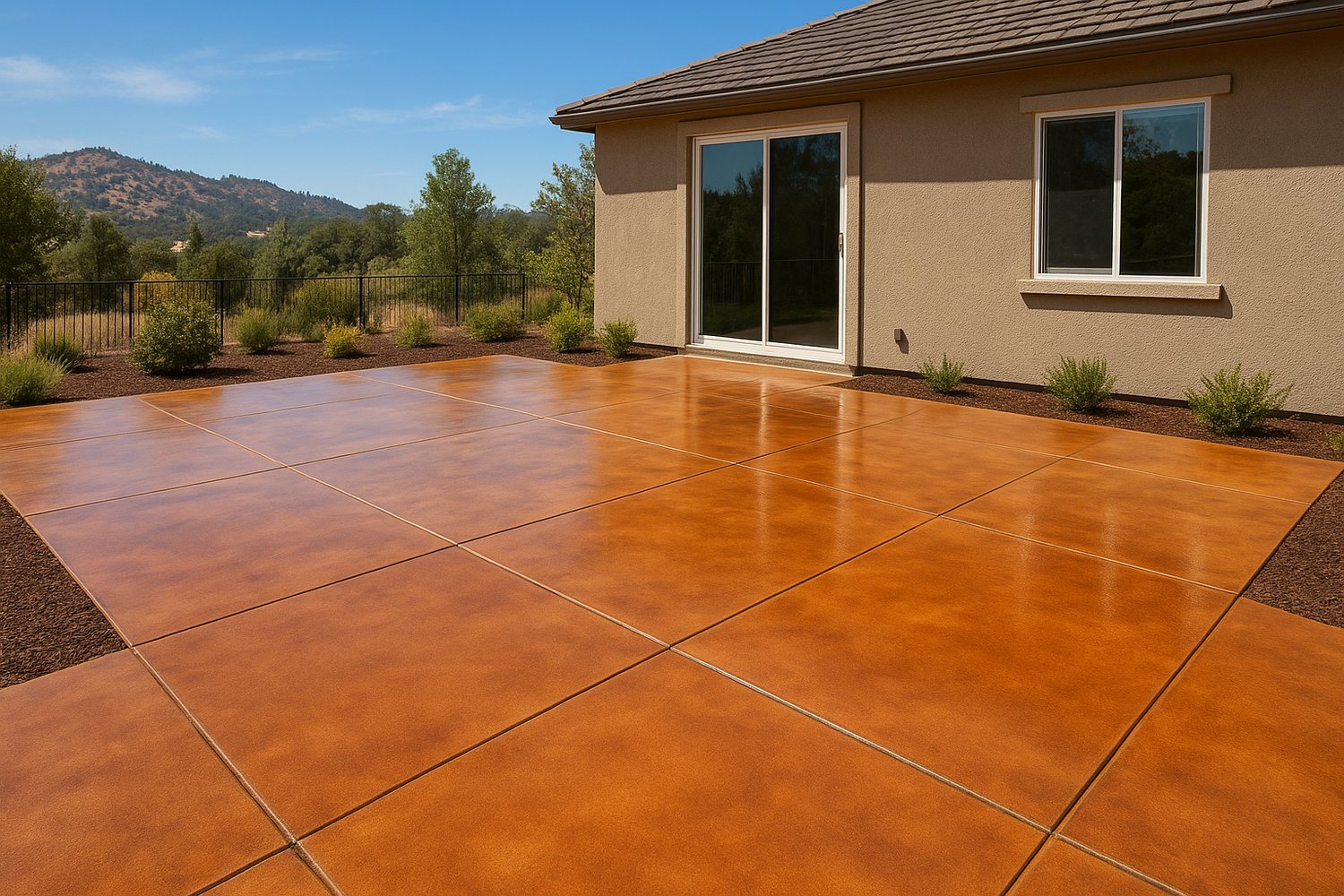
Acid Stain vs Water-Based Stain for Exterior Concrete, Explained
Acid and water-based stains both enhance exterior concrete, but they work very differently. Here’s what homeowners need to consider.
If you’re considering stained concrete for your outdoor space, you’ll face a key decision: acid stain or water-based stain. Here’s a no-nonsense guide tailored for local homeowners.
What Is Concrete Staining?
Concrete staining is a finishing technique that infuses color into concrete surfaces. Unlike paint, a stain soaks into the concrete, offering varied looks from translucent color washes to more opaque coverage. Outdoor spaces like patios, pool decks, and walkways benefit from stains because they combine lasting color with low maintenance.
Two broad types of stains are used: acid-based and water-based. Each interacts with concrete in a unique way and offers a distinct palette of results. Knowing the basics can help you weigh which one best suits your project.
In the Rocklin, Roseville, and greater Sacramento area, climate and outdoor use matter. The right stain not only enhances appearance but also stands up to our sun, rain, and swing seasons.
- Stains become part of the surface—not a surface coating
- Enhanced color options for patios, walkways, pool surrounds
- A practical upgrade for new pours or existing slabs
For a full summary on concrete staining methods, visit ourStained concrete (acid and water-based)page.
How Acid-Based Concrete Stains Work
Acid stains are reactive stains made with a blend of water, acid, and metallic salts. When applied, they chemically react with the minerals in your concrete, creating natural color variation and unique effects. This process produces earth-toned colors—think rusty browns, greens, and coppers, with mottled or variegated movement.
Because acid stain colors are governed by the chemistry of your specific slab, some unpredictability is built in. No two pours or stains look exactly alike, even within the same property. The result is a one-of-a-kind finish that many homeowners appreciate for its character.
In the Sacramento Valley and foothill regions, acid stains stand up to sun and weather, but do require proper sealing and periodic resealing to ensure longevity outdoors.
- Classic, natural stone aesthetics
- Permanent, non-peeling color
- Works best on undamaged, unsealed concrete
How Water-Based Concrete Stains Perform
Water-based stains work by penetrating the concrete and depositing pigments, rather than reacting with the surface’s chemistry. This leads to a much broader color selection—blues, greens, charcoals, and even brighter tints are possible, alongside softer earth tones.
Because water-based stains don’t rely on chemical reactions, what you see in the color sample is a closer match to your end result. The finish is typically more consistent across the slab, which appeals to those wanting a particular look without surprises.
In areas around Rocklin and Roseville, water-based stains suit both older, previously stained or patched concrete, and new pours. Like acid stains, outdoor use calls for a compatible sealer to protect your investment.
- Wider color palette
- Consistent, predictable results
- Suitable for new or previously stained slabs
| Feature | Acid-Based Stain | Water-Based Stain |
|---|---|---|
| Color Range | Earthy, natural | Wide (including bright colors) |
| Color Variation | Highly variegated | Consistent, even |
| Reaction with Concrete | Chemical, permanent | Pigment, physically bonds |
| UV Resistance | Very good (with sealer) | Good (rely on sealer) |
| Best Use | Bare, new slabs | New or already stained slabs |
| Application Complexity | Requires neutralizing | Simpler, more forgiving |
Key Differences: Acid Stain vs Water-Based Stain
Though both stains add color that lasts, their differences matter—especially for exterior surfaces. Acid stains react to form permanent, natural effects, but work best on clean, unsealed concrete. Water-based stains bring more color options and can cover up some surface imperfections, but may not achieve acid stain’s subtle, stone-like look.
Longevity outdoors depends on thorough prep and the right sealer, whichever method you choose. Acid-stained slabs may need slightly more frequent maintenance where local soils or irrigation systems leave mineral deposits. Water-based stains can fade faster under intense, direct sun if not sealed correctly.
Style, maintenance, and existing concrete conditions all play a role. Weigh these local factors carefully before moving forward—your choice will set the tone for years to come.
How Sacramento’s Climate Affects Your Stain Choice
The hot, sunny summers and moist winters in Placer, Sacramento and El Dorado counties put any exterior slab to the test. UV rays can break down lesser stains and cause fading if not protected with the right sealer. Acid stains tend to resist UV breakdown well, but still need a quality outdoor-rated finish on top.
Water-based stains might show color fading sooner in full-sun installations unless the sealer is maintained. On partially shaded patios or under patio covers, this is less of a concern. Routine cleaning and resealing are key, regardless of your stain type, to keep color vibrant and slab protected.
Pay attention to drainage, too—saturated ground, regular irrigation overspray, or winter runoff can affect how stains and sealers perform over time. A well-designed hardscape considers all these factors so your investment survives northern California’s swings.
- Direct sun: choose UV-resistant sealers
- Reseal every few years for best results
- Mind irrigation and runoff for stain longevity
Browse all ourConcrete optionsto compare surfaces for patios, pools and driveways.
What to Expect During Stain Application
Both acid and water-based stains start with thorough cleaning—no shortcuts here. Old coatings, moss, or oil must be removed for the stain to penetrate evenly. Sometimes this entails pressure washing and mild acid wash prep.
For acid stains, the surface remains carefully damp during application, then neutralized and rinsed. The slab is allowed to dry fully before a sealer goes on. Water-based stains can often be applied faster, in more color layers, and require less post-stain cleaning before sealing.
It’s important to allow proper curing and drying times for stain and sealer. Foot traffic and furniture should wait until the final coat is fully hardened, especially in our region’s breezy, dusty afternoons.
- Surface prep is key for all stains
- Expect a multi-day process
- Stain, neutralize (if acid), dry, then seal
Making the Choice: Which Stain Is Right for Your Project?
If you lean toward the organic, stone-like look with natural color transitions, acid stain may be the better pick—especially for ground-level patios and walks designed to blend with landscaping. Its unpredictability is a feature, not a flaw, for many homeowners.
If your wish list includes custom colors, precise patterns, or covering patched or older slabs, water-based stains give you flexibility and control. They’re great for modern designs and larger patio spaces where matching a color theme matters.
Think about how you’ll use the space: BBQ splashes, foot traffic levels, sun exposure and irrigation patterns all influence long-term appearance. The right stain elevates your investment and highlights the best of your outdoor living.
Next Steps: Professional Advice Makes a Difference
Deciding between acid and water-based stains isn’t always straightforward. A conversation with someone experienced in our soils, climate and slab types can help you avoid costly missteps. You want results that are both beautiful and practical.
A professional can evaluate your existing concrete’s porosity, previous finishes, and any problem spots before you commit. Sometimes a test patch is the smart move. A quality installation leverages both technique and local expertise.
If you’re thinking of transforming your patio, pool deck, paths or driveway, get answers to your stain questions from someone who actually installs and maintains exterior concrete in our region—it’s worth the discussion.
Ready for a tailored color plan?Request a consultationwith California Hardscapes today.
Planning a concrete project?
Call or text 916-741-0633, or email sales@californiahardscapes.com with your address, a short description and a few photos, and we will arrange a consultation.