Smart Planning: Choosing the Right Materials for Your Hardscape Project
Choosing hardscape materials well is the foundation of a successful outdoor project. Learn how to plan and select the right surface, base, and finish for your home.
Every hardscape project stands or falls on material choices. The right base and finish protect your investment and ensure lasting satisfaction.
Why Material Choice Matters in Our Region
Here in Rocklin, Roseville, Granite Bay, Folsom, and Auburn, climate and soil have a direct effect on how hardscape materials perform. Hot, dry summers, clay soils, and occasional heavy rains all play into the suitability of your choices. The materials you select need to stand up to these specific challenges without constant fixes.
Premium materials do more than look attractive; they endure. If a paver or slab is prone to cracking under thermal stress, it won’t survive our Sacramento Valley temperature swings. Likewise, the right base keeps patios and walkways stable after a wet winter, preventing future headaches.
Choosing materials suited for this part of California means less maintenance and greater longevity. Homeowners who work with knowledgeable professionals—not just product catalogs—see results that look good for years to come. Good planning always starts with an honest conversation about our local conditions.
For an in-depth look at base, surface, and accent options, visit ourMaterials page.
Understanding Your Project’s Foundation
Every lasting hardscape starts underground, with the right base materials and thorough prep work. In our area’s mix of clay and decomposed granite soils, the base is crucial to managing drainage and resisting movement. This foundation is where longevity—or failure—begins.
Common base choices include class II road base and compacted gravel. Each option has its strengths in terms of stability and drainage. Building atop a poorly prepped base wastes money on premium finishes that can’t compensate for shifting or water damage below.
Proper excavation is key, often to 4–8 inches depending on the load your patio, driveway, or path needs to carry. The combination of compaction, grading, and using region-appropriate base layers forms the backbone for eye-catching yet durable surfaces.
- Clay soils need extra attention for drainage
- Compacted base prevents settling and cracks
- Skipping base prep leads to costly repairs
Choosing the Right Surface Materials
Surface material is what you see and feel—but it’s also where durability and appearance intersect. Common choices in our region include poured concrete, precast pavers, natural stone, and decorative finishes. Each responds differently to Sacramento’s climate swings.
Poured concrete is versatile, cost-effective, and can be finished in many ways, but it needs expert installation to resist cracking as soils shift. Pavers offer flexibility and ease of future repairs. Natural stone brings unique aesthetics but may require more careful selection and maintenance.
Understanding the pros and cons of surface materials puts you in the driver’s seat. Blend beauty, practicality, and budget by weighing regional performance and your project’s needs. Aim for choices that age well in our area—not just in a photoshoot.
- Concrete: customized shapes, many finishes
- Pavers: flexible, easy to replace or repair
- Stone: natural beauty, unique patterns
| Material | Durability | Maintenance | Appearance | Best Use |
|---|---|---|---|---|
| Poured Concrete | High | Low | Smooth/Modern/Custom | Patios, Drives |
| Pavers | Medium-High | Medium | Varied/Patterned | Paths, Patios |
| Natural Stone | High | Medium-High | Natural/Unique | High-End Patios |
| Stamped Concrete | High | Low | Decorative/Patterned | Patios, Walks |
| Decomposed Granite | Mid | Medium | Rustic/Natural | Trails, Borders |
Finishes, Sealers, and Details: The Final Touches
Once the surface is complete, details like finishes and sealers help define the final look and performance. In our region, UV resistance and water repellency matter. For concrete, options include broom, smooth, stamped, or exposed aggregate finishes.
Sealers protect both concrete and pavers, keeping out moisture and reducing stains from leaves, irrigation, or outdoor living. Subtle touches, like color additives or shaped edging, can personalize a space and add curb appeal.
Choosing the right finish and sealer is about more than appearance—it affects slip resistance, cleaning, and shape retention. Finishing details are your project’s first impression and should be selected with care for our mix of sun, soil, and seasons.
- Color and texture finishes suit any style
- Quality sealers prevent fading and staining
- Edging adds polish and keeps surfaces intact
Practical Steps for Planning Material Selection
Start with your goals—do you need a driveway that handles heavy vehicles, or a patio that stays cool for bare feet? Matching materials to intended use is the foundation of a smart project in Greater Sacramento.
Work with professionals who understand local soils and supply chains. A seasoned contractor like Marty will help assess your property for drainage, sun exposure, and traffic, recommending materials that deliver on function and form. DIY research is valuable, but regional expertise is irreplaceable.
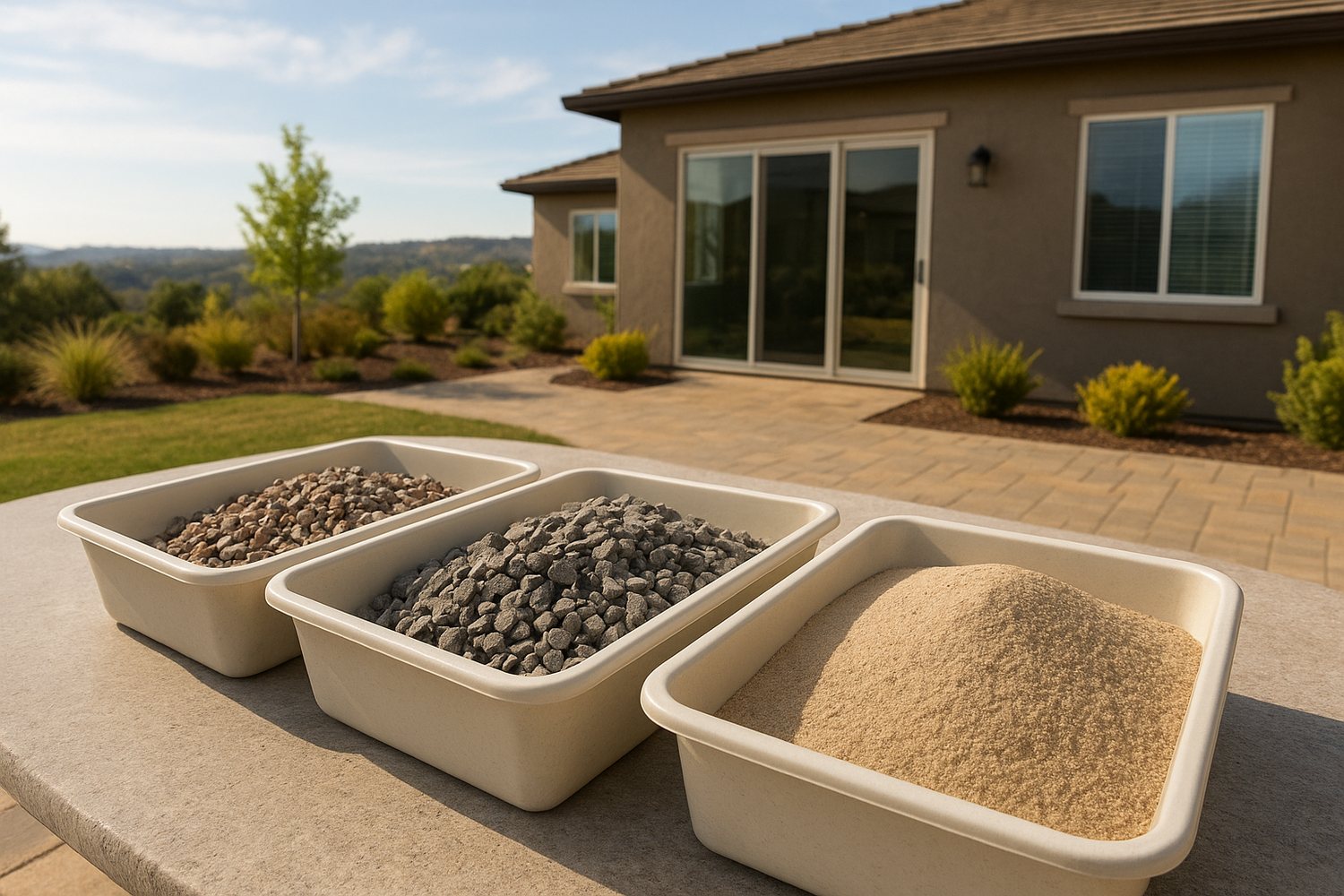
Obtain samples when possible—feeling textures and comparing colors outdoors helps you visualize results. Many homeowners find their preferences evolve once they see materials in natural light and compare them against existing landscaping.
- Identify how each area will be used
- Request samples before deciding
- Balance durability, appearance, and value
See the full scope ofall materials optionsavailable through California Hardscapes.
How to Balance Budget, Performance, and Curb Appeal
Material costs are just one part of the story. Long-term durability, maintenance, and the look you want all play into your choices. Sometimes spending a bit more upfront saves money on repairs—or adds value to your home.
Consider combining different materials for function and flair. For example, pair poured concrete paths with decorative stone borders, or alternate pavers and groundcover for visual interest. Smart mixes can expand your project’s impact without overspending.
Professional input helps prioritize where to invest: solid base work is rarely noticed but always essential. From there, select visible surfaces and touches that suit your tastes and lifestyle, keeping in mind our region’s climate and market.
- Invest in base and drainage first
- Mix materials for style and savings
- Factor in maintenance over years
Common Regional Challenges and Smart Solutions
Our seasonal extremes—hot summers, cool winters, and the occasional soaking rain—demand materials that flex and drain well. Avoiding freeze-thaw damage isn’t a major worry here, but thermal expansion and contraction are real concerns.
Tree roots, expansive soils, and hillside properties add complexity. For slopes, reinforced retaining walls and proper subdrainage manage movement. In shaded areas, select materials less prone to moss or slickness, such as textured finishes or non-slip pavers.
Local supply can affect material selection, too. Some stones or pavers are more readily stocked in the region, making repairs or expansions easier. A professional’s local network can help source consistent materials and keep projects on track.
- Check for thermal movement tolerance
- Use reinforced edges near trees or slopes
- Prioritize materials stocked locally
Working with a Trusted Contractor Ensures Great Results
Choosing materials for your hardscape is as much about your builder as your palette. An experienced contractor like Marty at California Hardscapes brings decades of hands-on knowledge in material performance and installation techniques.
Look for teams who listen to your goals, explain options clearly, and outline the pros and cons of each choice. Licensed, bonded, and insured partnerships safeguard your investment and relieve stress throughout the process.
Combining your vision with a seasoned builder’s insight ensures your new hardscape not only looks good on day one, but stands the test of time in the Rocklin and Sacramento area. That’s the value of planning every detail.
- Discuss your long-term outdoor plans
- Ask for expert advice on local materials
- Work only with licensed, insured professionals
Have questions or need advice?Request a consultationto discuss your materials choices.
Planning a materials project?
Call or text 916-741-0633, or email sales@californiahardscapes.com with your address, a short description and a few photos, and we will arrange a consultation.