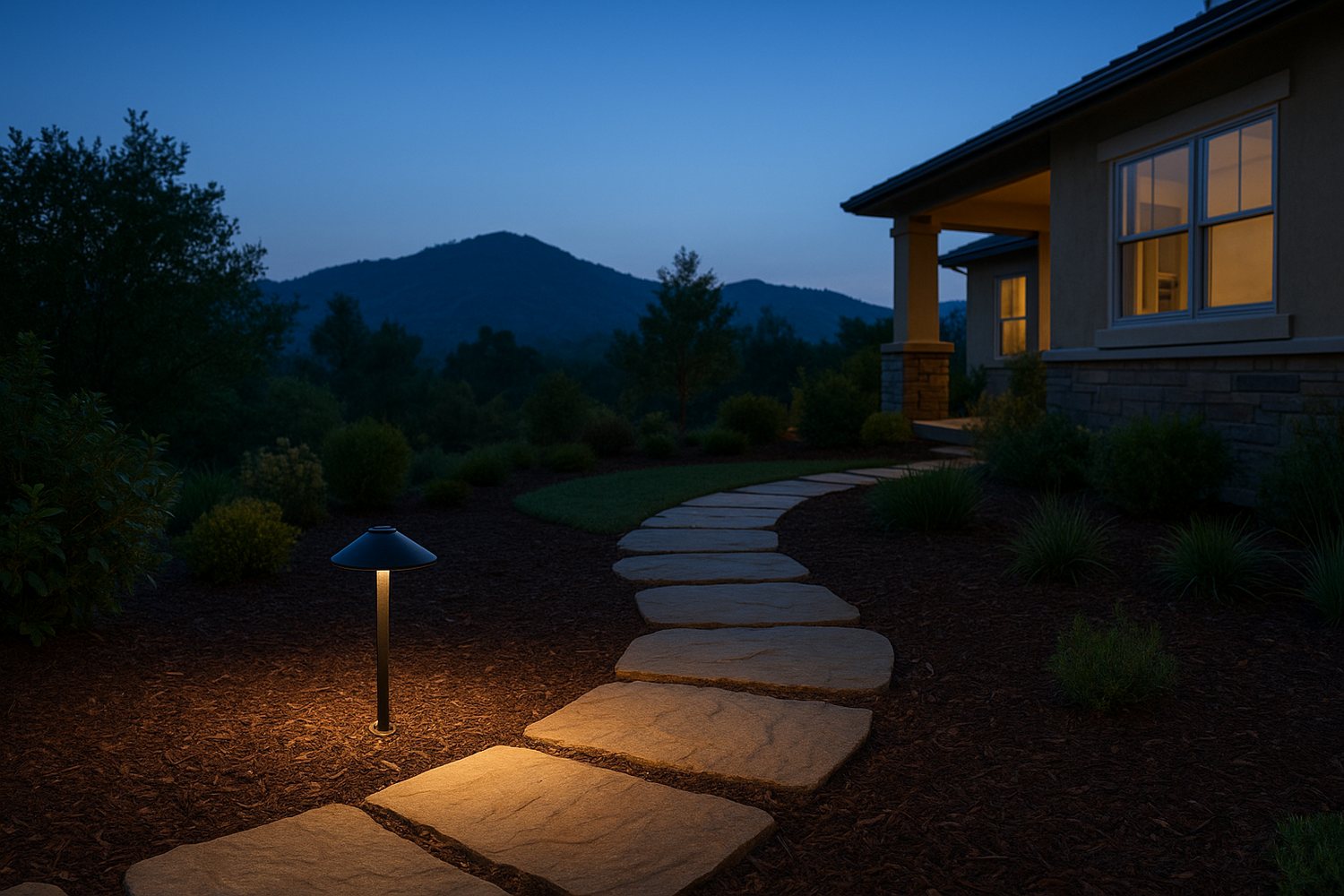
Comparing Path and Walkway Lighting Styles for Local Homes
Let’s break down the most effective path and walkway lighting options for your home. We’ll compare key styles, beam patterns, and real-life considerations for this region.
The right path and walkway lighting guides your way, adds ambiance, and boosts curb appeal. This comparison focuses on style choices and beam patterns that suit our local homes.
The Purpose of Path and Walkway Lighting
Path and walkway lighting isn’t just about seeing where you’re going after dark. Proper lighting gives your landscaping a finished look and highlights architectural or hardscape features. For homeowners in Placer, Sacramento, and El Dorado Counties, these fixtures also make outdoor spaces safer for family, friends, and visitors.
Local terrain and climate play a role in how lighting works. With many area properties featuring gentle slopes, retaining walls, and mature landscaping, the right illumination prevents missteps and adds to your home’s nighttime character. Weather-resistant fixtures also matter, thanks to our hot, dry summers and occasional winter rains.
Whether you’re considering a compact walkway or a winding garden trail, choosing lighting with the proper function and durability will make all the difference. A thoughtful lighting plan reflects both practical needs and the unique features of your Rocklin, Roseville, or nearby home.
Explore more details on ourPath and walkway lightingoptions and see how different styles perform.
Path Light Style Overview
There are three main categories of path light styles: classic mushroom or hat lights, modern bollard lights, and integrated low-profile options. Each has a different look and casts its beam in a unique pattern. Your choice should complement your home’s architecture and outdoor living areas.
Classic mushroom lights, with their wide, overhanging top, are a favorite in many area landscapes for their soft, outward-spreading light. Bollard lights provide bolder statements, often in sleek metal or concrete designs. Low-profile integrated lights, set at ground level, are subtle and virtually disappear during the day.
Choosing the right style involves balancing aesthetics, safety, and long-term maintenance needs for your region. Consider how the fixture will stand up to summer heat, nearby irrigation, and any potential lawn equipment.
- Mushroom/hat lights: soft, wide illumination
- Bollard lights: striking, vertical impact
- Low-profile/integrated: minimal look, subtle effect
Beam Patterns: What to Expect
The shape and spread of a light’s beam determines how well a path is illuminated. Wide, diffuse beams prevent harsh shadows and provide even coverage, which is ideal for walkways with curves or steps. Narrower, focused beams can highlight specific path sections or define edges.
Mushroom and hat fixtures tend to cast a 360-degree, umbrella-shaped light. Bollard lights often emit light from vertical slits or patterns, giving defined pools or lines of light. Integrated low-profile path lights usually provide a subtle, ground-hugging glow, outlining hardscape edges without being intrusive.
The local mix of hard surface and landscaping, plus whether paths are exposed or bordered by plants, factors into your beam pattern choice. At California Hardscapes, we always recommend on-site testing for beam pattern before full placement.
- Wide beams = broad, ambient light
- Narrow/focused beams = accent and edge definition
- Ground-hugging beams = soft, low-profile effect
| Style | Beam Pattern | Durability | Best For | Visual Impact |
|---|---|---|---|---|
| Mushroom / Hat | Soft, 360°, umbrella | High | Curved walkways, lawns | Classic, blends with landscape |
| Bollard | Focused, patterns or lines | Very high | Modern gardens, bold features | Strong, sculptural |
| Low-profile Integrated | Ground-hugging glow | Moderate–High | Paver/concrete edges | Minimal, virtually hidden |
Style and Beam Pattern: A Side-by-Side Comparison
Selecting the best fixture style and beam for your home means weighing several factors. To help, this table highlights key differences between path lighting types. Use it as a quick reference when imagining your own entry or garden walkway.
Consider the overall look you prefer, as well as the functional lighting needs of your property—especially if you have slopes, retaining walls, or nearby planters. The right pairing of style and beam ensures both safety and a welcoming nighttime presence.
It’s never just a matter of picking the brightest option. Carefully matching style, beam, and materials to site conditions avoids glare, over-lighting, or maintenance headaches—especially in this region’s Mediterranean climate.
Material Matters: What Lasts in Our Area
Path lights come in a range of materials, but not all are created equal. For Northern California’s climate, brass, stainless steel, and powder-coated aluminum offer durability against summer heat and winter rains. Fixtures should resist corrosion, fading, and regular impacts from yard work.
Plastic can crack or turn brittle in the intense Rocklin or Granite Bay sun. Lower-end metals may rust, especially if irrigation is close by. The right material extends the life of your investment—an important consideration if you want to avoid future repairs or replacements.
Ask about fixture construction, finish, and warranty details during the selection process. Material choices can also influence how much maintenance is needed to keep your lighting looking sharp and working effectively.
- Brass: ages to patina, highly durable
- Stainless steel: modern look, resists corrosion
- Powder-coated aluminum: lightweight, color versatility
- Plastic: budget-friendly, but less durable
For an overview of all available outdoor lighting solutions, visit ourOutdoor Lightingpage.
Spacing, Height, and Placement Tips
Proper spacing makes all the difference between a well-lit, practical walkway and an over-lit or patchy effect. Aim to divide the path length by the number of fixtures for even coverage. Most homeowners find that 5 to 8 feet apart works well, but adjust for curves, stairs, or focal points.
Height matters, too: lower fixtures (12–18 inches tall) ensure the beam stays on the path and minimizes glare. Taller bollard lights are useful for planted areas where you want light to reach both pathway and adjacent beds.
In this region, avoid placing lights where lawnmowers or trimmers commonly operate. For concrete or paver walkways, edge-mounting is often possible—offering a clean look while protecting fixtures from foot traffic.
- 5–8 feet between most fixtures
- Lower heights = less glare, safer lighting
- Place away from lawn equipment zones
Energy Efficiency and Smart Controls
Choosing LED fixtures reduces energy consumption, heat output, and the frequency of bulb replacements—all major considerations in California’s climate. Modern path lighting typically integrates LED as standard, offering reliable performance year-round.
Smart controls, such as wireless timers or motion sensors, let you automate your walkway lighting. This boosts security and convenience while reducing wasted energy. In communities like Rocklin and Granite Bay, automated schedules can also account for seasonal changes in daylight.
For homeowners interested in future upgrades, most new systems allow integration with smart home hubs or apps. Check for compatibility if you’re building a new outdoor living area or planning a larger lighting overhaul.
- LED = higher efficiency, less maintenance
- Smart lighting = automated, customizable
- Check compatibility before installation
How to Choose What Works for Your Home
Start with your space: walk the path you want to illuminate, noting safety concerns and natural gathering spots. Consider how different lighting styles would look alongside the existing landscaping, patios, or pool areas. Local homes often mix classic and modern styles for a custom, premium result.
Weigh material and fixture type against how much direct sun, water, or foot traffic the area gets. Take the time to view sample fixtures or beam demonstrations, if possible, to see effects up close. Consultation with an experienced local contractor helps tailor choices to your site and preferences.
Ultimately, the best solutions combine aesthetics and functionality. For advice and hands-on planning in the Rocklin, Roseville, and surrounding communities, California Hardscapes can help guide your selection and installation.
Ready for guidance choosing the right lighting?Request a consultationto discuss your project with our team.
Planning an outdoor lighting project?
Call or text 916-741-0633, or email sales@californiahardscapes.com with your address, a short description and a few photos, and we will arrange a consultation.