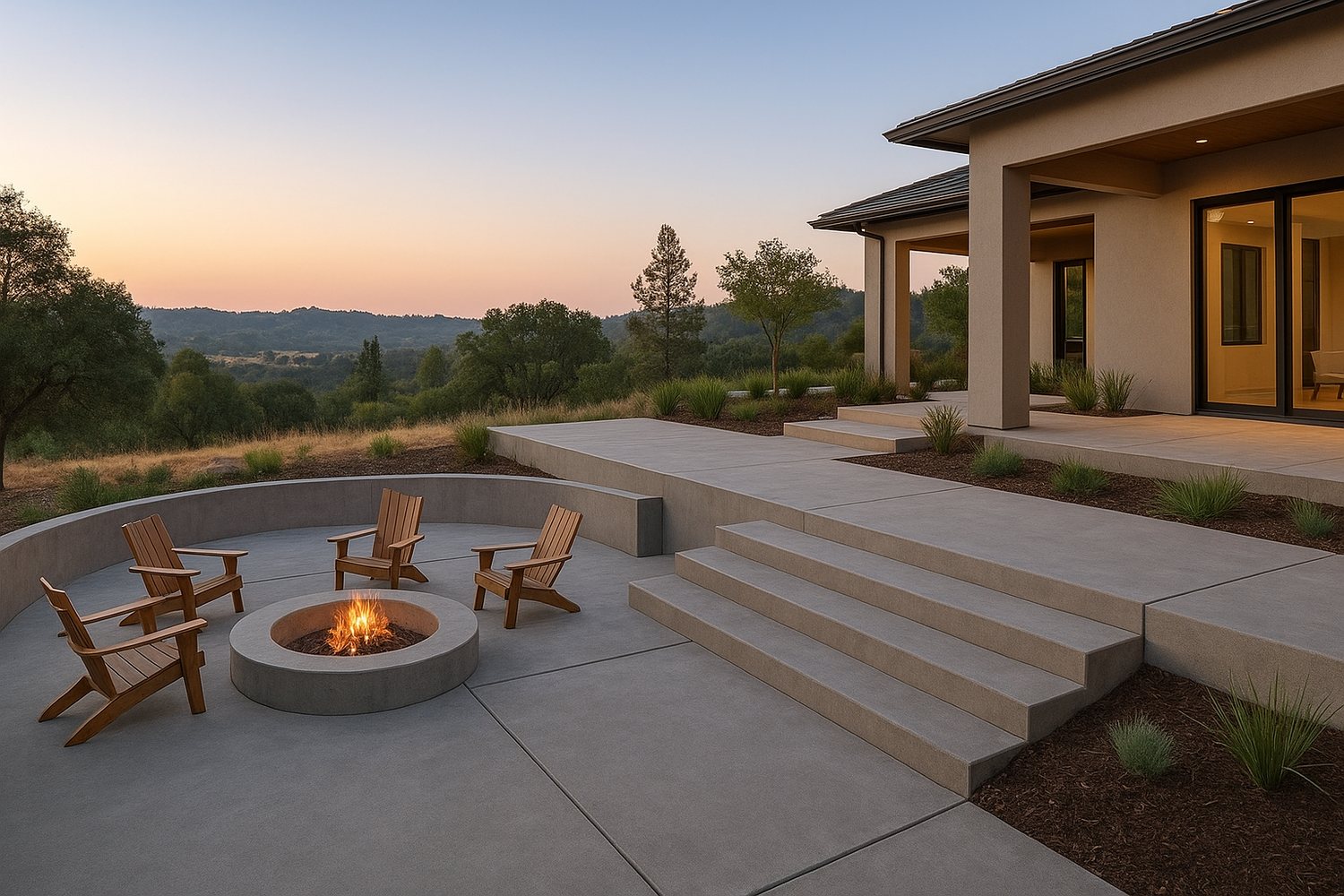
Concrete Patio Ideas for Shade, Dining, Lounging, and Fire Features
Explore real concrete patio design ideas tailored for the Sacramento and Placer County areas, with insight on shade, dining, lounging, and fire features.
Creating a functional, inviting patio in our Northern California climate calls for careful design. Here’s a practical look at concrete patio features for year-round enjoyment.
Designing for Shade: Concrete Patios that Keep You Cool
Summer sun in the Rocklin, Roseville, and Folsom area can be intense. Incorporating shaded zones into your concrete patio isn’t just about comfort—it’s about usability. Consider options like integrated pergola footings, built-in seat walls for shade sails, or embedding an anchored umbrella sleeve into the slab.
Patio covers and pergolas, attached or standalone, work especially well with concrete because of its stability. For a more natural look, combine your hardscape with strategically planted trees or tall shrubs, which soften the edges and offer shade as they mature.
If you’re thinking ahead, integrating electrical conduit or lighting mounts into the concrete pour can be helpful for future ceiling fans or LED fixtures. Shade shouldn’t block sunlight completely; partial shade solutions offer relief while maintaining brightness.
- Slab-set pergola and trellis mounts
- Umbrella sleeves for flexibility
- Raised planters for tree shade
For more inspiration and local advice, explore ourConcrete patiospage.
Dining Outdoors: Durable Concrete Spaces for Family and Friends
A concrete patio gives a solid foundation for outdoor dining spaces that endure the changing weather of El Dorado and Placer counties. Allow enough room for a dining table and chairs, plus walking space around them—at least a 10×12-foot area works well for most families.
Smooth, sealed concrete is easiest for moving chairs and cleaning spills, but consider textured finishes such as stamped, broomed, or exposed aggregate for slip-resistance. Herringbone or scored grid patterns add visual interest and help disguise inevitable spills and crumbs.
Integrating a built-in bench or low planter wall can provide extra seating and a transition between dining and lounge zones. If grill or kitchen upgrades are on your wishlist, plan utility lines or pads before the pour for seamless integration.
- Non-slip textures resist spills
- Built-in seating saves space
- Room for grills or outdoor kitchens
Concrete Patios for Lounging: Relaxed Living with Easy Care
Concrete’s versatility makes it ideal for lounging areas. These zones benefit from a more organic layout—curved patio edges or staggered slab levels break up the lines and invite relaxation. Use wide steps or risers to connect patios to lawns or pool decks.
Think about furniture: plan your slab size to fit sectional sofas, chaise lounges, and side tables. Lounging patios often pair well with borders of softscape—ornamental grasses, lavender, or succulents ease transitions and reduce glare.
Ambient lighting makes a big difference after sunset. Wire for low-voltage lighting, or install recessed step lights during construction for a finished look. If privacy is a concern, a concrete seat wall or planter can double as a visual screen.
- Curved or multi-level layouts
- Softscape borders for comfort
- Lighting sleeves cast during the pour
| Feature | Purpose | Suggested Finish | Special Prep Needed |
|---|---|---|---|
| Shade Zone | Comfort in sun | Broomed or colored | Footings for posts/anchors |
| Dining Area | Meals and gatherings | Smooth, sealed, or stamped | Utility pads for kitchens |
| Lounging Edge | Relaxation | Curved, exposed aggregate | Lighting sleeves |
| Fire Feature | Warmth/ambiance | Raised or recessed | Gas or electric sleeves |
Warmth and Ambiance: Fire Features Built into Concrete Spaces
Fire features are popular across Roseville, Granite Bay, and Auburn for extending patio season. Concrete patios provide the best fire-safe base for built-in gas or wood-burning fire pits and fireplaces, with proper clearances set at the design stage.
A dedicated fire zone can be circular or square, sized for group seating (10–12 feet across is common). Consider gas line sleeves or fire pit footing blocks set at pour time—much easier than retrofitting for utilities later.
Accent walls or raised plinths in concrete can also act as wind breaks in breezier foothill areas. Choose fire bowl materials compatible with the concrete and always check local codes regarding wood burning or open flames.
- Recessed or raised fire pit options
- Integrated gas line channels
- Concrete seat walls as wind breaks
Choosing the Right Concrete Finish for Patio Function
Finish choice impacts how your patio looks, feels, and functions across seasons. In our region, slip-resistance and heat reflection matter; lighter-colored finishes tend to stay cooler, while textured surfaces provide extra grip.
Stamped concrete can imitate stone or paver looks, ideal if you want a premium aesthetic without the weed or pest issues. Exposed aggregate is classic for foothill estates, offering both texture and durability, but broomed finishes remain a practical choice for budget and maintenance.
If staining or coloring concrete, select UV-resistant options to slow fading over the summers. Some homeowners in Rocklin or Folsom prefer a mix: stamped borders with smooth centers or colored edges with plain fields for definition.
- Broomed for simple slip-resistance
- Stamped for custom appearance
- Exposed aggregate for traction
Discover all ourConcrete optionsto find the best fit for your outdoor plans.
Smart Layouts for Every Backyard Size
A well-designed patio fits both your site and how you plan to use it. For smaller backyards, combine zones—set a fire feature at one end of a dining patio, or tuck a bench into a planter edge. In larger spaces, break up the concrete into pods for different activities.
Don’t forget sun exposure, wind, and privacy: patios on the north side of a home will stay coolest, while west exposures may need more robust shade. Use concrete pathways to link patios with lawns, pools, or other features for simple navigation.
Adapting to existing slopes is a California specialty. If your house sits above a drop-off, consider raised concrete patios, stepped down in tiers to soften grades and capture views. Well-planned retaining walls stabilize soil and double as seating where needed.
- Combine zones in compact spaces
- Tiers or pods in larger gardens
- Link features with concrete walkways
Planning Ahead: Practical Construction Tips for Sacramento-Area Patios
Timing and prep are critical for a smooth project. Most concrete pours in our area happen spring through fall, when dry weather helps proper curing. Access for materials—trucks, wheelbarrows, or pumps—affects both cost and timeline.
Ask your contractor about soil compaction and rebar or mesh reinforcement, especially in sites with clay soils or grade changes. Expansion joints and control cuts prevent unwanted cracking from temperature swings and ground movement.
Consider utility sleeves or stub-outs for future gas, water, or lighting lines, even if you’re not installing them now. Proper drainage—graded away from buildings to direct runoff—prevents puddles and patio heaving after rain.
- Best time for projects: dry months
- Reinforcement for shifting soils
- Plan conduits for future upgrades
Next Steps: Bringing Your Concrete Patio Vision to Life
Every backyard and homeowner’s wish list is unique in Rocklin, Auburn, and beyond. Start by gathering ideas for the concrete zones—shade, dining, lounging, or fire—that matter most, and sketch rough layouts to scale.
Prioritize features based on how you’ll use the space throughout the year and who you want to host. Consider phased construction if you’d prefer to tackle major upgrades in stages rather than all at once.
Together, you and your contractor can refine plans, choose finishes, and coordinate utilities before breaking ground. A thoughtful build with seasoned concrete know-how creates an outdoor living space built for all seasons.
- Sketch layouts before you build
- Decide on must-have features
- Work in stages if needed
Ready to plan your patio?Request a consultationwith our team today.
Planning a concrete project?
Call or text 916-741-0633, or email sales@californiahardscapes.com with your address, a short description and a few photos, and we will arrange a consultation.