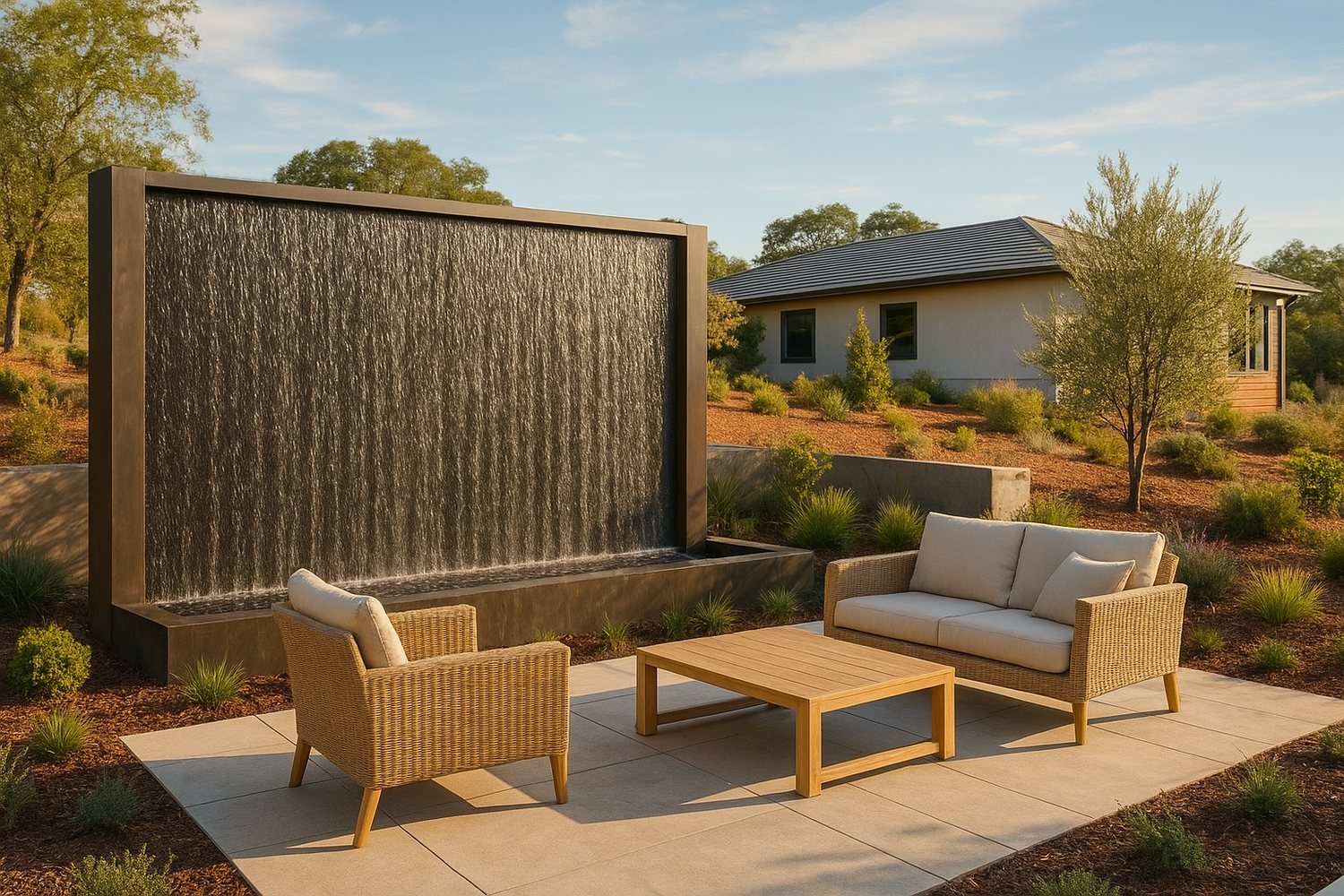
How to Control Splash and Sound in Modern Water Walls
Modern water walls add elegance to outdoor spaces, but managing splash and sound is crucial. Learn practical strategies homeowners can use to keep water features relaxing.
Modern water walls have become a popular water feature in Rocklin, Roseville, Granite Bay, and across the region. They provide a striking visual and tranquil ambiance. However, controlling splash and managing sound levels are essential for practical outdoor enjoyment. Here’s what to know before including one in your landscape.
Why Splash and Sound Control Matter
One of the biggest draws of modern water walls is their soothing presence. But without proper design, water walls can splash beyond their bounds, causing maintenance headaches and safety concerns—especially on patios and near walkways common in the Sacramento and Placer County area. The right planning helps prevent slip hazards or unwanted water on your paving and furniture.
Sound plays a big part in setting the mood of your outdoor living space. While the gentle trickle of a water wall can be calming, an overly loud or harsh cascade can become distracting, competing with conversation or disrupting peace. Placement, water flow, and materials all influence the sound dynamics.
Managing splash and sound isn’t about making a feature too quiet or sterile but about blending utility and beauty. Approaching the design with awareness of your space, microclimate, and usage patterns lets you enjoy your water wall at its best in any Placer or El Dorado County backyard.
- Splash can create maintenance and safety issues
- Sound should enhance—not overpower—your outdoor experience
- Smart design choices maximize comfort and enjoyment
For more styles and inspiration, explore ourModern water wallspage.
Choosing Your Water Wall Type
There’s a wide variety of water wall types, from smooth glass panels to textured stone slabs. Each produces a different visual effect and water behavior—some are prone to more splash or a sharper sound profile. In our local climate, consider how your chosen material will perform with summer heat and potential leaf debris.
For homeowners in Folsom or Auburn with frequent gatherings, opt for low-splash designs. Sheet falls, where water slides along a vertical surface, generally create less mist and gentler acoustics than water that falls freely. Materials like honed concrete, tile, or carefully spaced stone can support controlled, laminar flows.
Beyond appearance, think about your space’s size and function. In smaller patios, subtler walls reduce echo and maintenance. For larger yards with more distance from seating areas, you may have flexibility to get creative with bolder, more dynamic water effects.
- Sheet falls offer low-splash operation
- Textured walls change both look and sound
- Natural stone can handle local temperature swings
Managing Splash: Materials and Flow
Splash is mostly a product of water flow and the surface it interacts with. For homes in our breezier foothill areas, preventing wind-driven splash is especially important. Choosing a vertical surface with a smooth or very finely textured finish helps the water cling and flow evenly, significantly reducing errant droplets.
The second critical factor is flow rate. Too strong, and the water can rebound and splash out; too weak, and the feature may not achieve its intended look. Properly sizing pumps and adjusting valves allows fine-tuning, and many modern systems feature simple controls to balance aesthetics with real-world practicality.
A receiving basin that’s wider and slightly recessed will also help catch any droplets before they can escape, minimizing both wet spots and long-term clean-up. Every installation should be tailored to site-specific grades and patio slopes common in Placer and Sacramento County neighborhoods.
- Smooth surfaces reduce splash risk
- Adjustable pumps allow real-time fine-tuning
- Recessed basins keep water contained
| Material | Splash Potential | Sound Profile | Climate Suitability |
|---|---|---|---|
| Honed Concrete | Low | Soft, mellow | Excellent |
| Natural Stone | Moderate | Subtle, textured | Very good |
| Glass | Low | Sharper, clear | Fair—protect from etching |
| Metal | Moderate | Crisp, bright | Very good |
| Tile | Low | Even, consistent | Excellent |
Tuning Sound for Outdoor Comfort
A water wall’s sound isn’t just about volume—it’s about tone. Hard, flat drops landing at height can make a sharp noise, while softly sliding flows create a gentle background. Material selection for both the wall and catch basin determines how sound resonates—dense, thicker walls absorb some sound while metals and glass may sharpen it.
Pump speed and the height from which water falls are key to tuning loudness. A controlled, even flow from a moderate height is quieter and produces a more consistent, mellow note. For close-quarters patios, this is especially helpful if you want to avoid echoes or resonance against your home.
Think also about the orientation relative to prevailing wind and your home’s walls. Strategic placement can direct sound away from indoor areas or quiet corners. Working with experienced outdoor builders familiar with regional factors ensures you get a water wall that enhances, not disrupts, your space.
- Surface and water basin materials shape sound character
- Flow rate and drop height adjust sound intensity
- Placement can influence how sound travels outdoors
Customizing for Our Northern California Climate
Every region brings climate quirks—ours has bright summers, cool evenings, and seasonal winds. These affect both acoustic and splash performance. Water walls in Rocklin, Roseville, and Granite Bay need to withstand periodic dust, leaves, and shifting sun angles. Select materials and finishes that resist staining and algae growth.
UV-stable materials like honed stone, architecturally poured concrete, and durable tile work well here. Avoid designs that rely on delicate or easily etched surfaces, which can be worn by our region’s intense summer sun or periodic freeze nights. Local expertise can steer you toward features that age gracefully and require less care.
Hardscapes that integrate seamlessly with your existing landscaping, retaining walls, and patios further minimize risks and maximize enjoyment. Discuss how your water wall will interact with drainage and nearby beds or lighting for a feature that remains a pleasure, not a chore.
- Pick UV-resistant materials for longevity
- Simple, sealed designs are easier to maintain in our climate
- Integrate with existing patio drainage and lighting
To compare more backyard water features, visit ourWater Featuresoverview.
Pumps, Plumbing, and Control Systems
The mechanics behind a modern water wall are as important as its looks. Quality pumps sized for your feature’s height and width will keep the system running with minimal maintenance. Variable-speed pumps offer homeowners flexibility for both display and serene evenings with low sound.
Plumbing should be robust and accessible—especially if your water wall is integrated with other outdoor features like pools or irrigation. Insist on professional-grade fittings and waterproofing to avoid leaks or clogs, which can otherwise impact splash patterns and reliability over time.
Today’s control systems often feature remote or app-based speed and lighting options. Positioning access panels and wiring for easy maintenance means future tweaks or fixes are straightforward. This ensures your enjoyment lasts through changing seasons and outdoor routines common across Gold Country homes.
- Variable-speed pumps allow tuning of water flow
- Professional plumbing ensures lasting performance
- Modern controllers offer easy operation and maintenance
Maintenance for Longevity and Beauty
Routine cleaning and water checks are central to any water feature. Dust, pollen, and hard water buildup are common in our region and can impact both appearance and operation. Gentle scrubbing and the right cleaners (specific to your material) will keep the wall looking sharp.
Plan to inspect pumps, filters, and basins at regular intervals—at least every few months or after major wind events. Remove leaves promptly to prevent blockage and algae. Some homeowners choose automated top-off systems to maintain water levels without daily oversight.
Maintenance is easier and less frequent with the right materials, finishes, and site planning. When designing your wall, talk to your contractor about ways to position it for easier access and to reduce the impact of our regional challenges, ensuring ongoing enjoyment with less hassle.
- Clean gently to protect finishes
- Inspect pumps and remove debris regularly
- Consider automated top-off for busy lifestyles
Working with Local Outdoor Experts
A great-looking, functional water wall comes from deep experience with our local soils, slopes, and weather. Selecting a builder who understands both custom hardscapes and the nuances of local materials is key. Every decision—from wall height to basin size—shapes your experience for years ahead.
Licensed, insured, and bonded contractors add peace of mind and protect your investment. Look for experience in all phases of outdoor living design: concrete, stone, landscaping, and lighting. That’s especially important for integrating water features into complex spaces with patios, pools, or elaborate garden plans.
Discuss your vision and ask specific questions about splash, sound, and maintenance expectations. Local professionals will help you create a water wall that truly suits your Rocklin, Roseville, Granite Bay, or neighboring home—with style and performance tailored for the region.
- Choose contractors with broad outdoor expertise
- Insist on licensing and insurance for peace of mind
- Request detailed advice on design, sound, and upkeep
Ready to talk specifics? Request your consultation with California Hardscapeshere.
Planning a water features project?
Call or text 916-741-0633, or email sales@californiahardscapes.com with your address, a short description and a few photos, and we will arrange a consultation.