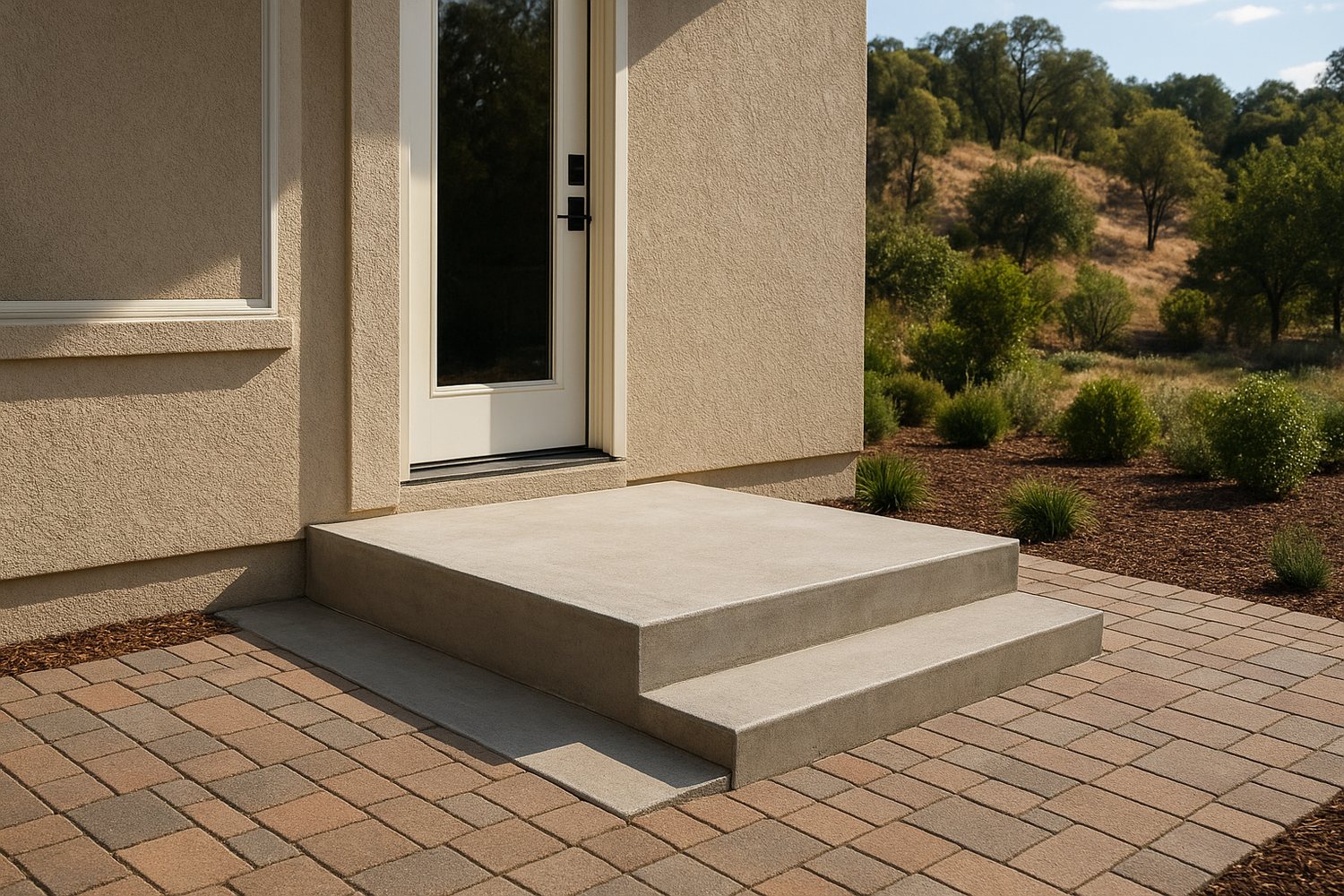
Concrete Walkway Design Ideas to Elevate Your Curb Appeal
Discover ways to use concrete steps, walkways, and landings to make a memorable first impression and add lasting curb appeal to your home.
The entrance to your home is your first chance to impress guests and enhance your property’s value. Smartly designed concrete walkways and landings can deliver both durability and visual charm.
Why the Right Walkway Design Matters
Your walkway isn’t just a path—it sets the tone for your entire landscape. A thoughtful design can create a true sense of arrival and seamlessly guide guests to your front door. Well-placed curves, landings, and steps don’t just improve how you navigate your yard—they help your home stand out.
Curb appeal is more than first impressions; it’s a reflection of your home’s character. In California’s local neighborhoods, matching your concrete with your home’s architecture and landscape can make your space look intentional and inviting. Details matter, especially in visible locations.
Investing in quality design means considering safety, drainage, and comfort. Materials and dimensions should respond to our region’s real-world climate and your household’s lifestyle. A well-planned walkway adds both beauty and everyday functionality.
For insight into practical layouts and finishes, visit ourConcrete steps, walkways and landingspage.
Product Choices: Concrete’s Appeal in Our Region
Concrete stands out in Rocklin and surrounding communities for its versatility. Unlike older broom-finished walkways, modern concrete offers a wide range of finishes—think stamped textures, integral colors, and exposed aggregate. Each can be selected to coordinate with your home’s style and the local landscape.
Our warm days and cool winters mean your walkway surface needs to resist cracking and stay comfortable underfoot. Concrete delivers on both, and smart finishing choices can prevent slip hazards when wet. Options like seeded aggregate also handle the sun’s intensity and add natural variation.
Durability counts: regional soils and regular use test your walkway daily. Properly installed concrete generally holds up better to shifting ground and traffic than many alternatives. Choosing finishes suitable for local conditions helps your project age gracefully.
- Stamped concrete mimics stone or brick
- Integral color offers fade-resistant richness
- Exposed aggregate adds grip and texture
Design Elements to Consider for Maximum Impact
Like a well-laid roadmap, your walkway’s shape steers both guests and the eye. Graceful curves soften hard lines and draw attention toward your entrance, while straight walkways can highlight symmetry. Widening a path near the driveway or entry adds a welcoming feel.
Steps and landings must balance functionality and style. In areas with a slope, consider breaking up elevation with broad, shallow steps or a landing that doubles as a porch extension. These elements blend accessibility with comfort and visual rhythm.
Using borders or banding—contrasting colors or surface finishes along the walkway edge—adds depth. Pairing refined details with sturdy construction sets your home apart in a neighborhood of traditional flatwork.
- Sweep curves for gentle visual flow
- Landings for gathering or plant displays
- Accent borders for subtle contrast
| Style | Look | Slip Resistance | Best For | Maintenance |
|---|---|---|---|---|
| Broom Finish | Classic, understated | Good | Traditional homes | Low |
| Exposed Aggregate | Natural texture, pebbled | Excellent | High-traffic, sun exposure | Medium |
| Stamped Concrete | Mimics stone or pavers | Good when sealed | Custom styles | Medium |
| Float Finish | Smooth, uniform | Fair | Clean, modern look | Low |
Comparing Concrete Walkway Styles
When selecting a walkway style, choices extend beyond the ordinary. Each finish and layout serves both function and fashion, with strengths that respond to local conditions and personal taste.
Stamped concrete shines for giving the look of natural stone at a lower cost. Exposed aggregate brings texture and keeps shoes steady in wet weather. Traditional broomed finishes remain clean and understated, a fit for classic homes.
Before you decide, evaluate surrounding landscape, existing hardscapes, and what you expect from everyday use. The table below compares practical aspects of several common options.
Integrating Steps, Walkways, and Landings Seamlessly
A walkway never exists in isolation—it should flow into your entry steps and any porch or landing. Thoughtful layout ensures that all outdoor elements function as a continuous experience rather than a series of mismatched pieces.
Matching materials, colors, and finishes from the base of your driveway to your front landing creates a polished look. Broad stair treads and extended landings can even double as informal seating spots, especially for families and neighbors.
Details like handrails, subtle lighting, or planting beds accentuate these transitions. They’re especially useful in our area, where elevation changes from street to door are common and safety must never be an afterthought.
- Consistent finish ties together steps and walkways
- Landings at doors for smooth entry
- Railings and landscape lighting boost safety
To explore more options for your property, see our full overview ofConcretedesigns and applications.
Practical Tips for Lasting Results
Start by mapping out traffic flow and high-use areas. In neighborhoods across Placer and Sacramento counties, focus on how kids, pets, and guests approach your home. Consider future landscaping changes—leave space for plantings or decorative stones.
Proper subgrade preparation is crucial given our mix of clay and rocky soils. Reinforcement (like steel or fiber mesh) reduces cracking, especially in areas prone to settling. Always install adequate joints and drainage to prolong your walkway’s life.
Maintenance is simple: occasional cleaning plus sealing every few years keeps your concrete resistant to stains and sun damage. Avoid deicers with harsh salts in winter—they can damage concrete and harm nearby plants.
- Plan paths for real daily use
- Reinforce to minimize cracks
- Seal to protect from stains and weather
Designing for Our Local Microclimates
In and around Rocklin, Roseville, and Folsom, sun exposure can be intense. Lighter concrete colors stay cooler underfoot—a smart choice near entryways and patios where people gather. Consider the shift from hot summers to cooler, damp winters when planning surfaces and drainage.
Shaded areas may benefit from textured finishes like exposed aggregate or light broom to maintain good grip year-round. Trees may drop leaves or fruit, so easy cleanup can be a factor.
Consulting a builder familiar with local conditions ensures that your walkway withstands the area’s specific climate swings while standing out for all the right reasons.
Making the Right Call for Your Home
In the end, your walkway should reflect both your taste and how you live. Combining safety, comfort, and curb appeal isn’t about cutting corners—it’s about matching quality design to your needs and local realities.
Partnering with an experienced concrete installer who understands this region’s materials, soils, and weather patterns means fewer headaches and better long-term results. The right choices at the start pay off in beauty and comfort every time you come home.
If you’re ready to plan a new entry, thinking about more than looks—think about making your entrance work for you, year-round, in our unique Northern California landscape.
If you’d like personal guidance for your home,request a consultationwith our team.
Planning a concrete project?
Call or text 916-741-0633, or email sales@californiahardscapes.com with your address, a short description and a few photos, and we will arrange a consultation.