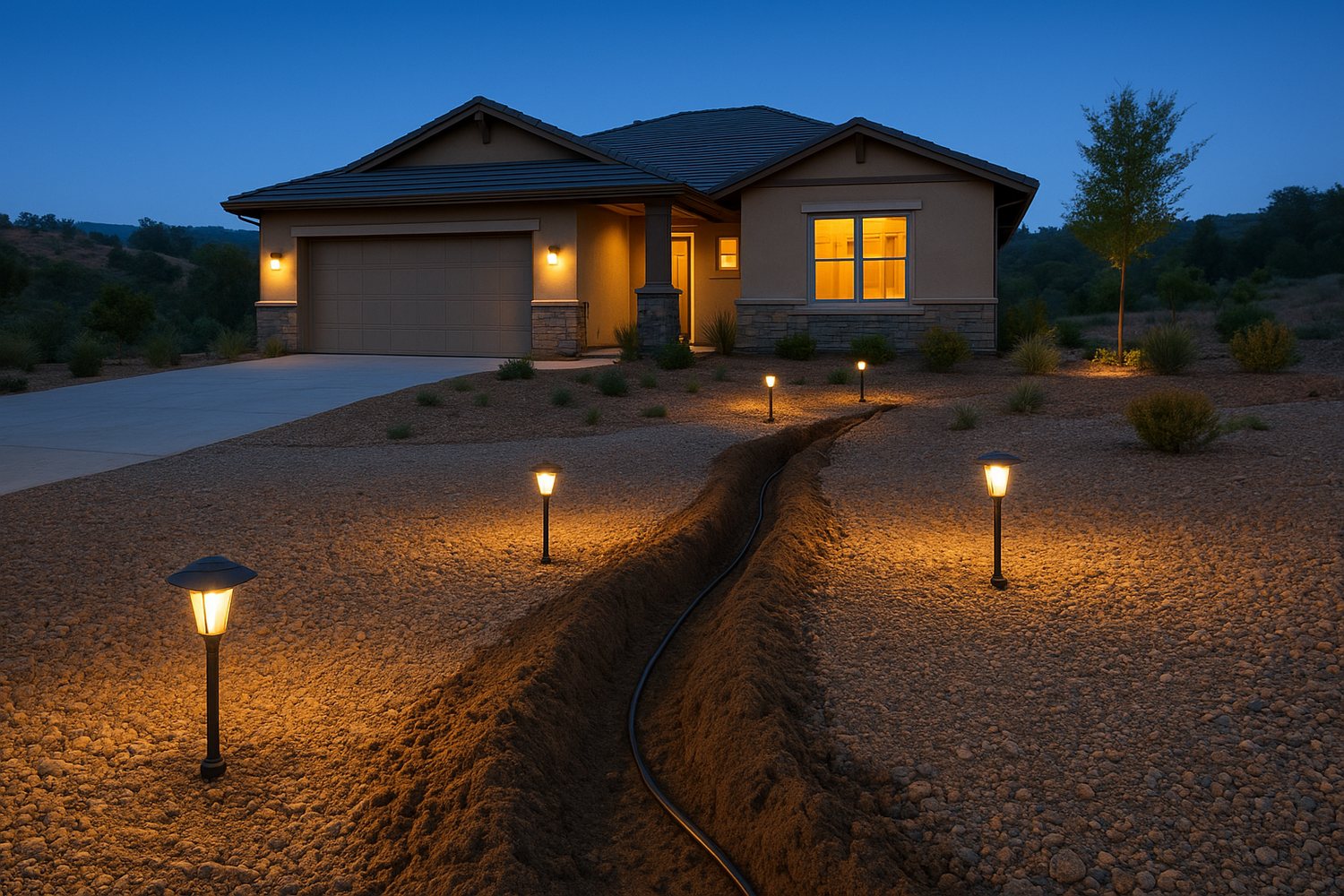
Understanding Low-Voltage LED Lighting Systems for Outdoor Spaces
Learn the basics of low-voltage LED outdoor lighting: why transformer choice, wiring layout, and voltage drop matter in Northern California yards.
Outdoor lighting turns a beautiful landscape into a welcoming retreat at night. Understanding how low-voltage LED systems work ensures lasting, reliable results.
Why Low-Voltage LED Lighting Makes Sense
Low-voltage LED lighting is popular for outdoor spaces in Rocklin, Roseville, Folsom, and nearby areas. It delivers practical, energy-efficient illumination for paths, patios, retaining walls, and landscape features. These systems are safer and more adaptable than traditional high-voltage options, making them ideal for California homeowners.
LED technology uses a fraction of the electricity needed by old incandescent or halogen bulbs. That means lower utility costs and less wear and tear on wiring and fixtures over the years. Since LEDs also last far longer, you’ll spend less time and money on maintenance.
The ‘low-voltage’ part (typically 12 volts) brings added safety for households with kids and pets. It’s also more forgiving during installation. With the right system design and professional planning, your outdoor lighting can be both beautiful and built to last.
- Energy-efficient and long-lasting
- Safe for families and outdoor pets
- Adaptable to changing landscape needs
For more details about design, installation, and real-world outdoor lighting, visit ourLow-voltage LED lighting systemspage.
The Role of the Transformer
Every low-voltage LED lighting system starts at the transformer. This device steps down standard household voltage (120V) to the safer, lower voltage needed for outdoor lights. Selecting a transformer with the right capacity ensures your lights operate reliably, even if you add more fixtures in the future.
Transformers come in several sizes, usually rated by their maximum wattage. Calculate the total wattage of all your LED fixtures to choose a transformer with enough headroom. Always allow for future expansion—overloading the transformer leads to dim or flickering lights.
Placement also matters. Mount the transformer near a GFCI outlet, sheltered from water and direct weather. Ask your contractor to use a weatherproof enclosure when installing outdoors for long-term reliability.
- Choose a transformer with extra wattage capacity
- Install near protected outdoor outlets
- Use weatherproof enclosures for safety
Wiring Layouts: Planning for Performance
The wiring plan is just as important as the choice of lights. The type and length of wiring affect how much voltage reaches each fixture. For California Hardscapes projects, direct burial wire rated for outdoor use is the standard to handle the region’s varied soil and weather.
There are a few common wiring layouts. The most straightforward is the straight run, where all fixtures branch from a single line. Looped or hub systems can also be used to balance voltage more effectively. Each layout has pros and cons when it comes to installation complexity and performance.
For larger or more spread-out landscapes in Auburn, Granite Bay, or rural parts of Placer County, a hub system often ensures even brightness and easier troubleshooting. Proper planning up front makes all the difference in keeping lights bright from the first fixture to the last.
- Use direct-burial wire rated for outdoor use
- Choose layout based on property size and design
- Plan for future fixture additions
| Wiring Layout | Best For | Complexity | Voltage Drop Risk |
|---|---|---|---|
| Straight Run | Small/simple yards | Low | High on long runs |
| Hub System | Large/multi-zone yards | Medium | Low |
| Loop System | Circular layouts | Medium | Lowest |
| Daisy Chain | Short fixture chains | Low | Medium |
Understanding Voltage Drop—and Why It Matters
Voltage drop refers to the gradual reduction in voltage as electricity travels further along the wire. With low-voltage LED lighting, this can cause dimmer lights at the end of long runs or uneven brightness across fixtures if not managed properly.
Several factors contribute to voltage drop: wire length, wire gauge (thickness), the total wattage being used, and the arrangement of fixtures. If left unchecked, this can undermine the look and function of your outdoor lighting—especially in larger yards common around Folsom and Granite Bay.
Using thicker wire, limiting long runs, or splitting the system into multiple circuits are proven ways to minimize voltage drop. Professional installation helps ensure every fixture looks as intended, even years down the road.
- Longer runs increase voltage drop risk
- Thicker (lower gauge) wire reduces loss
- Careful planning equals better lighting results
Key Materials: Wire and Connectors
Selecting wire for your low-voltage system involves more than just buying cable by the foot. Solid copper wire is the standard for durability and performance outdoors. The most common sizes are 12-gauge or 14-gauge—thicker wire can handle more current and longer distances with less voltage drop.
Good connectors matter too. Waterproof wire connectors ensure reliable performance through seasons of rain, irrigation, and changing temperatures. Even a single poor splice can lead to failures or headaches later on.
Ask your contractor about direct-burial rated wire and top-grade connectors for every transition. These details make the difference between “just works” and future troubleshooting.
- 12-gauge wire: for longer runs, more lights
- 14-gauge wire: for short runs and fewer fixtures
- Use waterproof connectors rated for direct-burial use
To explore all the ways you can illuminate and elevate your yard, check out ourOutdoor Lightingoverview.
Adapting Systems for Local Conditions
Placer, Sacramento, and El Dorado Counties see a wide range of temperatures, moisture, and soil types. Outdoor lighting systems must be designed for tough California summers and occasional heavy rain. Avoid shortcuts—materials must stand up to climate challenges over years of exposure.
For clay-heavy soils in Rocklin and Roseville, direct burial wiring should be placed deep enough to avoid damage during landscape work or from gophers. In more wooded areas of Auburn or Granite Bay, extra moisture protection helps prevent corrosion.
Proper design for your specific site also takes into account regional shade from mature trees or power needs for pool and patio lighting. A local professional helps tailor solutions to conditions found here, not just generic advice from elsewhere.
- Check wire depth before digging or planting
- Consider moisture barriers in wet soils
- Adapt lighting for shade coverage
When to Upgrade or Expand Your System
Expanding your outdoor LED lighting can be as simple as adding a few fixtures or as complex as reworking your entire system. If you notice dim lights or uneven coverage, it may be time to revisit transformer size, wiring layout, or wire gauge to handle the added load.
Landscape changes—new patios, trees, or driveways—often open opportunities for better lighting. Work with a team familiar with upgrading and integrating new circuits or fixtures seamlessly, using materials that match what’s installed.
If you’re unsure how much capacity your current system allows, have it inspected before making changes. A little planning saves frustration and protects your investment as your yard evolves.
- Upgrade transformer if adding many fixtures
- Rebalance circuits for even lighting after expansion
- Consult before DIY additions to avoid issues
Consulting a Pro for Best Results
While DIY lighting kits exist, the complexity of transformers, wiring, and voltage drop often benefit from professional oversight. Local experts know how to address specific challenges faced in this region—from gopher damage to long, sloped driveways.
A well-designed system is efficient, reliable, and hassle-free for years. California Hardscapes uses licensed, bonded, and insured contractors for every project to ensure lasting quality and safety.
For questions or guidance about your lighting needs, don’t hesitate to reach out. The right partner helps turn your vision into a seamless, practical outdoor lighting solution tailored to your property.
- Contact California Hardscapes for expert advice
- Custom plans for your home and landscape
- Professionally installed for maximum reliability
Ready to discuss your options or need an expert plan?Request a consultationwith our team today.
Planning an outdoor lighting project?
Call or text 916-741-0633, or email sales@californiahardscapes.com with your address, a short description and a few photos, and we will arrange a consultation.