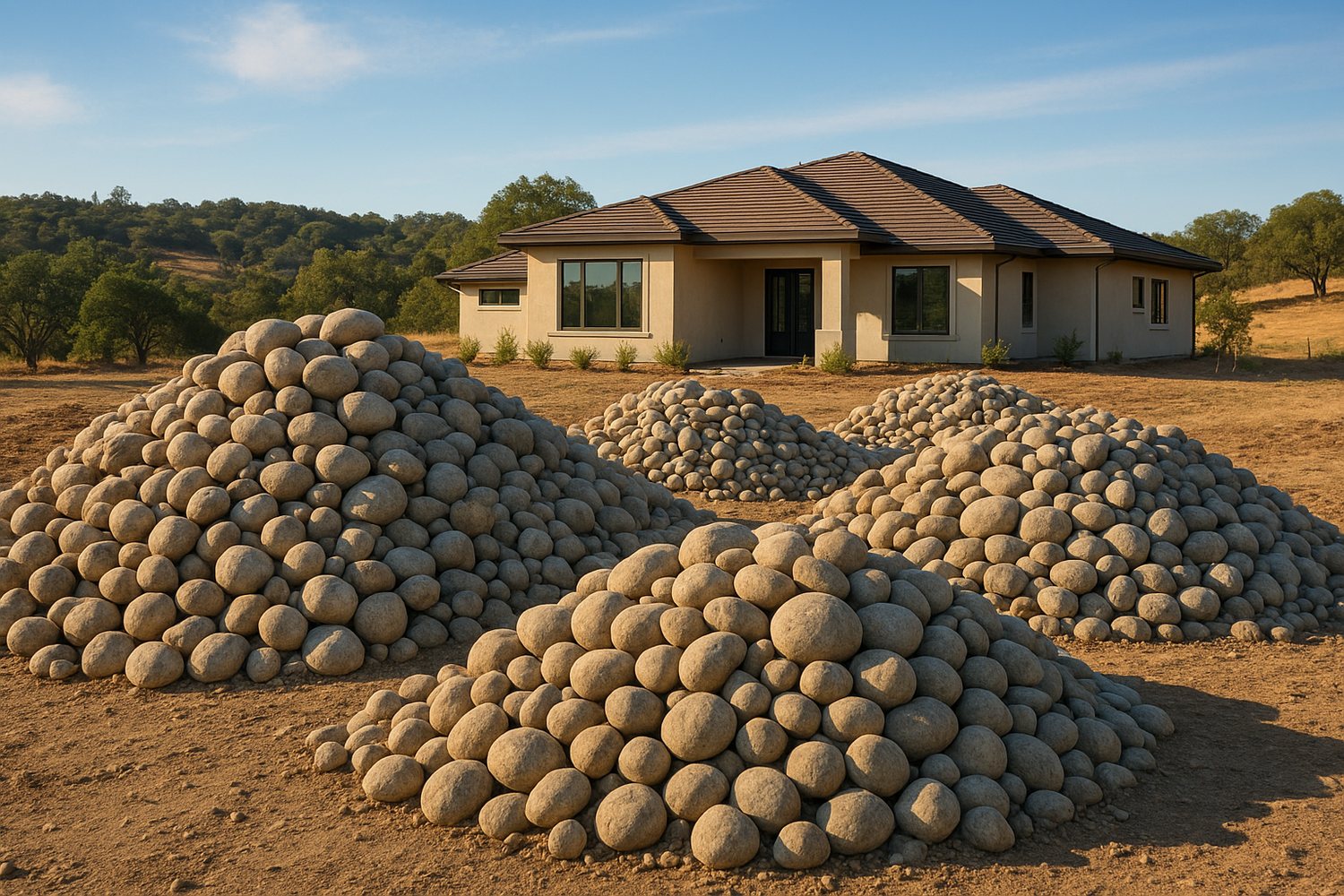
Mixing River Rock Sizes for Natural Outdoor Design
See how blending different river rock and cobble sizes can give your Rocklin, Roseville, Granite Bay, or Folsom landscape a natural, lasting look.
When it comes to creating outdoor spaces that feel both elegant and organic, blending river rock sizes is a powerful design move. Choosing the right mix can unify patios, paths, and garden beds while keeping things visually interesting.
What Sets River Rock and Cobble Apart
River rock and cobble are prized for their rounded, smooth shapes and nature-inspired color palettes. Unlike angular gravel or crushed rock, these materials are formed by years of tumbling in rivers, resulting in surfaces and patterns you can’t easily replicate with manufactured stone.
In our foothill communities—including Rocklin, Roseville, Granite Bay, and nearby towns—river rocks and cobble are favored for softening hardscape lines and echoing the region’s natural creeks and streams. Their look is timeless and fits both classic and modern designs.
The range of available sizes and colors makes river rock incredibly versatile. Local supply often includes choices from small pea gravel (3/8 inch) to large cobbles (up to 8 inches or more). Picking the right blend means balancing purpose and aesthetics.
- Naturally rounded shapes
- Colors from tan to charcoal
- Ideal for all-season interest
Find more inspiration and tips on our mainRiver rock and cobblematerials page.
Why Mixing Sizes Feels More Natural
Nature rarely sorts rocks by size—which is exactly why rigid, single-size installations often look out of place. Blending various river rock sizes, from small to large, is the surest way to mimic authentic streambeds and slopes.
Mixing sizes helps avoid monotony and creates organic movement across garden beds, dry stream beds, and accent zones. Contrasting big cobbles with smaller river rocks makes each piece stand out, especially around plantings and pathways.
Here, where oak trees, granite outcrops, and piney slopes are part of the landscape, a thoughtful river rock blend pays homage to the local terrain. Whether you’re defining borders or finishing off a patio, combining sizes delivers a more relaxed, regional look.
- Breaks up straight lines
- Adds visual depth
- Echoes Northern California creek beds
Choosing River Rock Sizes: A Local Guide
Start with a clear purpose: for broad groundcover or large dry creek beds, include a range—small river pebbles to fist-sized cobble. For garden borders or pathways, medium (1–2 inch) river rock blends stability and softness.
Think about scale; larger rocks can overwhelm small beds, while very fine pebbles might get lost in wide landscapes. Use the largest cobbles as features, then infill with intermediate sizes and scatter small rocks for fill.
Soil, topography, and nearby plantings should guide your size selection. In Placer and El Dorado County soils, where drainage is critical, smaller river rock mixes nicely with local decomposed granite, while cobbles help anchor slopes and control runoff.
- Garden edges: 1–2 inch stones
- Creek beds: 2–6 inch cobble plus mixed sizes
- Mulch replacement: pea gravel up to 1 inch
| Rock Size | Typical Use | Pros | Cons | Best Local Application |
|---|---|---|---|---|
| Pea Gravel (3/8–1/2 in) | Groundcover, mulch replacement | Drains well, easy to spread | May scatter out of beds | Flower beds, patios |
| Small River Rock (1–2 in) | Pathways, garden borders | Stable underfoot, blends well | Can shift over time | Accent strips, edges |
| Medium Cobble (2–4 in) | Dry creek beds, focal points | Visually impactful, resists washout | Heavier, harder to move | Swales, rain gardens |
| Large Cobble (4–8+ in) | Erosion control, water features | Anchors slopes, mimics nature | Requires placement by hand | Dry creeks, slope bases |
Blending Techniques for Professional Results
To achieve that effortless, layered look, start by rough-placing your biggest cobbles in scattered groupings. This breaks up space and prevents a lined-up effect. Next, fill gaps with medium-sized stones, spinning and rotating each to expose unique patterns.
Scatter small pebbles or river gravel to fill voids and soften edges—avoid creating “rings” around plants by varying how much you use in each spot. Mixing by hand, rather than dumping by the bag, lets you better control distribution and shape.
If you’re working on slopes or areas with water flow, partially bury some of the largest stones. This anchors them visually and physically, imitating the way rocks settle naturally in area creeks and washes.
- Group cobbles loosely, not in rows
- Layer medium stones around large
- Backfill with small rock for cohesion
Local Climate and Seasonal Performance
Our hot summers and wet winters can put landscaping materials to the test. River rock handles temperature shifts, standing water, and dry spells as well as any material, provided sizing is chosen and installed properly.
Larger cobbles won’t wash away in heavy storms and act as natural check dams on slopes and dry creeks. Finer river rock provides fast drainage, reducing mud and pooling around plantings even with heavy rainfall.
For lowest maintenance, use a high-quality landscape fabric under river rock in areas prone to weed growth. The blend of sizes helps conceal the fabric while allowing water penetration—important for the clay and decomposed granite soils common in this region.
- Prevents mud buildup
- Reduces soil erosion
- Handles variable rainfall
If you’re exploring other options, see our completeMaterials overviewfor stone, gravel, and more.
Design Ideas Specific to Placer and Surrounding Counties
Consider using larger river cobble to echo drainage swales or build dry creek beds that blend into the existing terrain. Smaller mixes can highlight boulder features, soften walkways, or accent seating areas around pools and patios.
On larger properties, mix sizes across zones: bigger rocks for more prominent creek beds and focal points; smaller pebbles or gravel in pedestrian areas. This approach breaks up large spaces while visually tying the design together.
In shady areas with oak or pine litter, river rock blends resist discoloration and pack less tightly, making seasonal cleanup easier. Select color palettes that harmonize with local stone, blending browns, grays, and muted golds for a cohesive regional look.
- Dry creeks with mixed cobble
- Garden beds with blended pebbles
- Walkway borders using multi-size stones
Installation Pitfalls to Avoid
One common mistake is using only a single rock size, which can look artificial and draw attention to itself rather than the landscape. Always intermix at least two or three sizes for a seamless, natural result.
Dumping full bags in place instead of layering and blending by hand creates uneven coverage and abrupt color shifts. Instead, pour out small sections and adjust placement as you go for a more authentic distribution.
Skip plastic weed barriers, which can rise to the surface over time. Use a high-quality landscape fabric instead, and be sure the base soil is graded and compacted, especially on slopes, to prevent settling and washout.
- Avoid single-size installations
- Hand-blend for best results
- Prepare soil and grade carefully
Get Expert Advice for Lasting Results
Even small choices in river rock size and placement can have a lasting impact on outdoor comfort and curb appeal. Working with professionals familiar with local soils, plants, and climate can help ensure your rockscape ages gracefully.
The right materials and techniques will outlast trends and deliver a landscape that reflects both you and the local environment. Whether you want a maintenance-friendly patio or a standout garden, expert planning matters.
California Hardscapes, based in Rocklin and managed by Marty with decades of experience in outdoor construction and materials, connects homeowners in our area to the knowledge and craftsmanship needed for projects of any scale.
- Work with experienced pros
- Plan by local conditions
- Balance aesthetics and practicality
Ready to plan your next landscape?Request a consultationand get real, regional advice.
Planning a materials project?
Call or text 916-741-0633, or email sales@californiahardscapes.com with your address, a short description and a few photos, and we will arrange a consultation.