Choosing the Best Outdoor Structures for Shade, Heat, and Rain
Explore which patio covers, pergolas, and outdoor structures best handle Northern California’s sun and rain. Get practical advice for your home’s outdoor space.
Staying comfortable outdoors in our region means planning for sun, heat, and unpredictable rain. Here’s what local homeowners need to know for better outdoor living.
Understanding Our Regional Climate Challenges
Homeowners in Rocklin, Roseville, Granite Bay, Folsom, Auburn, and beyond know the extremes: hot summers with long spells of sun, punctuated by strong storms in the rainy months. That mix creates unique challenges when designing outdoor spaces that get year-round use.
Broadly, there are three main weather problems to solve: providing shade during our intense summer afternoons, managing high heat that can make patios uncomfortable, and protecting outdoor areas from rain so you can enjoy them longer each year.
Choosing outdoor structures well suited to these conditions is the key to comfort, longevity, and easy maintenance. This starts with knowing your site’s specific exposure and how various features can help or hinder your plans.
- Sun exposure varies by orientation and landscaping.
- Rain can pool on flat surfaces without smart drainage.
- Heat retention differs for concrete, pavers, and wood.
For more insights and options, explore ourOutdoor Living page.
Shade Solutions: Pergolas, Patio Covers, and Beyond
Pergolas are popular for their blend of sun and filtered shade. With open-beam or lattice tops, they reduce sunlight but allow heat buildup unless you add climbing plants, retractable shades, or slats angled for real midday relief.
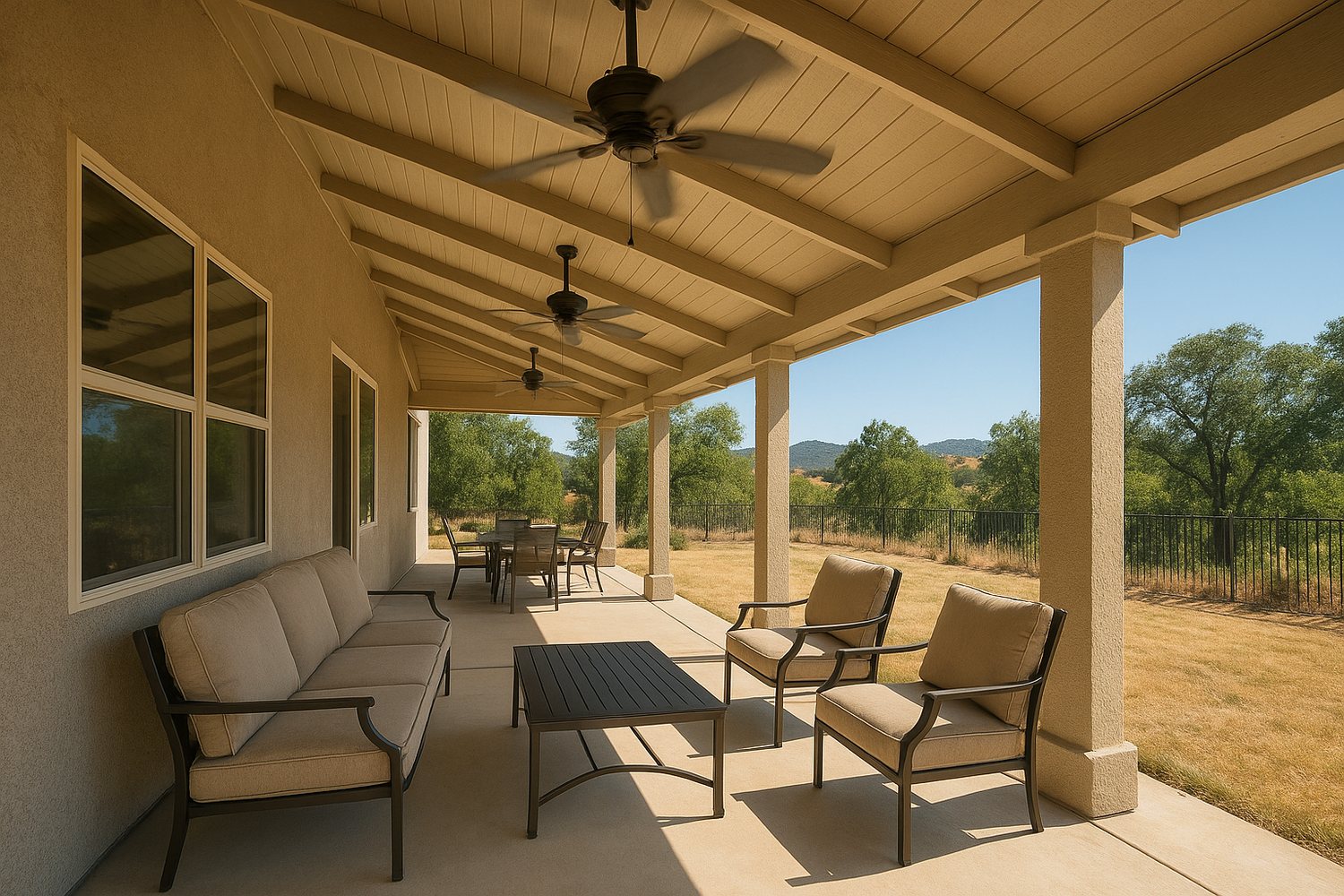
Solid patio covers, like insulated aluminum panels or wood-framed roofs, provide robust shade and cut the temperature underneath by several degrees. They block UV rays and help keep furniture and finishes in better shape over time.
Don’t forget natural options: strategic landscaping and planting can amplify shade—especially mature trees or fast-growing vines paired with structures. This not only softens harsh sunlight but can boost long-term cooling across your backyard.
- Lattice pergolas offer some relief, not total shade.
- Solid covers provide the coolest conditions.
- Vines and trees add seasonal shade and privacy.
Dealing with Heat: Keeping Outdoor Spaces Comfortable
Materials matter in the battle against heat. Light-colored surfaces, like decorative concrete, pavers, or stone, reflect more sunlight and stay cooler underfoot than darker options that absorb heat.
Adding ceiling fans or misters beneath patio structures can make a significant difference in comfort, especially in July and August. Even shade alone may not resolve high temperatures on still, windless days.
Consider the microclimate: south- or west-facing patios get hotter, while those shaded by neighboring homes or fences cool off quicker. Plan for thermal comfort by combining shade, airflow, and clever material choices—not just one solution.
- Reflective paving materials stay cooler in summer.
- Fans and misters cut ambient heat dramatically.
- Orient your seating for the best breeze and shade.
| Structure Type | Shade Level | Rain Protection | Heat Comfort | Maintenance Needed |
|---|---|---|---|---|
| Lattice Pergola | Partial | Minimal | Fair (with airflow) | Low to Moderate |
| Solid Patio Cover | Full | Maximum | Best (with fans) | Moderate |
| Retractable Awning | Adjustable | Good (short showers) | Varies | Higher (mechanical parts) |
| Tree Canopy | Seasonal | Minimal | Good (cooling) | Moderate (pruning) |
Rain Protection: Roofs, Awnings, and Drainage Plans
When it rains—especially during December and January—it pours. Solid patio covers or attached roof extensions provide real weather shelter, letting you grill, dine, or lounge without scrambling for cover.
Retractable awnings are flexible for seasonal cover but typically require more upkeep and might not withstand strong wind gusts. For full wet-weather protection, opt for permanent roofed structures and mind how water will drain away from your home.
Good drainage is non-negotiable: pool covers, patios, and outdoor kitchens all need proper slope and downspouts. Rely on experienced contractors who design with runoff, not just surface coverage, in mind to avoid puddles or structural issues.
- Solid roofs protect best from steady rain.
- Retractable awnings suit mild, short showers.
- Patio surface slope prevents standing water.
Comparing Structure Options for Our Area
Several types of outdoor structures can be adapted to local needs, but each has tradeoffs. The best choice for your home may combine elements: a pergola for style, a solid cover for real weather, or an attached patio roof that ties everything together.
Costs, maintenance, and long-term usability all factor into the decision. Look for durable finishes, strong framing, and materials that withstand the particular heat and moisture cycles we see in the foothills and valley alike.
Ultimately, matching your priorities—sun, heat, rain, aesthetics—to the right structure is much easier when you understand how each option performs here in Placer, Sacramento, and El Dorado communities.
- Multi-use spaces often blend structures.
- Decision factors: exposure, use style, budget.
- Consult for site-specific recommendations.
Curious which features fit your needs? See our overview ofall Outdoor Living options.
The Role of Materials in Outdoor Living Comfort
Concrete, pavers, natural stone, and composites all behave differently in sun, heat, and wet weather. Lighter finishes keep patios cooler, while sealed concrete shrugs off rain and allows for easy cleaning.
Wood brings warmth and character but needs more upkeep to weather our dry summers and wet winters. Aluminum and vinyl withstand more abuse from sun and rain, with less expansion or cracking over time.
Consider built-in drainage with your material choice, especially for patios adjacent to your house. This reduces problems with slick surfaces or water runoff that can harm both structures and landscaping.
- Sealed hardscape resists stains and weathering.
- Composite decking offers cool, low-maintenance surfaces.
- Material selection shapes upkeep and comfort.
Practical Tips for Planning Your Outdoor Space
Start with your intended use: do you want year-round dining, summer lounging, or a place that multitasks? Arrange seating, cooking, and relaxation zones so that each benefits from the right balance of shade, airflow, and cover.
Factor in lighting, too. Low-voltage outdoor lighting makes evening use safe and appealing while extending the daily value of your patio or garden area. Place fixtures to illuminate pathways, steps, and key features.
Finally, check drainage and transitions: a well-designed outdoor space won’t just look right, it’ll feel right in every season—no muddy puddles, no sizzling seats, and no sunburned guests. It pays to plan before you build.
- Define primary uses before choosing structures.
- Integrate lighting and drainage from the start.
- Think about multi-season comfort and style.
Expert Guidance Makes a Difference
It’s one thing to dream up your ideal space and another to navigate materials, exposure, and climate. Local professionals bring practical experience with how structures actually hold up in our weather.
A contractor who’s managed concrete, hardscapes, and outdoor construction for years knows the pitfalls—to avoid and the best techniques to make your investment last. Planning with an eye toward site-specific issues often prevents headaches (and extra costs) down the road.
When you’re ready to start your outdoor living upgrade, draw on knowledgeable input. Smart design accounts for our region’s heat, sun and rain, knows the materials, and crafts a space that fits your style—and the local climate.
- Consult seasoned pros for tailored advice.
- Leverage years of hands-on regional expertise.
- Professional planning pays off for comfort and durability.
If you want direct advice for your site, request a meeting through ourconsultation form.
Planning an outdoor living project?
Call or text 916-741-0633, or email sales@californiahardscapes.com with your address, a short description and a few photos, and we will arrange a consultation.