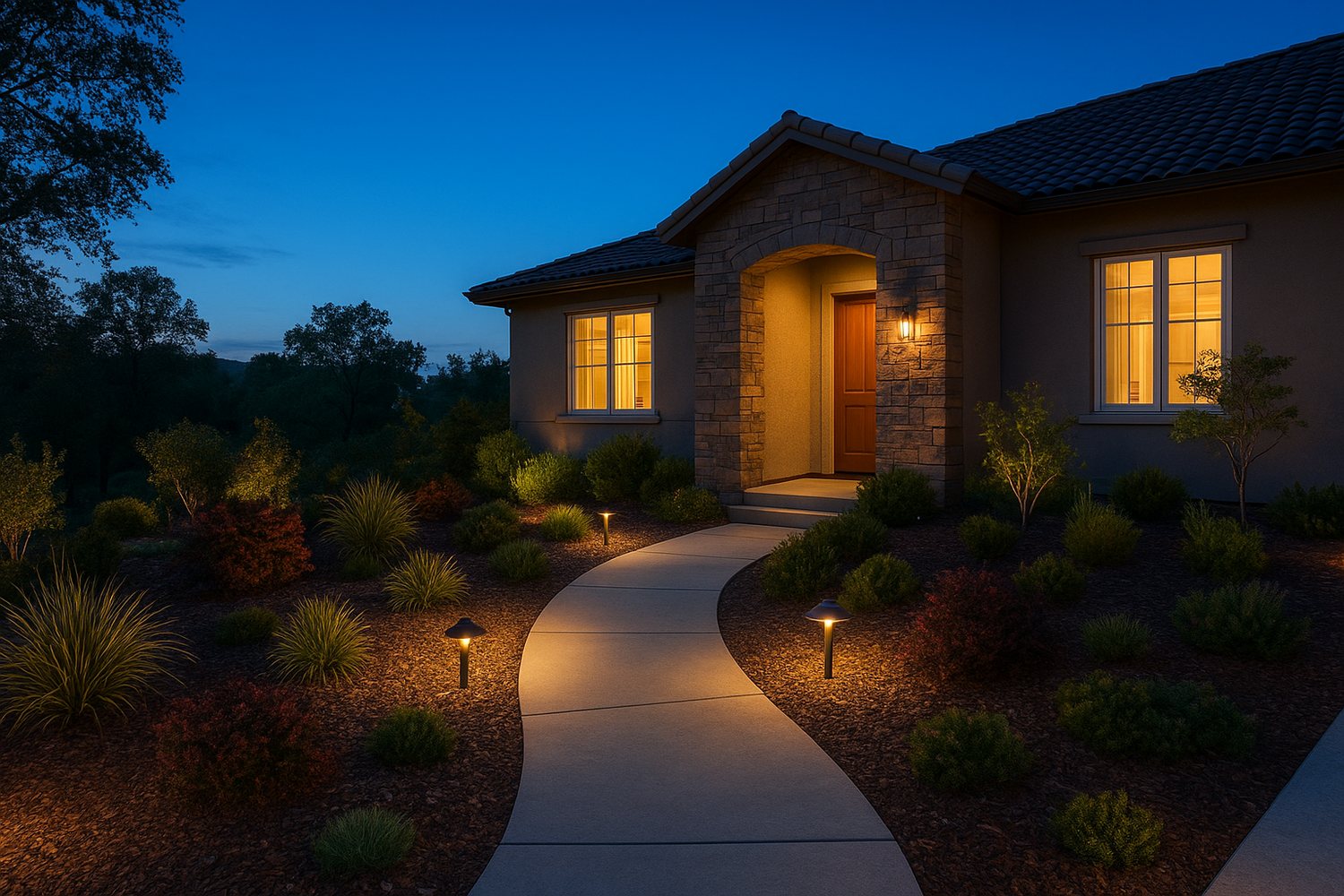
Choosing the Right Color Temperature for Your Path and Walkway Lights
Choosing the right color temperature for your path and walkway lights can define your home’s style and nighttime curb appeal. Get practical guidance for our region.
Color temperature can make a big difference in the look and feel of your walkways after dark. Here’s what to consider for homes in the greater Rocklin area.
What Is Color Temperature in Outdoor Lighting?
Color temperature describes the appearance of light, ranging from warm (think candlelight) to cool (like daylight). Measured in Kelvins (K), lower numbers mean warmer, yellowish-white light, while higher numbers produce a cooler, bluish-white tone. This choice dramatically impacts your landscape’s atmosphere at night.
Pathway and walkway lights are available in a variety of color temperatures. Most people recognize the difference between the warm glow of a porch light and the crisp white beam in a workspace. For outdoor use, your decision should consider both style and practical safety.
Understanding color temperature basics can help you select lighting that enhances your outdoor living spaces. Let’s break down the options most suitable for our local homes, highlighting specific pros and cons.
For more on path lighting, see ourPath and walkway lightingservice page.
Popular Color Temperatures for Path Lighting
Most residential path lighting falls into three general ranges: warm white (2700K–3000K), neutral white (3500K–4000K), and cool white (over 4000K). Each creates a very different effect on your landscape features and walkways.
Warm white lights (2700K–3000K) have a soft, cozy appearance that complements flagstone, concrete, and most landscape designs found throughout Placer, Sacramento, and El Dorado Counties. Neutral white is clean and modern, highlighting hardscape textures without feeling harsh.
Cooler temperatures above 4000K are rarely used for residential paths except where extra visibility is needed, such as on busy entranceways. In most Rocklin-area neighborhoods, a warmer color usually feels more welcoming in the evening.
- Warm white: 2700K–3000K
- Neutral white: 3500K–4000K
- Cool white: 4000K+
How Color Temperature Affects Ambience and Safety
The right color temperature does more than look good—it sets a mood and can improve nighttime safety. Warm lights encourage relaxation, while cooler whites provide crisp visibility for navigating steps or pathways after dark.
If your property is surrounded by mature trees and natural stone, soft white lights often help paths blend with the environment, emphasizing comfort. Brighter, cooler temperatures are preferred when security or safer footing takes priority—like near garages or down steep walkways.
Think about where and how your family uses outdoor spaces at night. In most homes near Rocklin, Folsom, and Granite Bay, a mix of warm and neutral whites offers both style and practical illumination.
- Warm = welcoming and subtle
- Cool = bright and focused
- Mix for ideal results
| Color Temp (Kelvin) | Tone | Best For | Ambience |
|---|---|---|---|
| 2700K | Warm white | Traditional gardens, patios | Cozy, welcoming |
| 3000K | Soft white | Modern landscapes, stone paths | Natural, versatile |
| 4000K | Neutral white | Contemporary hardscapes | Clean, crisp |
| 5000K+ | Cool white | Security areas | Bright, utilitarian |
Regional Considerations: What Works in Northern California
Landscapes in our region feature oaks, evergreens, earth-toned pavers and a range of concrete finishes. The lighting you choose should blend with these local materials and complement your home’s architecture.
Warm white lighting (2700K–3000K) tends to harmonize with the gold and brown tones of California landscapes, softening hard edges and promoting a natural look. Neutral whites can enhance the appearance of modern hardscapes, particularly concrete finishes popular here.
Library-bright, cool white lighting is better suited for commercial or high-security spaces—rarely is it the best first choice for residential paths in Placer or El Dorado County. Choose a color temperature that makes your home feel safe and inviting after sunset.
Placement and Spacing for Pathway Lights
Once you pick the right color temperature, think about where light fixtures should go. Good outdoor lighting is subtle: place your lights so they guide safely along walkways without glare or harsh shadows.
Generally, fixtures should be installed 5 to 8 feet apart, staggered rather than lined up, to deliver even coverage. With the area’s weather and soil conditions, it’s important to use durable, weatherproof lights and avoid over-lighting.
Combine gentle color temperatures with careful placement for pathways that improve safety and blend into your yard’s natural beauty. Consult with a local pro if you’re unsure about proper spacing or wiring options.
- Space fixtures 5–8 feet apart
- Avoid direct glare into eyes
- Use weatherproof, well-rated products
Explore all your options on ourOutdoor Lightingoverview.
Balancing Path Lighting with Rest of Your Yard
Path and walkway lighting should coordinate with other outdoor lights for a unified effect. Consistency in color temperature helps create a professional, polished look across your property.
Match the temperature of your path lights to accent and patio lighting—or consider a gentle transition, such as using warmer whites on walkways and neutral tones on architectural features or seating areas.
A cohesive lighting plan not only looks better, but also makes outdoor living more comfortable and functional after dark, particularly in patios and pool surrounds common in Granite Bay and Folsom.
- Unify temperatures for professional look
- Consider gentle transitions
- Think beyond just walkways
Installation: DIY or Professional?
Choosing color temperature is just the first step; installing outdoor wiring, controlling glare, and ensuring durability also matter. If you’re comfortable with basic landscaping, low-voltage lighting can be a straightforward weekend project, especially along shorter paths.
Many homeowners, especially those with complex yards or hardscape features, prefer to work with a licensed contractor familiar with local soils, irrigation, and electrical safety. This can ensure more dependable results that last through seasons of rain and heat.
Every California Hardscapes project uses licensed, bonded, and insured contractors. Whether you want a simple upgrade or a fully planned outdoor living space, Marty and the team can guide you through each lighting decision.
- DIY okay for short or simple runs
- Pros bring expertise with complex outdoor setups
- Licensed, bonded and insured contractors help keep the work to code
Making Your Lighting Decision: Practical Tips
Think about how each pathway is used: family access, guest entry, or garden enjoyment. Test sample fixtures in several color temperatures at night before making a large purchase.
Walk the property after dark to see how different light levels affect your space, paying attention to both beauty and safety. Adjust as needed to avoid over-lighting quiet corners or missing steps.
Choose fixtures designed for outdoor use, with color temperature labeled on the packaging. Don’t hesitate to get advice from a local expert who understands regional materials and outdoor living styles.
- Sample before buying in bulk
- Test results at night
- Ask for local recommendations
Ready for tailored advice?Request a consultationwith our team today.
Planning an outdoor lighting project?
Call or text 916-741-0633, or email sales@californiahardscapes.com with your address, a short description and a few photos, and we will arrange a consultation.