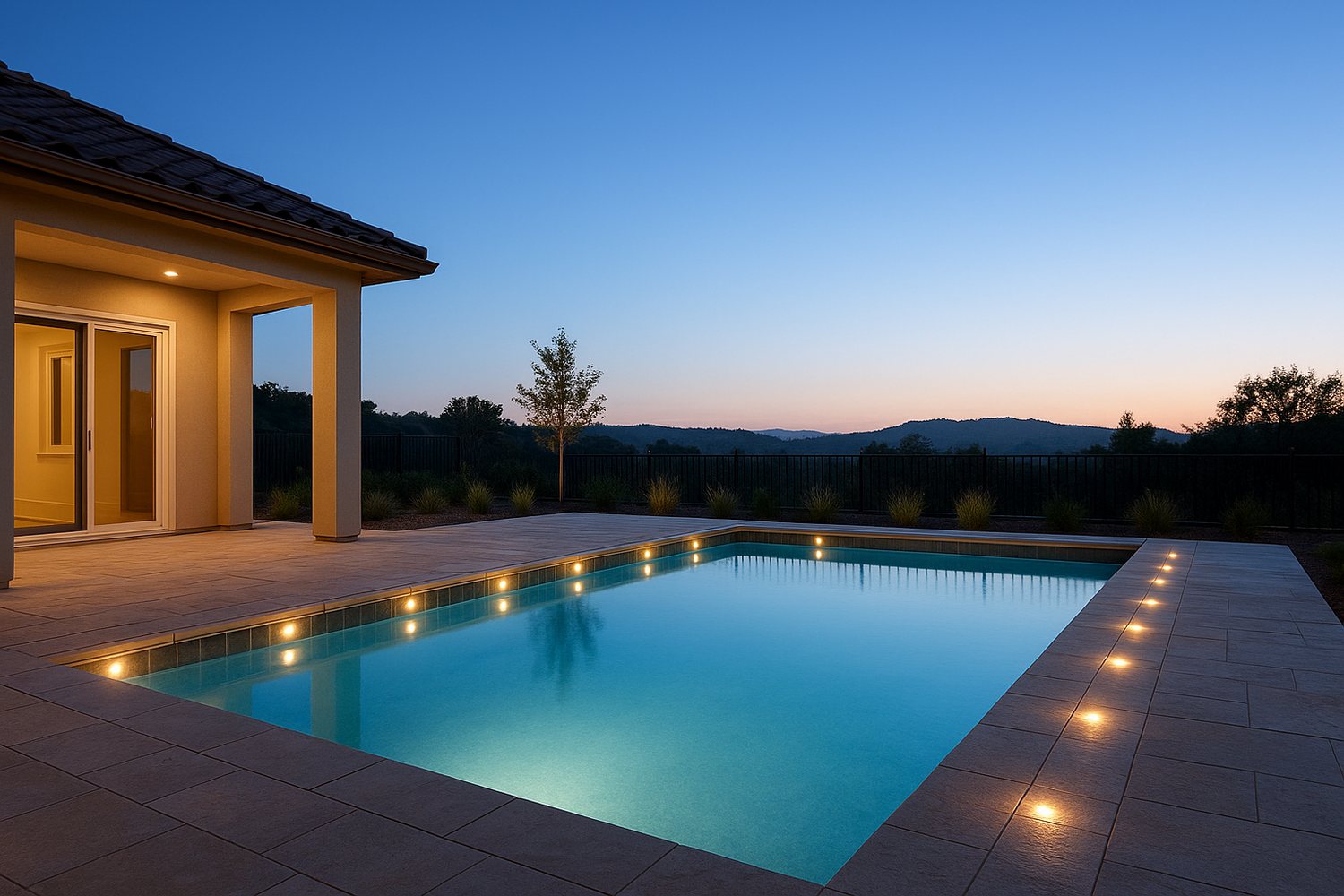
Essential Guide to Pool and Water Feature Lighting Safety
Get practical tips on safely lighting your pool or water feature and learn what matters most for Rocklin and nearby California homeowners.
Pool and water feature lighting brings beauty and function to your yard, but safety and smart placement are key. Here’s what local homeowners need to know.
Why Lighting Around Water Matters
Outdoor lighting isn’t just about making your pool or water feature look stunning at night. The right lighting improves safety, preventing accidents around wet, slippery areas. For Rocklin and neighboring communities, lighting extends the enjoyable hours you can spend outdoors, well past sunset.
Strategic lighting choices can reduce shadows and blind spots that might otherwise lead to slips or falls, especially around pools, spas, and fountains. Clear visibility is crucial for both entertaining and keeping an eye on swimmers—children and adults alike. Safe pathways with properly placed lights also help guests navigate comfortably.
In our region’s dry summers, pools and water features become social hubs, but thoughtful lighting ensures those gatherings stay safe. Planning now prevents issues later. Understanding what to install—and where—lays the groundwork for a secure, vibrant backyard environment.
- Improves visibility during gatherings
- Helps prevent trips and falls
- Enhances enjoyment of outdoor living spaces
Learn more about options and technical details on ourPool and water feature lightingpage.
Electrical Safety Fundamentals
Electricity and water don’t mix, so safe wiring and fixtures near pools and decorative water are mandatory. All outdoor fixtures near water should be rated for wet locations and professionally installed to code. In Placer, Sacramento and El Dorado Counties, following California regulations and building codes is essential.
Low-voltage lighting is often preferred near pools and fountains because it’s safer and more energy efficient. These systems run at 12V instead of higher household voltage, reducing the risk if a fixture comes into contact with water.
Always rely on a licensed contractor who understands local requirements for ground fault circuit interrupters (GFCI), bonded wiring, and fixture placement. Proper grounding and separation of wiring from water lines will help protect your family and property long-term.
- Use wet-location rated fixtures
- Prefer low-voltage (12V) systems near water
- Always require GFCI protection
Choosing Lights for Pools and Water Features
Not every outdoor light is built for wet areas. Pool and water feature lighting fixtures must withstand splashes, humidity, and full submersion in some cases. Look for materials like stainless steel, composite, or marine-grade finishes designed to last in the local climate.
For underwater and edge lighting, LED fixtures are the top choice. They’re cool to the touch, energy-efficient, and long-lasting. Many LED pool lights now offer color-changing features, giving you flexibility for mood and effect without sacrificing safety.
When lighting ponds, cascades, or fountains, submersible spotlights or ring lights can highlight movement and texture. Above-water options like wall-mounted sconces or cap lights work well for pool decks and adjacent patios, helping blend beauty with essential illumination.
- Choose fixtures rated for full or partial submersion
- Opt for corrosion-resistant materials
- LEDs offer energy savings and color options
| Lighting Type | Best Location | Safety Features | Typical Use |
|---|---|---|---|
| Submersible LEDs | Pools, fountains | Waterproof, low voltage | Underwater accent |
| Path Lights | Walkways, pool edges | Grounded, glare-free | Navigation and safety |
| Wall Sconces | Adjacent walls, patios | Wet rated, shielded | General area lighting |
| Bollard Lights | Perimeter, planters | Sturdy, low glare | Edge delineation |
| Step/Riser Lights | Stairs, elevation changes | Downward aiming | Trip prevention |
Smart Placement for Maximum Safety
Placement is everything when it comes to water feature lighting. Fixtures should give enough light without the risk of glare that can distract swimmers or guests. Avoid positioning lights where they shine directly into eyes or reflect harshly off the water.
To light walkway edges and pool surrounds, stagger fixtures about 6–8 feet apart for even coverage. Task lighting, such as step or riser lights, should be aimed downward to highlight changes in elevation and reduce tripping hazards. Underwater lights are most effective when placed opposite key entry points and directed away from seating or lounging zones.
In communities like Roseville and Folsom, landscape features such as rocks, planters, or retaining walls provide natural spots to conceal fixtures. Think about the way people move through your space—and how to guide them gently, safely, and beautifully after dark.
- Stagger lights for consistent coverage
- Aim fixtures away from eyes and water surface
- Use natural features to conceal wiring and housings
Balancing Lighting Design with Local Conditions
California’s climate matters when choosing outdoor lighting. Hot summers, strong sun, and occasional winter storms call for tough, weather-resistant materials and fixtures. Some areas may also experience heavy fog or dust, which can dull light output if not considered upfront.
In places like Granite Bay and Auburn, selecting sealed, rust-proof fixtures keeps your pool area looking good season after season. Regular maintenance is much easier when lights hold up to our region’s unique environmental challenges.
Residents should also plan for proper drainage and fixture cleaning schedules. Dust, leaves, and hard water buildup are common and can block or discolor lighting. A little extra care goes a long way toward safe, long-lasting illumination.
- Pick weather-resistant fixtures for our climate
- Watch for buildup from dust, pollen, or water
- Ensure access for routine cleaning and inspection
See our full range of choices by visiting theOutdoor Lightingoverview.
Common Lighting Types Compared
Different lighting types offer distinct safety and design benefits near water. Understanding the basics can simplify your decisions when planning your space.
Recessed and submersible LEDs limit tripping hazards by tucking below foot level or in the water itself. Post and bollard lights define walkways and pool edges, making navigation clearer. Wall-mounted fixtures and uplights extend ambiance to adjacent patios or fences without creating glare for swimmers.
Matching lighting type to location is key. For example, submersible lights add drama and visibility inside water features, while path lights keep journeys around wet areas safe at night.
- Recessed and submersible for water features
- Path and bollard lights for edges
- Uplights for surrounding landscape
Mistakes to Avoid with Poolside Lighting
Misplaced or poorly installed lights can cause more harm than good. Common pitfalls include over-lighting, which creates glare or light spillover, and under-lighting, which leaves shadowy areas where accidents can occur.
Another mistake is using fixtures not rated for outdoor or wet environments, leading to fast deterioration or electrical hazards. Always check labels and consult with professionals familiar with California Hardscapes’ standards for code-compliant, reliable installations.
Don’t overlook easy maintenance access. Fixtures hidden behind heavy foliage or below grade can become impossible to clean or repair. A site design that considers future maintenance will keep your lighting vibrant and safe for years.
- Avoid glare and harsh reflections
- Do not use indoor-rated fixtures
- Plan for easy upkeep and repairs
Ready to Plan Your Safe Outdoor Lighting?
Great outdoor lighting starts with professional planning. For homeowners in Rocklin, Folsom, and nearby areas, knowledge of local landscape, climate, and regulatory details makes a measurable difference.
A tailored plan considers not just safety, but how lights complement hardscape, pool design, and everyday living. The best systems blend subtlety with modern control options, giving you flexibility for every gathering or quiet night in.
California Hardscapes works with experienced, fully licensed contractors and partners. Start with a conversation about your goals, and get trusted advice from teams who know what works—and what doesn’t—here in Northern California.
- Assess your space and usage first
- Consult local lighting and code experts
- Choose licensed professionals for installation
Ready to start?Request a lighting consultationwith California Hardscapes now.
Planning an outdoor lighting project?
Call or text 916-741-0633, or email sales@californiahardscapes.com with your address, a short description and a few photos, and we will arrange a consultation.