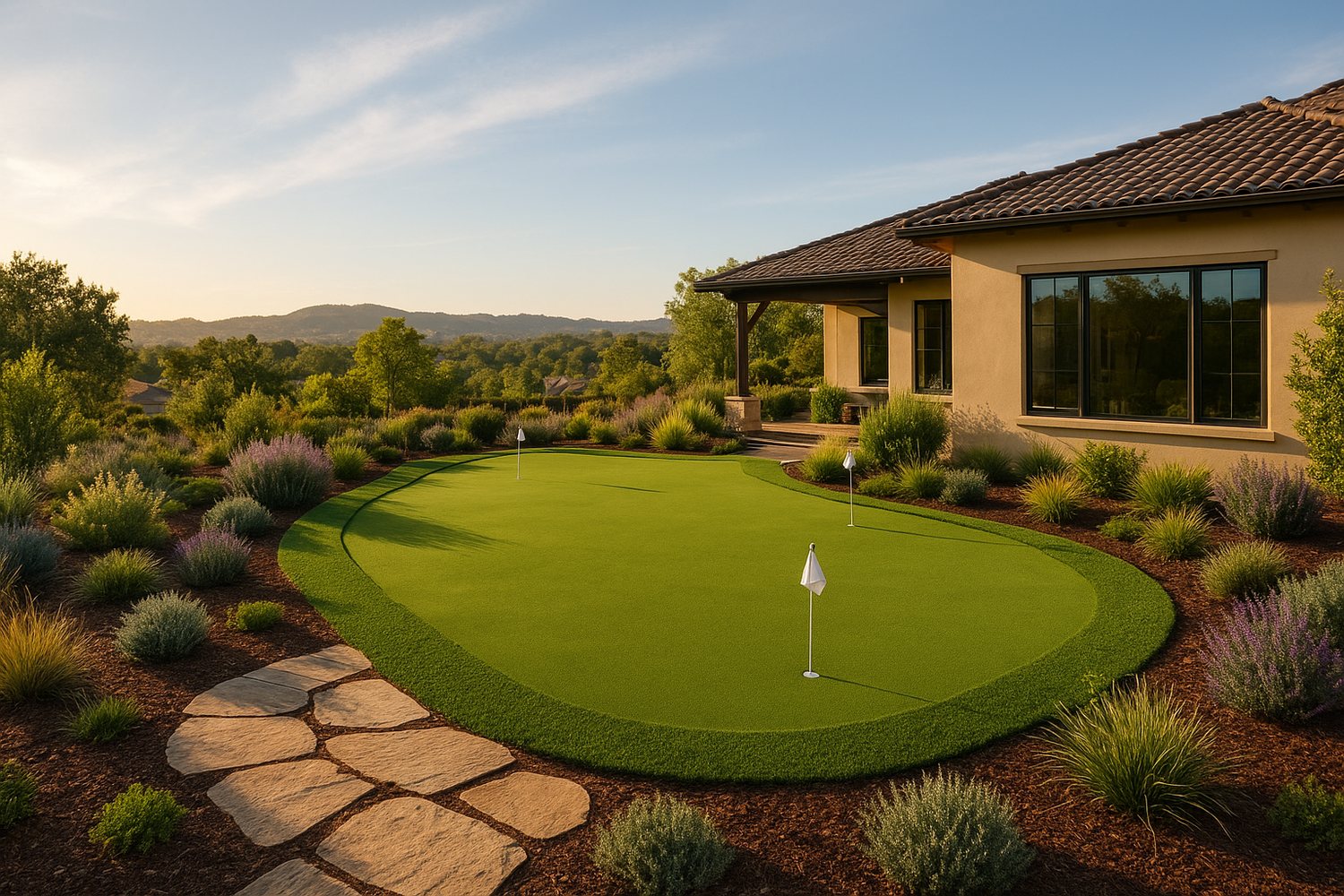
How to Keep Your Backyard Putting Green Rolling True
A premium backyard putting green can elevate your game, but its performance depends on smart care and regular maintenance. Learn region-specific secrets.
Artificial turf putting greens are a perfect fit for Northern California backyards. But keeping your green rolling true takes some practical routine care.
The Value of a Smooth Rolling Turf Green
Your backyard putting green is more than just a finishing touch—it’s a tailored practice ground and a valuable lifestyle upgrade. For many homeowners in places like Rocklin, Roseville, and Granite Bay, artificial turf delivers that fun, low-maintenance surface for honing your short game. But a putting green’s real worth comes from how true it rolls, imitating the predictability you expect from a quality golf course.
Any deviation—bumps, softness, or uneven infill—breaks the experience. To get consistent roll, your surface prep and ongoing care must match the original install’s precision. The Placer and Sacramento foothills have their quirks—tree debris, clay soils, and temperature swings—that require a few habits tailored to the region.
Investing a little time into your green translates to better putting practice and a long-lasting surface. Because artificial turf requires less work than natural grass, you’re mostly handling preventative care and quick tune-ups. This article focuses on making those tasks simple and effective.
Read more about our completeBackyard putting greenssolutions.
Regular Debris Removal: The First Key to Consistency
Pine needles, oak leaves, and tiny sticks—common in local neighborhoods—will settle on your turf no matter how open your yard is. Letting debris accumulate leads to flattened fibers and areas where your ball skids or bounces unpredictably. The solution is straightforward but critical: frequent cleanups.
A turf-specific rake works best, but a leaf blower set to low can also clear your surface without disrupting the infill underneath. Once or twice a week is enough for most yards, but windier conditions (especially in Auburn or Folsom) may need more frequent attention. Check the edges and cup areas closely, since that’s where debris likes to cluster.
Quick sweeps keep the fibers upright and the roll truer, heading off long-term compaction or matting issues before they start. This is one of the most practical habits for keeping your backyard green in peak shape year-round.
• Use a soft-bristled turf rake for dry debris • Clear around and inside cups regularly • Avoid metal rakes, which can damage the turf
Brushing: The Essential Step Most Homeowners Skip
A turf putting green’s surface performance relies on the upright position of its fibers. Over time—through foot traffic or play—even dense, high-quality turf will start to flatten. In Northern California, local pollen and dust can speed this up, making the roll less predictable.
Brushing the green with a stiff-bristled turf brush should be part of your routine. Once a month is typical, but more frequent brushing benefits areas of concentrated activity, especially around fringe and approach zones. Work against the grain to lift the fibers and redistribute the infill evenly.
If you notice certain spots rolling faster or slower, a thorough brushing often restores the balance. Combined with basic debris removal, this single step does more than any other to maintain true, reliable roll on your home green.
• Brush in different directions for uniform results • Avoid wire brushes—they can cut and abrade turf fibers • Pay special attention to ball drop spots near cups
| Feature | Artificial Turf | Natural Grass | Care Frequency | Typical Longevity |
|---|---|---|---|---|
| Mowing Needed | No | Yes | Weekly | Varies |
| Surface Consistency | High | Variable | Monthly (artificial) | Daily (natural) |
| Watering Required | Rare | Yes | Rare (artificial) | Large volumes |
| Fertilizing | None | Yes | Never | Seasonal |
| Brushing/Topdressing | Brushing | Topdressing/Sanding | Monthly (brush) | Quarterly (topdress) |
Managing Infill for Lasting Performance
Infill—the layer beneath the turf blades—acts as ballast and provides the realistic feel golfers expect. Over time, infill can migrate, compact, or settle, causing certain spots to play too hard or slow. That’s especially common in areas with clay soils, or on surfaces that see a lot of family activity.
Checking infill is simple: look for low spots or areas where fibers seem floppy or hard-packed. A turf infill calculator or an installation team can tell you the recommended depth, but in most home settings, a visual check is usually enough. If needed, add a little more of the same grade infill and brush thoroughly to distribute.
Don’t overdo it—adding too much infill at once can make the surface overly firm. Take your time, blend in as needed, and always finish with a round of brushing. Well-managed infill is what keeps your green feeling and playing just right for years.
• Check infill depth annually • Use silica sand or a manufacturer-recommended product • Avoid colored or crumb-rubber infills not listed for golf
Comparing Artificial Turf and Natural Grass Greens
Some homeowners still ask if they should install a natural grass putting green instead. When it comes to ease of maintenance, surface reliability, and year-long use, artificial turf is the clear winner in our region. Still, it’s worth understanding the differences to reinforce your maintenance routine.
Natural grass greens demand regular mowing, fertilizing, topdressing, and years of agronomy knowledge. In our warm, dry summers, keeping real grass alive—let alone fast and true—becomes a part time job. Artificial turf needs consistent, focused care, but very little of your spare time.
Reviewing these differences will help you appreciate the practical advantages of your turf green and commit to quick, regular tune-ups over complex lawn chores.
Explore all of ourArtificial Turfoptions for home landscapes.
Watering: When Less is More
Unlike grass, your artificial green doesn’t need regular watering, saving on time and utilities—a welcome advantage during Sacramento Valley’s long, dry summers. However, there are times you should use water purposefully.
Occasional light rinsing helps control pollen, dust, and surface residues, particularly during pollen-heavy spring months or after nearby landscaping work. For deep cleaning, a garden hose set on a gentle spray can do the trick—just make sure the green drains fully afterward.
Keep in mind: overwatering can wash out infill, causing low spots or uneven rolls. Use water sparingly and only with a purpose, not as a routine part of upkeep.
• Rinse the green during high pollen months • Never use pressured washing equipment • Check drainage after watering
Checking and Fixing Cup Edges
The cup areas take the most direct impact from use, especially with kids practicing chip-ins or frequent putting sessions. Over time, cup surrounds can loosen, flatten, or gather debris, affecting putt outcomes.
Periodically inspect around each cup, making sure the turf maintains a tight fit against the cup collar and hasn’t lifted. Use a putty knife or flat, non-sharp tool to gently tuck fibers if they start to lift. Replace or add infill if bare spots develop at the rim.
Stay ahead of wear by addressing looseness immediately—it ensures your putts break as expected and keeps the turf from developing permanent creases or ripples.
Seasonal Touch-Ups for Foothill and Valley Climates
Our unique transition from hot, dry summers to damp winters means paying attention to turf performance as seasons change. Watch for matted areas after winter rains or excess dust as summer dries out the air.
Each spring, plan to deep clean, brush, and spot-check infill. In the fall, clear dropping leaves promptly—oak and maple leaves can stain turf or clog drainage. A mid-year maintenance check helps spot potential trouble before it compounds.
Practical, twice-yearly tune-ups are usually enough when paired with regular cleaning. A little extra effort during seasonal extremes preserves the surface and extends the life of your green.
• Deep clean, brush, and adjust infill every spring • Remove fallen leaves promptly in autumn • Watch for drainage after storms
Request a personalized assessment—justcontact our team for a consultation.
Planning an artificial turf project?
Call or text 916-741-0633, or email sales@californiahardscapes.com with your address, a short description and a few photos, and we will arrange a consultation.