Which Retaining Wall is Right for Your Slope, Style, and Budget?
Comparing retaining walls? We break down options for Rocklin and Placer-area homeowners by slope, look, and budget priorities. Real advice, not sales talk.
Retaining walls do more than hold back earth—they shape usable spaces, define landscaping, and can elevate curb appeal. Choosing a wall that suits your property, style, and project budget means weighing classic and modern options with a clear understanding of how they perform in California’s climate.
Why Slope, Style, and Budget All Matter
Every yard is unique, but in Placer and Sacramento foothill communities, sloped terrain is common. Homeowners want walls that not only prevent erosion and manage grade but also work with their landscape vision. The choice isn’t one-size-fits-all: wall height, load needs, and how much curve or interest you want all matter.
Style is just as important as structural function. Some homeowners prefer the timeless, textured look of stone or block, while others want clean lines or a custom architectural finish. Wall materials, colors, and patterns can dramatically influence the overall feel and flow of your landscape.
Budget rounds out the equation. Retaining wall costs vary widely by material, site requirements, and finish choices. Like many outdoor projects, an upfront investment in the right wall saves on future repairs and upgrades. Making a confident decision takes real-world information about wall types, how they work, and what to expect.
• Consider the grade and drainage needs of your property.
Explore construction choices and local expertise on ourRetaining Walls page.
Concrete Block Walls: Tried, True, and Versatile
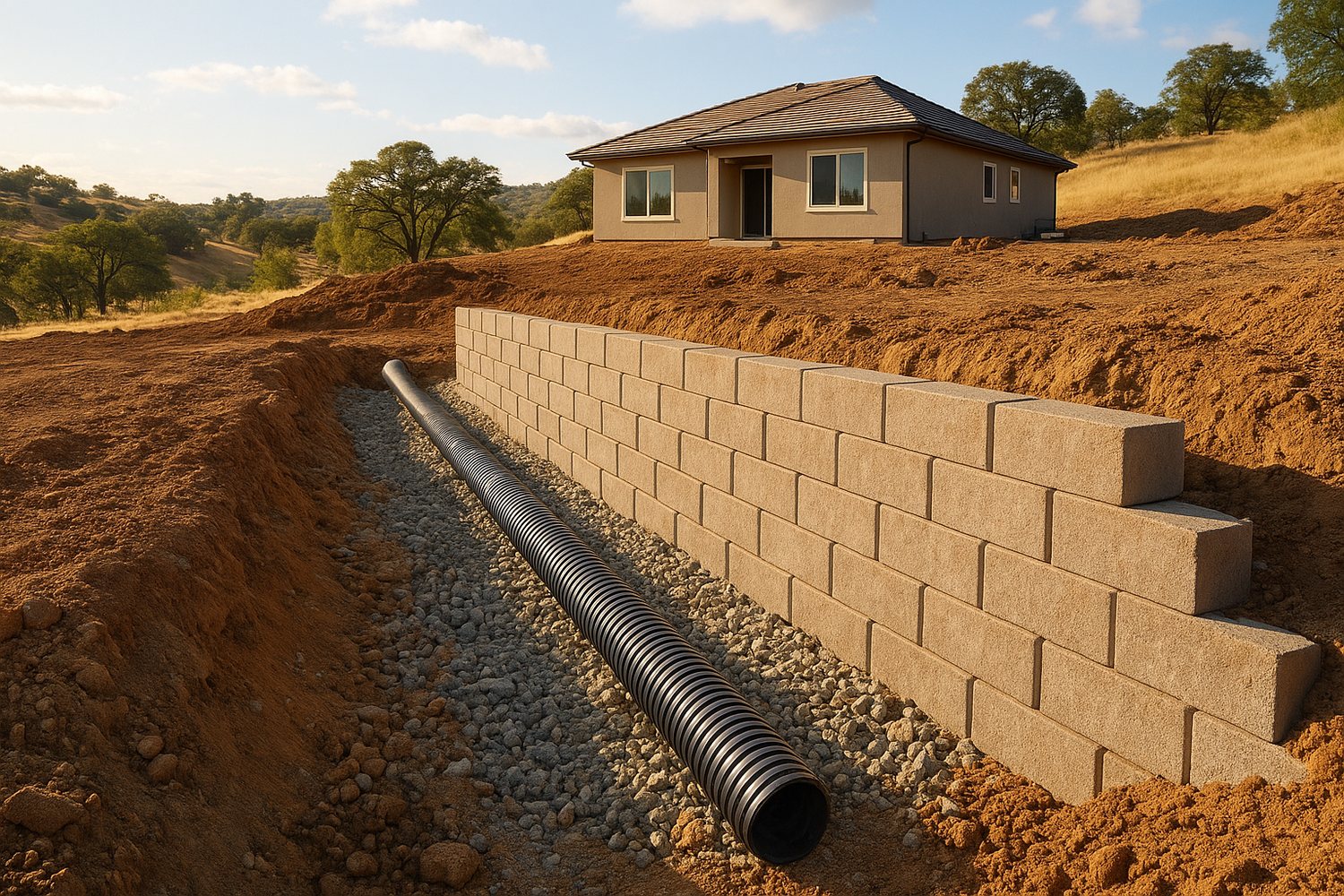
Segmental concrete block walls are a staple in California hardscaping. Built from interlocking blocks, these walls are engineered for gravity and drainage—a plus for clay soils and slopes common in Rocklin, Roseville, and Folsom. They accommodate curves or terraces and can range from subtle to bold with various textures and colors.
Block retaining walls require a well-prepared base, proper drainage behind the wall, and tight stacking for full structural integrity. Depending on height and soil, they might need little-to-no reinforcement up to a certain height, making them popular for residential applications. Maintenance needs are very low after installation.
The aesthetic is adaptable: blocks can mimic quarried stone, feature split-faced textures, or smooth out for a modern look. Many brands offer color blends suited to the bright, sun-baked landscape. While typically more affordable than natural stone, they provide notable longevity and engineering confidence.
• Engineered for steep slopes and curves
Poured Concrete Walls: Strength Meets Sleek Style
Poured concrete retaining walls are unbeatable for pure strength and custom design flexibility. These walls are made to order, with concrete poured into forms on-site, which allows for unique shapes, angles, or even built-in lighting and seating. They’re ideal for situations requiring maximum stability, such as tall walls or supporting structures.
A poured wall’s finish depends on your taste: from plain and modern to stone-pattern stamped or integrally colored. Up close, they deliver a clean, precise appearance, popular in contemporary landscapes but also possible to soften with stucco or veneer. Factoring in the finish and reinforcement can impact the overall investment.
In this region, poured concrete stands up well to wet winters, root pressure from oaks or pines, and sun exposure. It is less DIY-friendly but rewards long-term with fewer seams and an imposing presence. Drainage systems must be planned to avoid hydrostatic pressure and cracking over time.
• Structural choice for tall or load-bearing walls
| Wall Type | Max Height (No Engineering) | Typical Look | Best For | Relative Cost |
|---|---|---|---|---|
| Concrete Block | Up to 4 ft | Textured, uniform, many colors | Most residential slopes | $$ |
| Poured Concrete | Over 4 ft | Smooth, modern or sculpted | Custom/tall/complex walls | $$$ |
| Natural Stone | 3–4 ft | Organic, rustic, regional | Visual blending, special features | $$$$ |
Natural Stone and Boulder Walls: Timeless California Appeal
Natural stone or local fieldstone retaining walls bring a sense of age and permanence to any landscape. They are especially fitting for homeowners aiming for a natural, organic transition between home and native foothills, or who want to blend with existing stone elements on site.
These walls are crafted from stacked stone or strategically placed boulders. While the look is hard to duplicate, they’re often best for shorter walls (under 3–4 feet) due to complex engineering demands above those heights. Installation is more labor-intensive and requires experienced placement for both appearance and lasting integrity.
Cost tends to run higher because of material and build labor, but with expert installation, natural stone walls can last generations. They’re also less formal and more forgiving to minor shifts, making them suited to informal gardens and steep slopes where visual blending matters most.
• Perfect for organic, regional character
Comparing Wall Types for Your Needs
With a range of retaining wall options, it helps to cut through the sales pitch and compare features side-by-side. Certain criteria—such as wall height, slope, customization, look, and budget—make some choices stand out for specific needs in Rocklin and surrounding areas.
Concrete block walls excel at balancing cost with performance for common residential uses. Poured concrete offers premium strength and total design control, but usually at a higher price. Natural stone stands alone for rustic character and fits best with landscape-driven projects or when budget allows for artisan work.
Weigh these priorities with your property’s grade, drainage, and overall vision. When unsure, consult with a local contractor who understands Northern California’s climate and soils. The right wall adds beauty and lasting practicality to your sloped yard or garden.
• Height, slope, and style should be chosen together
See our overview of allRetaining Walls optionsfor the Rocklin and Placer areas.
Key Considerations Unique to Northern California
Shifting soils, summer heat, and intense winter rain challenge every retaining wall in the Foothills and Sacramento Valley. Not all materials stand up to our clay subsoil and seasonal cycles. Adequate drainage, subgrade preparation, and quality construction matter as much as material when longevity is the goal.
Local ordinances may dictate maximum wall heights before engineering is required. Oak roots, fluctuating water tables, and fire risk also shape material selection. Block and concrete fare well, but stone—when sourced locally—can be both firewise and visually harmonious if used thoughtfully.
Work with a professional who knows the soil, rainfall, and inspection codes in your area to avoid costly missteps. Up-front engineering checks and proper materials handling distinguish walls that last from those that shift, lean, or fail with time.
• Clay and heavy soils demand drainage solutions
Budgeting Your Retaining Wall Project
Your budget will reflect not just material but grading and site challenges, drainage needs, wall height, and any special finishes. In general, concrete block offers the best cost-performance for the majority of Rocklin and Placer-area homes, with poured concrete next, and natural stone reserved for special projects and focal points.
Don’t overlook long-term maintenance savings. Investing in proper engineering and installation keeps your wall in shape through wet winters and shifting soils. Cheaper solutions sometimes lose ground—literally—leading to pricey repairs. Choose a wall that meets both your current and future needs.
A quality-built wall can raise home value by expanding usable yard space, creating level planting beds, and preventing erosion that threatens foundations or neighbors below. The up-front investment, chosen for your terrain, design, and climate, builds lasting peace of mind.
• Site prep and drainage drive much of the cost
Bringing It All Together: Choosing Confidently
Selecting the right retaining wall starts with your slope and site, but the best results also reflect your style and how you use your yard. Concrete block walls win for flexibility and value; poured concrete is unmatched for strength and flair; natural stone excels for character and blending with the local landscape.
Prioritize construction quality, drainage, and professional advice over quick fixes or trending materials. A well-designed retaining wall stands its ground for decades, anchoring patios, gardens, or play areas safely and attractively.
For most homeowners in Rocklin, Roseville, Granite Bay, Folsom, Auburn, and neighboring areas, the choice comes down to which priorities—budget, looks, easy care, or lasting legacy—matter most for your space. True confidence comes from clear information and a partner who builds for the region.
• Use local experience for material and drainage planning
Ready to discuss your project?Request a consultationwith California Hardscapes today.
Planning a retaining walls project?
Call or text 916-741-0633, or email sales@californiahardscapes.com with your address, a short description and a few photos, and we will arrange a consultation.