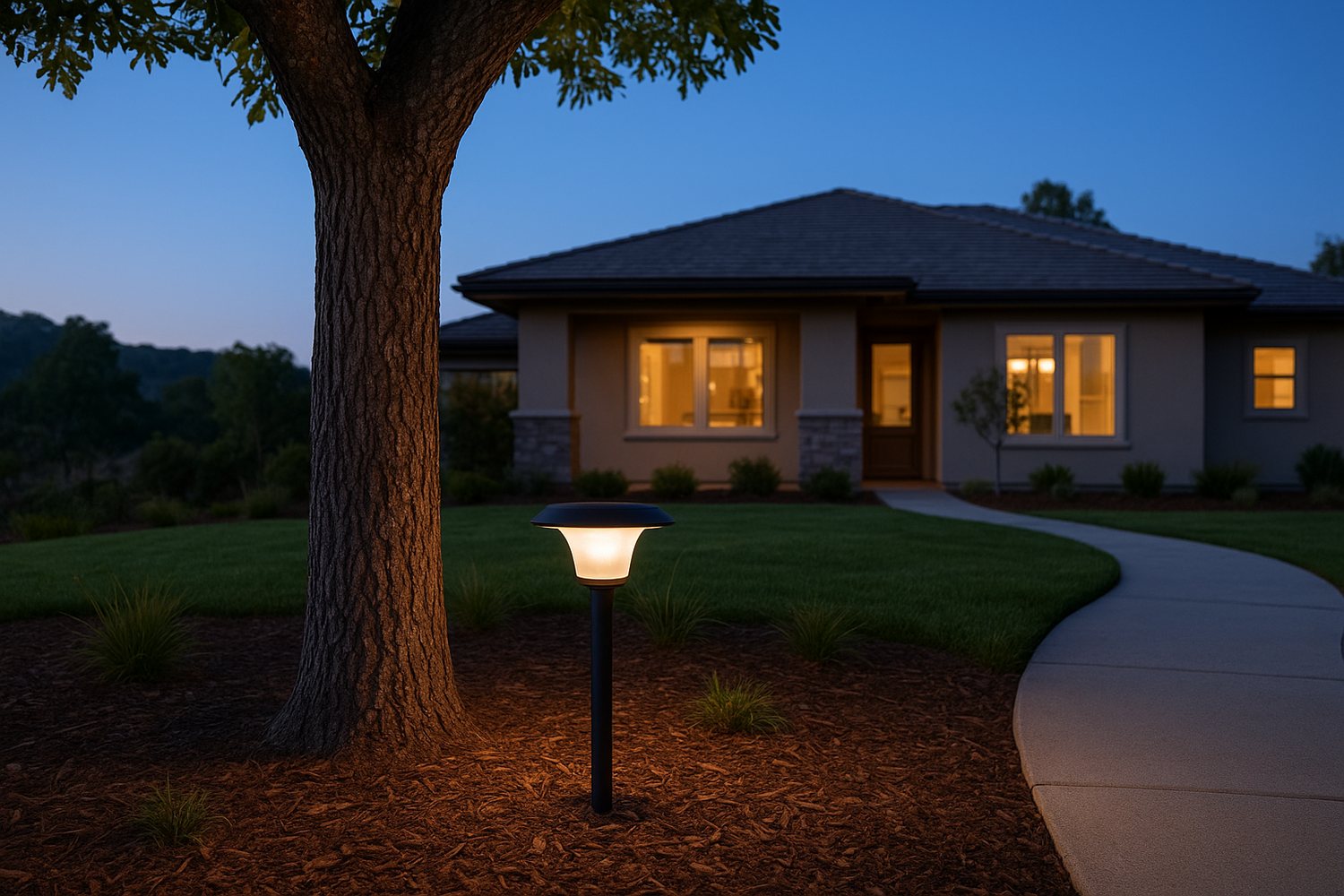
Tree and Landscape Uplighting: Design for Drama Without Glare
Tree and landscape uplighting adds drama to California homes—when done right. Learn how to highlight trees and gardens for nighttime impact, minus the glare.
Outdoor uplighting transforms an ordinary yard into a nighttime showpiece. But drama shouldn’t come with excessive brightness or glare. We’re sharing proven strategies to achieve striking uplighting results in local landscapes.
Why Tree Uplighting Matters in Placer County
Trees are often a homeowner’s biggest landscape asset, but after dark, their sculptural qualities get lost. Uplighting can reveal branches, bark texture, and canopy form—showcasing oaks, valley maples, and ornamental olives common in Rocklin, Roseville, and nearby areas.
A well-lit tree anchors the night view and extends living areas outward. Unlike patio lights or porch fixtures, tree uplighting draws attention to the yard’s organic beauty and creates visual interest, even from inside.
As beautiful as tree lighting can be, missteps happen—like too-bright fixtures or poorly aimed beams causing uncomfortable glare. The best results balance drama with control, blending safety, artistry, and respect for neighbors’ comfort.
Learn more about our approach to drama and glare-free effects on ourTree and landscape uplightingpage.
Understanding Glare and How to Avoid It
Glare occurs when a light source is visible or overly intense, making it unpleasant to look at or creating harsh shadows. In outdoor settings, glare is especially unwelcome because it undermines the sense of tranquility landscaping should deliver.
The trick is to highlight the tree, not the light itself. Glare control relies on careful fixture placement and selection, with shields or “eyelids” blocking sidelight. Choosing lower lumen (brightness) fixtures also helps prevent over-lighting smaller or closer trees.
Expert teams will angle fixtures to graze the trunk or aim past foliage, ensuring the most striking features are illuminated while bright bulbs remain unseen from common viewing spots like patios and windows.
Selecting Fixtures for Drama, Not Distraction
Uplighting fixtures come in many shapes and strengths, but not every one suits every tree. For established valley oaks or tall conifers, stronger spotlights may be needed, yet these should always include glare shields and directional controls.
Smaller accent lights often work best for ornamental trees, creating gentle highlights without overpowering the area. Durability is a consideration in local climates—Corrosion-resistant metals like brass and thoughtfully sealed components handle sprinklers and irrigation.
Where possible, opt for lights rated for landscape use and select color temperatures that complement foliage: warmer whites (2700K-3000K) create welcoming ambiance and flatter both green and reddish leaves found in our region.
- Use spotlights for tall trees, accent lights for small ones
- Integrated glare shields recommended
- Choose corrosion-resistant fixtures for irrigation
- 2700K–3000K color temperatures suit local landscapes
| Fixture Type | Best For | Glare Control | Durability | Color Temp Range |
|---|---|---|---|---|
| Spotlight | Tall trees | Integrated shields | High (metal housing) | 2700K–3000K |
| Accent Light | Small ornamentals | Angled lens | High (sealed LED) | 2700K–3000K |
| Well Light | Flush in turf/beds | Minimal sidelight | Medium (buried) | 2700K–3000K |
| Wash Light | Wide shrubs | Deflectors or indirect | High (coated brass) | 3000K–3500K |
Placement Techniques: Lighting for Form and Texture
Start by identifying the tree’s most interesting features: twisting trunk, branching silhouette, or seasonal foliage. Position fixtures 1–2 feet from the base, angling slightly upward to graze bark or highlight low limbs.
Avoid aiming lights directly out toward paths or patios. Instead, conceal fixtures in plantings or place them where foot traffic is unlikely, reducing both glare and maintenance headaches.
For larger trees, multiple fixtures spaced around the base provide full, dramatic coverage without harsh shadows. In dense suburban lots, use fewer, lower-brightness fixtures to keep light confined and considerate of nearby properties.
- Aim light along, not perpendicular to, the trunk
- Hide fixtures in shrubs or rocks when possible
- Double-check light doesn’t hit windows or neighboring yards
Working With the Region’s Unique Trees and Landscapes
From foothill pines in Auburn to fruitless olives in Granite Bay, tree forms and growth habits vary with the microclimate. Uplighting strategies should adapt—uprights for palm clusters, wide beams for bushy camphors, or tighter spots for slender cypresses.
Granite-based soils, summer drought, and winter irrigation cycles can impact fixture stability and performance. Stake-mounted fixtures should be set firmly, and connections rated for outdoor conditions prevent issues with sprinklers or seasonal downpours.
Local palettes often include drought-tolerant shrubs, boulders, and decomposed granite mulch. Integrating uplighting with ground-level landscape materials keeps the design cohesive and maintenance practical for busy homeowners.
Explore even more possibilities with our complete guide toOutdoor Lighting options.
Retrofitting vs. New Installations: Making the Right Choice
If existing trees have outgrown their old fixtures or you’re redesigning, decide if a retrofit (new fixtures, same wiring), or a complete system upgrade suits your needs. Retrofitting is efficient when wire and transformer capacities are right, but new installations offer full creative freedom.
For homes with mature trees but aging lighting, consider LED retrofits. Modern LEDs provide vivid color, low energy use, and better light control—plus longer lifespans amid Placer and Sacramento’s hot, dry summers.
Fresh installations capitalize on trenched wiring, tailored transformer placement, and smart controls. However, both options should be handled by skilled professionals who understand local soils, electrical codes, and the art of landscape lighting.
Long-Term Care: Keeping the Look Night After Night
Clean lenses and adjust fixtures seasonally—fallen leaves, errant sprinklers, or shifting soils can alter aiming or cause hot spots. A biannual walk-through ensures lighting remains dramatic and free of glare.
LED fixtures rarely fail, but keeping junctions clean and above soil line helps prevent corrosion, particularly in yards with clay or granite-based soils. Trim nearby branches that could eventually block or reflect the light beam.
For major issues like unexplained outages, worn transformers, or recurring glare, reach out to licensed professionals. Solid upkeep prolongs the visual impact and protects your investment in outdoor living spaces.
- Adjust aiming before special events
- Wipe lenses after rain or irrigation
- Inspect connections and seals each season
Real-World Design Tips for California Homeowners
Evaluate your space after dark before choosing fixture locations—this reveals existing shadows and highlights. Think about focal points from both inside and outside the house, not just from the curb.
For drama with restraint, consider layering. Use uplights for specimen trees, then supplement with soft path lights or downlit accents elsewhere. This approach gives dimension and avoids a “theme park” look.
Work with teams experienced in local codes, climates, and typical landscapes. The right combination of professional guidance, well-placed fixtures, and targeted glare control helps create a stunning yet comfortable outdoor retreat.
- Preview designs with temporary battery-powered lamps
- Layer uplighting with path or wall washing
- Factor in property lines and HOA restrictions
To discuss your trees and landscape with a lighting expert,request a no-obligation consultation.
Planning an outdoor lighting project?
Call or text 916-741-0633, or email sales@californiahardscapes.com with your address, a short description and a few photos, and we will arrange a consultation.