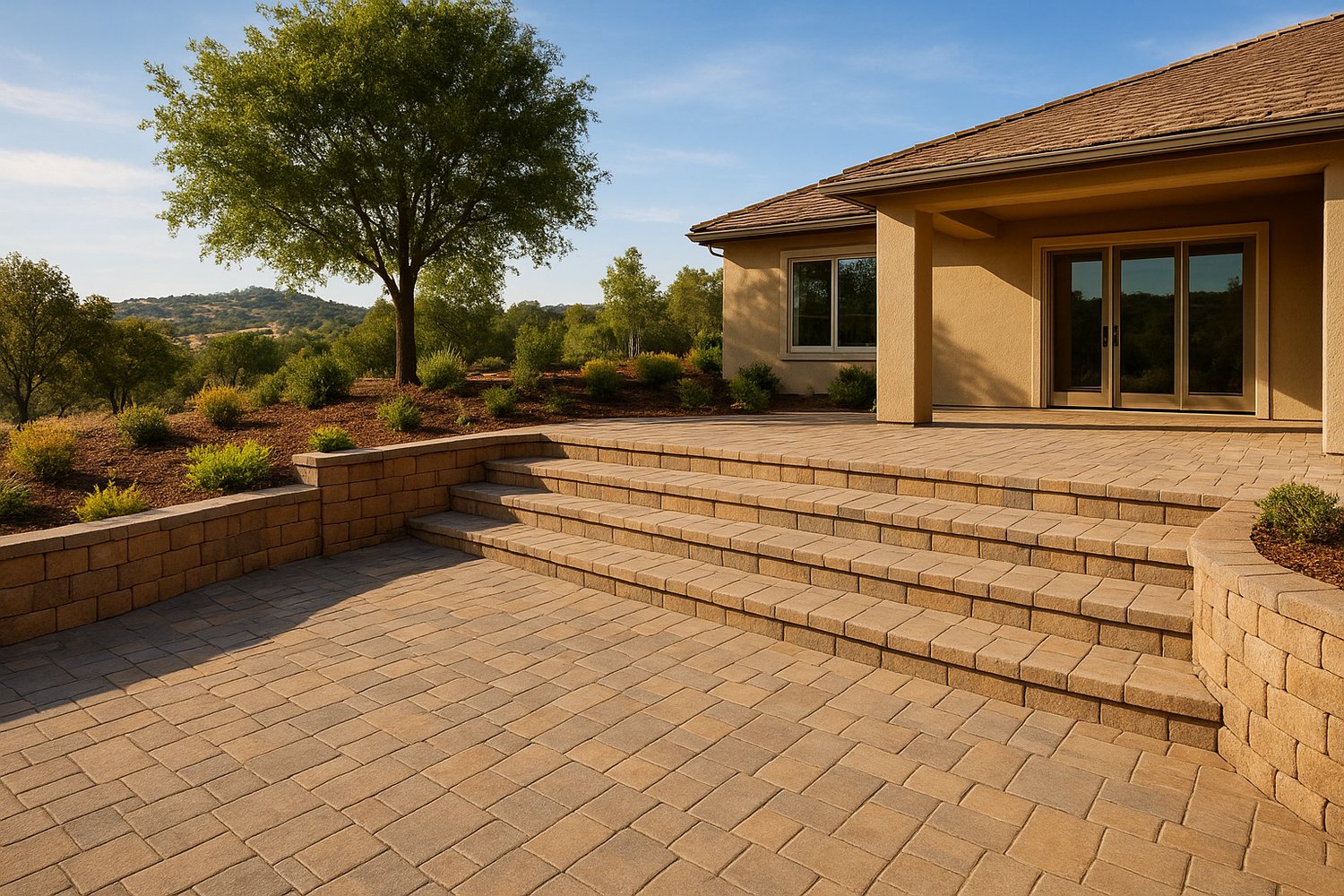
What Goes Under a Paver Patio Matters
A long-lasting paver patio starts with more than just quality materials. Here’s what homeowners should know about proper ground prep, base, and edging in our region.
Paver patios can add years of beauty and utility to your backyard. But what’s below the surface is what truly ensures your patio stands the test of time, especially with our seasonal swings in northern California.
It’s More Than Just Brick and Stone
When homeowners imagine a paver patio, the emphasis is often on pattern, color, and material choice. But the key to a patio that looks great for decades lies in what you don’t see—the materials and groundwork supporting every paver.
We’ve seen too many patios in Placer and Sacramento Counties crack, settle, or become uneven because of shortcuts below the surface. A truly durable patio is always rooted in correct construction steps from the bottom up.
Understanding the essential elements under a paver patio—excavation, the base layers, compaction, and edge restraints—helps you make smart, lasting decisions for your outdoor living space.
To learn more about how we craft patios built to last, see ourPaver patiospage.
Excavation: Getting to Solid Ground
Every successful paver patio in our region starts by removing the right amount of soil. Excavation isn’t just digging a shallow hole—it’s making room for the layered base your patio will need.
Around Rocklin, Roseville, and our foothill neighbors, soil types range from sandy loam to dense clay. The type and depth of excavation can differ, but the aim is always to get below grass, roots, and loose material.
Missing this step leads to settling as roots decay and soils shift, especially after our wet winters. A deep, even excavation gives your patio its stable platform.
- Clear all grass and organic matter
- Dig extra deep for soft or clay-heavy soils
- Slope for drainage away from your home
The Base: Not Just Sand and Gravel
The heart of any paver patio is its base—most often a compacted layer of crushed rock. This layer typically ranges from four to six inches thick, and it’s tailored to local soil conditions.
In Placer and El Dorado Counties, the right base stone is crucial, as we see expansive clays and heavy wet-dry cycles. Crushed gravel or Class II road base makes up most of the support under your pavers.
Skimping on base material or choosing the wrong type is the most common reason for uneven patios. The correct base stone keeps your paver surface flat, rock-solid, and draining properly.
- Use clean, angular crushed stone—never round rock
- Add permeable geotextile below base on clay
- Check for regional standards with your contractor
| Layer | Typical Thickness | Purpose | Key Materials |
|---|---|---|---|
| Paver Surface | 2-3 inches | Weatherproof walking surface | Concrete, stone, brick pavers |
| Sand Bedding | 1 inch | Adjusts for minor height differences | Concrete sand |
| Base Gravel | 4-6 inches | Main support & drainage | Crushed gravel, Class II base |
| Geotextile Fabric | Optional | Prevents soil mixing | Permeable landscape fabric |
| Compacted Subgrade | Varies | Solid underlayer | Native soil, well compacted |
Compaction: Locking It All Together
Compaction may seem simple, but it’s a non-negotiable step. Mechanical plate compactors are used to compress each base layer, eliminating air pockets and minimizing settling.
For patios in the Folsom and Auburn area, skipping or rushing compaction means pavers will slowly drop and shift with the seasons. We recommend compacting every two inches of base as it’s installed.
Compacting more than just the final base layer ensures strength all the way through. The result is a firm, level foundation that keeps its shape year-round.
- Compact soil and each two-inch base lift
- Edge zones get extra compaction attention
- A ‘bouncy’ base will lead to future problems
Edging: Keeping Pavers in Place
Your patio needs sturdy edges—more than simply burying the border pavers. Edge restraints are typically made from thick plastic, metal, or poured concrete, and prevent spreading and shifting over time.
In areas with temperature swings and ground movement, like Rocklin and Granite Bay, good edge restraints are critical for holding shape and pattern. They also stop sand or base material migrating outside your patio.
Cutting corners on edging is a shortcut that’s sure to show up in a few years as border pavers tilt or the whole patio starts to drift. Proper edge restraints mean sharp lines for years.
- Secure edge restraints with long stakes
- Install edging tight against the paver line
- Match edging type to your patio design
Browse the complete range ofHardscapes & Patiosoptions we offer for Placer County homes.
Why These Steps Decide Patio Longevity
Every step below your paver patio is an investment in how long it will last. Skipping base layers or rushing compaction won’t show at first, but Sacramento Valley freeze-thaw and rain patterns will expose shortcuts.
Neither the best pavers nor the prettiest pattern will matter if the ground below shifts or the edges buckle. The real test of a patio is its ability to stay flat, drain well, and resist weeds and settling.
Proper construction might seem like extra work, but it helps you enjoy your outdoor space for many years—with less maintenance, fewer repairs, and peace of mind.
Regional Concerns: What Matters in Our Area
Homeowners in this part of California face unique challenges—expansive clay in some neighborhoods, sandy soils in others, and water runoff most winters. Local expertise matters when choosing the right build.
Drainage is especially important; patios that trap water against your home invite bigger problems. Sloping the base away from structures and choosing a base that doesn’t hold water are standards here.
Before you start, ask your contractor to explain how they tailor paver patio bases for the specific soil and rainfall conditions in your area. The best patios are always site-specific.
- Identify soil type: clay, sand, silt or loam
- Always plan for our occasional heavy storms
- Prevent patio water from reaching foundations
Work with True Pros for Peace of Mind
A paver patio should be an asset, not a headache. The steps taken before the pavers go down make all the difference, and trustworthy contractors are happy to explain their process.
At California Hardscapes, our experience with Rocklin and regional soils means we know what works and why. Clear communication and thoughtful preparation save you effort down the road.
If you have questions or want more details about the build process, don’t hesitate to reach out. Getting the groundwork right should always be your builder’s top priority.
Have questions about your specific site?Request a consultationand get expert advice.
Planning a hardscapes & patios project?
Call or text 916-741-0633, or email sales@californiahardscapes.com with your address, a short description and a few photos, and we will arrange a consultation.