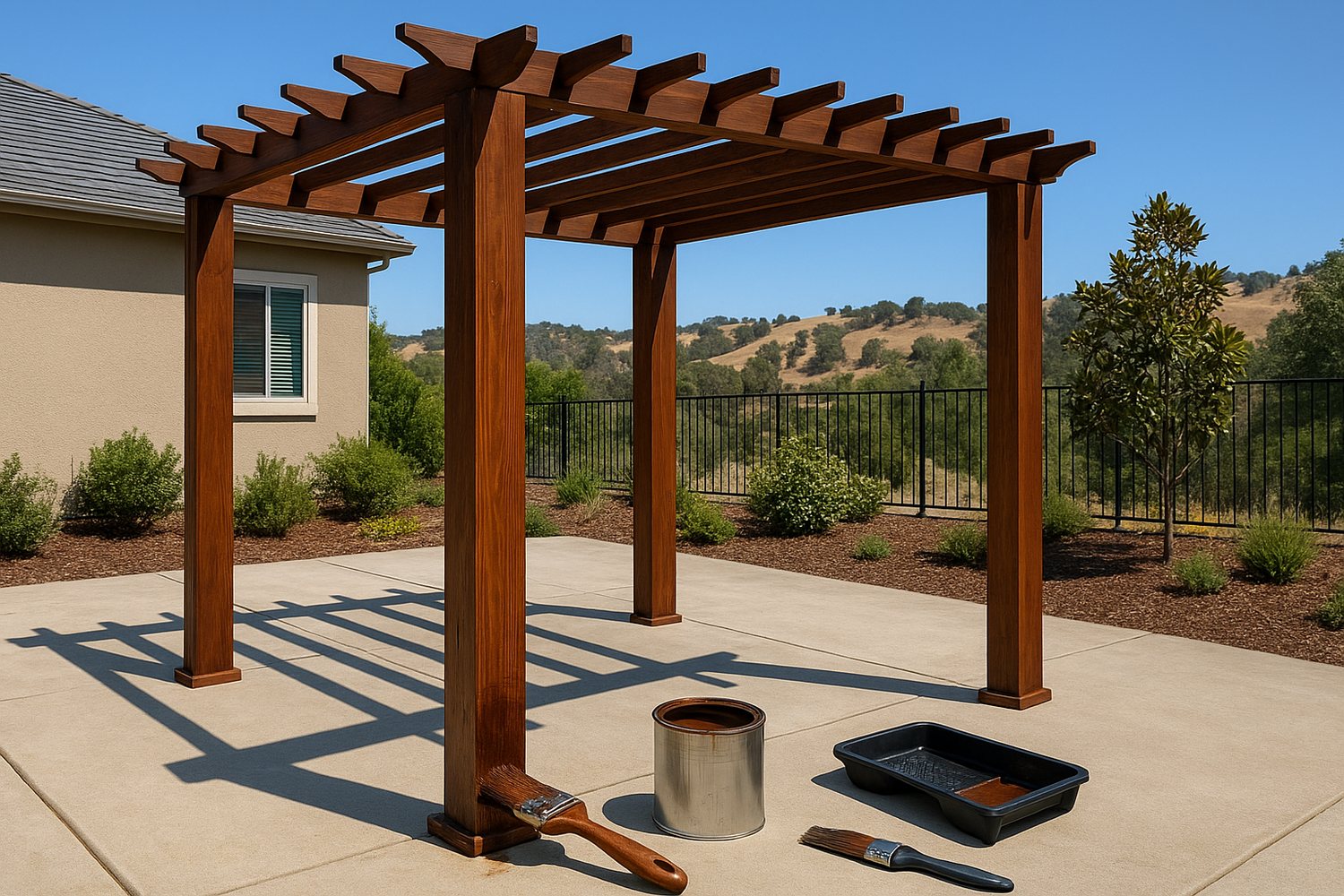
Keeping Your Wood Pergola Beautiful Year-Round
A well-maintained wood pergola is both beautiful and practical. Here’s how Rocklin area homeowners can keep theirs looking sharp through every season.
A wood pergola brings comfort and style to any backyard in our part of California, but regular care is key. With some practical maintenance, you can have a structure that looks great and stands up to sun and weather.
Why Wood Pergolas Need Seasonal Care
Wood pergolas offer classic appeal, but the sun and weather patterns in Rocklin, Roseville, and surrounding communities can wear them down without the right care. UV rays, summer heat, and steady winter rain put constant stress on the wood. With time, you may notice fading, warping, or even rot if maintenance gets skipped.
Seasonal attention helps prevent minor issues from becoming major repairs. Summer sun dries wood quickly, which can lead to cracks, while winter moisture invites mildew or swelling. You can protect your investment by understanding what each season means for your pergola and acting accordingly.
Whether your pergola shades a patio, pool, or outdoor kitchen, basic care keeps it structurally solid and looking sharp. Regular maintenance also preserves the comfortable outdoor living spaces that families use in every season.
- Fading and discoloration from UV exposure
- Cracking or swelling caused by moisture changes
- Potential for mildew and wood rot if unattended
Find more guidance and inspiration on our mainWood pergolaspage.
Cleaning: The First Step to a Lasting Finish
Start every season with a thorough cleaning to set the stage for effective staining and sealing. Dust, pollen, and organic debris collect on pergolas year-round, often out of sight in overhead beams or joints. Left unchecked, this debris can trap moisture and lead to surface decay.
Use a soft-bristle brush and garden hose for most cleaning jobs. For stubborn spots or mildew, a mild solution of soap and water gets the job done. Avoid pressure-washing, which may erode the wood’s surface or open up new cracks.
Once cleaned and dried, inspect the pergola closely for areas needing extra attention. Clean wood doesn’t just look better—it also allows stains and sealers to bond properly, boosting their effectiveness and extending protection.
- Use gentle cleaning methods
- Inspect for hidden debris or algae
- Allow full drying before further maintenance
Staining: Longevity and Curb Appeal
A quality stain not only enhances natural grain but also blocks damaging UV rays—a real concern in the Sacramento Valley’s sunny summers. Pick an outdoor-grade, penetrating wood stain suited to our climate, which better resists peeling and fading.
Apply stain after the wood is fully cleaned and dry. Use a brush or pad for even coverage, working in the direction of the grain. In high-sun areas like Roseville and Folsom, deeper shades often outlast lighter ones and provide longer-lasting protection.
As a general rule, plan to restain wood every two to three years, but inspect annually. Early touch-ups prevent small worn spots from expanding. Keep in mind: regular staining maintains visual harmony in outdoor living spaces and helps set your property apart.
- Use UV-resistant outdoor wood stains
- Darker stains offer more sun protection
- Check finish condition annually
| Finish Type | Good For Sun | Good For Rain | Visual Impact | Reapplication Needed |
|---|---|---|---|---|
| Clear Sealer | Low | High | Wood grain shows | Every 1–2 years |
| Semi-Transparent Stain | Moderate | Moderate | Some color, grain visible | Every 2 years |
| Solid Stain | High | High | Full coverage, less grain | Every 3–4 years |
| Oil-Based Finish | Moderate | High | Rich color, deep penetration | 1–2 years |
Sealing: Moisture Shielding for All Seasons
Sealing creates a moisture barrier that’s especially valuable as our region shifts between dry heat and winter rain. Transparent sealers highlight natural wood color, while semi-transparent or tinted versions add extra defense against sunlight.
Apply sealant following the instructions and only to fully dry wood—a must for deep, even coverage. Pay special attention to exposed ends and joints, since these spots are most vulnerable to water absorption in storms or irrigation cycles.
Reapply sealer every one to two years, or sooner if water stops beading on the surface. In Auburn and El Dorado County, steady winter rains test a pergola’s finish, so timely resealing can head off problems before they start.
- Choose sealers with both water and UV resistance
- Seal exposed joins and endgrain thoroughly
- Test yearly by checking water beading
Routine Checks: Catch Issues Early
Regular inspections help spot minor problems before they do real damage. Once each season, take a careful look for splitting, mold, mildew, and loose hardware. In windy or rainy areas like Granite Bay and Folsom, fasteners and connectors can loosen over time.
Checking for carpenter bees, termites, and other pests is just as important. In spring, look for small holes or sawdust on or around your pergola, as these are common early warning signs of insect activity in this region.
Tighten up fasteners and fill any small cracks with outdoor wood filler before they expand. Address fungus or mold at the first sign of discoloration—quick fixes can mean the difference between a minor patch and a major repair.
- Check for signs of rot, insects, and hardware loosening
- Fill cracks while they are small
- Address any mildew or fungus immediately
For a full look at outdoor living improvements, see all your options on ourOutdoor Livingoverview.
Weatherproofing Tips for Rocklin-Area Homes
Success in outdoor living here means adjusting care to California’s climate extremes. In the dry, hot months, provide extra shade or cover to prevent sun stress on particularly exposed pergolas. Removable fabric canopies or vine-covered trellises are simple and effective upgrades.
During heavy winter rains, check drainage around all pergola posts. Water should flow away from footings, never pooling at the base, to help preserve both wood and underlying concrete. Mulch or gravel can assist with this task while keeping the area tidy.
If windstorms are in the forecast, double-check that all panels, fasteners, and crossbeams are secure. Taking a few quick steps before a storm saves trouble and helps your pergola ride out the season in great shape.
- Improve drainage with gravel or mulch
- Consider shade cloths for added sun protection
- Secure loose parts ahead of wind events
Choosing the Right Products for Local Conditions
With so many stains and sealers out there, focus on products tested and proven in Central and Northern California climates. Look for labels that mention UV resistance, mildew control, and compatibility with hardwoods or softwoods common in local construction.
Ask suppliers or contractors about product history in our area—some finishes work better on dense woods like redwood and cedar, while others are intended for faster-growing pine. The same goes for fasteners: opt for galvanized or stainless steel to avoid rust streaks on your pergola’s surface.
A little research up front can make a world of difference to how your pergola weathers growth cycles, rain, and temperature swings. Smart product choices now mean fewer reapplications and less maintenance later.
- Check for California-specific product guidelines
- Use rust-proof fasteners and connectors
- Select stains and sealers suitable for local wood types
Professional Help Versus DIY: Making the Call
Tackling staining and sealing on your own is possible with time, patience, and access to the right materials. For extensive repairs, raised structures, or specialty finishes, hiring a professional team may be your best bet.
With decades of hands-on construction management, Marty and the California Hardscapes team understand the specific needs of wood structures in local neighborhoods. Whether you need a little advice or a full care plan, there are reliable solutions for both hands-on homeowners and those who’d rather leave things to the experts.
Cost isn’t the only factor—think about your available time, the complexity of your pergola’s design, and your comfort working at height. Choose the approach that matches your priorities and brings the right peace of mind for your outdoor living investment.
- DIY is ideal for smaller, accessible structures
- Hire out for multi-level or intricate pergolas
- Consult local experts for best results
If you want expert help keeping your pergola in its best shape,request a consultation.
Planning an outdoor living project?
Call or text 916-741-0633, or email sales@californiahardscapes.com with your address, a short description and a few photos, and we will arrange a consultation.