Revitalize Worn Concrete with Resurfacing & Decorative Overlay Solutions
Give your old, but structurally sound concrete surfaces a premium second life with our expert resurfacing and overlay techniques.
What Is Concrete Resurfacing and When Does It Make Sense?
Best for: Best for homeowners with structurally sound but cosmetically worn concrete patios, walkways, pool decks, and entryways.
Many Rocklin-area homes have concrete patios, driveways, or pool decks that are holding up well structurally but have lost their original appeal. Years of weather, foot traffic, hard water stains, and even shifting soils can leave slabs drab, pitted, or stained. Tearing out and replacing perfectly functional concrete is expensive, messy, and time-intensive. That’s where resurfacing and decorative overlays come in, offering a second chance without the demolition.
Concrete resurfacing refers to applying a new, thin layer—called an overlay—over an existing concrete slab. Using advanced polymer-modified materials, these overlays bond tightly to the old concrete, providing a fresh surface that’s not only beautiful but also durable enough for real-life use. With modern technology, overlays come in a wide array of finishes, textures, and colors to customize your outdoor living space exactly how you want.
However, overlays have limits: they work only when the existing concrete is intact, free from major cracks, heaving, or severe settling. At California Hardscapes, we approach every resurfacing project with upfront, honest assessment. Our philosophy is simple: We don’t compete on being the cheapest; we compete on quality, integrity, and results that exceed expectations. Every project is completed as if it were our own home—done right, with no corners cut.
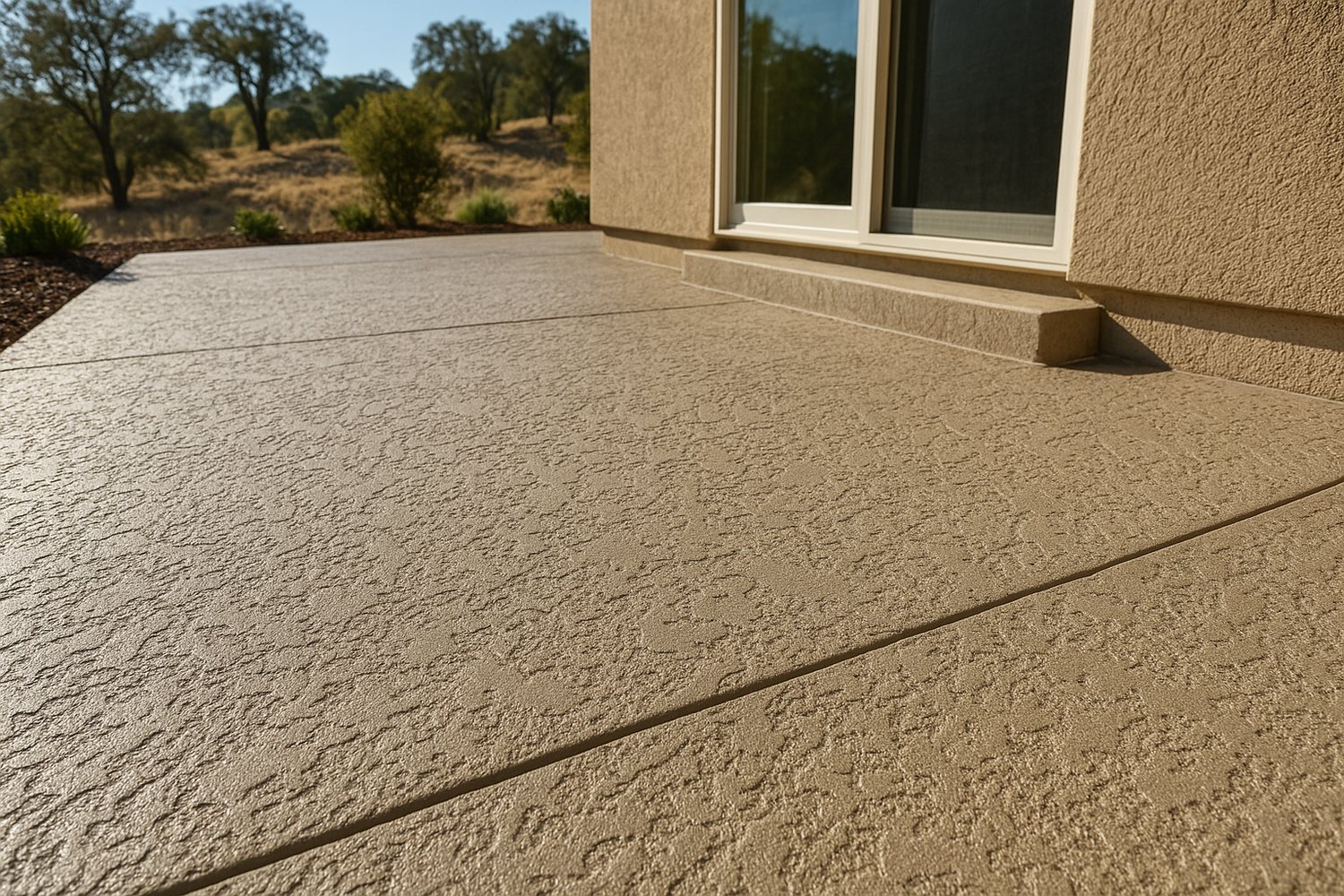
Decorative Overlay Styles & Options
Polymer-Modified Toppings
These are our most versatile overlays, blended with special polymers for superior adhesion, flexibility, and strength. They can be applied in thin layers (1/8"–1/4") to refresh patios, walkways, or driveways. Suitable for both smooth and textured finishes, they resist wear and weather, making them ideal for most exterior uses.
Microtoppings
Microtoppings are ultra-thin, usually 1/16" or less, allowing for a refined, modern look with minimal build-up. Best for interior entries or protected porches but also suited to lighter-use outdoor surfaces. They create a smooth, contemporary appearance and are a great base for stains or dyes.
Spray-Down Knockdown Overlays
Popular on pool decks and patios, spray-down overlays are sprayed and flattened with a trowel for a “knockdown” texture. This creates a comfortable, slip-resistant surface that stays cooler underfoot—ideal for Sacramento Valley’s hot summers. Customizable with earth-tone colors and stenciled patterns.
Stamped Overlays
These overlays mimic the appearance of stone, brick, slate, or wood. Concrete is applied thicker (typically 1/4”–3/8”) and stamped with realistic patterns while still workable. Stamped overlays can transform a plain slab into a high-end landscape feature—without the cost and hassle of full replacement.
Custom Color Treatments
Overlay systems can be colored integrally, stained, dyed, or antiqued after curing. Choose from subtle earth tones, bold modern shades, or multi-color effects. Our regional soils and landscape styles favor natural taupes, charcoals, and warm stone hues, but the palette is wide open.
Edge and Joint Details
Finish the look with special edging (rounded, beveled, sculpted) or custom joint accents. These finishing touches help overlays blend with adjacent concrete or landscape borders. Proper jointing also helps minimize future cracking, especially in large or irregular slab shapes.
How We Build Premium Overlays at California Hardscapes
An overlay is only as good as the prep and process behind it. Every resurfacing job starts with a thorough evaluation to confirm the existing slab is a good candidate. From there, every step matters—from cleaning and repair to curing and sealing. Here’s how a quality crew ensures a lasting, beautiful result:
- Evaluation & Preparation: Assess the existing concrete for structural soundness and moisture issues. Perform repairs such as crack filling, patching, or grinding down high spots. Deep clean and etch the surface to ensure maximum overlay adhesion.
- Masking & Protection: Carefully mask surrounding landscaping, walls, and fixtures to prevent overspray, staining, or accidental contamination during resurfacing. Protects both property and finished edges.
- Mixing & Placing Overlay: Blend the selected overlay (polymer-modified, microtopping, spray mix, or stamp mix) precisely per manufacturer specs. Apply evenly across prepped slab, at the correct thickness for the chosen system.
- Texturing & Patterning: Work quickly while material is plastic. Trowel, broom, spray, stamp, or stencil the overlay to achieve the desired texture or pattern. Multiple passes may be needed for two-tone or antiqued effects.
- Detailing & Edges: Sharpen edges, define joints, and cut new control joints if necessary to manage cracking. This step includes any specialty finish work along steps, risers, or border inlays.
- Curing: Allow the overlay to cure undisturbed following product guidelines, typically 24–72 hours for initial set, longer before heavy use or sealing. Moisture and temperature are monitored throughout.
- Sealing: Apply a premium concrete sealer, either clear or with an enhancing tint, to lock in color and protect against stains, UV rays, water, and freeze-thaw cycles. Resealing intervals vary by overlay type and exposure.
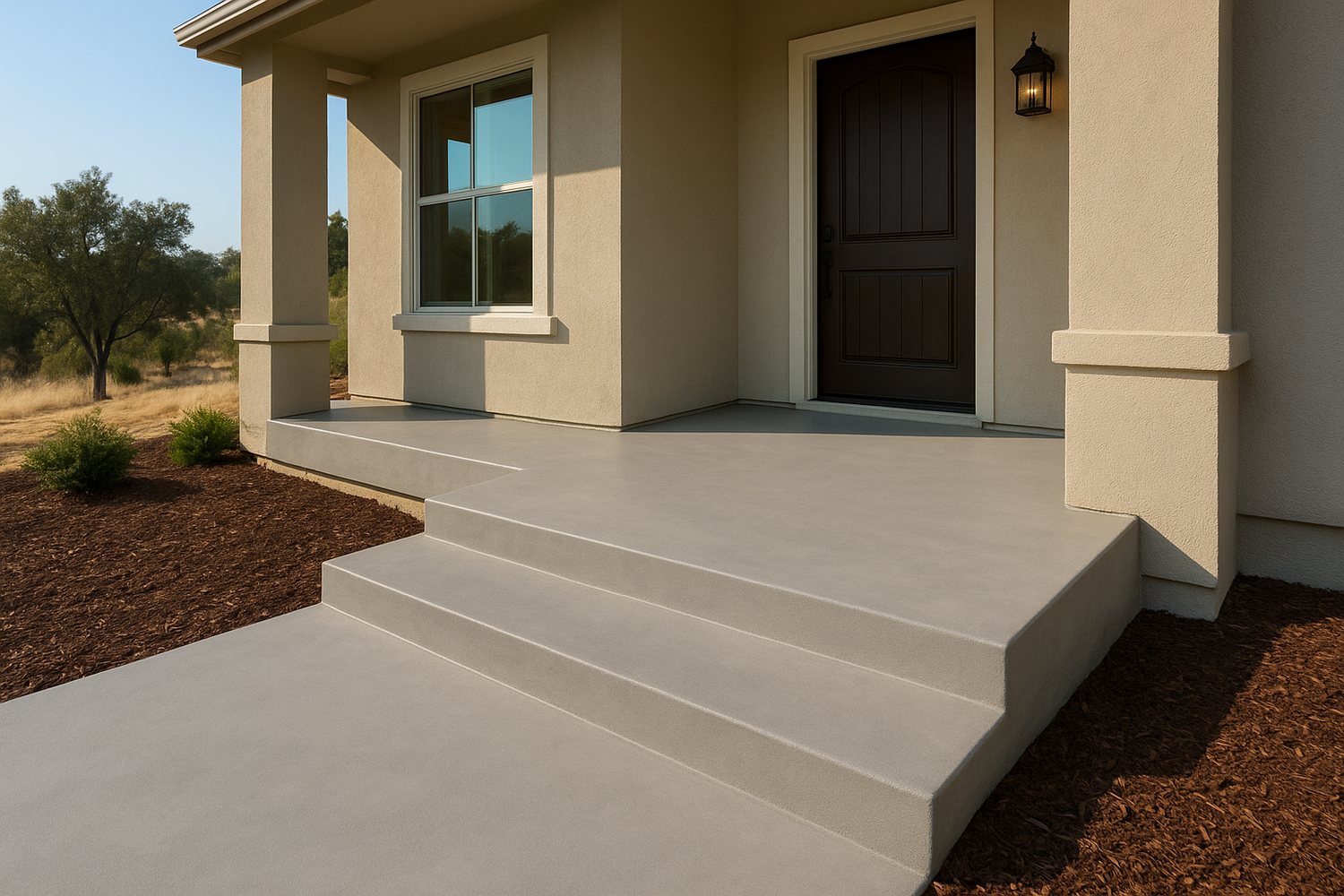
Pros & Cons of Concrete Resurfacing with Overlays
Strengths
- Transforms the look of tired, plain concrete for a fraction of replacement cost.
- Wide range of decorative options: textures, colors, patinas, natural stone effects.
- Minimizes demolition mess, haul-away fees, and disruption to landscaping.
- Improved slip resistance, especially with spray or textured finishes, for safer pool and patio areas.
- Durable finish when applied over sound slabs, resisting weathering, staining, and abrasion.
Trade-offs
- Can only be applied to structurally sound, stable concrete—major cracks, sinking, or heaving require replacement.
- Overlay thickness is limited (usually under 3/8”), so can’t resolve uneven or severely pitted slabs.
- Subject to wear, fading, or chipping without proactive maintenance and regular resealing.
- Some heavy objects, metal patio furniture, or harsh de-icers can scratch or stain certain overlay finishes.
What Affects the Cost of a Decorative Concrete Overlay?
Concrete resurfacing generally costs less than full replacement, but prices depend on many technical and design choices. Our estimates reflect the true care and detail that go into each project—no shortcuts, just long-term, quality value. While overlays are cost-effective for sound slabs, they aren’t always the cheapest option upfront depending on project complexity. Your investment brings custom beauty matched to Central Valley climate and lifestyle.
- Size and accessibility of the work area—smaller or hard-to-reach projects typically cost more per square foot.
- Overlay system chosen: microtoppings, spray-downs, and stamped overlays vary in material and labor needs.
- Existing surface repairs—crack filling, grinding, patching, or joint work add to prep time and cost.
- Pattern, color, and detail complexity, including custom stamps, borders, or hand-applied effects.
- Edge work, steps, or vertical surfaces often require specialized prep and application.
- Sealer choice and the number of coats; higher-performance sealers or color enhancements add to materials cost.
Care, Maintenance, and Longevity
Proper maintenance extends the beauty and lifespan of overlays. We recommend sweeping and hosing off debris regularly, avoiding harsh metal shovels or abrasive pads, and spot-washing spills before they stain. Use only neutral-pH cleaners (never strong acids or degreasers) to preserve the sealer and decorative finish. In our region’s summers, shade structures help reduce fading on vibrant overlays.
Most overlays will need re-sealing every 2–4 years, depending on foot traffic, sun exposure, and water. Plan on periodic inspections, especially after rainy winters or heavy use. Well-maintained overlays can last 10–15 years or longer on sound concrete, but factors like tree root movement or improper drainage can shorten that lifespan. Minor dings or wear areas can often be refinished or spot-repaired without replacing the whole overlay.
Compare other options

Concrete repair, sealing and replacement
Crack repair, joint sealing, spall and scaling repair, sealing and resealing, and when to remove and replace.
Explore →
Colored (integral color) concrete
Explore integrally colored concrete by California Hardscapes Rocklin—pigment choices, color charts, matching, care & trade-offs for Placer & Sacramento homes.
Explore →
Concrete patios
Explore expert advice on concrete patios in Rocklin: layout, finishes, durability, costs, design tips and care. Make the right choice for your outdoor space.
Explore →Frequently Asked Questions About Concrete Resurfacing & Overlays
Will resurfacing fix cracks or uneven concrete?
Overlays can cover hairline cracks and minor surface wear, but they can’t correct movement, heaving, or deep cracks that reflect underlying slab failure. If the existing concrete has ongoing settling or severe cracks, replacement is usually recommended. We thoroughly assess each slab and explain the best options for your situation before starting work.
How long does a concrete overlay last?
When properly installed over a sound sub-base and regularly maintained, overlays can last 10–15 years or longer. Surface wear, harsh sun, freeze-thaw cycles, and traffic patterns all play a role in longevity. Periodic re-sealing helps overlays resist stains, wear, and fading, so scheduled upkeep is essential.
Is the surface slippery when wet?
Overlay systems can be finished with textures that provide excellent slip resistance, such as knockdown, broom, or light stamp patterns. Smooth microtoppings may be more slippery; we recommend adding slip-resistant additives in pool or entry areas. Discuss your safety concerns with us and we’ll tailor the right finish for your space.
How long before I can walk or drive on a new overlay?
Curing times vary by product, thickness, and weather. Light foot traffic is typically allowed after 24–48 hours, while driveways may require 5–7 days before vehicle use. We’ll advise you at the end of your project when it’s safe to walk, place furniture, or use the surface based on conditions.
Can overlays be applied in summer or when it’s over 100°F?
Yes, but high summer heat and direct sun speed up curing and may affect finish quality if not managed correctly. Our team schedules pours early or late in the day, uses shade structures, and adjusts mix water and admixtures for the conditions. Extreme heat or cold may shift installation dates slightly for best results.
Are decorative overlays a good DIY project?
Overlay systems require specialized materials, exact mix ratios, and fast, skillful application. Professional crews have the equipment, experience, and product knowledge to ensure a quality finish that lasts. DIY attempts often struggle with poor bonding, uneven texture, or discoloration; we recommend consulting a pro for lasting value.
Can I customize the color, pattern, or finish?
Absolutely. Overlay systems offer nearly endless customization—bring us your inspiration photos or pick from dozens of samples. From faux-stone or wood plank stamps to two-tone or antiqued color washes, edge accents, or medallions, we’ll help you achieve a one-of-a-kind look that suits your home’s style and HOA requirements.
How do I know if my existing slab is a good candidate?
We start with a detailed slab inspection—checking for cracks, movement, saturation, and previous repairs. If your concrete is level, stable, and free from active water or root issues, resurfacing is likely a good choice. If not, we explain all available options and why we recommend one path over another—so you can decide with confidence.
Ready to Discuss Your Concrete Resurfacing Project?
Call or text 916-741-0633, or email sales@californiahardscapes.com with your address, a short description of your concrete, and a few photos. We’ll review your project, answer questions, and let you know if resurfacing is the right fit.