Dry Creek Beds: A Beautiful, Functional Landscaping Feature
A dry creek bed blends attractive natural rock with practical stormwater control. We build them for real drainage and years of resilience—never just for show.
What is a Dry Creek Bed, and Why Choose One?
Best for: Dry creek beds are ideal for homeowners who want to manage runoff and add natural beauty without constant maintenance.
Dry creek beds are the elegant solution for landscapes that face water runoff, soggy spots, or simply need a striking feature to tie together the yard. At California Hardscapes, we build dry creek beds as functional, landscape-grade drainage features, not just as pretty accents. The combination of natural river rock, ornamental boulders, and select plants delivers a scene that looks right at home in the Sierra foothills.
Properly installed, a dry creek bed uses gravity and careful channel sizing to collect and guide stormwater away from your home, patios, or pathways. Unlike French drains that hide underground, dry creek beds become a centerpiece—especially during winter rains, when you want to see exactly where water is flowing (and that it’s not pooling where it shouldn’t). Fire-safe, dog- and kid-friendly, durable and nearly maintenance-free, they’re practical for more than just looks.
For our region—Rocklin, Roseville, Folsom, Granite Bay, Auburn, and nearby communities—well-built creek beds are more than a style trend. They solve headaches caused by heavy clay or decomposed granite soils, rolling grades, and unpredictable weather. If you care about long-term value and reliability, understand this: we don’t compete on being the cheapest. We compete on quality, integrity, and results that exceed expectations. Done right, no corners cut; every project built as if it were our own home.

Design Options for Your Dry Creek Bed
River Rock Size and Color
Choose from a range of rounded river rocks—typically 2 to 6 inches—for the main channel. Small ‘pea’ gravel is used for highlights or accent rings, while larger cobbles and ‘Mexican beach’ pebbles add variation. Gray, tan, and faded blue colors feel natural in Placer and El Dorado yards.
Boulders for Structure
Strategically placed boulders anchor the channel edges, create visual flow, and mimic real creek formations. We set them deep, never perching. Boulders also slow water velocity, reduce erosion risk, and nest planting pockets, blending function and style.
Planted Margins: Grasses, Shrubs, Natives
Planting alongside the creek softens edges and stabilizes soil. Ornamental grasses, California natives, and low-water groundcovers thrive here with minimal irrigation. On HOA or visible frontages, we recommend layered, drought-adapted plantings that hide fabric and meet curb appeal goals.
Bridges and Crossings
A simple wooden or flagstone bridge over your dry creek adds charm and utility. For wider crossings, custom concrete or stone slab bridges are possible. All crossings are built for safe footing and long-term durability, with footings set beyond typical water spread.
Sizing for Runoff Control
Unlike decorative-only installations, we size your dry creek bed based on contributing roof area, slope, and soil absorption. Depth and width are matched to the region’s major rainfall events, using local guidelines—so water flows freely, but doesn’t overspill.
Fabric and Edging Details
Professional-grade weed fabric underlies the rocks, blocking weeds but letting water percolate. Steel or stone edging keeps rock in place, prevents channel creep, and makes landscape maintenance easy. We never skip edging—it’s what keeps a creek bed looking crisp after years of storms.
How We Build a Dry Creek Bed: The California Hardscapes Way
A premium dry creek bed is more than piles of rock; it’s a system built for strength, longevity, and smart drainage. Our build process uses the same sitework focus and attention to detail that go into proper concrete, retaining wall, and pool construction. Marty oversees layout, elevations, and material selection—no cut corners. Here’s how a quality crew gets it done:
- Layout & Subgrade Preparation: We stake out the channel path, dig to designed depth, and shape the subgrade to direct water smoothly. Excess roots or organics are removed, and the bottom is packed firm.
- Compacted Base Installation: For stability, a layer of compacted road base or angular gravel is added to the subgrade—unless native soil is clean clay. This base reduces settling and keeps channel contours true.
- Landscape Fabric Placement: We unroll heavy-duty commercial weed barrier, overlapping seams by at least 8 inches and pinning securely. Fabric allows drainage but blocks roots and weeds from growing through.
- Edging Installation: Steel, masonry, or natural stone edging is set flush to finished grade, forming the channel perimeter and containing rock. Edging stakes or mortar are used so nothing shifts after rain.
- River Rock & Boulder Placement: River rock is carefully placed, not dumped, to mimic natural water patterns—with large boulders and cobbles at bends, entries, and overflows. Key rocks are partially buried for realism and strength.
- Planting & Mulching: We cut planting openings in the fabric, place selected plants, and mulch around them. Larger shrub and accent plantings are used to break up lines, while drip irrigation is set where needed.
- Finishing & Cleanup: We check channel slope for consistent flow, test runoff with water, adjust rock and edge as needed, and clean up all debris. The job’s not complete until the dry creek is photo-ready and robust.

Real Pros and Cons of Dry Creek Beds
Strengths
- Transforms rain runoff into an attractive landscape feature—never just a ditch.
- Reduces erosion and standing water near foundations better than bark, mulch, or lawn.
- Almost zero ongoing maintenance—no mowing, minimal weeding, no re-paint or re-staining.
- Fire-safe and pet-friendly compared to wood mulch or groundcovers.
- Durable: well-built beds outlast most fences, patios, or plantings (even under heavy rains).
Trade-offs
- Up-front installation cost is higher than basic gravel or surface drains.
- If sized or graded incorrectly, water can overtop the channel or cause erosion.
- Unedged, poorly installed creek beds quickly spread rock and lose form after storms.
- Some local HOAs or cities require pre-approval for visible drainage features.
Dry Creek Bed Costs—What to Expect
Dry creek beds are an investment in both function and curb appeal. While the labor and material costs are higher than installing mulch or decorative gravel, you get a drainage feature that’s engineered to last decades. Our approach: build it right, on budget, to minimize future headaches. The final cost is shaped by both the size and ambition of your vision.
- Total length and width of the creek bed channel, including any tributaries or branches.
- Choice and quantity of river rock, boulders, and specialty stones—boulder-heavy builds run higher.
- Amount and type of edging (steel, stone, or concrete) used for border control.
- Site conditions: slopes requiring grading, root/rock removal, or access limitations.
- Number and size of bridges, crossings, or specialty features (cascades, plant pockets).
- Extent and species of margin planting, including irrigation or mulch details.
Maintaining and Protecting Your Dry Creek Bed
Dry creek beds are among the lowest-maintenance hardscape features you can add. Periodic inspection after major storms is recommended—remove branches, excess leaves, or windblown debris that can block water flow. Weed control is usually minimal thanks to quality landscape fabric and sturdy edging, but spot-treating seedlings around plantings may be needed.
Sealing is generally not required for natural stone. If exposed concrete or faux stone bridges are included, a penetrating sealer every 2–5 years helps maintain color and resist algae. Lifespan depends on initial build quality, site drainage, and how well plants are maintained: well-built beds with proper grading and materials can function beautifully for 15–30 years or even longer.
Compare other options
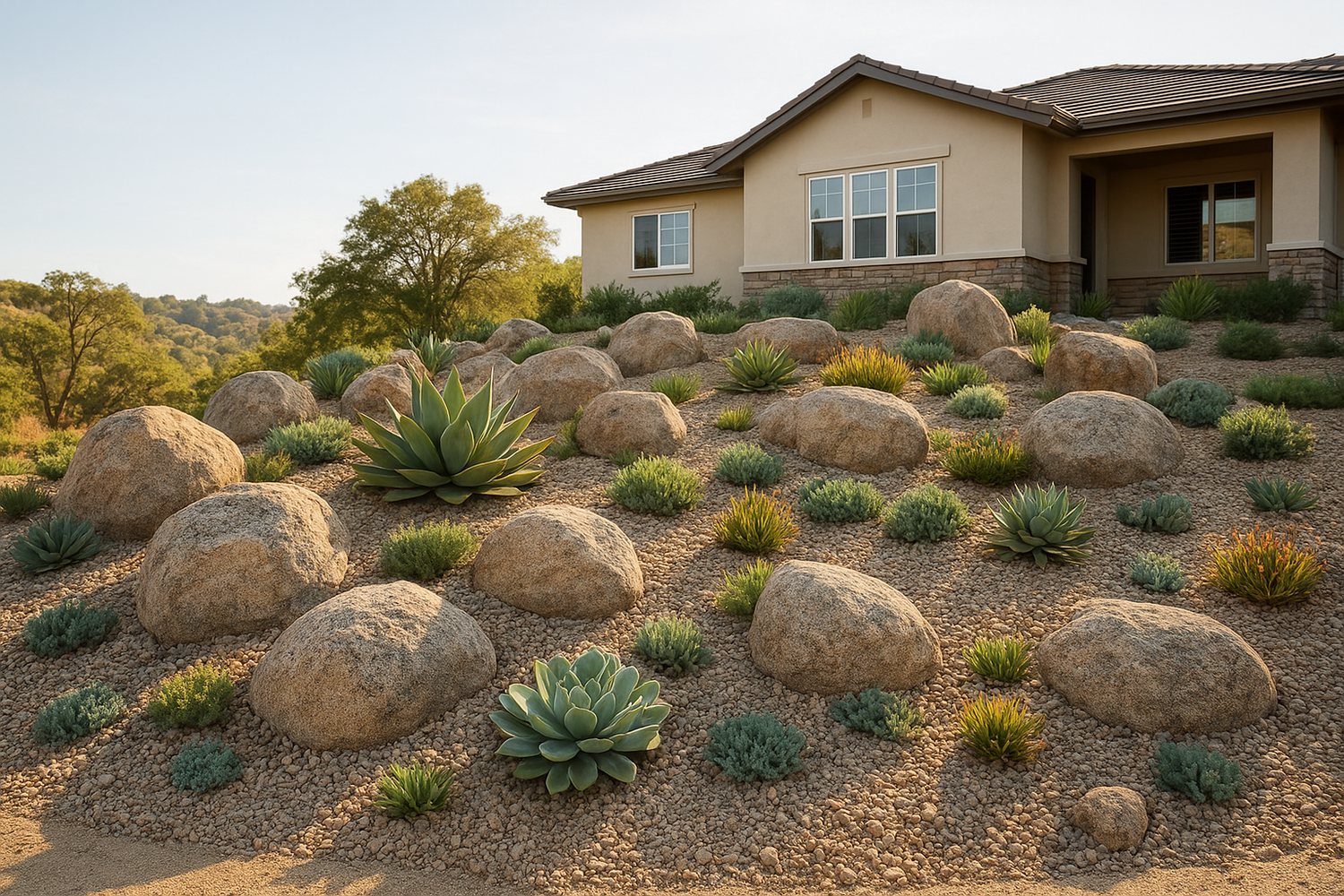
Boulders and rock gardens
Learn how landscape boulders and rock gardens can upgrade your yard. See placement tips, care, pros and cons, and options for Rocklin area homeowners.
Explore →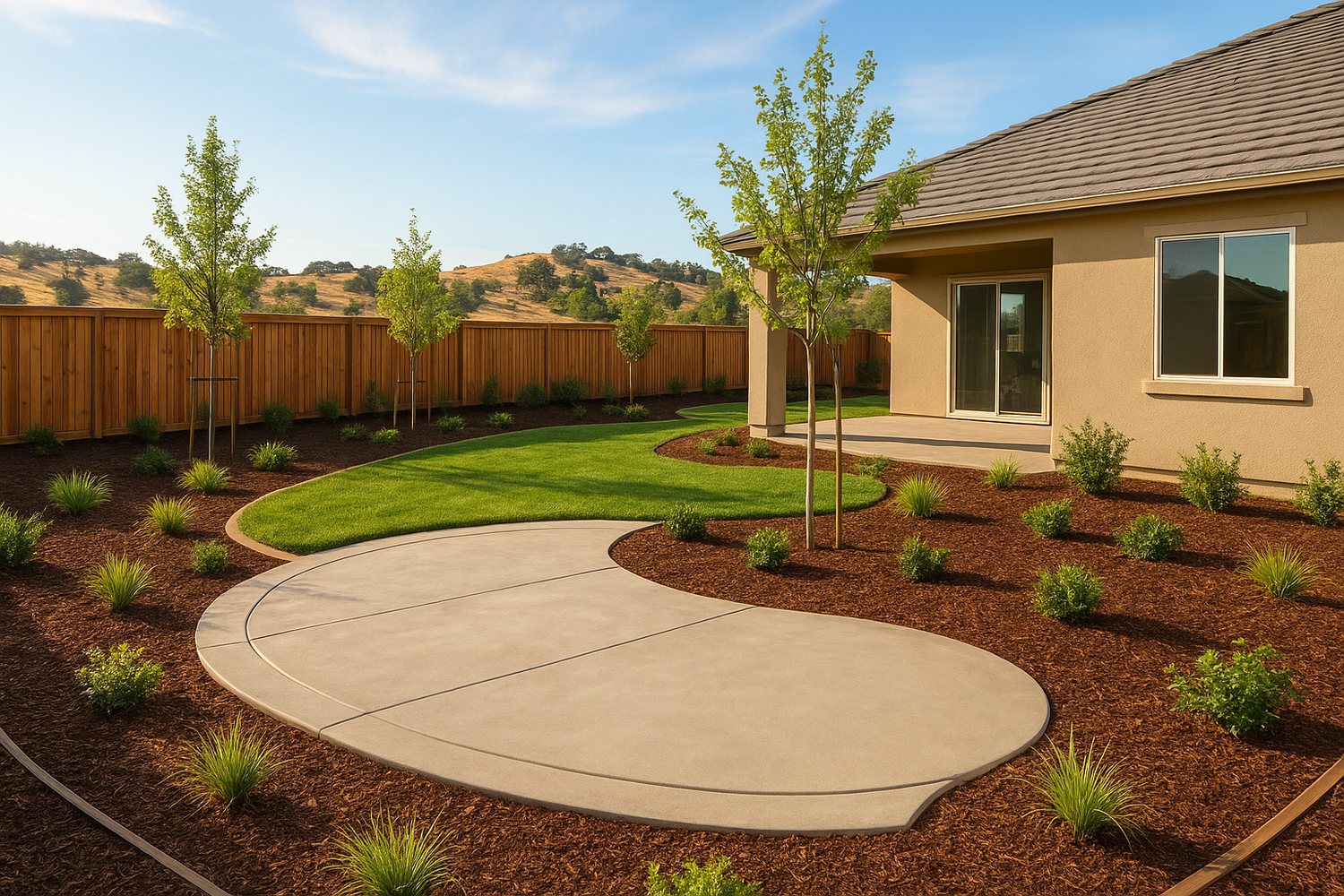
Landscape design and planning
Expert landscape design and planning in Rocklin and nearby. Site analysis, sun/shade, drainage, plant palettes, hardscape integration, built right.
Explore →
California native plant gardens
California native plant gardens Rocklin homeowners can enjoy: pros, cons, design options and build details for beautiful low-water yards.
Explore →Dry Creek Bed FAQs—for Placer, Sacramento & El Dorado Homeowners
Will a dry creek bed solve drainage around my house or patio?
If properly designed and sized, a dry creek bed is excellent at capturing and redirecting roof, driveway, or hillside runoff. For chronic flooding right next to your foundation, we may pair the creek bed with underground drainpipe or catch basins. Every site needs a custom look at slopes, gutters, and soil absorption before a solution is confirmed.
How deep and wide does my dry creek bed need to be?
The sizing depends on the amount of water expected during a major storm event, your lot’s specific slope, and the infiltration rate of regional soils. As a rule of thumb, most residential channels range from 12–24 inches wide and 6–12 inches deep, but larger systems are needed on steeper slopes or where water collects from big roof areas.
Can I use colorful decorative gravel instead of river rock?
River rock is preferred for its smooth edges (reducing injury risk), ability to keep from washing away, and natural look consistent with local streams. Some limited accent zones or border lines can use decorative gravel or colored stone, but loose, lightweight gravels are prone to moving in strong water or wind.
Do dry creek beds attract pests, snakes, or mosquitoes?
Unlike standing water features, a properly built dry creek bed won’t hold puddles—mosquitoes have nowhere to breed. The occasional lizard or garter snake may enjoy sunning on the warm rocks, but the channel itself does not attract pest infestations like ponds or thick shrubbery might.
How long does installation typically take?
Smaller dry creek beds (30–50 feet long) can usually be completed in 3–5 days, including layout, excavation, edging, rock/larger boulder placement, and plantings. More complex jobs—including bridges, extra-wide channels, or major soil work—can extend the timeline. Weather and site access are important factors.
Will the rocks and boulders shift during storms or over time?
We set both river rock and large boulders with careful attention to subgrade, base, and edging. Partially burying boulders and locking smaller rocks in place prevents major movement. On very steep grades or with heavy runoff, occasional repositioning (every few years) may be needed to keep the channel crisp.
Is any maintenance required with creek-side plantings?
All landscaping needs some maintenance, though creek bed plantings are lower-care than lawns or traditional beds. Expect to periodically prune, replace occasional plants, and tidy up windblown debris after major storms. Drip irrigation, if installed, should be checked seasonally for leaks or clogs.
Can you help with HOA or city approvals for a dry creek bed?
We frequently assist homeowners with providing plans, elevations, and descriptions for HOA or city/county approval as needed. Local requirements can vary widely, especially for visible frontage or substantial grading. We recommend checking with your association or local planning office early in the process so your project proceeds smoothly.
Ready to Explore a Custom Dry Creek Bed?
Email sales@californiahardscapes.com with your address, a short project description and a few photos. Let’s see if a dry creek bed is the right answer for your yard.