Exposed Aggregate Concrete: Choices, Construction, and Care
Thinking about exposed aggregate for your driveway, patio, or walkway? This guide gives you everything you need to know before investing.
Thinking Beyond Plain Concrete
Best for: Exposed aggregate concrete is perfect for homeowners wanting a decorative, slip-resistant, and durable surface that highlights natural stone.
Exposed aggregate concrete sets itself apart from typical gray flatwork by revealing a beautiful mix of natural stone just beneath the surface. The finished effect is both richly textured and non-slip, with color and depth that ordinary broom finishes simply can’t match. It’s a popular choice here in the Rocklin, Roseville, Granite Bay, and Folsom areas for driveways, front walks, entries, patios, and pool decks.
This finish is made by either mixing aggregate into the concrete or by seeding selected stones on top, then removing the cement paste to uncover the stones. The result? Every job is unique, depending on the stone blend, exposure depth, and how it’s finished and sealed. With the right planning and an experienced crew, exposed aggregate can be both an upscale design feature and a practical, long-lasting solution.
As with anything worth building, exposed aggregate must be done right from the start. Poor installation or thin sections can lead to loose stones or scaling. At California Hardscapes, we don’t compete on being the cheapest. We compete on quality, integrity, and results that exceed expectations—with every project built as if it were our own home. If you’re weighing whether this option is right for your property, this page goes deep on the technical, design, and lifestyle considerations.
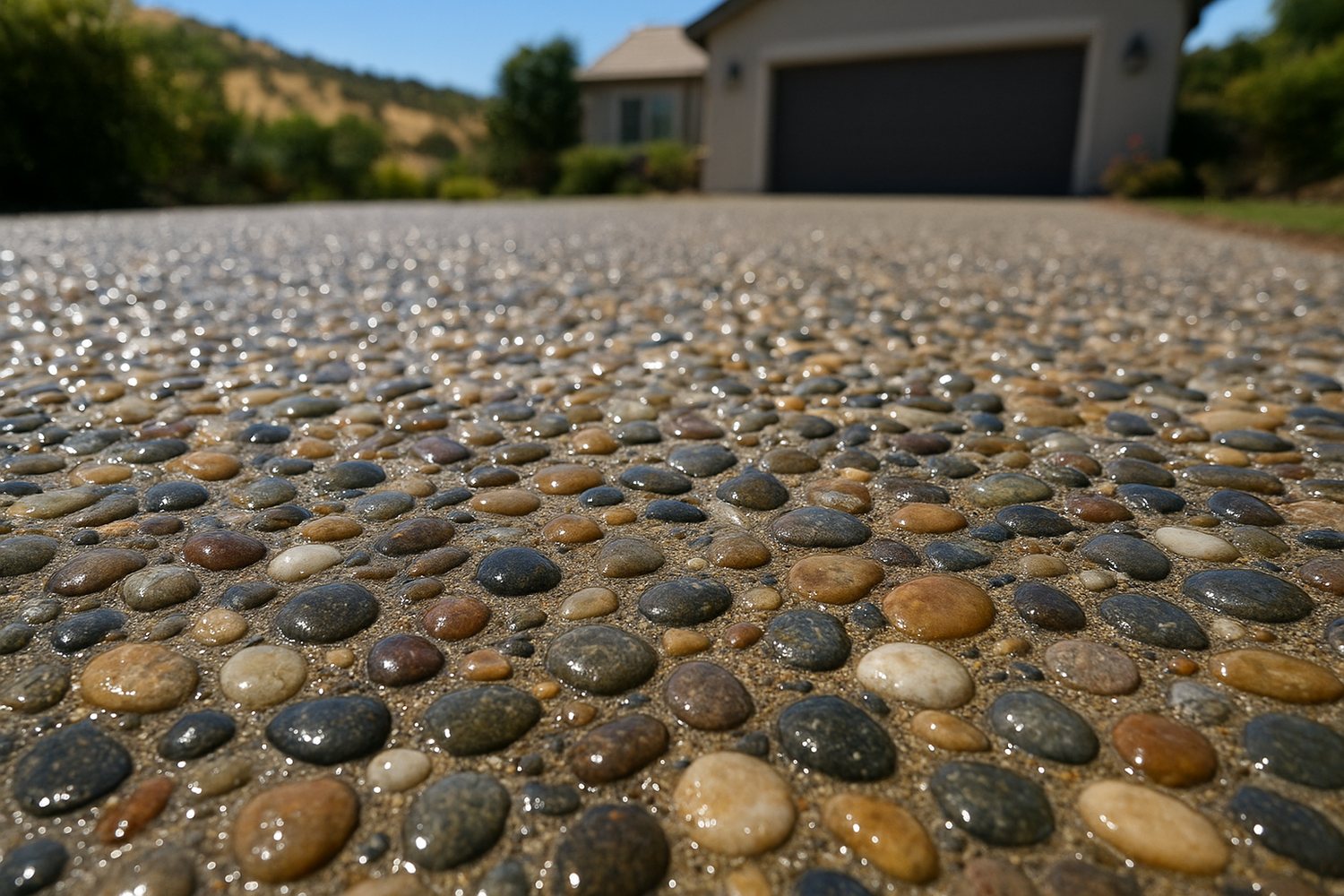
Design Choices for Exposed Aggregate Concrete
Seeded vs. Mix Aggregate
With mix aggregate, decorative stone is blended throughout the concrete at the batch plant. The look is random and even. Seeded aggregate, on the other hand, involves hand-broadcasting specialty stones atop freshly placed concrete. This can create a bolder, more custom look, highlight rare colors, or create patterns. Seeded may cost more for install and material but lets you control color, size, and density.
Aggregate Stone Types
Your choice of stone dramatically impacts the final look. Common options include smooth round river pebbles (in tan, gray, multi-color, or black), crushed granite for a sharper angular profile, or specialty recycled glass and quartz. Stone must be graded for size (usually 3/8” to 5/8”). Locally, river rock is most common and wear-proven. Ask to see physical samples before deciding.
Aggregate Colors
Color options depend mainly on the source of your stone. Earthy tans, browns, charcoals, gray-blues, and black are all possible. Seeding with colored or specialty aggregate lets you tune the palette to your home. Pigments can also be added to the concrete itself for richer background color that complements the aggregate.
Exposure Depth
Shallow exposure leaves the tips of the aggregate just peeking through the concrete paste—creating a subtler, often more even appearance. Medium exposures show more stone, and deep exposure dramatically highlights color and texture, but can make surfaces rough-textured. The right approach balances looks, slip-resistance, and ease of cleaning.
Retarder Application
Surface retarders are sprayed to slow the set of the top layer of concrete, giving the crew time to wash off paste and expose the aggregate evenly. This step is crucial for consistency. Retarder can be used with both mix and seeded aggregate, and choosing the right formula is critical for our local weather and project timing.
Sealing Options
A high-quality penetrating or film-forming sealer is essential for color pop, easier cleanup, stain resistance, and freeze protection. Options range from natural matte to glossy wet-look. Sealing should be repeated every 2–4 years, depending on exposure and traffic. The right sealant won’t make surfaces slippery but will protect and enhance your investment.
How Skilled Crews Build Exposed Aggregate Concrete
A durable, beautiful exposed aggregate slab starts with a solid foundation and careful attention to each step. Here’s how we approach every project, with every detail treated as if it were our own home:
- Excavate and grade the subgrade for uniform depth—removing roots, clay pockets, old concrete, and ensuring plenty of compaction to avoid settling, especially in our regional soils.
- Lay a compacted base layer (class II road base or crushed rock), a minimum of several inches thick. In areas prone to winter wet or roots, we may use geotextile or thicker base depths.
- Build sturdy forms with true edges and proper slope for water runoff, ensuring accessibility and aligning with landscape and structures. Forms also shape any decorative borders or joint patterns.
- Install steel rebar (and mesh, if required), supported on true chairs, to prevent cracking and give the slab consistent strength through winter freezes and summer heat.
- Pre-layout and cut expansion or control joints to manage shrinkage cracks. Decorative saw-cuts or tooled joints can be blended into the overall design, especially on driveways or patios.
- Place and screed the concrete mix, then float for level. For seeded aggregate, we hand-broadcast chosen stones over the surface. A carefully measured retarder is applied, then after set time, paste is pressure-washed or brushed off to reveal the exact amount of stone.
- Final rinse and clean, let the surface cure properly (often with protective plastic or curing compounds). Once fully dry, seal with the right product for color, traffic, and slip-resistance.

Pros and Cons of Exposed Aggregate Concrete
Strengths
- Striking, natural look that compliments homes throughout Placer, El Dorado, and Sacramento counties.
- Excellent slip resistance, even when wet—ideal for entries, pool decks, and steep drives.
- Durable and weather-resistant when installed and sealed properly; surface wears well even through hot summers and winter rains.
- Highly customizable: colors, aggregate types, patterns, and borders can be tailored to fit any aesthetic.
- Low routine maintenance; just periodic cleaning and resealing keeps the finish looking great for years.
Trade-offs
- More labor-intensive and detail-sensitive than broom or trowel finishes, so up-front cost is higher.
- Deep exposures or certain stones may feel rough underfoot, which may not be ideal for barefoot traffic.
- Some aggregates and sealers may be harder to source or require special ordering, affecting timeline and cost.
- Surface can develop haze, dullness, or isolated pop-outs if not cleaned, sealed, and maintained as recommended.
Understanding Cost and Value
Exposed aggregate concrete is an investment—reflecting both material and skilled labor. While more costly than simple broom finishes, the longevity, decorative appeal, and safety benefits mean many homeowners view the upfront cost as worthwhile for signature features like driveways, walkways, and entertaining spaces. As with all custom concrete work, thoughtful design and top-notch execution produce the longest-lasting results. Our philosophy is simple: deliver quality, not shortcuts.
- Aggregate type and whether it’s mix or custom-seeded (uniquely colored or imported gemstones cost more).
- Thickness and size of the slab—driveways and vehicular areas require deeper pour and more reinforcement.
- Site preparation: heavy grading, digging out clay pockets or handling slopes, and adding deep base or drainage increase cost.
- Forming complexity, including radius edges, decorative borders, or multi-level steps.
- Sealing product selected, and whether a premium UV-resistant formula is preferred for exposed locations.
- Accessibility for materials and equipment: tight yards or tricky driveways may need extra hand labor.
Maintenance Tips for Lasting Beauty
Routine maintenance keeps exposed aggregate looking its best. Hose or gently pressure wash as needed to remove dust, leaves, and stains. Avoid harsh de-icers or metal snow shovels, which can hasten wear. Every 2–4 years—depending on sun, traffic, and leaf-fall—reapply a compatible penetrating or film-forming sealer to preserve water-resistance and color vibrancy. Check with your installer for safe cleaning agents and products.
With proper installation and timely resealing, exposed aggregate surfaces regularly last 30 years or more. Heavier vehicles, constant soak (pool splash-out) or harsh chemicals can shorten lifespan and cause premature surface loss. Watch for signs like dullness, pitting, or isolated stones coming free. Most owners find maintenance is simple—much easier than pavers or stone joints. Get touch-up advice before DIY repairs or power-washing.
Compare other options

Colored (integral color) concrete
Explore integrally colored concrete by California Hardscapes Rocklin—pigment choices, color charts, matching, care & trade-offs for Placer & Sacramento homes.
Explore →
Concrete patios
Explore expert advice on concrete patios in Rocklin: layout, finishes, durability, costs, design tips and care. Make the right choice for your outdoor space.
Explore →
Concrete repair, sealing and replacement
Crack repair, joint sealing, spall and scaling repair, sealing and resealing, slab lifting considerations, and when to remove and replace.
Explore →Frequently Asked Questions About Exposed Aggregate Concrete
How is exposed aggregate different from stamped or broom-finish concrete?
Exposed aggregate reveals the natural stones within the concrete by removing the surface layer, showing real pebble texture and color. Stamped concrete is patterned and typically colored but does not display real stone. Broom finish is the simplest, with just parallel lines for traction, showing mostly gray cement paste. Each offers distinct looks, costs, and performance.
Will exposed aggregate work for a driveway with heavy cars or RVs?
Yes, when built thick with the right base and steel, exposed aggregate handles residential vehicles—often better than decorative pavers or thin overlays. Specifying larger, strong aggregates and proper jointing prevents cracking and raveling. Discuss all loading needs with your installer at the design stage.
How soon can we use or walk on new exposed aggregate?
Foot traffic is generally safe 24-48 hours after final wash and exposure, but avoid heavy loads—and wait until recommended cure and sealing are complete before placing vehicles or furniture. Sealing often happens about 1 week after placement, weather depending, for best adhesion and durability.
Is exposed aggregate slippery when wet?
No, when properly exposed and sealed, the stone texture gives excellent traction—even in wet or poolside areas. High-gloss sealers can sometimes feel slick on steep grades, so a matte or non-slip additive may be recommended for inclines or walking surfaces used barefoot.
Can existing plain concrete be upgraded to exposed aggregate?
True exposed aggregate requires new placement—it’s not possible to grind or acid-wash regular gray concrete to match the look. Occasionally, overlays or toppings can mimic the effect, but results and longevity are unpredictable. For best appearance and strength, a new slab is the standard approach.
What are typical maintenance and resealing intervals?
Expect to reseal every 2–4 years, depending on sun exposure, traffic, and weather. Occasional gentle cleaning goes a long way. In shaded, leaf-heavy areas, checking sealer performance in the fall helps prevent water intrusion over winter.
How do I choose between mix aggregate and seeded finishes?
Mix aggregate is more uniform, using aggregate blended at the plant, and may save cost. Seeded lets you handpick specialty stones, colors, or borders, making for a true custom look. Seeded jobs demand more labor and expertise, so consider your design goals versus budget.
What should I do before my project starts?
Check any HOA or city rules for visible areas. Mark irrigation and utility lines (call 811 for underground utilities). Plan to clear the work area of vehicles, personal items, and landscaping close to the project. Good up-front prep means fewer surprises and a faster, smoother job.
Ready to Explore Exposed Aggregate?
Email sales@californiahardscapes.com—include your address, a brief project description, and a few site photos. We’ll connect to talk options and next steps.