Gas Fire Tables & Fire Bowls: Create Your California Gathering Place
Add warmth, light, and ambiance to your backyard with custom gas fire tables and bowls, designed and installed for lasting enjoyment.
Why Choose a Fire Table or Fire Bowl?
Best for: Best for homeowners who want a gathering spot that offers style, warmth, and drama—without the smoke or hassle of wood fires.
There’s something timeless about gathering around a fire. In our climate—from Rocklin to Folsom—a gas fire table or bowl can transform your backyard into a year-round destination for relaxation or entertainment. Unlike woodburning fire pits, gas features offer instant ignition, clean flames, and low-maintenance enjoyment—without the ash or lingering smoke.
The selection today is broader than ever: concrete and metal bowls, sculptural fire-and-water features by the pool, sleek linear fire tables for contemporary patios, and options in burners, controls, and glass or stone media. Placement is key—close enough for comfort, but thoughtfully sited for safety, visibility, and connections. Reliable gas lines and sturdy builds mean you’ll be enjoying your fire feature for years.
California Hardscapes approaches fire tables and bowls as a craft—just as we do with patios and pools. Marty oversees every project with the mindset: Build it as if it were for your own home. That means no cutting corners: every connection, every finish detail, and every material choice aims for durability, long-term value, and safety. We don’t claim to be the cheapest, but our focus is quality, integrity, and exceptional results each time.
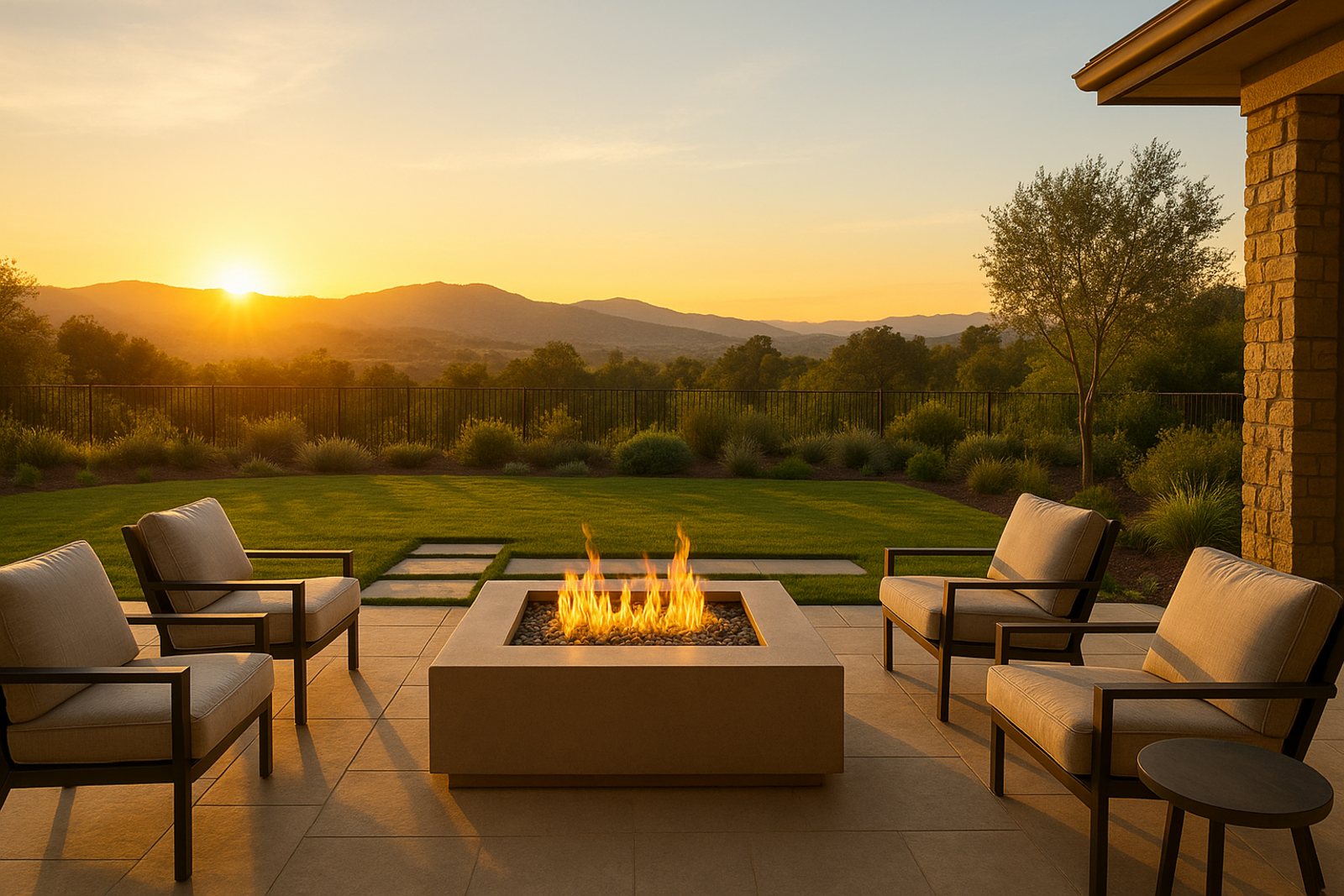
Fire Table and Bowl Options for Your Space
Cast Concrete Bowls
Cast concrete remains a top choice for fire bowls thanks to its durability, clean lines, and natural texture. Available in round, square and custom shapes, these bowls come in a range of colors and surface finishes. Choose smooth, sandblasted, or etched textures to coordinate with your patio or poolscape. Concrete holds up well to our hot summers and cool winters when properly installed and sealed.
Metal Fire Bowls
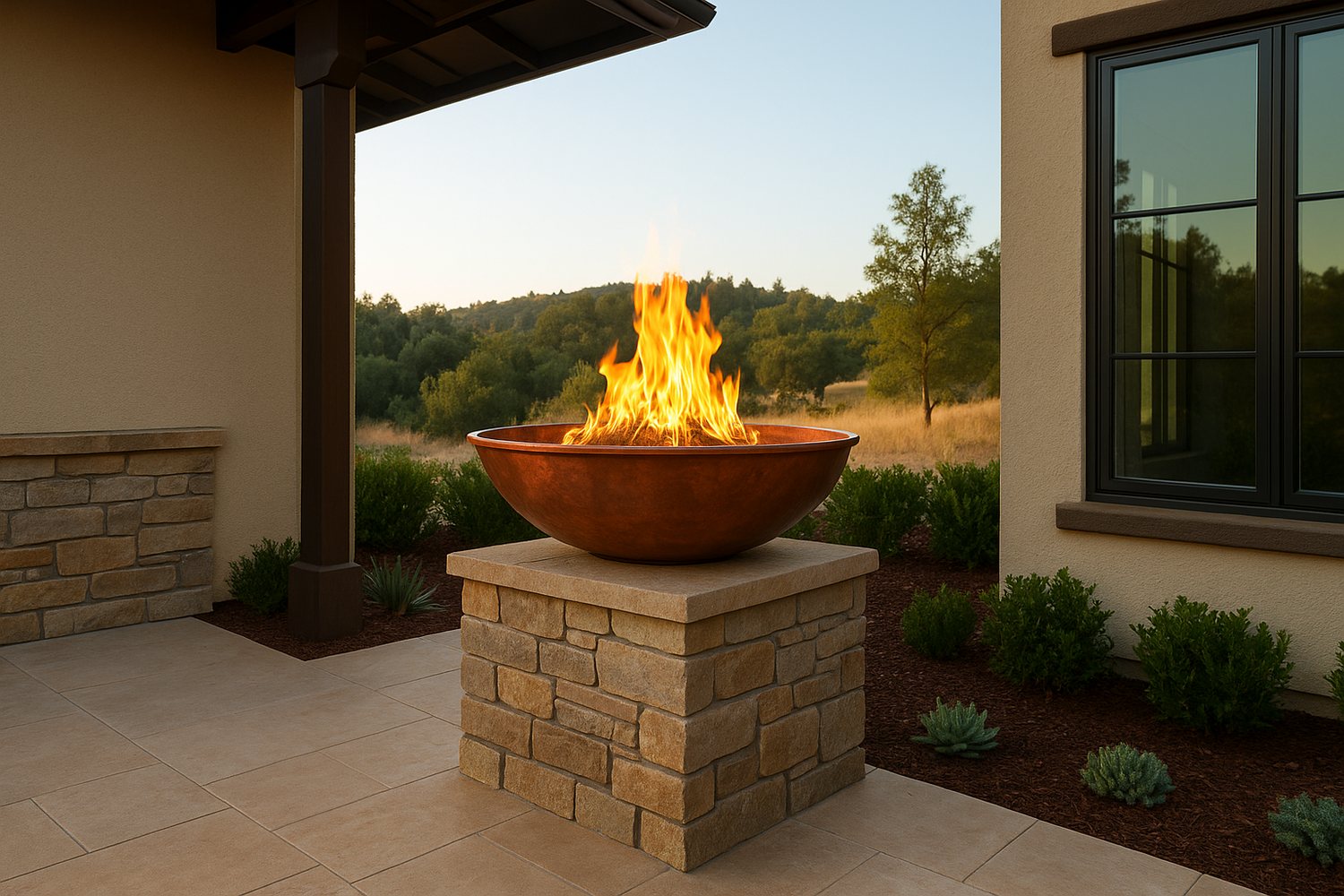
Metal bowls, especially those made from stainless steel or copper, offer a striking look that’s both modern and timeless. Copper ages to a rich patina, while stainless stays crisp and reflective. Look for double-walled construction and quality welds for lasting strength, especially near pools or exposed spots. Metal bowls can be set on columns, walls, or pedestals for visual impact.
Poolside Fire-and-Water Features
Elevate your pool experience with fire bowls that incorporate water spillways or bubblers. These dramatic features combine dancing flames above a gentle cascade, creating an unforgettable visual and auditory effect. Fire-and-water bowls require careful planning of gas, water, and electrical lines, and they’re best built in during pool construction or major remodels.
Burner Types & Decorative Media
Burners range from classic rings for round bowls to linear troughs for rectangle tables. All-metal burners resist corrosion and deliver consistent, adjustable flames. For aesthetics, you can top burners with fire glass, lava rock, or ceramic stones—each changes the look and heat distribution. Choose a burner sized appropriately for the desired flame height and fuel supply.
Wind Guards and Controls
Wind guards are low-profile glass barriers that help maintain a stable flame and shield guests from heat loss or sudden gusts. Options include push-button ignition, wall switches, timers, and smart phone controls. For family safety, consider features like key valves or flame-sensing shutoff. Position controls within easy reach but out of splash or traffic zones.
Custom Placement and Pedestals
Proper placement sets the mood—whether centered on a patio, flanking a pool, or anchoring a gathering nook. Pedestals and columns can elevate bowls for visual drama or practical reasons (like shielding flames from low seating). Always factor wind direction, seat heights, and proximity to structures or trees. Built-in gas lines should be planned early for seamless looks and convenience.
How We Build a Lasting, Safe Fire Table or Bowl
Building a quality gas fire table or bowl is far more than just setting down a feature and running a hose. It’s a precise process demanding sturdy foundations, smart utilities, crisp concrete or patio detailing, and safe, code-compliant gas connections. Every step matters—down to the subgrade and sealing. Here’s what to expect when California Hardscapes takes on your project:
- 1. Subgrade Preparation: Excavate and compact soil under the fire feature area, addressing clay or DG soil movement and grading for drainage. Verify slopes away from structures and plan for any pedestal or column bases.
- 2. Base Installation: Lay a well-compacted gravel base to provide drainage and prevent settling. For patios, ensure the base integrates with surrounding concrete or paver systems.
- 3. Formwork and Setting: Build precise forms for concrete pads, pedestals, or gas line chases as needed. Set bowl brackets or anchor sleeves within forms for secure mounting.
- 4. Reinforcement: Install rebar or mesh reinforcement in concrete pads or pedestals to prevent cracking, considering local soil types and feature weight.
- 5. Gas Line Routing: Licensed plumbers trench and install gas lines with proper materials and depth, adding shutoff valves and pressure regulators per code. All connections are tested for leaks before final assembly.
- 6. Feature Placement and Assembly: Set the fire table or bowl on its pad or pedestal, secure burners and media, and install controls, wind guards or water lines for combo features. Protect finishes and check function.
- 7. Finishing Touches: Clean and inspect all surfaces, seal exposed concrete, and verify burner operation. Restore surrounding landscaping or patio areas, leaving the site ready for you to enjoy.
Advantages and Drawbacks of Gas Fire Tables & Bowls
Strengths
- Instant ignition and shutoff—no smoke, ash, or wood mess.
- Consistent, adjustable flame height and reliable warmth even on cool evenings.
- Broad design flexibility: shapes, finishes, and placements to suit your yard.
- Safer and more HOA-friendly than woodburning alternatives, with options for flame-sensing shutoff and wind guards.
- Long-lasting, low-maintenance materials (concrete, stainless steel, copper) built for tough climates.
Trade-offs
- Upfront installation costs, especially for underground gas line or electrical work.
- Limited heating radius compared to larger woodburning fire pits.
- Gas features are not a source of cooking heat—open flame is for ambiance, not grilling.
- Permanent placement means changes later require demolition and new work—so initial planning is essential.
What Affects the Cost of a Fire Table or Bowl Project?
Prices range greatly based on the size and complexity of your project. Gas fire features are an investment—especially with built-in plumbing, custom pedestals, or integrated pool or lighting controls. At California Hardscapes, every bid is detailed and built around the best long-term value, not lowest up-front number. You’ll see every element spelled out clearly before work begins.
- Type and size of fire feature (concrete vs. metal, size of bowl, custom vs. standard).
- Complexity and length of gas line trenching, plus need for regulators, shutoffs or meters.
- Custom pedestal, seatwall, or masonry base construction for mounting features.
- Integration with water features, pool hydraulic systems, or outdoor lighting.
- Site preparation required: soil type, grading, demo of old patios or landscaping.
- Selection of controls, wind guards, custom media, and finish detailing (sealing, coloring).
Maintenance and Longevity: What to Expect
Routine care is straightforward—keep burners, media, and control boxes free from debris, spider webs, or pets. If your feature includes a water element, regularly check for calcium deposits and winterize as needed. Most concrete or metal bowls just need an occasional wipe-down. For glass wind guards, use a non-abrasive cleaner, and keep flames off glass surfaces to avoid breakage.
Concrete bowls may need re-sealing every 2–4 years, especially if exposed to splash zones or UV. Burner components can last a decade or more with proper use, but check annually for corrosion or leaks—especially after winter. Hard water can add maintenance, as can heavy tree debris or oak leaf buildup. With quality installation and periodic checks, expect 10–20 years of reliable use before major refurbishing is needed.
Compare other options

Outdoor bars and entertaining areas
Explore practical, premium options for outdoor bars and entertaining areas in Rocklin. Details on counters, seating, audio, lighting, care and more.
Explore →
Aluminum and louvered pergolas
Explore louvered pergolas for Rocklin & area: adjustable aluminum, rain gutters, powder-coat colors, lighting, heaters & more. Premium, precise builds.
Explore →
BBQ islands and grill stations
Learn the trade-offs and steps to a quality BBQ island in Rocklin, Roseville & nearby. Grill types, frames, countertops, ventilation, costs, and upkeep.
Explore →Frequently Asked Questions About Fire Tables & Bowls
Do I need a permit for a gas fire feature?
Permit requirements depend on your city or county and the specific details of your project. Gas lines almost always require inspection and a permit. HOA rules may govern location, style, and heights. We recommend checking with your local authority and reviewing your HOA’s guidelines before starting design or scheduling work.
How far does my fire bowl or table need to be from structures or fences?
Placement guidelines typically call for several feet of clearance from any combustible surfaces, including walls, pergolas, or fences. The exact distance depends on the bowl or table size, burner output, and wind direction. We assess every site with safety in mind before finalizing design, ensuring code compliance and practical enjoyment.
Can you add a fire feature to an existing patio or pool?
Yes, it’s possible to retrofit a fire bowl or table onto an established patio or pool deck, but it may involve trenching for gas lines, modifying the base, or cutting into existing hardscapes. In these projects, careful planning limits disruption and ensures a seamless look. The earlier fire features are incorporated into an outdoor remodel, the more options you’ll have for integration.
Are gas fire bowls safe for families with kids and pets?
When installed professionally, gas fire features offer safety advantages over wood fires—there’s no open stack of burning logs, flying sparks, or ash. Wind guards, flame-sensing shutoffs, and recessed burners add further peace of mind. However, flames and hot media are still dangerous—active supervision and basic safety rules remain a must with children and animals nearby.
What’s the lifespan of a gas fire table or bowl in this region?
With quality materials and professional installation, gas fire bowls and tables in our climate last 10–20 years or more. Factors influencing lifespan include the type of bowl (concrete holds up very well), media selection, burner durability, exposure to splash or hard water, and routine maintenance. Annual checks and resealing for concrete ensure maximum durability.
Can I use my fire bowl or table during spare-the-air days or burn bans?
Yes—because gas fire features produce minimal emissions, they’re generally allowed during woodburning bans in our area. However, always double-check local rules or temporary restrictions. Gas fires do not create significant smoke or particulates, making them a preferred choice for both your family and your neighbors’ comfort.
What kind of gas can I use—natural gas or propane?
You can use either natural gas (from a house stub-out) or propane (from a buried or above-ground tank), but burners and plumbing must be matched to the fuel type. Natural gas offers convenience and lower operational cost if available. Propane gives flexibility where gas service isn’t easily accessible. We help you select the safest and most efficient option for your site.
Can fire bowls and fire tables be used year-round?
Absolutely. In our region’s mild winter, there are few days when a fire table or bowl can’t add warmth and ambiance to an evening gathering. Summer evenings benefit from subtle lighting and comfort, while occasional chill in fall or spring is easily chased away with a quick flame. Choosing materials rated for local climate ensures performance year after year.
Ready to Talk Fire Features?
Call or text 916-741-0633, or email sales@californiahardscapes.com with your address, a short description of your vision, and a few photos of your outdoor space. We’ll review the possibilities and help you plan a fire feature that enhances your home—and fits your life.