Your Guide to Choosing Flagstone & Natural Stone for Outdoor Projects
Flagstone and natural stone deliver a premium look and lasting performance for patios, steps, caps and wall accents. Here’s what to know before choosing yours.
Why Flagstone and Natural Stone Stand Out
Best for: Ideal for homeowners seeking a unique, timeless and durable hardscape with natural beauty—a finish that’s never exactly duplicated.
Flagstone and natural stone are trusted go-to choices for elevating outdoor living, favored for their organic beauty, authenticity and durability. Whether you’re remodeling a patio, constructing garden steps, or topping a seating wall, natural stone creates a sense of permanence and connection to the landscape. Every slab is uniquely shaped by nature—and no two installations ever look quite the same.
Choosing stone isn’t just about picking a color or a shape: it’s about weighing your site’s conditions, understanding how stones weather and age in California’s intense seasons, and how different types respond underfoot or to heavy use. Flagstone refers broadly to flat, thin slabs (often sandstone, slate or quartzite), but stone type, thickness, and cut affect cost, maintenance, slip resistance and even comfort for bare feet.
Our approach at California Hardscapes is rooted in experience: more than three decades spent specifying, supplying, and installing hardscape materials across Rocklin, Roseville, Granite Bay, Folsom, Auburn and surrounding foothills. We don’t compete on being the cheapest. We compete on quality, integrity, and results that exceed expectations. That philosophy guides every decision, from stone selection through finished installation—done right, no corners cut.
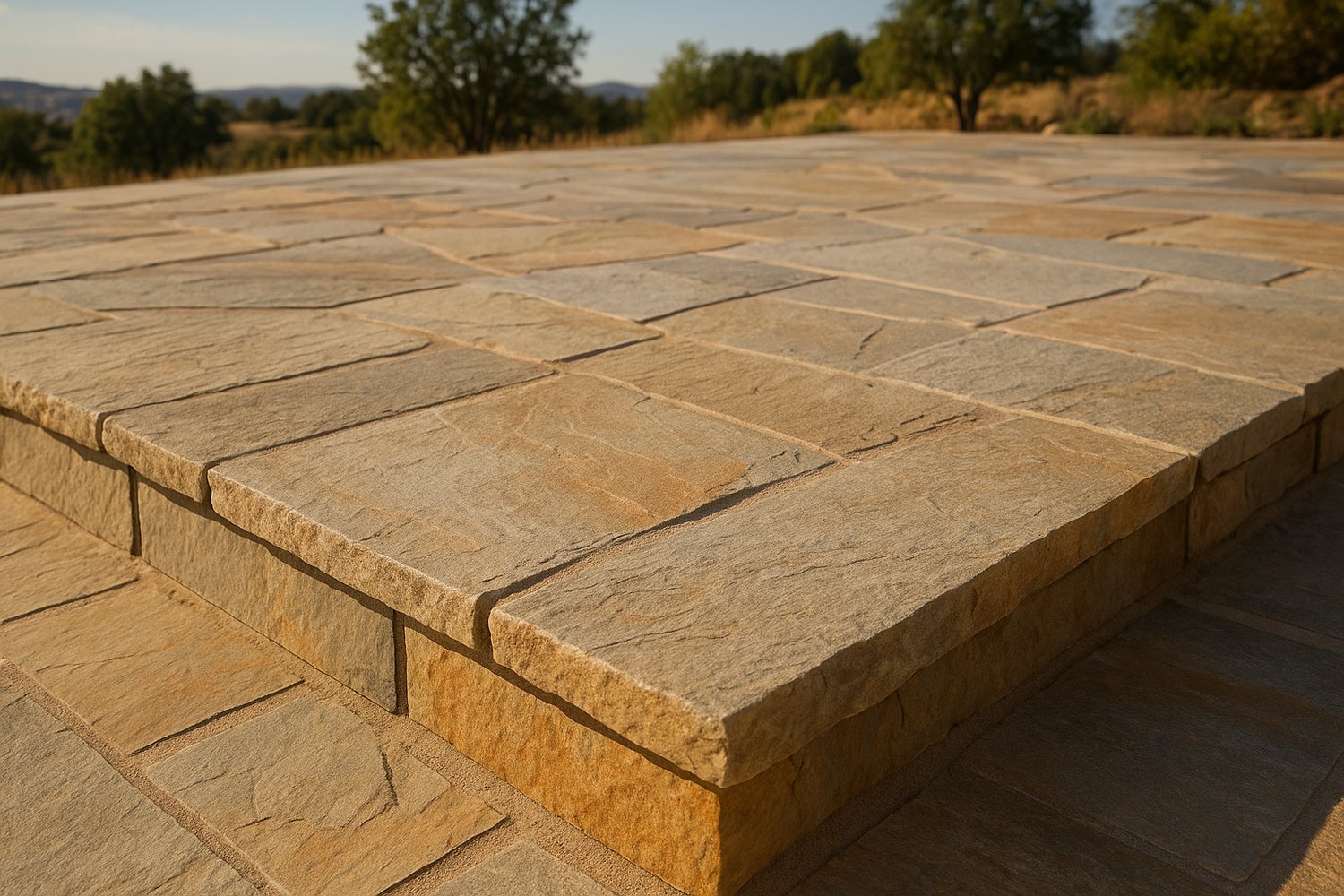
Versatile Choices: Flagstone & Natural Stone Options
Material Types: Sandstone, Slate, Quartzite
Sandstone is a practical favorite with warm earthy hues, naturally slip-resistant surface, and moderate porosity. Slate is denser, often cooler in color—greys, blues, purples—and less absorbent (but can be brittle). Quartzite delivers unmatched hardness, sparkle, and gold-silver tones; it’s tough, resists scratching and weathering, but is typically costlier and very heavy.
Thickness: Walkable or Veneer
Patio-grade flagstone for walkways, patios and steps commonly runs 1½–2" thick, ensuring stability and a solid feel underfoot. Stones thinner than 1¼" can shift and crack unless mortared atop a slab. Veneer-grade is lighter (¾–1¼") for vertical wall faces and caps, not for heavy-traffic flatwork.
Color and Pattern Range
Color varies widely by quarry: creamy buff and tan, rusty red, steel blue, charcoal, even subtle greens and purples. Some stones feature pronounced veining or fossil traces, others are more uniform. No color is perfectly consistent, so always expect and embrace variation—that’s the point of natural stone.
Irregular vs Cut Shapes
Irregular (as it comes from the quarry) offers a more rustic, organic look—jigsawed together by hand, each joint unique. Cut or ‘dimensional’ flagstone (square, rectangle, or consistent pattern) offers a neater, modern appearance, more uniform gaps, and typically easier cleaning, but sometimes more visible cuts and seams.
Surface Texture and Edge Finish
Some flagstones are naturally split for a rough, grippy texture ideal for pools and patios; others are sawn for a smoother finish, more formal and easier to hose off. Edge treatment matters too: natural edges blend into the landscape, while sawn edges align in orderly lines or with tight grout joints.
Applications: Patios, Steps, Caps & Walls
Patios and pool decks call for robust, non-slip stone thick and level enough to walk on safely. Treads and step risers use thicker slabs or stacked stone for durability. Wall caps require denser stones with clean finishes, resisting water and maintaining integrity. Lighter pieces serve as attractive veneers for vertical wall surfaces.
What a Quality Flagstone Installation Looks Like
Professional flagstone and natural stone installations blend skilled prep with meticulous finishing, ensuring your hardscape lasts for decades. The best results come from experience—understanding the region’s soils, anticipating movement, and attending to every joint and transition. Here’s how licensed, bonded and insured contractors assemble a quality flagstone patio, walk, or landscape feature:
- Subgrade: Remove vegetation and loose soil, then shape and compact subgrade to proper depth—accounting for slope and drainage so water moves away from structures and roots.
- Base: Install and compact several inches of a stable base like compacted class II road base or decomposed granite, moistened in lifts, to lock in a smooth, unyielding surface. Proper base prevents shifting and settling.
- Forms: Set edge restraints or forms (concrete, metal, pressure-treated wood) around the perimeter to define final lines, contain the base, and support outer stones. Forms stay in until all surfaces and joints are secure.
- Reinforcement: Lay flagstone closely fitted atop base, using select stones for key walk zones. For mortared installs, a concrete slab foundation may get steel reinforcement to resist cracking. Walls and steps use rebar, mesh, or pins as needed.
- Joints: Choose jointing: dry-laid (swept with decomposed granite or sand), or mortared (grouted joints over a slab base). Wider gaps suit rustic dry-laid paths; mortared joints resist weed growth and ant intrusion for clean lines.
- Finishing: Tap stones in to final height for a trip-free walk, checking every piece for evenness and proper alignment. Clean excess mortar or sand before it hardens. For steps or caps, fit and finish edges precisely.
- Curing and Sealing: Where mortar is used, allow for controlled curing—keep moist per product specs for full strength. Apply an appropriate stone sealer (matte or gloss) to enhance color and resist stains, moisture and efflorescence.

Flagstone and Natural Stone: Pros and Cons
Strengths
- Every project ends up one-of-a-kind; no two stone patios or walls ever look identical.
- Flagstone offers exceptional durability and freeze-thaw resistance when installed right.
- It maintains color and rich surface texture even after years of sun, foot traffic and water.
- Stone is non-combustible and slip-resistant—especially important around pools, grills and fire features.
- Patios and steps stand up to pressure-washing, moving furniture, and even heavy planters better than stamped concrete or pavers.
Trade-offs
- Material and skilled labor costs are higher than concrete or pavers; natural stone is an investment.
- Some stone (particularly dark colors and quartzite) can get hot to the touch in direct sun, especially on summer afternoons.
- Irregular flagstone has wider, more uneven joints, which can be harder to sweep and may let in weeds without good joint filler or maintenance.
- Some stones, especially softer sandstones and slates, may weather, flake or develop surface pitting over decades—choice of quarry and sealing matter.
Understanding Cost: What Influences Your Stone Project
Natural stone is a premium choice and priced accordingly—costs reflect extraction, transport, manual sorting, and the expertise needed for installation. Every site is unique, and pricing is customized after a careful review of your design, access, and the chosen stone itself. Remember: shortcuts can mean shifting, cracking, or drainage issues that cost more down the line. We believe in getting it right from the start.
- Stone type, origin, and thickness: Hard-to-source stones, extra-thick slabs, and imported materials raise costs.
- Patio or wall size and shape: Curves, tight spaces or complex layouts require more skilled time and material waste.
- Site access and prep: Steep driveways, steps, or long carries increase labor; poor soil, roots or underground obstacles affect prep costs.
- Choice of joint: Mortared installs and tight joints are more labor-intensive than dry-laid, but offer better weed resistance and easier cleaning.
- Base construction: Areas exposed to heavy water or freeze-thaw cycles may require thicker, engineered bases for longevity.
- Finishing, edging and sealing: Wall caps, steps, custom cutouts or premium sealers add to the finished investment.
Caring for Your Flagstone and Natural Stone Surfaces
Flagstone and natural stone are remarkably resilient but do best with some basic maintenance. Regular sweeping keeps sand and grit from building up in joints. Occasional gentle pressure washing removes algae and stains—avoid aggressive chemicals or high-pressure tips, which can etch the stone or damage joints. Quickly clean up oils, acids (from leaf debris, citrus, pet messes) and fertilizer spills: these can stain porous stones if left too long.
Resealing intervals vary by stone and environment: patios and caps often benefit from resealing every 2–4 years, while vertical stonework can go longer. Some sealers enhance color, others preserve a natural appearance while blocking moisture and stains. With quality installation, routine maintenance, and the right sealer, natural stone installs last several decades—in many cases, they easily outlive standard concrete or manufactured pavers.
Compare other options

Ready-mix concrete basics
Discover ready-mix concrete basics for homeowners in Rocklin and surrounding areas. Learn about strength, slump, aggregates, fibers, color, pouring & curing.
Explore →
Decomposed granite (DG) guide
Expert decomposed granite guide for Rocklin homeowners: types, uses, installation, pros, cons, care, costs, and local tips by California Hardscapes.
Explore →
Sand for hardscapes
Compare bedding sand, joint sand, polymeric sand and more for hardscape projects in Rocklin. Discover the right sand and why it matters for lasting results.
Explore →Frequently Asked Questions About Flagstone and Natural Stone
How do I know which stone is safest for my patio or pool deck?
For pool areas or patios where bare feet and slip resistance matter, look for flagstones with rougher split-face surfaces and lighter color tones that stay cooler in the sun. Sandstone and certain quartzites excel here: naturally gritty, grippy, and not prone to getting extremely hot. Thicker slabs (1½" and up) ensure movement won’t crack stones. Our team can recommend options based on your exact site and exposure.
What’s the difference between dry-laid and mortared flagstone?
Dry-laid flagstone is set directly over a compacted base with sand or decomposed granite swept into the joints. It’s less expensive, easily re-leveled, and gives a rustic look, but weeds or ants can appear if joints aren’t packed and maintained. Mortared flagstone is installed over a concrete slab and grouted—providing a smoother, tighter surface that resists shifting, but at higher cost and with longer installation time.
How do I choose between irregular and cut flagstone shapes?
Irregular flagstone provides a natural, rustic, interlocking pattern—ideal if you want a handcrafted look that disappears into the landscape. It’s more labor-intensive and results in wider joints. Cut or dimensional flagstone offers geometric uniformity, easier cleaning, and faster installation. Appearance and joint width preference usually drive the decision, along with budget and maintenance goals.
Will I need permits or HOA approval for a stone wall or patio?
Requirements vary by city, county, and even by HOA. Most patios and small landscape walls can be installed without a formal permit unless they alter drainage, are tall enough to affect safety (commonly over 3–4 feet), or impact public walks. Projects visible from the street or in front yards often need HOA review. It’s best to check with your local association or agency ahead of time and plan accordingly.
How often should stone patios and caps be sealed?
Most flagstone patios benefit from resealing every 2–4 years, depending on traffic, sun exposure, and the type of stone and sealer. High-traffic or poolside areas may need more frequent attention. Wall caps and vertical faces generally last longer between sealing. Signs it’s time: water no longer beads up, or stains set in more easily.
Can I install stone patios over existing concrete?
Yes, it’s common practice—particularly for mortared installations. The existing slab must be structurally sound with no major cracks or settling. Stone is affixed and joints are grouted for a durable, finished look. Always check slab conditions and expansion joint needs before proceeding. For dry-laid work, removal of old slabs is usually necessary.
What options do I have for cleaning and preventing moss or weed growth?
Regular sweeping and leaf removal go a long way. For moss, light pressure washing and occasional treatment with a mild, stone-safe cleaner helps. Filling joints with polymeric sand or compacted decomposed granite deters weeds and insects. Avoid bleach, strong acids, or metal brushes, which can damage stone surfaces and joint materials.
How does stone compare to concrete pavers in terms of longevity and resale value?
Natural stone, properly installed and maintained, often outlasts manufactured pavers and holds its beauty for decades. It’s less likely to fade and more resistant to shifting or cracking from roots and climate cycles. Our clients find that quality stone adds significant design and resale appeal—particularly in upscale neighborhoods, where authenticity and craftsmanship matter most.
Let’s Get Started on Your Stone Project
Email sales@californiahardscapes.com with your address, a brief description of your vision, and any photos of your space. Marty and the team will advise on specific stones and provide an honest, expert consultation.