Koi & Garden Ponds: A Complete Guide for California Homes
Transform your outdoor space with a custom-built koi or garden pond—done right, from the ground up, for years of reliable enjoyment.
Considering a Koi or Garden Pond?
Best for: Best for homeowners seeking a low-traffic outdoor focal point, relaxing soundscape, and a rewarding hobby with year-round appeal.
Koi and garden ponds bring a soothing, living dimension to your backyard—much more than just a water feature. They offer movement, sound, and a direct connection with nature that appeals to kids and adults alike. From small reflective pools to expansive koi habitats, they’re achievable in a surprising range of yards, including the challenging soils and slopes of our region. Ponds can anchor a new landscape design or provide a fresh focal point for a mature yard.
Choosing to install a koi or garden pond is about more than aesthetics—it’s a hands-on commitment to water quality, fish health, and seasonal care. But with the right planning and construction, routine upkeep can be manageable, and most maintenance is simple: filter checks, periodic cleaning, plant grooming, and brief inspections for leaks or hungry wildlife. Modern filtration, robust liners, and proper design make today’s ponds both durable and naturally balanced.
Like any permanent landscape improvement, results and reliability come down to details: proper excavation, thick underlayment, smart filtration, adequate aeration, and structures that blend with your planting and hardscape. California Hardscapes approaches every pond project without shortcuts, using only techniques and materials that deliver the best results for our demanding area. Our focus: straightforward guidance, honest about trade-offs, executed as if we were building for our own homes.
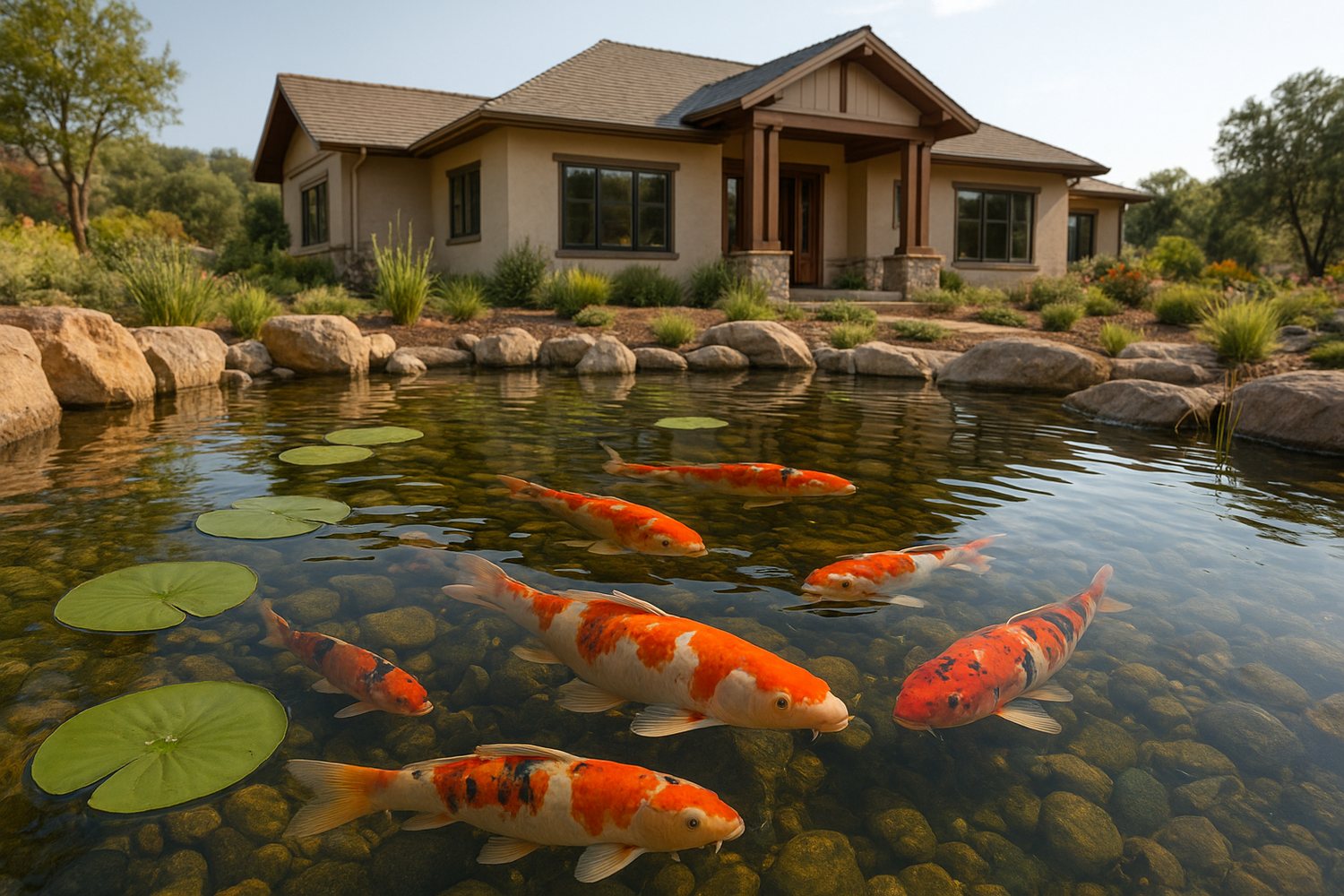
Pond Types and Design Options
Classic Koi Ponds
Designed for healthy, long-lived koi, classic koi ponds are typically deeper (3–5 feet) with straight sides to reduce predator risk and minimize temperature swings. You’ll need substantial filtration, sturdy EPDM or reinforced liners, and minimal planting within the pond for fish safety. Planted surround beds and rock edging blend these formal ponds into the landscape.
Natural-Look Garden Ponds
Mimicking natural bodies of water, these ponds feature irregular shapes, shallow shelves for plants, integrated boulders, and gentle slopes. They blend wildlife habitat with ornamental interest, supporting aquatic plants, frogs, and native insects alongside fish. Water clarity and filtration may be less rigorous than koi ponds, but still important for ecosystem balance.
Waterfall-Integrated Ponds
Adding a waterfall not only elevates the visual and audible appeal but dramatically boosts circulation and oxygenation. These ponds often use biofiltration hidden behind the falls, helping keep water clean while maintaining a wildlife-friendly edge. Waterfalls also aid in cooling during hot Central Valley summers.
Urn, Bowl & Formal Water Gardens
For tighter spaces or a contemporary look, formal pond designs use geometric basins, ceramic urns, or modular containers as focal points. They offer flexibility, increased safety (especially if shallow), and low maintenance. These tend to be best for aquatic plants or small goldfish—not large koi.
Hybrid Ponds (Koi + Plants)
Hybrid designs use tiered depths and partitioned sections—one for koi and another for lush aquatic planting. Strategic rock placement and planting shelves allow for some rooting plants in protected areas, helping balance water chemistry while preserving fish health and safe zones.
Disappearing Ponds & Pondless Waterfalls
A great option if you love the sights and sounds of water but want less ongoing responsibility, these features recirculate water through a hidden basin—no exposed surface, no fish, and dramatically reduced care requirements. Ideal for families with young children or busy lifestyles.
How a Quality Pond is Constructed
A successful koi or garden pond isn’t just a hole in the ground—it’s a carefully layered, engineered system built to last through decades of Northern California’s demanding climate and soils. Each step, from excavation to sealing, determines leak resistance, easy maintenance, and fish health for the long term. Here’s how a top-notch crew like California Hardscapes approaches pond construction:
- Subgrade: The area is marked out, vegetation is removed, and excavation begins, factoring in final depths and shelves for planting and equipment. Native soil grade is checked for compaction and stability.
- Base: Once at target depth, soil is shaped for gentle shelves and subgrade is tamped and leveled. A thick, protective underlayment—often geotextile—is added to protect the liner from punctures, roots, and settling.
- Forms: For formal or geometric ponds, rigid forms are placed to hold straight or shaped concrete or block walls. Naturalistic ponds are contoured by hand, using rockwork and tamped earth.
- Reinforcement: If needed (especially with concrete shells or block walls), steel rebar or mesh grids are carefully installed to increase strength and prevent cracks, especially across slopes or unstable soils.
- Joints: Penetrations for skimmers, bottom drains, or return lines are sealed with flexible boots and waterproof tapes. Careful detailing at liner overlaps, wall bases, or slab joints prevents future leaks.
- Finishing: The EPDM, PVC, or reinforced liner is installed, overlapped by edge stones and shelves. Filtration equipment, aerators, pumps, and plumbing are set up. Rockwork, boulders, and marginal planting are carefully integrated.
- Curing & Sealing: Any concrete work is thoroughly cured to prevent shrinkage or cracks. Seams and pond edges are sealed, and water is slowly added while testing all systems for leaks and balanced operation.

Advantages and Trade-Offs
Strengths
- Transformative outdoor focal point: a beautiful, calming addition that upgrades curb appeal and daily enjoyment.
- Contributes to wildlife habitat, supporting native birds, beneficial insects, and frogs alongside koi or goldfish.
- Customizable for any yard size or style—from small reflective pools to expansive koi havens and waterfalls.
- Offers hands-on enjoyment for families: feeding fish, maintaining plants, and observing pond life up close.
- Done right, modern liner and filtration technologies allow for low-leak, long-lifespan construction with manageable upkeep.
Trade-offs
- Initial investment is higher than most hardscape features—quality matters, and cutting costs risks leaks and fish losses.
- Requires year-round attention: regular filter maintenance, water testing, seasonal debris removal, and monitoring for predators.
- Fish health depends on strict water quality, proper feeding, and guarding against disease or chemical contamination.
- May require HOA approval, city/county permits, and careful design to avoid setbacks, utilities, or invasive roots.
Koi Pond Costs and What Influences Them
Installing a koi or garden pond is more involved than most outdoor features; it’s an engineered ecosystem with ongoing care needs. While initial costs are higher than for fountains or basic landscaping, a well-constructed pond delivers unmatched long-term enjoyment, provided the design, excavation, liner, and filtration are all executed at professional standards. As always, upfront quality pays dividends in lower maintenance and repair down the road.
- Pond size and depth: Larger, deeper ponds require more excavation, liner materials, and reinforcing, all of which raise costs.
- Filtration and circulation setup: High-quality multi-stage filters, bottom drains, UV clarifiers, and pumps add both reliability and expense.
- Liner and edge detailing: Thicker liners and careful edge treatments with rock, stone, or block preserve durability and enhance appearance.
- Landscaping and rockwork: Integrated boulders, marginal plantings, and natural stonework add to both beauty and budget.
- Access and site prep: Sloped, clayey, or root-infested soils—common in our region—demand extra grading, root barriers, or stabilization.
- Utility connections and safety: Adding electrical for pumps, lights, or aerators (with code-compliant GFCI outlets) and safety fencing, if required, add to complexity.
Upkeep and Seasonal Care
Regular care centers on removing leaf debris, inspecting filters and pumps, testing water for ammonia, pH and nitrates, and periodically thinning plants. Koi ponds often need partial water changes every few weeks, and occasional vacuuming or netting to remove sludge and organic buildup. Keeping up with these tasks prevents algae blooms, fish stress, and cloudy water—and makes management far easier across the seasons.
Pond liners can last 20–40 years if properly protected from rocks, roots, sun, and heavy foot traffic. Edge stones may need occasional repositioning. Most filtration systems benefit from annual deep cleaning and professional inspection every 3–5 years. Resealing of exposed concrete or stone work is typically needed every 3–10 years, depending on sun exposure and winter freeze-thaw cycles. Leaf nets and floating covers can reduce labor during heavy fall drop or spring pollen.
Compare other options

Garden streams and creeks
Explore recirculating garden streams and creeks in Rocklin. Learn about liners, rock placement, water movement, connections to ponds, planting, and care.
Explore →
Spillway bowls and scuppers
Explore spillway bowls and scuppers: copper, concrete, fire & water combos, honest pros and cons for Rocklin, Roseville, Granite Bay, and more.
Explore →
Water feature maintenance and repair
Water feature maintenance and repair Rocklin homeowners rely on: cleaning, algae control, winter care, repairs and renovation.
Explore →Frequently Asked Questions About Koi & Garden Ponds
How deep should a koi pond be?
For healthy koi, plan on a minimum of 3 feet, with 4–5 feet ideal—especially in areas with extreme summer or winter swings. This depth protects fish from predators, reduces water temperature spikes, and provides stable conditions for both fish and plant life. Shallower garden ponds are suitable for goldfish and aquatic plants but may be at greater risk from raccoons, herons, and freeze-thaw cycles.
Are there specific liners that last the longest?
The best long-term liners are 45-mil EPDM rubber, which offer high flexibility and aren’t harmed by UV rays or root intrusion. Reinforced PVC and spray-applied polyurea are also used, especially in formal or commercial ponds, but EPDM is the standard for residential installations due to its blend of durability and ease of repair. Always use a thick geotextile underlayment to protect any liner from roots, clay fragments, and rocks.
What filtration is necessary for koi ponds?
Proper filtration is essential for fish health: it should handle both mechanical (debris) and biological (ammonia/nitrite) loads. Most ponds rely on a skimmer, bottom drain, mechanical pre-filter, biofilter (often in a waterfall box), and circulation pump, with optional UV clarifiers to combat algae. Underpowered or neglected filters are the main reason for murky water or fish stress, especially as your pond matures.
How do you control predators?
Deep water and steep-sided walls deter most raccoons, cats, and herons. Netting—especially in spring and fall—provides extra security, while overhanging plants or floating islands give fish refuge. Motion-activated lights or sprinklers can help, but careful pond design is the strongest defense. Avoid shallow shelf zones where wading hunters can strike. Large rocks and marginal plantings also dissuade potential predators.
Can you add aquatic plants in a koi pond?
Koi are notorious for uprooting and nibbling most aquatic plants, but you can use protected planting zones or heavy containers filled with coarse gravel. Hardy lilies, rushes, and floating plants like water hyacinth and water lettuce work well when contained. A hybrid design—where plants and koi are separated by rocks or partitions—often delivers the best results for both plant lovers and fish keepers.
How is hard water managed in local ponds?
Our region’s water, rich in calcium and minerals, can cause scale buildup in pumps, filter housings, and on liner surfaces. Use compatible filtration media, test water regularly for hardness, and consider periodic water exchanges with reverse osmosis or softened water if necessary. Monitor for mineral crusts and flush pumps as part of scheduled maintenance. Proper plantings can also help take up excess nutrients.
What seasonal maintenance is required?
In summer, ensure full circulation and watch for low water from evaporation. Shade is critical to keep water cool. In fall, leaf nets save hours of cleanup. Periodic skimming, pruning aquatic plants, and checking for leaks are key all year. Winter in the foothills sometimes brings hard freezes—keep pumps running or use a pond heater to maintain surface openings, ensuring oxygen for fish beneath ice.
Do I need permits or HOA approval for a pond?
Permit requirements depend on your city or county, pond size, and whether safety fencing will be needed. Some HOAs want pre-approval for significant water features, particularly those high in view or with lights or recirculating pumps. Review your property setbacks, easements, and association guidelines before breaking ground, and always verify utility locations with 811 prior to any excavation.
Ready to Explore Your Pond Project?
Email sales@californiahardscapes.com with your address, a short description of your vision, and a few photos. We’ll reply with honest feedback and what’s possible for your yard’s unique conditions.