Custom Metal Screens for Equipment, AC & Trash Bin Enclosures
Discreet, durable metal screens hide pool pumps, air conditioners, trash bins and utility areas—improving curb appeal and function without sacrificing airflow.
Why Consider Metal Screens for Your Outdoor Equipment?
Best for: Homeowners who want a lasting, attractive way to conceal pool equipment, AC units, trash and recycling bins, or similar utility areas in their yard.
Outdoor equipment is essential for today’s Northern California homes, but even the neatest setup can distract from a carefully planned landscape. California Hardscapes designs metal screens that provide privacy and beauty, while keeping your gear protected and accessible. Done right, a screen can blend with any style—from traditional to clean-lined modern—elevating the overall look of your property.
Our screens are built to withstand the heat, rain and daily use common in Rocklin, Roseville, Granite Bay, Folsom, Auburn and surrounding communities. With custom layout and pattern design options, homeowners can choose solutions tailored for each area: pool equipment tucked beside the house, air conditioners visible from the patio, bins near the side gate, or utility meters at the lot edge. Every project is designed with site conditions and your needs in mind.
California Hardscapes doesn’t compete on being the cheapest. We compete on quality, integrity, and results that exceed expectations—no corners cut, every project built as if it were our own home. Metal privacy screens are just one of many full-service outdoor construction offerings we provide, each installed by licensed, bonded and insured contractors with deep roots in Northern California landscapes.
Design Choices for Metal Equipment Screens
Custom Patterns for Privacy & Airflow
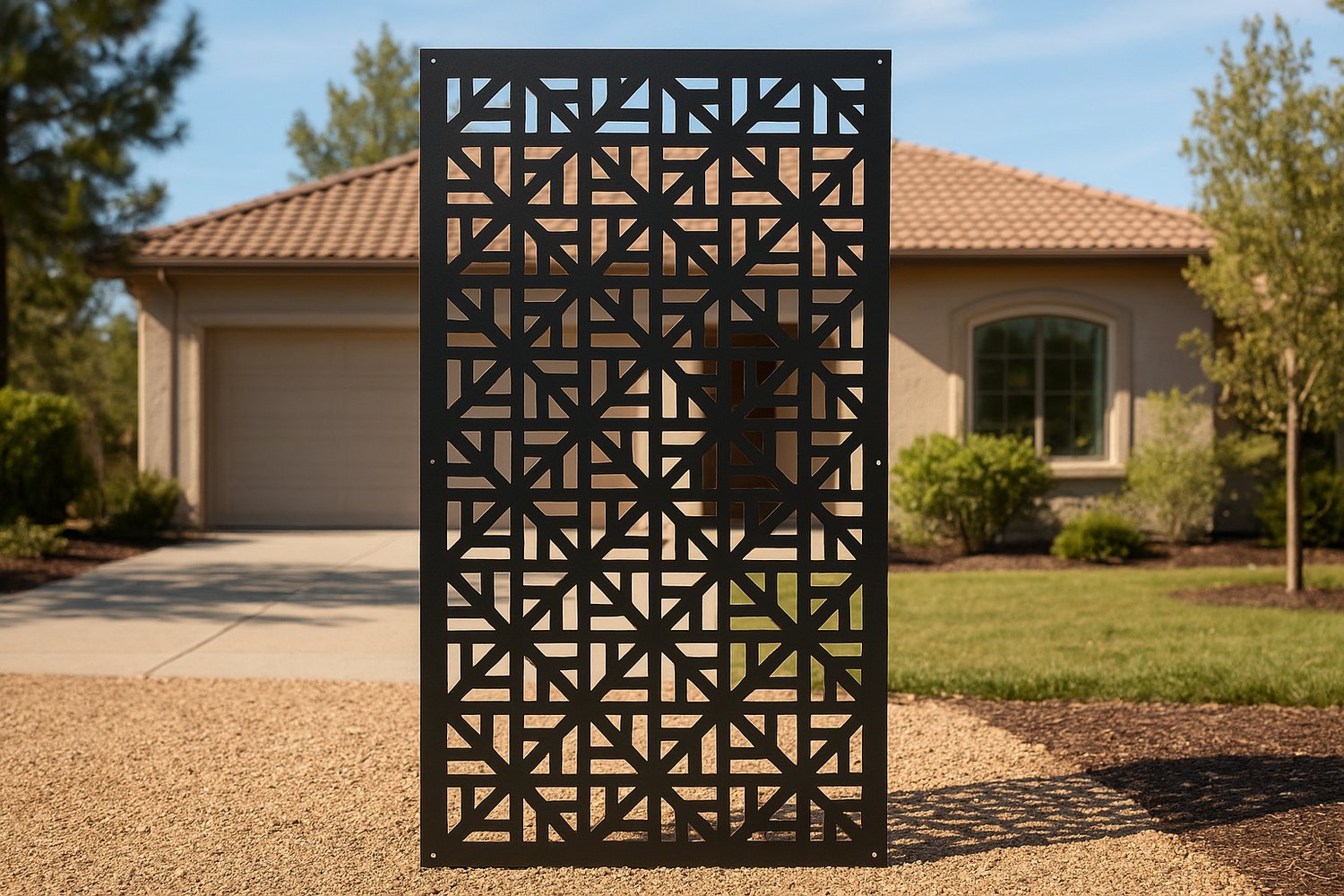
Choose from dozens of privacy and airflow patterns, from geometric to natural motifs and clean modern lines. Laser-cut openings are sized for visual screening while maintaining steady ventilation—a must for pool pumps and AC units. Designs are settled in consultation to complement your architecture or reflect personal style.
Configuration & Panel Sizing
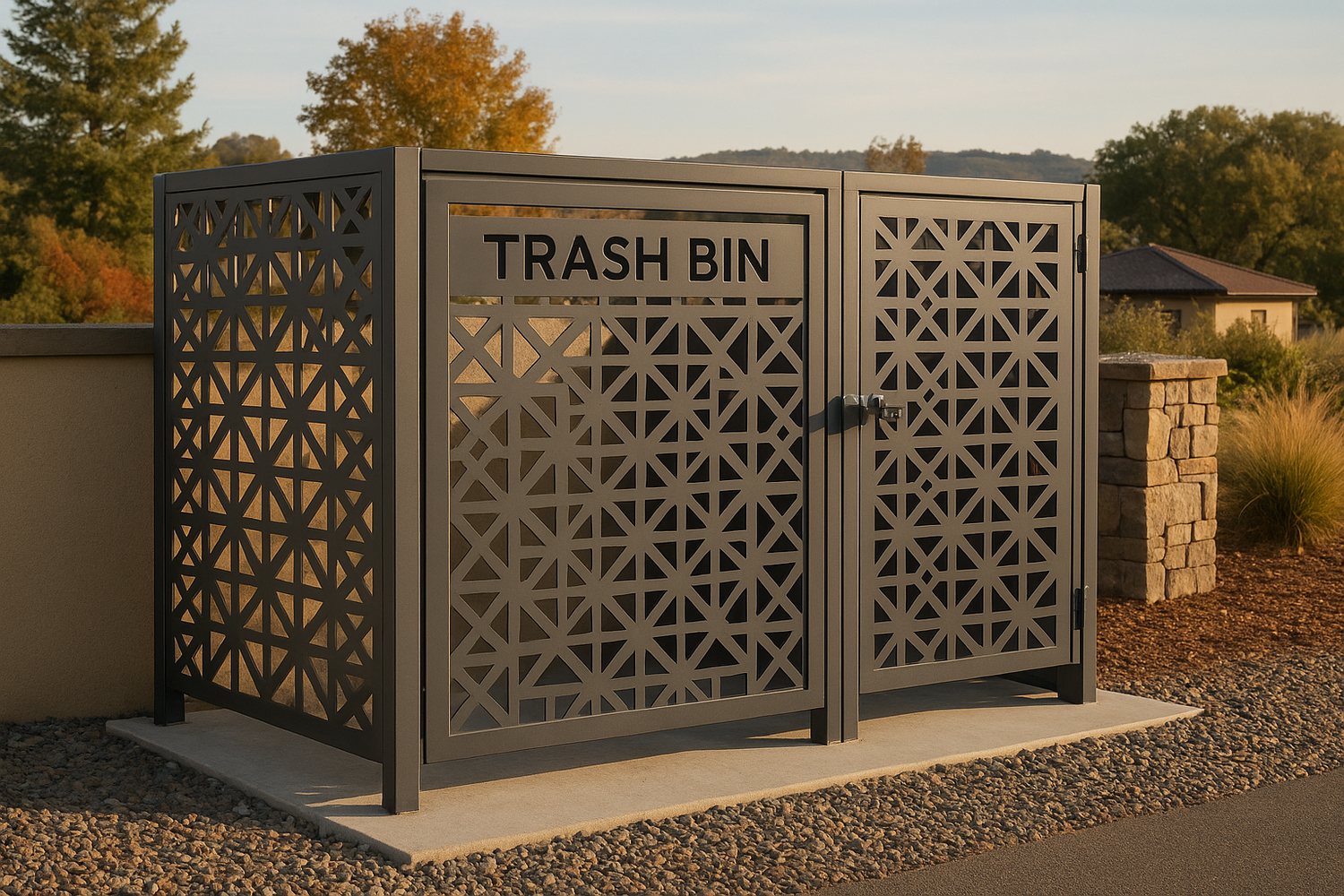
Screens can be single panels, L-shaped, U-shaped, or fully enclosed with a gated entry. Panel heights and widths are tailored to block lines of sight without restricting maintenance access. Taller designs help conceal stacked utilities, while compact screens fit tight side yards or narrow setbacks.
Integrated Gates & Easy Access
Gates are optional but recommended for frequent access—trash bins, pool service, or AC maintenance. Hinged or sliding panels are sized for clear passage, with latches placed for easy reach from outside or inside the enclosure. Each setup balances access and security based on location and usage needs.
Edges and Corners
Edges can be clean and squared, softly rounded, or framed with trim depending on location and the desired look. Rounded corners help avoid snags in narrow walkways, while flush edges minimize gaps and help deter pests. Each detail is chosen to resist wear and look consistent over years of use.
Finish & Appearance Options
Finish and color options are discussed in consultation, offering choices for every aesthetic—wanted to blend with nearby fencing, emphasize modern curb appeal, or pair with home details. Durable finishes help protect against weather, sprinklers, and summer sun, keeping screens looking new longer.
Mounting Methods & Foundations
Panels can be mounted to concrete pads, existing fences, masonry, or stand-alone posts, adjusted for local slope and drainage. Secure footings ensure stability against wind and accidental impact. No matter the installation site, each screen is anchored with longevity and performance as top priorities.
How Premium Metal Screens Are Built
Every California Hardscapes metal screen installation follows a methodical, proven process that ensures a result as reliable as it is attractive. Licensed, bonded and insured contractors handle each construction phase, paying close attention to foundation, fit, accessibility and safety—whether the screen is for pool equipment, AC units or trash bin enclosures.
- Site preparation begins by marking screen placement, checking for underground utilities (call 811), clearing the area, and establishing proper slope and drainage away from equipment.
- Where needed, a compacted, stable base is prepared using gravel or decomposed granite to prevent settling and allow for ongoing drainage beneath the panel locations.
- Forms or layout guides are set to map post locations and panel lines, helping ensure straight runs, correct setbacks, and crisp alignment even on slopes or next to irregular hardscapes.
- Reinforcement anchors, such as steel post footings, are placed and set in concrete where required, providing durable support and resisting wind or accidental bumps from bins or carts.
- Panel and gate frames are installed, carefully leveled and squared. Joints and attachment points are checked for stability, minimizing movement and keeping hinges aligned and smooth.
- Each panel is fitted and finished—including pattern alignment, edge touch-ups, and final hardware installation. Doors and gates are hung, adjusted for swing, and tested for easy operation.
- Metal screens are left to cure or settle as needed before cleanup. Final checks ensure panels are secure and alignment is true. Additional sealing may be done to enhance weather protection where appropriate.
Key Advantages and Drawbacks
Strengths
- Cleans up and visually unifies outdoor equipment, boosting curb appeal and property value.
- Laser-cut patterns maintain airflow essential for pool pumps, AC units and trash bin ventilation.
- Highly durable—metal resists weather, pets, and daily wear better than most wood or vinyl options.
- Configurable for virtually any space: tight setbacks, sloped lots, or around existing hardscape.
- Low-maintenance finish stays attractive year-round, with occasional washing and rare touch-ups.
Trade-offs
- Not the least expensive screening method—premium materials and construction cost more upfront.
- Metal retains some surface heat in direct sun; unshaded panels may be warm to the touch on hot afternoons.
- Partial visibility of equipment is possible depending on pattern and local sightlines.
- Metal screens require periodic cleaning and may eventually need recoating in harsh settings.
Understanding Costs
Custom metal screens are a premium investment in your home’s aesthetics and function. The initial outlay is higher than wood or plastic options, but durability and curb appeal are unmatched. Our design process considers every factor—location, usage, and integration with existing landscaping or hardscape—to deliver a screen that truly fits. Prices, thickness and finish selections are always discussed during your project consultation, not online.
- Number and size of panels or enclosures required for the space.
- Level of detail and privacy in the chosen screen pattern.
- Height and length of the enclosure, especially for full trash bin or utility runs.
- Inclusion of gates, hardware, or custom access features.
- Type of site preparation and required foundation or mounting repairs.
- Complexity of slopes, existing structures, and integration with patios, retaining walls or fencing.
Maintenance and Longevity
Premium metal screens require minimal maintenance. Regularly hose down or gently scrub to remove dust, cobwebs, and hard water spotting. Keep vapor or leaves from building up in decorative holes or at the base, as trapped moisture can shorten a finish’s lifespan. Inspect latches and hinges yearly, lubricating as needed to maintain smooth operation.
Depending on finish and exposure to irrigation or harsh sun, screens may need to be recoated after several years (often 7–12 for most locations). Lifespan hinges on several factors: environmental exposure, degree of wear, selected color, and moisture. Screens in shaded areas or away from sprinklers often require less upkeep over decades and rarely suffer from warping, fading or rusting when properly maintained.
Compare other options

Metal fence and gate care
Get expert advice on metal fence and gate care for Rocklin homes. Cleaning, hinge checks, touch-ups and practical tips from California Hardscapes.
Explore →
Patio privacy screens
Freestanding and post-mounted metal privacy screens for patios, hot tubs and seating areas.
Explore →
Matching fence and gate sets
Designing metal fences, gates and screens as one matching set.
Explore →Frequently Asked Questions
Will a metal screen reduce the efficiency or lifespan of my AC or pool equipment?
When designed with the right pattern and setback, a properly vented metal screen does not restrict essential airflow for pool pumps or AC condensers. In fact, it helps shield equipment from wind-blown debris and pets. Pattern choice is always tailored to balance privacy with safe ventilation.
How do I access my equipment or bins once they are enclosed?
Custom gates or removable panels are built into most enclosures for convenient access. Hinged doors, latch choices, and clear walk-through widths are discussed during design to ensure you can reach pumps, bins, or valves without hassle or heavy lifting.
Are permits or HOA approval required for these screens?
Requirement vary by address. For front yards, property lines or locations visible from the street, an HOA or city review is sometimes necessary. It’s a good idea to check your governing documents or ask your city planning office about screening structures before starting work.
How are screens anchored to withstand wind and pet contact?
Screens are installed using secure post footings or anchored to existing masonry, fencing, or pads. Footings and hardware are sized appropriately for the height, weight and location of the screen, ensuring stability against seasonal wind and the occasional nudge from pets, carts or bins.
Will the screen’s pattern limit visibility enough to fully hide my equipment?
Most laser-cut patterns provide 60%–90% opacity, greatly reducing visibility while maintaining airflow. Absolute visual blockage is possible with some denser motifs, but for safety and serviceability, total enclosure is rarely recommended. Site lines and pattern densities are agreed upon during the design process.
Can screens wrap corners or fit in tight spaces?
Yes—screens can be fabricated as single, L-shaped, U-shaped or even fully surround enclosures depending on the site layout and what you’re trying to conceal. Compact posts, flexible sizing and custom mountings make it straightforward to screen even challenging utility areas or narrow side yards.
What maintenance should I expect, and how long will a screen last?
Routine upkeep is minimal: rinsing to remove dust and keeping leaves or debris from accumulating at the base. Depending on exposure, refinishing may be needed every 7–12 years. Well-installed metal screens should provide decades of reliable service, with hinge or latch maintenance as the main concern.
Can these screens match my house color or other metal features in my yard?
Yes. During consultation, you’ll discuss finish and color options designed to coordinate with your home, fence, or existing outdoor accents. The goal is a seamless, harmonious look that feels intentional and elevates your property’s overall design.
Ready to Discuss Equipment or Bin Screening?
Email sales@californiahardscapes.com with your address, a short description of your project and photos of the area to get started.