Metal Side-Yard and Walk Gates: Functional Security and Curb Appeal
Quality metal side-yard and walk gates add privacy, security, and visual interest to your home’s exterior. Here’s what to consider before choosing this long-lasting upgrade.
Choosing the Right Metal Side-Yard or Pedestrian Gate
Best for: Homeowners seeking a secure, durable, and visually tailored entry for side yards, garden paths, or pedestrian access areas.
Metal side-yard and walk gates serve both practical and aesthetic roles in the landscape. They’re the everyday entrances we use to access side yards, move between front and back, or welcome visitors on garden paths. Whether it’s keeping kids and pets safe, managing privacy, or complementing a landscape design, the right metal gate makes a lasting impression and solves real problems.
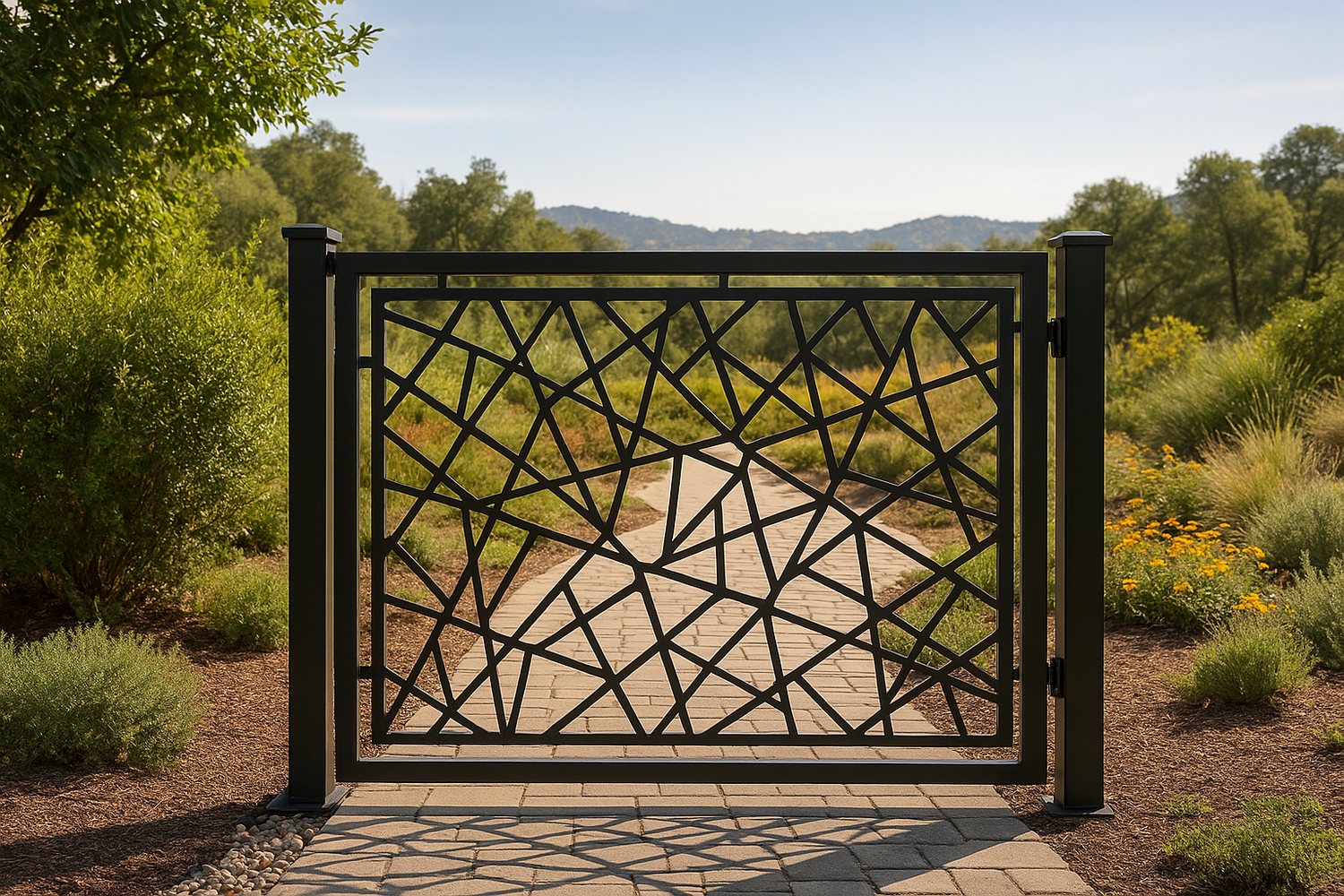
At California Hardscapes, every metal gate is custom-designed to fit each home. These gates are built with careful attention to detail, both in their structure and appearance. Options range from solid privacy panels to open artistic patterns that frame views and add curb appeal. The choice is always personal and practical, based on use, location, visibility, and the level of privacy you want.
Function matters as much as form: the reliability of the latch, swing clearance, height that matches fencing, and the integration with hardscape paths must all be assessed. While some choose gates that nearly disappear, others select custom laser-cut patterns to make their entrance a focal point. No matter the design, California Hardscapes follows a simple philosophy: We don’t compete on being the cheapest. We compete on quality, integrity, and results that exceed expectations. When done right, metal gates solve problems and raise the standard for outdoor living.

Design Choices and Options for Metal Side-Yard and Walk Gates
Gate Widths and Heights
Side-yard gates are typically between 36” and 48” wide to allow for easy passage of tools, bins, or even small vehicles like mowers. Heights can be matched to adjoining fences—from 4’ for walk gates up to 6’ or more for side-yard security gates. Size decisions affect not only appearance but also usability and compliance with any neighborhood or city guidelines.
Privacy vs. Open Pattern Designs
Solid panels offer total privacy, hiding side yards and blocking views, while open or laser-cut patterns allow air and light to pass through, providing visibility and decorative flair. Some customers blend both: the lower section solid for privacy and the upper patterned for style and transparency. Each approach has trade-offs in privacy, airflow, pet containment, and maintenance.
Latches, Locksets, and Hardware
Gate security and everyday operation rely on the right hardware. Choices include simple lever latches, keyed locks, and specialized hardware for self-closing or child safety. Consider how often the gate will be used, who needs access, and whether you want to match the style and color of nearby doors or fencing hardware. Upgrading hardware can improve lasting reliability and user experience.
Pairing with Existing or New Fencing
The visual connection between the gate and fence lines is critical. Some gates match the exact fence panels for a seamless look, while others intentionally contrast with bolder color or pattern choices. Proper integration avoids awkward transitions and ensures structural alignment. If you’re adding a gate to an existing fence, measurement and mounting details are especially important.
Thresholds and Pathways
A well-designed walk gate considers the approach: Are you stepping onto concrete, pavers, decomposed granite, or turf? Threshold height needs to prevent trip hazards, shed water, and allow the gate to swing freely. Considerations like wheelchair or cart access may also affect grade transitions, slope, and the choice of a continuous or open threshold.
Custom Patterns and Details
Many California Hardscapes gates feature signature custom designs—ranging from modern geometric cuts to organic nature-inspired motifs. You might integrate house numbers, address signs, or family initials. Options for edges (arched, flat, or shaped), picket arrangements, and ornamental add-ons are discussed in the design consultation. The end result is a gate that’s not only functional but distinctly yours.
How a Quality Metal Walk Gate is Built and Installed
Proper installation of a metal side-yard or pedestrian gate is a careful process that affects durability, function, and long-term satisfaction. While designs and locations vary, every project follows a step-by-step method using licensed, bonded, and insured contractors—no corners cut, every detail checked. Here’s how a professionally constructed gate project typically proceeds, from ground prep through the installation of reinforcement, finishing work, and alignment adjustments.
- Subgrade Preparation: The work begins by clearing and leveling the area where the gate and posts will stand, removing roots, debris, and any old structures to establish a stable foundation with proper drainage away from the gate threshold.
- Base Placement: For posts, holes are dug to the required depth for stability and compliance with local standards. These are often filled with concrete to anchor the gate’s support structure and withstand wind, weight, and seasonal soil movement.
- Setting Forms and Guides: Temporary forms or guides ensure the gate posts remain perfectly plumb and aligned during the curing of their bases. Walkways or thresholds may require additional forming to maintain grade and blend with adjacent hardscape.
- Reinforcement: Depending on soil, slope, and the gate’s weight, reinforcing materials like rebar may be placed within the concrete post footings or beneath walkways to reduce cracking and improve long-term stability.
- Joint Planning: Expansion joints are installed in any adjacent concrete or paving to allow for seasonal expansion and contraction, which helps prevent cracking near the threshold and posts.
- Finishing and Gate Hanging: Once bases and thresholds are set, hardware and hinges are attached, and the gate panels are hung. Careful alignment ensures smooth swing, full closure, and secure latch function.
- Curing and Sealing: After all concrete and joint work, new surfaces cure to their designed strength before any final sealing is applied. The last steps check hardware function, gate movement, and, if included, sealing of metal components.
Pros and Cons of Metal Side-Yard and Walk Gates
Strengths
- Long-lasting solution that won’t warp or rot, even when exposed to extreme California weather.
- Low-maintenance compared to wood and many other materials, with little required beyond periodic cleaning and inspection.
- Highly customizable in size, privacy, and artistic pattern—designed to match your home and landscape.
- Excellent security: robust panels and hardware reduce forced entry and keep gates tightly closed.
- Pairs well with both modern and classic architectural styles; adds curb appeal and value.
Trade-offs
- Initial investment is higher than standard wood or chain-link alternatives, reflecting quality and lifespan.
- Metal surfaces can become hot to the touch in direct summer sun, requiring care around young children or pets.
- If not properly finished or maintained, may be vulnerable to rust or mineral buildup in some environments.
- Limited privacy with open patterns—trade-off between airflow/light and seclusion may not suit every side yard need.
Understanding Costs and Value
Metal side-yard and walk gates represent an investment in the longevity, security, and aesthetics of your property. Pricing reflects the scope of custom design, the complexity of installation, and the high-quality materials involved. While cost can be a deciding factor for some, California Hardscapes emphasizes results that exceed expectations—each project is priced individually based on your needs and site conditions, never as a one-size-fits-all solution.
- Gate size and height: Larger gates use more material and require robust foundations, directly impacting price.
- Complexity of design: Intricate custom patterns or multi-panel layouts take more labor and precision to produce.
- Hardware selection: Upgrades like keyed locks, high-end handles, or automated latching add to project cost.
- Site preparation: Challenging soil, sloped ground, or old structure demolition require additional groundwork.
- Connection to existing fences or structures: Integrating with current fencing may take extra adjustment or retrofitting.
- Accessibility and installation logistics: Limited site access or challenging approach may add time and increase labor needs.
Care and Maintenance for Metal Gates
Routine maintenance is minimal: occasional washing with water and mild soap to remove dust, pollen, or hard water spotting, along with annual checks for hardware tightness and gate alignment. For properties with abundant oak trees or sprinklers, more frequent rinsing and debris removal can prevent buildup in hinges or patterned cutouts. Inspect for any scratches or chips in the finish and address promptly to prevent minor corrosion spots from developing.
Lifespan is typically measured in decades, especially when metal gates are kept clean, protected from irrigation overspray, and their moving parts lubricated as needed. Resealing, if recommended for your design or installation, may be suggested every five to eight years. Gate longevity can be affected by slope drainage, nearby plantings, mineral-rich water, or pets that scratch or paw at panels. A well-built and well-maintained metal gate is a premium, long-term solution.
Compare other options

Patio privacy screens
Freestanding and post-mounted metal privacy screens for patios, hot tubs and seating areas.
Explore →
Matching fence and gate sets
Designing metal fences, gates and screens as one matching set.
Explore →
Metal fence and gate care
Get expert advice on metal fence and gate care for Rocklin homes. Cleaning, hinge checks, touch-ups and practical tips from California Hardscapes.
Explore →Frequently Asked Questions About Metal Side-Yard and Walk Gates
What is the ideal width for a walk gate or side-yard gate?
The most common walk gate width is 36 inches, which is wide enough for people and most landscaping tools. For side-yard access that needs to accommodate trash bins, wheelbarrows, or larger equipment, widths between 42 and 48 inches are often chosen. Wider gates may require stronger posts and hardware for stability. Choosing the best width balances function, location, and any local HOA or city requirements.
Are metal gates suitable for privacy as well as security?
Absolutely. Solid panel designs offer full privacy, shielding views into side yards or back gardens while providing excellent security. However, some choose patterned or partially open designs to allow air and light while maintaining a level of enclosure. The right choice depends on your goals for privacy, airflow, and aesthetics—these preferences are always discussed during the design consultation.
How do I choose hardware for my side gate?
Hardware options are based on intended use, appearance, and security needs. Entry gates often use keyed locks; less-trafficked side gates might use simpler latches. For homes with pets or children, self-closing or childproof hardware is worth considering. You can select hardware during the design consultation, often coordinating with other exterior finishes or the broader fencing style.
Do metal gates require special maintenance in our area?
Maintenance is simple but important: periodic cleaning to remove dust, hard water spots, and yard debris. Hardware should be checked every year, and any scratches or finish damage promptly addressed to avoid surface rust. Given local hard water and oak trees, rinsing gates periodically is recommended, especially after windy days or irrigation.
Should my gate match the fence or stand out?
Both approaches are popular. Many homeowners prefer matching materials and patterns for a cohesive look, especially along property lines or front entries. Others select bold, custom designs with contrasting colors or cutouts that make the gate a focal point. The style of the home, existing hardscapes, and your goals for curb appeal are all factors. California Hardscapes will help develop a tailored design that supports your goals.
What about installation on a slope or where there’s an existing concrete path?
Installation on a slope or near existing paving requires precise measuring and preparation. Thresholds may be adjusted to maintain clearance, prevent trip hazards, and allow for proper drainage. Sometimes, minor grading or the installation of a small ramp or step is necessary. These factors are reviewed during onsite visits and planning.
Does a metal gate get hot in summer? Is it safe for pets and kids?
Metal gates do heat up in full sun, especially during peak summer afternoons when temperatures climb over 100°F. While burns are uncommon, it’s wise to consider shade or selective placement if pets and children regularly use the gate. Lighter colors or patterned designs with partial shade can help reduce surface heat.
Will I need approval from my HOA or city before installing a metal gate?
Some HOA and city regulations influence the height, pattern transparency, and even color of side-yard and walk gates. Requirements vary by address, so it’s important to check your guidelines early in the planning process. California Hardscapes can answer questions and assist in design decisions that respect neighborhood and city standards, protecting your investment and peace of mind.
Ready to Explore Your Gate Options?
Email sales@californiahardscapes.com with your address, a short description of your project, and a few photos to start the conversation about custom side-yard or walk gates.