Metal Sign Design and Layout: The California Hardscapes Approach
Designing a custom metal sign for your home means making choices that blend function, architecture, and lasting style. Here’s what to know before you start.
Designing a Metal Sign for Your Home: What Matters Most
Best for: Best for homeowners who want a signature look for house numbers, plaques, or dramatic entry signs that hold up year after year.
A metal sign is a signature touch for any residence, from address numbers to grand entry signs. With careful design, these pieces become focal points that outlast paint, wood or plastic alternatives—and truly belong with their surroundings. Crafting a quality sign is about more than picking a font: it involves choosing forms, proportions, and contrasts that stand out for both beauty and clarity.
Lettering style, size, and the relationship between negative space and borders all influence how legible and attractive your sign will be from the street or up close. Every design starts by defining your priorities: maximum visibility, matching historic details, fitting with modern aesthetics, or integrating an emblem, family name, or address with a unique pattern. These decisions impact not just the look of your sign, but how it will function in daily life.
Unlike quick-made online options, metal signs created by California Hardscapes are prepared with your home’s real environment in mind. Placements are measured for their contrast with the wall or gate behind, and visual proofs are provided before any cutting is done. This means the final sign doesn’t just meet—but elevates—expectations, whether it needs to stand up to summer heat, foot traffic, or rain. Done right, there are no corners cut; each piece is designed as if for our own home.

Flexible Design Choices: Deciding What’s Right for You
Lettering Style and Size
Classic serif fonts offer formality; sans-serif styles lean modern and clean. Your choice should fit the home’s architectural lines and the distance from which the sign will be read. Larger numbers or names are crucial for drive-up recognition, with sizing tailored based on mounting height and setback from the street or sidewalk.
Cut-Out vs. Raised Letters
Cut-out (also called negative space) lettering gives a bold, contemporary look, allowing the wall color to show through for maximum contrast. Raised letters create depth and traditional elegance, projecting cleanly from the background. The right choice depends on your wall color, lighting, and personal taste for subtlety or drama.
Borders, Edges, and Trims
A border visually finishes a sign and prevents it from blending too much into the background. Rounded, beveled, or crisp square edges each contribute a different feeling—softness or sharp contemporary lines. Ornamental-style trims can echo gate scrollwork or fence detail for a cohesive look.
Emblems, Icons, and Artwork
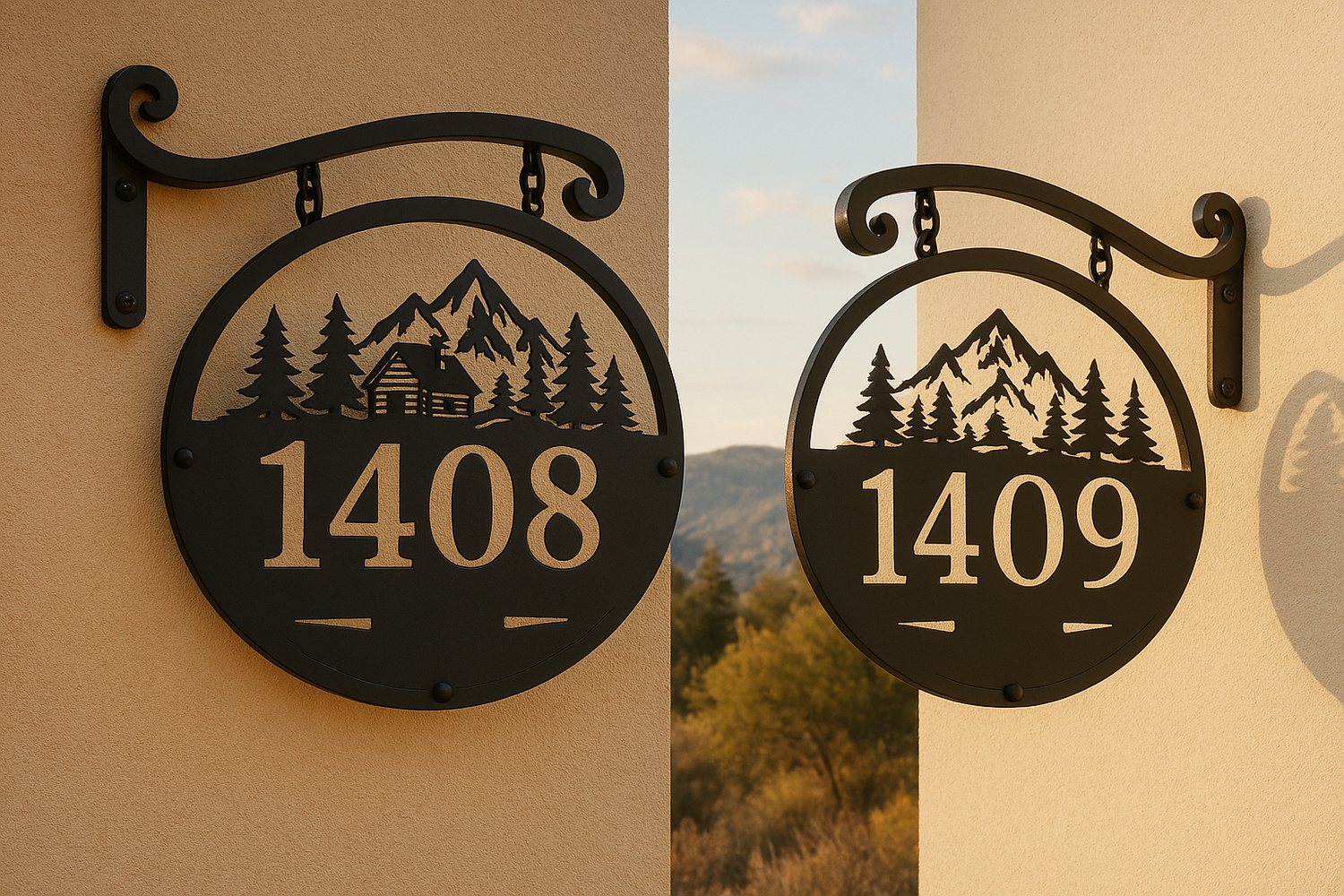
Incorporating a family crest, ranch logo, or simple motif adds distinctiveness. Whether it’s a pinecone emblem for a Granite Bay property or a subtle cityscape outline, these design elements are precisely cut and can become the primary feature or a small accent within a larger sign.
Contrast with the Mounting Surface
Sign legibility ultimately comes down to how much it stands out from its background. A dark metal sign on a light stucco wall or a bright surface on a stone facade will ‘pop’ from down the street and in daylight or exterior lighting. During planning, sign color and finish are matched not just to taste, but to the real-world tones of your wall, column, gate, or fence.
Layout Proofs and Pre-Cut Approvals
Before fabrication, each sign undergoes a digital proofing process. You’ll see exactly how the sign’s scale, spacing, and features look both on their own and against a photo or mockup of your mounting surface. This is your opportunity to request adjustments, ensuring peace of mind that what’s delivered fits in every way.
How a Quality Metal Sign Is Designed and Built
Every custom metal sign from California Hardscapes is the result of a step-by-step process designed for durability, precision and harmony with your property. The following outline gives a sense of what goes into preparing and installing a sign designed to last, with all work managed by licensed, bonded and insured contractors.
- A thorough site review—photos and tape measurements—documents the wall or structure for size, material, stability, and surface condition. This step ensures your sign’s mounting points and proportions fit perfectly, not just in theory.
- A smooth mounting base is prepared, whether that means cleaning a stucco wall, verifying stone is flat and level, or prepping a gate or fence. For ground-mounted signs, footing installation or posts may be set according to plan.
- Precision formwork (physical templates or digital overlays) is used to confirm the sign’s shape, mounting holes, and any alignment with architectural features like trim, posts, or reveals.
- High-strength anchors or fastener types are selected for the mounting surface—typically masonry bolts for concrete or brick, or hidden-rated screws for wood or composite. Reinforcement is planned for heavier signs or wind-prone areas.
- Sign sections, if needed, are dry-fit to ensure everything aligns cleanly. Spacers or bumpers can create a floating effect or keep the sign slightly off the wall for shadow and drainage.
- Once placement is perfect, all fasteners go in, making sure the sign is secure and plumb. If called for, visible screw heads are capped or blended for a seamless finish.
- A final inspection ensures all edges are free from burrs, borders are sharp, and cutouts are crisp, followed by gentle cleaning and a walk-through to confirm satisfaction with placement, visibility, and finish.
Advantages and Practical Limitations: Honesty About What to Expect
Strengths
- Customizable to suit any architectural style, including intricate emblems or distinct family names.
- Weather-resistant metal construction stands up better than wood, vinyl or painted plaques—no peeling or fading in the sun.
- Laser-cut design delivers unmatched crispness in letters and artwork for a professional, permanent look.
- Quick visual recognition from the street, essential for first responders or guests.
- Mounts securely to masonry, wood, composite or metal—fits fences, columns, gates, or home exteriors.
Trade-offs
- Lettering may be less visible with low foreground-background contrast, especially in low light or on highly textured walls.
- Permanent mounting means removal or moving the sign can leave behind fastener holes or minor wall repair needs.
- Detailed artwork or very small lettering may push the limits of what can be cleanly cut and remain readable, especially at a distance.
- HOA review or city guidelines sometimes add complexity, such as specifying sign size or prohibiting certain motifs—double check before designing.
Cost Insights: How Variables Influence Metal Sign Investment
A quality metal sign is a permanent investment—one that’s designed to last for generations, not just years. Unlike off-the-shelf options, the cost reflects the design work, proofs, mounting requirements, and the fact that each element is planned for your specific home. It’s worth noting that at California Hardscapes, we don’t compete on being the cheapest. Quality, integrity, and lasting results are our philosophy, delivered just as we’d want in our own home. Detailed project costs are always reviewed in a personal consultation.
- Sign size and overall shape—larger, multi-word or complex shapes require more material and labor.
- Lettering style—intricate fonts, raised letters, or highly detailed artwork can increase design and production time.
- Installation location—mounting on masonry, stone, or difficult-to-access areas may require special tools or added preparation.
- Need for ground-mount posts, custom mounting brackets, or added reinforcement, especially for freestanding or gate signs.
- Number of proofs and design iterations—multiple rounds of revision and visualization may be needed for truly custom layouts.
- HOA or city review requirements can affect the process, occasionally requiring extra site photos, drawings, or specific sign sizes.
Care and Maintenance: Keeping Your Metal Sign Looking Its Best
Routine maintenance is straightforward and low effort: occasionally rinsing dust and pollen, and wiping down with a soft cloth keeps the lettering and border details clear. For signs in direct irrigation overspray or facing the road, a gentle scrub with mild soap may be recommended every few months to prevent mineral buildup or water spotting.
Most homeowners find that touch-up or resealing is rarely needed except every several years, and lifespan is affected more by placement than anything else. Signs installed beneath roof eaves or facing north will generally age slower than those in constant sun or direct sprinkler spray. Compared to wood or painted hardboard, an expertly installed metal sign offers decades of service—often long after neighboring materials need repair or replacement.
Compare other options

Metal sign care
Learn how to properly care for California Hardscapes' outdoor metal signs in Rocklin and nearby communities with complete maintenance and seasonal tips.
Explore →
Family name signs
Laser-cut metal family name and monogram signs for entries and patios.
Explore →
Ranch and gate signs
Explore durable custom metal ranch, property, and gate entry signs by California Hardscapes. Perfect for Rocklin & area homes.
Explore →Frequently Asked Questions: Metal Sign Design and Layout
How do I choose the right font for my metal sign?
Start by considering your home’s architectural style and how far the sign will be viewed from. Classic serifs work well with traditional homes or older neighborhoods, while sans-serif fonts offer clean lines for a modern look. Test readability—some ornate scripts may require larger sizes to stay legible. Visual proofs provided before final cutting help you compare styles side by side before making a decision.
Will a metal sign rust or discolor over time?
Sign lifespan depends on placement, exposure, and the type of metal and finish selected in your consultation. Most signs are designed for maximum weather resistance. Regular maintenance (such as rinsing off irrigation water and dust) can greatly extend their appearance and structural integrity. Signs exposed to salty air or direct sprinkler spray may develop natural patina or water marks faster, but these can sometimes be cleaned or touched up.
How big should house numbers or lettering be for good visibility?
As a rule, numbers intended to be read from the street should be sized according to viewing distance—usually starting at 4" for close walk-ups, up to 8" or larger for setback driveways. The specific size is finalized based on a site visit and proof overlays to make sure the sign stands out from the curb, not just up close by the door.
What is the difference between cut-out and raised letters?
Cut-out letters use negative space—the shape is removed, showing the wall or sky behind (sharp, contemporary look). Raised letters project outward, creating shadow and depth (classic effect). Choice is often a matter of taste and background color; cut-outs ‘pop’ on bright walls, while raised styles may stand out more on textured or dark surfaces.
Can I include a family crest or custom graphic on my sign?
Absolutely. Many homeowners opt to personalize their sign with an emblem, monogram, or small artwork. The final design is first proofed digitally to ensure detail will be crisp and the sizing is practical for all cut lines, regardless of complexity. Discuss your vision during the consultation to explore what works best for your setting.
Are there restrictions on mounting a metal sign in my neighborhood?
Some HOAs, city codes, or county rules specify materials, sizes, or locations for home signs. It’s a good idea to check guidelines ahead of time. California Hardscapes provides proofs and technical details that can help with most review processes, but requirements do vary by address and jurisdiction.
Does installing a metal sign damage my wall or gate?
Metal signs are typically mounted with anchors or fasteners suited to your wall type, and installed to minimize disruption. Removal may leave small holes or need patching, especially on stucco or masonry. Careful installation and planning reduces the risk of wall cracks, misaligned mounts, or water entry.
What is included in the proofing process before my sign is made?
Before your sign is fabricated, a digital proof shows exact sizing, all lettering, borders, and layout on a photo or rendering of your intended install location. This allows you to spot issues with contrast, scale, or alignment and request changes. Only when you’ve approved the final proof does production move forward.
Start Your Custom Metal Sign Design Conversation
Ready to explore a distinctive metal sign that truly fits your property? Email sales@californiahardscapes.com with your address, a short description of your vision, and photos of your possible mounting location. Every design begins with a conversation.