Rocklin’s Complete Outdoor Kitchen Design & Construction
A professionally built outdoor kitchen transforms your backyard into an entertaining center and adds lasting value to your home. Explore layout, material, appliance, and build choices—so you can enjoy outdoor living, your way.
Build the Outdoor Kitchen That Complements Your Lifestyle
Best for: Best for homeowners seeking to elevate outdoor entertaining, maximize patio function and invest in lasting home value with a durable, fully equipped kitchen.
An outdoor kitchen is more than a grill: it’s a complete workspace and gathering spot where meals, guests, and good times can come together. In California’s foothill communities, homeowners are choosing full-featured outdoor kitchens for durability, convenience, and a chance to make the most of our region’s long outdoor living season. With the right design and install, your backyard transforms from an afterthought to the heart of your home.
Outdoor kitchens can be tailored to meet your needs, space, and budget—from a simple straight run with built-in grill to a fully customized U-shaped chef’s station. Every project includes key choices: layout, countertop and cabinet materials, appliances, plumbing and electrical integration, and shade. It’s about balancing what you want with what your site allows, and avoiding shortcuts that lead to maintenance headaches or performance issues.
At California Hardscapes, we don’t compete to be the cheapest in town. Instead, we bring decades of construction experience and the philosophy of building every project as if it were our own family’s home—no corners cut. Every choice, from subgrade prep to the last lighting connection, matters. If you want a kitchen that looks great, functions long-term, and handles our region’s unique soils and weather, you’re in the right place.

Your Outdoor Kitchen: Layouts, Surfaces, and Components
Layout: Straight, L-Shaped, U-Shaped, Island
Straight layouts suit compact yards and line patios or walls for efficient prep space. L-shaped designs create a prepping or dining nook, separate tasks, and maximize corner areas. U-shaped kitchens offer the most workspace and appliance access, while standalone islands can be both focal point and flexible bar. Placement for shade, wind, and sightlines is key.
Countertops: Granite, Concrete, Porcelain
Countertops need weather and stain resistance above all. Granite remains the gold standard for durability, with a timeless look. Sealed concrete offers custom color and edge profiles, but requires proper sealing. Porcelain slabs deliver rich aesthetics and resist heat and chipping. Each material’s maintenance and price points vary; your use habits should guide the final pick.
Cabinet Bases & Veneers: Masonry, Steel, Stone, Stucco
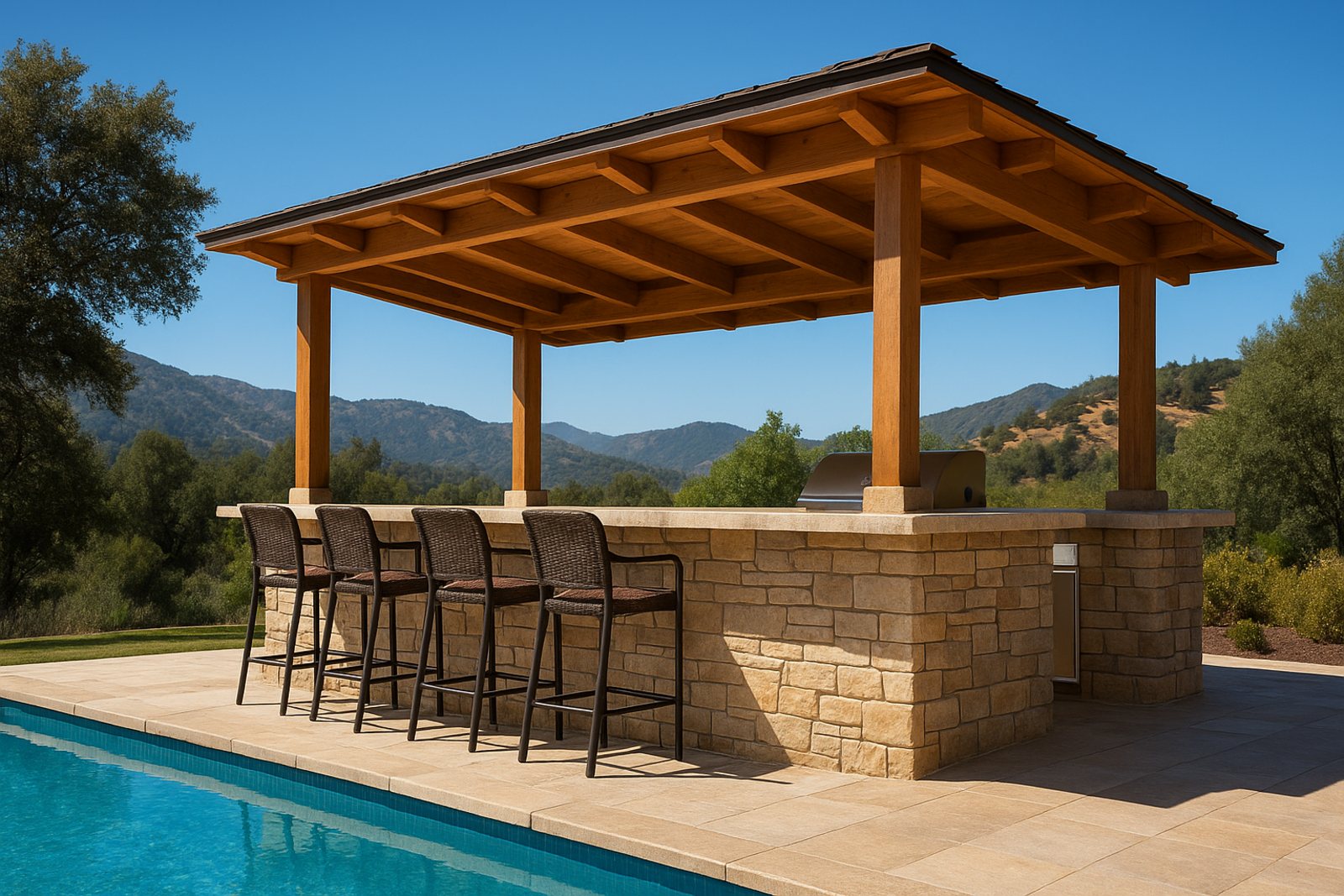
Structural kitchen bases are typically block or steel frame, clad with stone veneer, stucco, or brick. Stone veneer blends with natural landscape and holds up to weather. Stucco offers a clean, contemporary look, but needs regular cleaning. Block bases allow integrated seating or planters. All need careful construction for settling, especially on clay or sloped ground.
Appliances: Grill, Side Burner, Smoker, Pizza Oven
Stainless built-in grills anchor most outdoor kitchens. Add a dedicated side burner for sauces or a smoker for slow-cooked flavor. Pizza ovens are increasingly popular, but demand planning for ventilation and clearances. Select outdoor-rated, high-quality appliances for longevity; lower-grade equipment won’t fare well in sun and storm.
Sinks & Refrigeration: Utility and Prep Convenience
A sink is a game-changer for clean-up and prep but demands thoughtful water, drain, and freeze protection. Outdoor-rated mini-fridges and beverage coolers keep essentials close. Placement, venting, and shade (to minimize drain and energy load) all affect performance and lifespan.
Utilities: Gas, Water & Electrical Integration
Outdoor kitchens need proper gas lines (for grills, burners), water service (to sinks), and electrical (for fridges, lights, and outlets). Routing lines underground with safe clearances and future access is critical; DIY shortcuts often fail inspections or code. Lighting and controls are best run on dedicated, weather-protected circuits.
How a Quality Outdoor Kitchen Is Built
A truly lasting outdoor kitchen relies on expert installation from the first scoop of dirt to the final appliance hookup. Our approach: never rush, never skimp. Each step below is done in order, with materials and techniques proven for California backyards and soil conditions:
- Subgrade preparation begins by removing organic matter and topsoil, and leveling the work area. Compaction is key here, especially on clay or decomposed granite soils found in our region.
- A compacted gravel base is installed for drainage and stability. A 4–6 inch layer is common, adjusted for slope and anticipated load. This is laser-leveled and re-compacted for uniform support.
- Formwork is set for concrete pads, footings, or walls, with control lines double-checked for square and elevation. Proper forming ensures every structure sits true and plumb.
- Reinforcement with steel rebar or welded wire mesh counters movement and helps resist cracks over root or clay pockets. Ties and spacers are used to maintain coverage within concrete pours.
- Joints—expansion and control—are placed to minimize future cracks. Their spacing and placement depend on design, slab size, and where kitchen components land.
- Concrete is poured, finished, and cured based on weather and product choice. Color, texture and edge details go in at this stage; improper finishing can ruin looks or longevity.
- Sealing is applied where relevant (to countertops and some masonry surfaces) to repel stains, UV, and hard water. Sealer choice and proper curing protect the final finish.
The Upsides and Trade-Offs of an Outdoor Kitchen
Strengths
- Transforms patios into a true outdoor room, perfect for family gatherings and entertaining larger groups.
- Adds long-term value, appeal, and function to your home—especially in a region where outdoor living season runs March through November.
- Reduces mess and heat inside the house during summer, letting you keep major cooking and cleanup outside.
- Lets you design and personalize: material, layout, and appliance choices reflect your cooking and entertaining style.
- Built from quality materials, a well-maintained outdoor kitchen lasts for decades with minimal disruption or upkeep.
Trade-offs
- A premium outdoor kitchen is a significant investment, best suited to homes where it will be used and enjoyed regularly.
- Annual or bi-annual maintenance (cleaning, resealing, appliance care) is required to avoid weathering, staining or freeze damage.
- Proper gas, water and electrical connections add build complexity versus a basic BBQ; never a candidate for shortcuts.
- Site limitations—like slopes, heavy-rooted oaks or strict HOAs—can increase cost, delay timelines or limit certain design options.
What Impacts Cost? Planning for Your Outdoor Kitchen
No two sites, needs or tastes are identical—so expect a wide range for outdoor kitchen pricing. Features, access, soils, materials and chosen appliances all affect final numbers. California Hardscapes competes on quality, not lowball bids: we price to reflect proven materials, correct prep, and finishes that last in foothill conditions.
- Layout shape and size—the number of cabinet runs, special angles, and size of patio or hardscape work.
- Countertop material selection (natural granite, engineered stone, concrete, porcelain, etc.) and edging preferences.
- Cabinet structure (block, steel framing) and veneer (stone, stucco, brick), including custom details like bar overhangs.
- Type, brand, and number of built-in appliances (grills, side burners, refrigerators, sinks or pizza ovens).
- Utility runs for gas, water, drainage and electrical. Trenching, soil type, and distance from the house all matter.
- Site factors—sloped lots, existing hardscape, tree roots, soil correction needs, or required upgrades for HOAs/city.
Caring for Your Outdoor Kitchen: Maintenance and Lifespan
Regular cleaning is essential: wipe countertops after use, clear debris from cabinet bases, and keep grill components dry. Stainless appliances benefit from periodic deep cleaning and protective treatments, especially in hard water areas. Countertops (especially granite and concrete) should be resealed every 1–3 years, depending on exposure and usage. Replace gaskets, check burner ports, and inspect venting at the start and end of each season.
A well-built outdoor kitchen can deliver 20+ years of reliable use. Lifespan depends on build quality, maintenance habits and protection from extremes. Shade structures or covers protect surfaces from UV and heavy rain. Freeze-prone locations require winterizing water lines and drains. Hard water spots, leaf tannins (especially near oaks), or heavy-use appliances may age faster without attentive care.
Compare other options

BBQ islands and grill stations
Learn the trade-offs and steps to a quality BBQ island in Rocklin, Roseville & nearby. Grill types, frames, countertops, ventilation, costs, and upkeep.
Explore →
Outdoor bars and entertaining areas
Explore practical, premium options for outdoor bars and entertaining areas in Rocklin. Details on counters, seating, audio, lighting, care and more.
Explore →
Aluminum and louvered pergolas
Explore louvered pergolas for Rocklin & area: adjustable aluminum, rain gutters, powder-coat colors, lighting, heaters & more. Premium, precise builds.
Explore →Outdoor Kitchen FAQs for Foothill Homeowners
What layouts work best for my backyard?
It depends on your yard size, how you entertain, and existing hardscape. Straight and L-shaped kitchens fit most patios, allowing room for dining or poolside traffic. U-shaped kitchens suit larger yards and active cooks who want multiple prepping and cooking zones. Islands work well as serving bars or focal points in open spaces. Shade, wind, and proximity to the house play key roles in choosing a layout that feels both spacious and functional.
Are outdoor kitchen appliances different from indoor?
Yes—outdoor-rated appliances are engineered for weather, temperature shifts and rain. Stainless, marine-grade grills, refrigerators, and cabinets resist rust and UV far better than basic models. Indoor appliances will fail quickly outdoors; only choose products specifically rated and warranted for outdoor use. While this adds upfront cost, it protects your investment and ensures hassle-free entertaining for years.
Can I have a sink in my outdoor kitchen?
Absolutely. An outdoor sink makes prep and cleanup convenient, especially for avid grillers. However, it means running water lines, ensuring proper drains, and protecting against freezing—even in areas with only occasional winter cold. Local code or HOA may require specifics on backflow, drains, or shutoff valves. Consider how you’ll winterize the plumbing if you plan or travel during cold snaps.
How do local soils affect my kitchen build?
Decomposed granite offers better drainage than clay, but both need proper base compaction. Clay, when wet, can expand and heave, so concrete pads and masonry require deeper, well-compacted footings and often additional drainage. Sloped or terraced yards need careful base preparation to prevent runoff erosion. A contractor familiar with regional soils, like California Hardscapes, builds these steps in from the start.
What shade structures can be integrated?
Pergolas, solid patio covers, or even integrated umbrellas can protect your outdoor kitchen from harsh sun and rain. Shade extends the life of your finishes (especially stone and wood), makes cooking more comfortable, and keeps fridges running efficiently. Placement matters: avoid blocking ventilation for grills or pizza ovens. Design shade as part of your complete outdoor living plan, not an afterthought.
How do I maintain my outdoor kitchen?
Routine cleaning—wiping counters, clearing leaves, and keeping drains unclogged—prevents stains and buildup. Seal countertops every 1–3 years (or as directed by the installer) to defend against weather and hard water. Inspect appliance hoses, gaskets, and burners annually. Shutting off and draining water lines before deep freezes prevents split pipes. High-heat cooks may need to degrease hood filters or stone surfaces more frequently.
Do I need HOA or city approval?
Most outdoor kitchens that involve new utility lines (gas, water, or electrical), masonry, or covered structures require review by your city, county, or HOA. Requirements and timelines vary by neighborhood and jurisdiction. Utility installs must meet code for safety—don’t skip this step, as unpermitted work may cause future headaches or need undoing. California Hardscapes recommends checking with your local governing body before starting.
How long does an outdoor kitchen last?
With quality materials, skillful installation, and semi-annual maintenance, your outdoor kitchen should last two decades or longer. Countertops may need periodic resealing, and appliance brands with proven performance outdoors will outlive their cheaper counterparts. Siting, sun exposure, and tree proximity all affect wear. Investing up front in superior foundations and real outdoor-rated appliances pays dividends long term.
Ready to Design Your Outdoor Kitchen?
Call or text 916-741-0633, or email sales@californiahardscapes.com with your address, a brief description of your goals, and any site photos. We’ll start the conversation and guide you through options that suit your home and lifestyle.