Paver Pool Decks: Comfort, Craftsmanship, Lasting Value
Discover the safest, coolest, and most beautiful way to surround your pool with a custom paver deck installed by California Hardscapes.
Why Choose Pavers for Your Pool Deck?
Best for: Homeowners who value lasting beauty, slip-resistance, temperature comfort, and meticulous installation over short-term savings.
A well-designed pool deck anchors your whole backyard. In Northern California communities like Rocklin, Granite Bay, and Folsom, homeowners are seeking more than just function – they want spaces that feel cool underfoot in our summer heat, shed water reliably through winter storms, and stand up to years of poolside fun. Paver pool decks meet these demands with unmatched flexibility and beauty.
Unlike poured concrete or wood, pavers allow you to choose your ideal color, pattern, and texture. They can be tailored to blend with any pool shape, landscape style, and home aesthetic. But the real difference is beneath the surface: a professionally built paver deck manages expansion, contracts with the weather, sheds water away from the pool, and resists shifting, cracking, or popping through the decades.
At California Hardscapes, we believe the best outdoor spaces are built to last a lifetime, not just a season. With thirty-plus years of hands-on experience in concrete, outdoor living, and hardscape materials, Marty oversees every project and builds it as if it were his own home. We don’t cut corners or chase the lowest bid – but we do deliver pool decks that perform and impress, year after year.

Paver Pool Deck Options and Upgrades
Cool-to-the-Touch Paver Colors and Materials
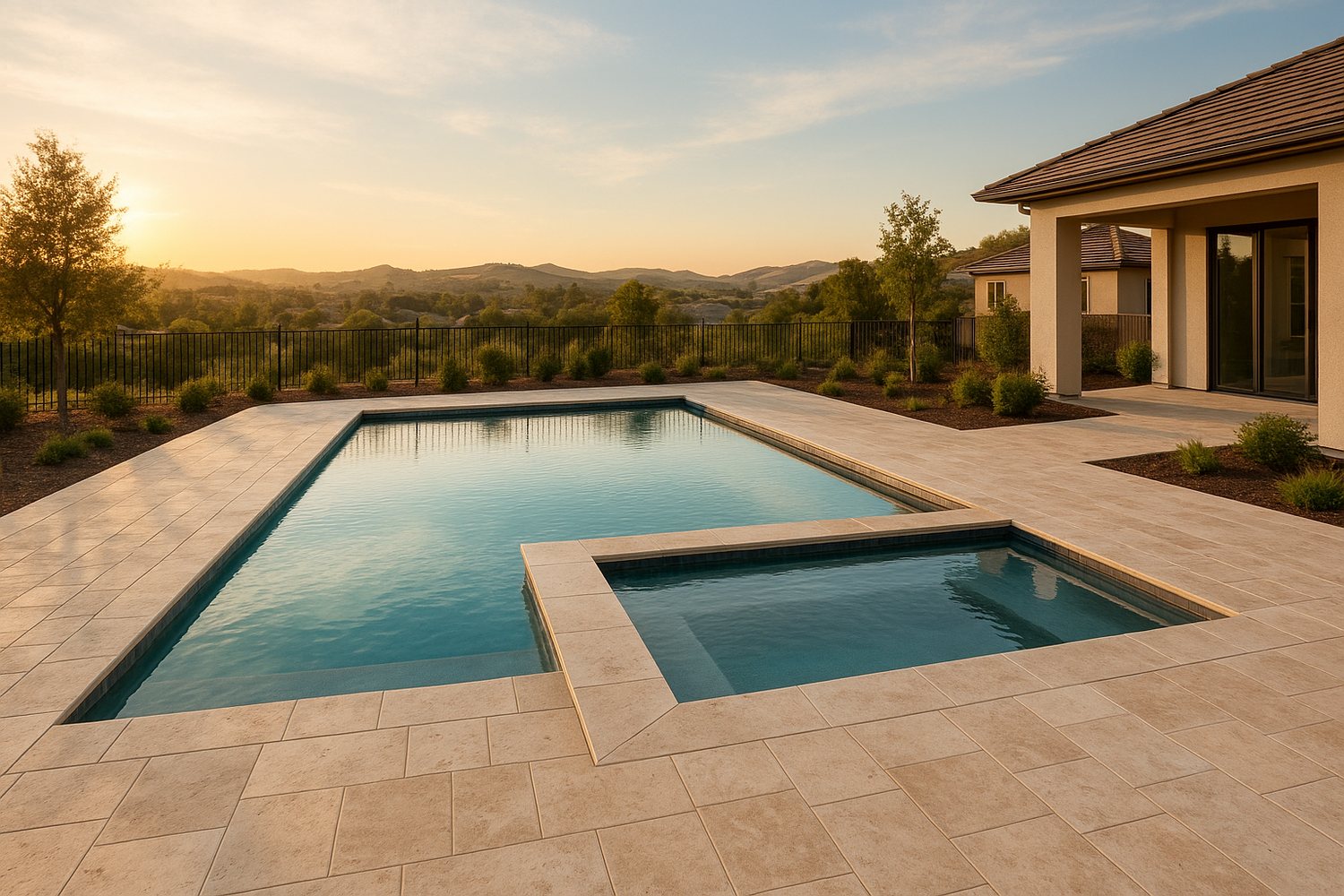
Our most popular pool pavers are lighter in color for a reason: they absorb less heat, staying comfortable for bare feet on summer days over 100°F. Choices like sandy tan, soft grays, and travertine-look blends don’t just look clean—they feel cooler. We recommend materials like concrete pavers or true stone that hold up to sun, salt, and pool chemicals.
Coping Styles for a Safe, Beautiful Pool Edge
Coping is the transition where deck meets pool wall. Opt for traditional rounded bullnose for a smooth grip, or choose square-edge paver coping for a crisp, modern border. Travertine coping is also prized for comfort and custom radius shaping, but we also offer specialized slip-resistant concrete or matching paver stones for a seamless look.
Slip-Resistant Surfaces for Safety
Textured pavers with non-slip surfaces are essential for pool decks, especially in family settings. Flagstone-pattern pavers, tumbled or brushed finishes, and certain concrete blends all provide extra grip even when wet, reducing the chance of slips without feeling rough on bare skin.
Precision Drainage Systems
Proper deck drainage is vital to avoid puddles or water washing back into your pool. We design gentle slope into the deck to direct runoff away from the pool and, if needed, install slot drains or channel drains within the paver field. All selections are ADA-friendly and designed to blend with the surface.
Joint Expansion at the Pool Bond Beam
Where the deck meets the pool shell (the bond beam), we always incorporate an expansion joint. This flexible detail allows for separate movement between the pool structure and paver deck, so temperature swings or settling don’t crack tile or pop coping. Joint material resists chemicals and UV exposure.
Salt and Chlorine-Resistant Choices
With today’s saltwater pools and chlorine sanitizers, deck materials must withstand long-term exposure. High-quality pavers, travertine, and selected concrete blends are highly resistant to etching, fading, or erosion from pool chemicals—far outperforming typical broom-finished concrete or inexpensive stone.
How a Premium Paver Pool Deck Is Built
A flawless, long-lasting paver pool deck takes far more than just setting stones. Each step is handled with trained eyes and decades of hands-on experience. Here’s how California Hardscapes crafts pool decks designed for California’s climate and soils.
- Subgrade Preparation: We begin by excavating and grading the site, removing organic material and unstable soils. The subgrade is compacted for a rock-solid foundation, with special attention near the pool’s edge and around roots or utilities.
- Base Installation: A thick layer (typically 4-6 inches) of compacted road base or class II aggregate is installed, checked for proper slope to ensure dependable drainage away from the pool and house.
- Forming and Outlines: Flexible forms are set to define deck shape, coping radius, and control the interface with the pool bond beam. We precisely measure expansion joints and any elements for steps or planters.
- Reinforcement and Edge Restraints: Heavy-duty edge restraints made from concrete or plastic lock the outer course of pavers to prevent drift or spreading. Around the pool, expansion joints and flexible materials are used to manage movement.
- Laying Pavers: Starting from the coping, pavers are methodically laid in the chosen pattern, with precise gaps for sanded joints. We carefully check alignment, pattern flow, and integrate drainage inlets where needed.
- Joint Sand and Compacting: Fine polymeric sand is swept into all joints, followed by compacting the paver field to seat stones and lock joints tight. Polymeric sand resists washout and inhibits weed growth.
- Optional Sealing and Detailing: For certain finishes, we apply high-quality sealers that protect against pool chemicals and stains. The deck is power washed, inspected, and detailed for a perfect finish.
Pros and Cons of Paver Pool Decks
Strengths
- Stay cooler than most concrete surfaces in full sun, especially with light colors.
- Superior slip resistance and barefoot comfort with quality textured paver choices.
- Resist cracking and surface pop-outs that affect poured concrete, thanks to flexible joint system.
- Highly customizable look—endless colors, patterns, and coping options suit any style.
- Easy to repair—individual pavers can be replaced if damaged, without patching slabs.
Trade-offs
- Upfront installation may cost more than basic concrete due to skilled labor and materials.
- Requires periodic joint sand topping-up and occasional resealing to stay pristine.
- Low-quality pavers or poor installation can result in edge drift or uneven settling.
- Weeds or ants can infiltrate poorly constructed joints if polymeric sand isn’t used or maintained.
Cost Considerations: What Affects Your Paver Pool Deck Investment
Paver pool decks are an upgrade that pays off in durability, comfort, and lasting curb appeal—but costs do reflect skilled labor and premium materials. Every installation is custom: the price varies based on site conditions, design ambitions, and level of detail. At California Hardscapes, we focus on quality, not shortcuts, because every dollar spent should buy decades of relaxation, not ongoing repairs.
- Deck size and complexity: Curved edges, steps, and integrated features impact time and materials.
- Choice of paver material: Genuine stone, premium concrete pavers, or basic blends vary in price and performance.
- Prep and base work required: Digging out old decks, correcting slopes, or compensating for poor soil adds effort.
- Coping and border style: Upgrades like custom bullnose coping or contrasting perimeter bands increase material and labor needs.
- Drainage solutions: Subsurface or trench drains, added slopes or channel installations contribute to a higher-quality (and sometimes higher-cost) deck.
- Accessibility and logistics: Tight sites, sloping yards, or limited material access may require extra labor or specialty equipment.
Maintaining and Protecting Your Paver Pool Deck
Routine maintenance is straightforward: sweep away debris, hose off splashes, and pull surface leaves to avoid staining. Every few years, joints may need a fresh application of polymeric joint sand, especially after heavy storms or cleaning. If your deck is sealed, re-apply sealer every 3–5 years (or as needed) to keep surface colors vibrant and repel water or chemical stains.
Paver pool decks can easily last 30 years or more when installed correctly. Lifespan depends on base preparation, quality of materials, sealing frequency, and traffic use. Avoid harsh pressure washing—gentle cleaning with pool-safe products is best. If a single paver cracks or stains, replacement is simple and often invisible when matched properly.
Compare other options

Paver driveways
Is a paver driveway right for you? Rocklin’s trusted experts explain installation, costs, care, and design choices. Get the best driveways, done right.
Explore →
Flagstone and natural stone patios
Explore flagstone & natural stone patios: types, installation, care, costs, and honest pros & cons from California Hardscapes in Rocklin, CA.
Explore →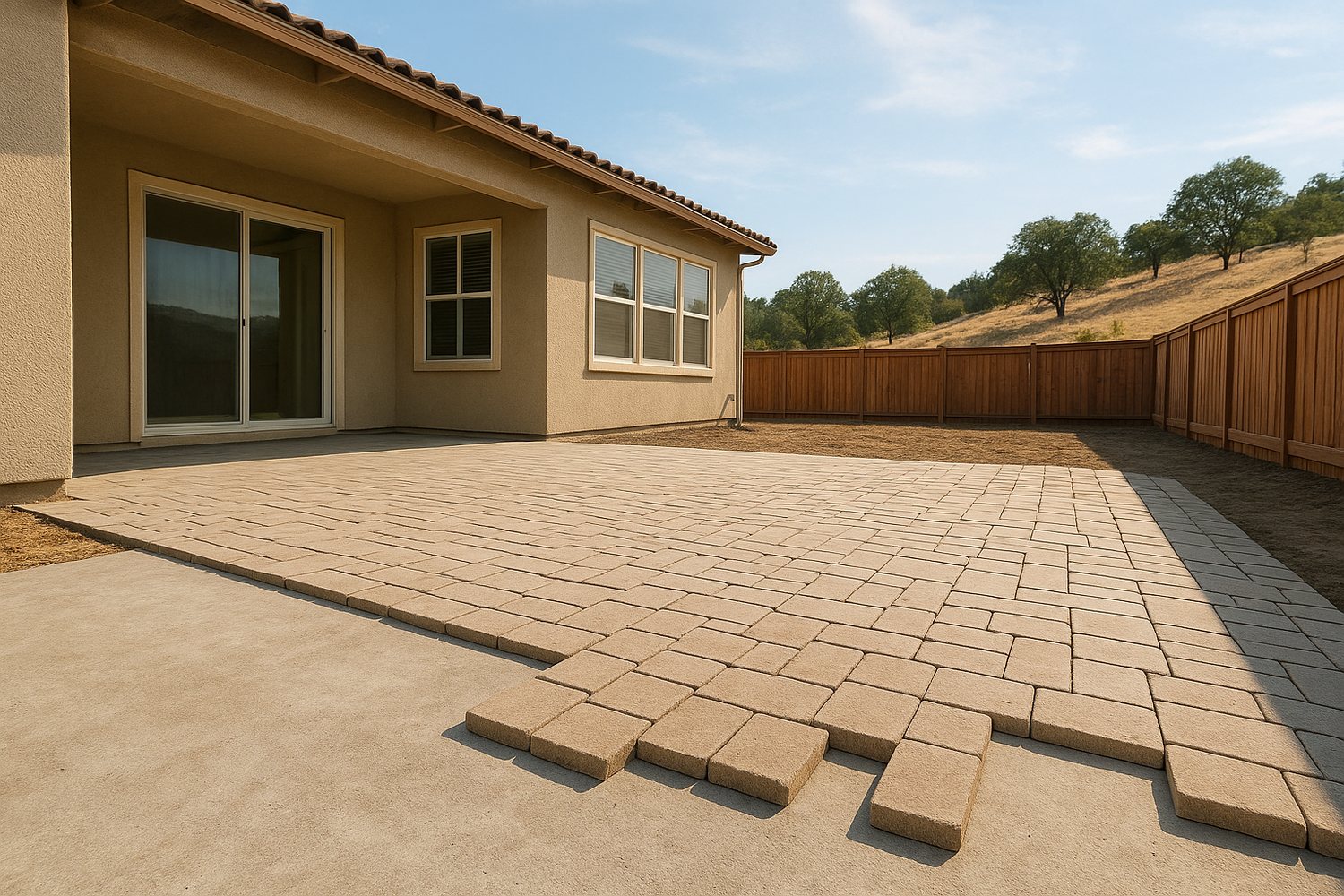
Pavers over existing concrete
Installing pavers over an existing concrete patio or walkway.
Explore →Frequently Asked Questions About Paver Pool Decks
Are paver pool decks really cooler than concrete?
Yes, especially when light-colored, concrete or stone pavers absorb less solar heat than typical broom-finished concrete. Material density, color, and surface texture all play a role. In our climate, choosing sand or cream tones significantly improves barefoot comfort during summer afternoons.
Will weeds or ants become a problem in paver joints?
With proper installation—using polymeric joint sand and compacting pavers tightly—weed growth and ant infiltration are rare. Occasionally, shifting or erosion can open joints, but these are easy to top up or repair. Poorly installed (or old) decks with regular sand are more susceptible.
How long does a paver pool deck last in our area?
When built with a stable base, reinforced edges, polymeric sand, and quality materials, a paver pool deck commonly lasts 30 years or more. Occasional paver swaps or re-sanding are minor compared to repairs for cracked concrete.
What kind of maintenance will I need to do?
Regular sweeping, rinsing away leaves or chemical spills, and refreshing joint sand every few years keeps your paver pool deck in top shape. If sealed, plan on resealing about every 3–5 years for best stain protection and color preservation. Damaged or heavily stained pavers are easily replaced individually.
What expansion is needed between the pool and paver deck?
A flexible joint—usually filled with a durable foam or elastomeric material—separates the pool bond beam from the paver deck. This prevents tile or coping cracks due to independent movement between the deck foundation and pool structure through the seasons.
How do you handle drainage for paver decks?
We build a continuous, gentle slope away from the pool toward yard drains or landscaping, ensuring no standing water. Where necessary, recessed channel drains are installed without interrupting the paver pattern. Proper base compaction and setting grades are vital for year-round drainage in our clay and granite soils.
Will the pavers be damaged by saltwater or pool chemicals?
High-quality pavers and stone are inherently resistant to corrosion or color fading from salt or chlorine. Lower-grade materials or poorly sealed surfaces may show surface wear over time. We strongly recommend specific paver products and sealing routines for saltwater pools to maximize longevity.
Is a permit required for a paver pool deck?
Requirements vary by city, county, and HOA—some only require review for new hardscape, while others have drainage or setback rules. We’re familiar with the process in our region and can assist with guidance, but homeowners should always review their local regulations before starting work.
Ready to Plan Your Paver Pool Deck?
Email sales@californiahardscapes.com with your address, a short description of your goals, and photos of your pool area to start the conversation.