Permeable Pavers for Driveways and Patios
Discover if permeable pavers are the right choice for your California yard. Learn the benefits, design options, and long-term considerations from experienced professionals.
Permeable Pavers: How They Work and Where They Shine
Best for: Permeable pavers are ideal for homeowners looking to manage runoff, protect local creeks, and create beautiful, durable driveways or patios that withstand Northern California’s climate.
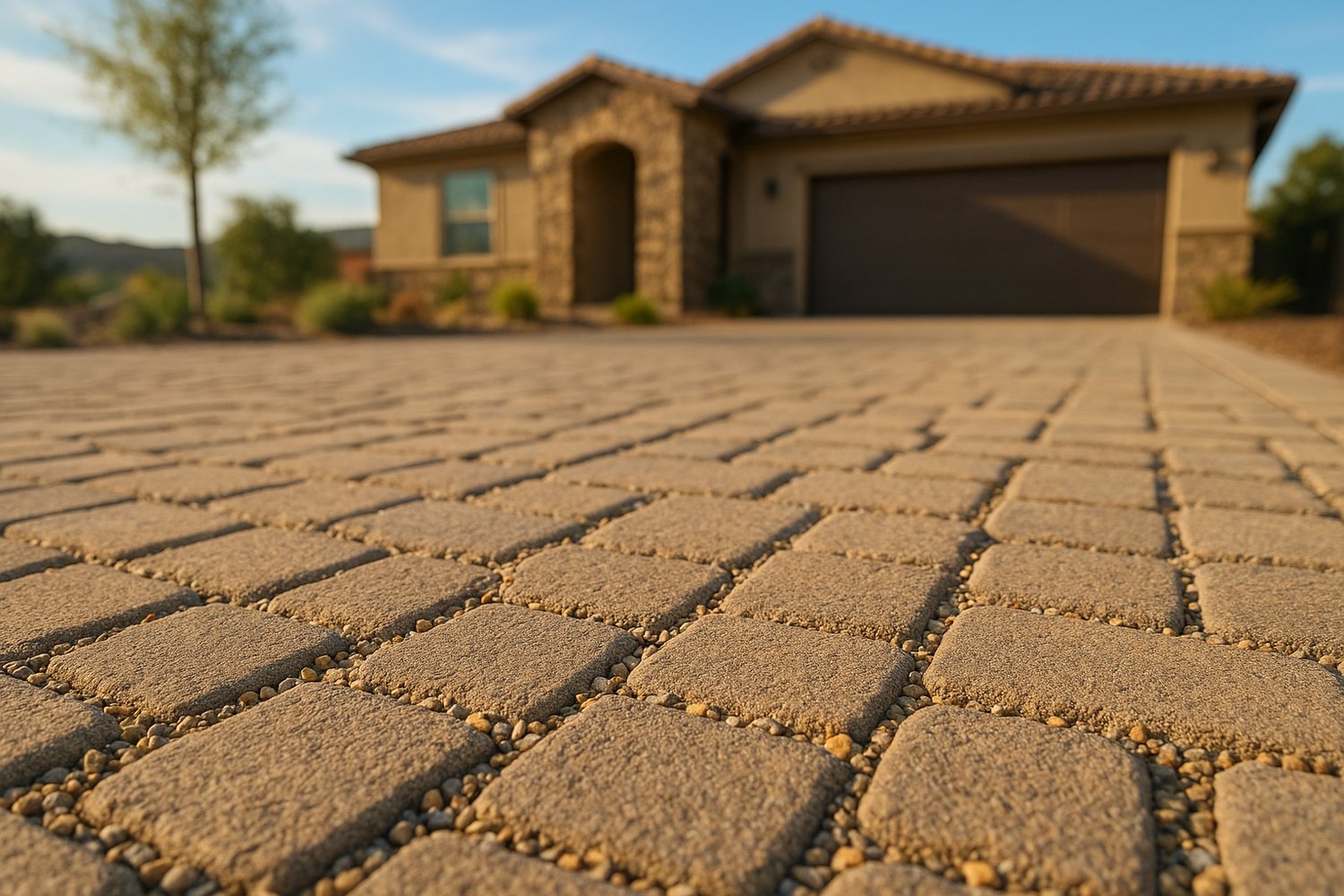
Permeable pavers are engineered paving stones laid over an open-graded, crushed rock base, with intentionally wide joints filled with clean chip stone. Unlike traditional concrete or asphalt, this system lets water soak through the surface and into the ground, reducing runoff and helping recharge the groundwater around your home. For communities facing tight stormwater rules—or anyone ready to protect their landscape while keeping up curb appeal—they offer practical benefits that go well beyond aesthetics.
California Hardscapes builds every hardscape with a quality-first approach rooted in decades of hands-on concrete and landscape experience. We don’t compete on being the cheapest. We compete on quality, integrity, and results that exceed expectations. Every permeable installation we build is crafted to function as intended for years to come—no shortcuts, no cut corners, and every decision made as if it were for our own home.
Permeable pavers are especially well-suited to Rocklin, Roseville, Granite Bay, Auburn, and the Folsom area, where seasonal rain and clay soils frequently mean runoff concerns, and local HOAs or cities may pressure homeowners to meet stormwater management criteria. Driveways, patios, walkways, and pool decks can all be surfaced with permeable systems, offering practical sustainability and architectural style. Still, as with any building material, there are honest trade-offs to weigh before deciding on the right solution—especially when factoring in long-term care and regional weather.
Design Options for Permeable Pavers
Pattern and Layout
Permeable pavers come in various modular patterns—herringbone, running bond, ashlar, and basketweave being popular choices. Pattern doesn’t just influence visual impact; it can also affect structural performance, especially for driveways with turning vehicles. Our team can recommend layouts that balance sophistication with strength.
Color and Finish
Surface color ranges from earth tones to modern grays, allowing you to coordinate with existing masonry, siding, and landscape design. Some manufacturers offer blended or multi-tone pavers for a natural look, while others provide crisp, monochromatic finishes. Choose lighter shades to help reflect solar heat, especially in full-sun areas.
Paver Texture
Available textures include smooth, tumbled, and rough-hewn (stone look) surfaces. Slip-resistant finishes are best for pool decks and patios, while driveways benefit from pavers designed to resist tire marking. Texture is set at the factory and affects both appearance and the feel underfoot.
Joint Width and Stone
Permeable systems use extra-wide (typically 3/8"–1/2") joints between pavers, filled with washed, angular chip stone. The joint fill is critical—it lets water in, helps lock the pavers, and resists washing out with rain. Different chip stone colors and sizes can give a subtle accent or blend with your chosen paver.
Border and Edge Details
Edge restraint is essential for any hardscape, especially permeable systems. Options include concrete curbing, soldier course borders, or contrasting paver bands to frame your driveway or patio. These strengthen the edge while offering clean lines and visual definition.
Paver Size and Material
Standard permeable pavers range from small-format bricks to large slabs. Some systems use concrete, some clay, and some natural stone, each with unique color, strength, and maintenance characteristics. For driveways, smaller modular pavers increase load distribution and reduce the risk of shifting.
Our Quality-First Approach to Permeable Paver Installation
Building a permeable paver driveway or patio is more than just laying stones—it’s a multi-step process that relies on selecting and installing each layer to exacting standards. Our experience in concrete, materials, and site management ensures every step is done right, delivering the durability and infiltration performance this hardscape requires. Here’s the meticulous process our licensed, bonded and insured contractors follow on every project:
- Careful excavation to remove topsoil, roots, and debris, then grading to establish correct subgrade depth and slopes for water infiltration and to avoid future settlement.
- Installation and mechanical compaction of successive layers of open-graded angular crushed stone, sized for optimal drainage and load-bearing; thickness may vary by use (patio or driveway) and soil conditions.
- Placement of edge restraint forms—concrete, steel, or heavy-duty plastic—to define boundaries and keep pavers from spreading or shifting over time, especially near lawn or planting beds.
- Optional geotextile fabric laid between soil and base to prevent mixing and help support long-term stability, particularly important with clay soils or where invasive roots are a concern.
- Even spreading and leveling of bedding chip stone layer, then precise laying of permeable pavers to maintain consistent joint width; filler chip stone is swept into joints for interlock and infiltration.
- Careful plate compaction of the pavers and joint stone to lock the system together, followed by checking all surface levels, and additional filling as needed until joints are stable and fully packed.
- (Optional but recommended) Application of a penetrating, breathable sealer once pavers and joints are fully settled—this can enhance color and minimize staining while preserving permeability.

Permeable Paver Advantages and Considerations
Strengths
- Reduces runoff: Allows water to soak into the soil, minimizing puddles, erosion, and stormwater pollution.
- Ideal for local soils: Works well even on California clays and decomposed granite that struggle with drainage when compacted.
- Aesthetic flexibility: Wide array of patterns, colors, and textures to match architecture and landscaping.
- Durable under traffic: Properly built systems handle the weight and movement of cars and trucks without rutting or cracking.
- Lower long-term impact: Helps meet HOA or city requirements for stormwater management, protecting property value and community environment.
Trade-offs
- Needs regular joint maintenance: Chip stone joints may need topping up every 1–2 years, especially in driveways or beneath oaks.
- Higher upfront cost: Materials, labor, and detailed installation make permeable pavers more expensive than basic concrete or asphalt.
- Not maintenance-free: Occasional weeding, sweeping, and joint stone upkeep are required, or infiltration performance may decline.
- Performance depends on installation: Permeable systems must be built to strict specs—poorly installed systems are prone to shifting, runoff, or clogging.
Understanding the Cost of Permeable Pavers
Investing in permeable pavers is a decision to prioritize durability, aesthetics, and environmental performance over up-front savings. While costs are higher than basic concrete or asphalt, you get a sophisticated hardscape that also helps solve water management challenges. Every project is unique, and precise estimates are based on site access, design choices, and subsurface conditions—here’s what most strongly affects your investment:
- Site preparation and grading requirements, which vary based on slope, existing soils, and vegetation.
- Total square footage—the larger the area, the more pavers, base material, and labor required.
- Paver type, style, color, and manufacturer, which influence material and shipping costs.
- Edge restraint style, border details, and custom shapes that add complexity to installation.
- Soil conditions and subgrade stabilization needs—clay soils or high groundwater can require extra base depth or drainage measures.
- Access for equipment and materials—tight yards or limited access may increase installation time and labor.
Caring for Your Permeable Paver System
Routine maintenance for permeable pavers focuses on keeping joints clear and topped with clean chip stone. About once or twice a year, sweep additional stone into visible joints, especially after heavy rain or leaf drop. Blowing or gently power-washing the surface may help remove sediment or organics, but avoid using polymeric sand or hard joint fillers that inhibit water flow.
Most paver joints need periodic inspection and topping-off for maximum longevity. Resealing, if you opt for it, is typically needed every 2–5 years depending on traffic and exposure. Lifespan of a properly installed permeable paver system is generally several decades, but performance hinges on consistent upkeep—especially in areas shaded by oaks, or where roots and acorns fall. Good maintenance protects both looks and infiltration rates.
Compare other options

Paver and stone steps
Explore expert-built paver and stone steps Rocklin homeowners trust: design, safety, lighting, materials, costs & care by California Hardscapes.
Explore →
Paver patios
Paver patios in Rocklin: honest, in-depth guide to patterns, blends, installation, drainage, and care. Decide if a premium patio is right for your home.
Explore →
Porcelain pavers
Explore porcelain paver patios in Rocklin: premium thickness, slip-resistant textures, stone & wood looks, base options, and care tips for patios and pools.
Explore →Answers to Common Permeable Paver Questions
How do permeable pavers help with stormwater runoff?
Permeable pavers allow rainfall to pass through the joints and open base, infiltrating slowly into the surrounding soil instead of running along the surface or into streets and storm drains. This reduces flooding, erosion, and pollution in local creeks. They’re especially beneficial in areas like Placer and Sacramento counties, where city regulations and water quality concerns are increasing.
Are weeds or grass likely to grow in the joints?
Permeable paver joints filled with clean, angular chip stone resist most weed growth, especially when properly maintained. Still, wind-blown soil or organic debris can settle in the joints over time, making occasional weed pulling or joint stone replenishment necessary. Regular sweeping or using a leaf blower helps minimize this issue.
What kind of maintenance do permeable driveways and patios require?
The main routine is topping off joint chip stone every year or two and keeping surfaces clear of leaves and dirt. Occasional weeding, especially beneath oaks or in shady areas, may be required. Inspect for displaced joint stone after major storms or street sweeping. Power washing can be done with care to avoid blasting joint material out of place.
Can permeable pavers handle heavy vehicle loads?
When installed over a properly constructed open-graded base, permeable paver systems are structurally robust enough for cars, SUVs, trucks, and even light delivery vehicles. Base depth and paver type can be tailored to expected loads. As always, quality of materials and installation are critical for longevity on driveways.
Do permeable pavers get slippery when wet?
Most permeable pavers are designed with slip-resistant textures, and the combination of surface roughness and open joints allows water to quickly drain away. This means less risk of slick surfaces, especially on pool decks or patios. Choose a texture and color best suited for barefoot or high-traffic areas if slip resistance is a concern.
Will the system clog over time and stop draining?
Permeable paver systems can lose performance if joints become filled with dirt, fine debris, or organic matter. Regular cleaning and topping off chip stone protect against clogging, and most issues are easily addressed with maintenance. If a section does become clogged, joint vacuuming or removal and refill is typically successful in restoring flow.
How do I know if my property is suitable for permeable pavers?
Most Northern California residential properties are good candidates, especially those with adequate setback from buildings and graded so water doesn’t pond against foundations. Slope, soil type, and nearby trees may influence how the base is designed. During a site visit, we’ll check drainage, elevations, and access to confirm suitability and recommend any needed modifications.
Can I use deicing salts on my permeable paver driveway?
In foothill areas with occasional freeze events, using deicing salts sparingly is generally acceptable—but overuse can potentially harm pavers and nearby planting beds. It’s best to sweep up excess after ice has melted and avoid salt altogether where possible, using sand or gravel for traction instead. Properly built permeable drives rarely freeze at the surface, as they drain rapidly.
Request Expert Advice or an Estimate
Email sales@californiahardscapes.com with your address, a brief description of your project, and photos if possible. Our team will review your needs and recommend the best hardscape options for your property.