String & Cafe Lights—Professional Grade for Your Backyard
String and cafe lights create instant atmosphere, but only when chosen and installed right. Here’s what savvy homeowners need to know.
The Appeal & Essentials of String Lighting
Best for: Best for patios, pool decks, garden zones, or side yards where a welcoming, stylish glow is wanted for relaxation or gatherings.
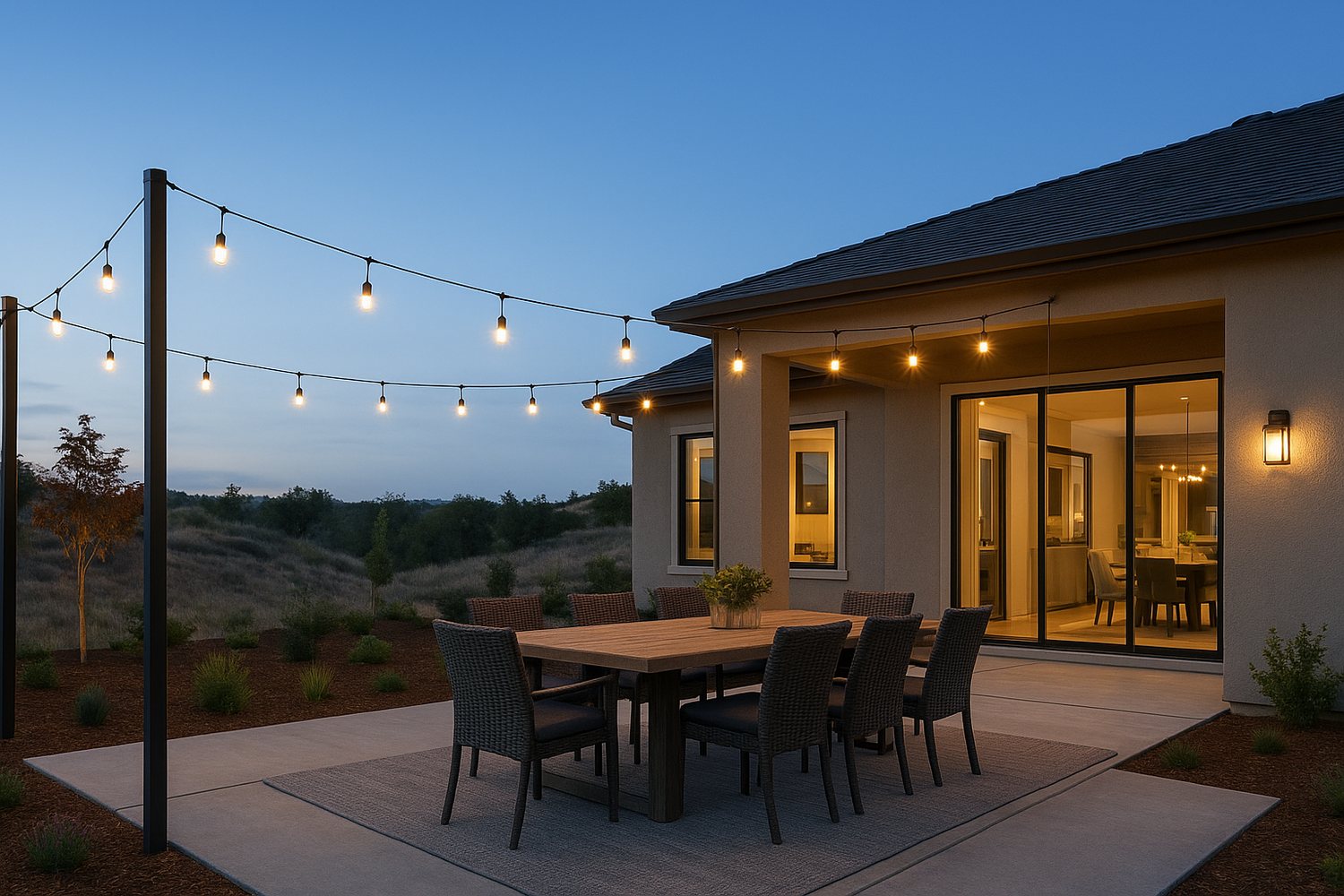
Nothing changes the mood of an outdoor space like string and cafe lights. Whether draped above a patio, stretched between posts, or slung over an outdoor kitchen, this lighting style delivers instant warmth and festive ambiance. In northern California backyards where evenings are spent outdoors from spring through fall—and even on cool winter nights—these lights lend hospitality and charm that feel equally right for everyday relaxation or big family events.
But not all string lights are the same. Home improvement store options might seem tempting, but they rarely hold up through our blazing summers, wet winters, and the rigors of permanent outdoor use. Commercial-grade string and cafe lighting uses heavier cables, weatherproof connections, and quality LED bulbs with real staying power—delivering consistent, reliable beauty that lasts season after season, all with the safety factors homeowners expect from a professional install.
California Hardscapes believes in doing the job right, never cutting corners. We don’t compete on being the cheapest; instead, we work to give you function, durability, and an end result that looks as good years down the line as it does the night the switch is first flipped. If you want a lighting upgrade that feels effortless, makes entertaining easy, and holds up to daily life, here’s your in-depth guide to string and cafe lighting—how it works, your options, trade-offs, and what to expect.

Popular String and Cafe Lighting Options
Commercial-Grade String Light Strands
Built to handle the heat, moisture, and movement of outdoor life, these feature thick UV-resistant rubber cables and heavy-duty sockets. Unlike retail sets, they’re rated for year-round exposure and can be custom-cut for any length or layout, reducing breakage and voltage drop on longer runs.
Galvanized Steel Catenary Cables
These sturdy support cables allow longer spans and straight runs between attachment points. Properly tensioned and anchored, they prevent sagging on wider patios or open space, giving both neat lines and reliable safety—especially great for large party zones or where tree and post spacing varies.
Custom Steel or Powder-Coated Posts
For patios or spaces without natural anchor points, we install freestanding steel or aluminum posts set in concrete footings. Posts can match existing yard features or fencing, with versatility for stringing lights above any space—even over turf, pavers, or raised planters.
Long-Life LED Bulbs
LED filaments mimic the look of vintage Edison bulbs while keeping power usage ultra-low. They’re shatter-resistant, available in warm or neutral tones, and last far longer than classic incandescent options—reducing ladder time and re-lamping chores over the years.
Smart Dimming Controls
Integrate your lights with a dimmer—manual, remote-controlled, or even smart-home app-based. Dimming lets you tune the brightness for lively parties or soft evening glow, minimizing energy use and extending bulb life further.
Permanent vs. Seasonal Installation
Permanent installs use robust mounting hardware, proper weather sealing, and code-compliant exterior wiring. Seasonal or temporary hangs might skip structural attachments, but can’t match the safety or lifespan of setups properly installed to last in our variable regional climate.
How Professional String Lighting is Installed
A thoughtfully built string or cafe lighting system looks effortless—but beneath that inviting glow is careful layout, measurement, and construction. Here’s what’s involved in a best-practice installation by experienced outdoor builders, using commercial-grade materials at every step.
- Site survey and layout: Identify anchor points (fascia, posts, trees, structure), measuring spans and marking cable/power runs; check for underground utilities before any post digging.
- Footing and support installation: Where needed, dig and pour concrete footings; set posts to engineered depth/spacing for cable tension and wind resistance, factoring in local slopes or root interference.
- Mounting hardware and catenary cables: Install wall plates, eye-bolts, turnbuckles, and tension galvanized cables, ensuring they’re taut, level (or intentionally swagged) and safely secured to resist pulling or wind sway.
- Stringing commercial-grade light strands: Attach light strands to catenary, spacing bulbs evenly, allowing for expansion/contraction with temperature swings, securing each socket as needed for clean lines.
- Electrical connections: Install weatherproof exterior outlets—ideally, on a dedicated GFCI-protected circuit; ensure all wiring and control boxes are rated for continuous outdoor use and enclosed from moisture.
- Control integration: Mount manual, remote, or smart dimmer controls; test for even operation, brightness range, and safe automatic shutoff per code requirements and owner preference.
- Final adjustments and inspection: Tighten all hardware, check bulb operation, tidy up cords and slack, and walk through operation and safety tips with the homeowner before calling the job complete.
Pros and Cons of String & Cafe Lamps
Strengths
- Instantly upgrades outdoor ambiance—inviting for both everyday use and parties.
- Highly flexible layouts: zig-zag, parallel lines, or custom geometries to suit any patio or yard.
- Low-voltage, high-efficiency LED bulbs minimize long-term energy usage.
- Permanent, code-compliant installation is much safer (and longer lasting) than DIY approaches.
- Dimming and switching options let you set any brightness and mood level you prefer.
Trade-offs
- Initial cost for commercial-grade materials and proper installation is much higher than off-the-shelf DIY kits.
- Permanent setups require structural supports—like posts and anchored hardware—which can’t always be easily repositioned later.
- Light output is softer, more atmospheric; not a viable replacement for task or security lighting needs.
- Weather, tree debris, or nearby irrigation can occasionally lead to cleaning or bulb replacement, even with quality components.
What Influences the Cost of String Light Installation?
String and cafe lighting range in cost depending on materials, complexity, and site factors. While hardware-store kits look tempting, commercial solutions and professional installation pay off with safer, longer-lasting results. Expect initial pricing to reflect quality components, custom layout, and qualified labor—every project is unique.
- The overall length of lighting needed and the number of separate runs or zones.
- Need for custom posts or footings (especially if there aren’t sturdy attachment points).
- Quality and rating of light strands, cables, and weatherproof sockets used.
- Electrical work scope: outlets, new circuits, GFCI protection, and code requirements.
- Type of control: basic switches, integrated dimmers, or smart-home/app systems.
- Site conditions: existing landscaping, hardscapes, slope, and accessibility for equipment and crew.
Caring for Your String & Cafe Lights
Well-installed string lighting needs little day-to-day maintenance. Periodically, check for any loose cables, sagging lines, or burned-out bulbs—swap bulbs only with matching commercial LED types. Lightly clean cable housings and bulbs with a damp, soft cloth about twice a season to prevent pollen and dust from dimming their appearance.
Permanent installations can last 7–10 years or longer with minimal upkeep, though bulb replacement intervals vary by quality and runtime. In most cases, no resealing is needed, but inspect connection boxes and weather seals after storms or heavy irrigation. If you notice flickering or loss of brightness, check for build-up on contacts or signs of wire wear—prompt fixes now prevent bigger issues later. Keep climbing plants or heavy debris clear for the best looks and longevity.
Compare other options

Low-voltage LED lighting systems
Discover if low-voltage LED lighting systems fit your outdoor space. Covering transformers, wiring, fixture materials, energy savings, and expandability.
Explore →
Path and walkway lighting
Premium path and walkway lighting in Rocklin, Roseville, Granite Bay, Folsom and Auburn. Explore options, placement, costs, and expert installation tips.
Explore →
Pool and water feature lighting
Explore design, safety, installation and code tips for pool, spa, and water feature lighting in Rocklin, Roseville, Granite Bay & nearby communities.
Explore →String & Cafe Lights: Your Questions Answered
How long do commercial-grade string lights typically last outdoors?
With proper installation and quality products, commercial-grade string lights often last 7–10 years or longer before major maintenance is required. Bulbs may need changing sooner, depending on hours of use and exposure, but robust cables and sockets handle Rocklin’s climate year-round. Regular cleaning and prompt fixes for any minor issues help maximize longevity.
Are permanent string light installations safe in wet weather?
Yes, when installed professionally using code-rated, weatherproof components, permanent setups are designed to withstand rain, fog, and even occasional sprinkler overspray. All exterior outlets and control boxes should be GFCI-protected and fully enclosed. It’s not recommended to use basic hardware-store string sets for permanent outdoor use in our region.
Can I have string lights on a patio without existing trees or structures?
Absolutely. Freestanding steel or powder-coated posts set in concrete can be installed at the correct spacing for your design. This allows for string lights across patios, turf zones, or between garden beds where there are no usable trees, fences, or house fascia. Posts are customizable to blend with your yard’s aesthetics.
Do I need a city permit to install cafe lights in my backyard?
Permit requirements for exterior lighting installations vary between cities, counties, and even specific HOAs. Minor, plug-in setups typically don’t require permits, but permanent systems with new wiring or structural supports might. It’s important to check your local regulations or HOA rules before scheduling your install.
Can string lights be used with a dimmer or on a smart system?
Yes. High-quality LED string light systems are commonly paired with manual or remote dimmers and can often be integrated into a smart-home control system (via compatible outlets or switches). This gives you full command over brightness, on/off schedules, and even voice control if desired.
How much electricity do LED string lights use?
LED bulbs are extremely energy efficient—often drawing 80–90% less electricity than equally bright traditional incandescent bulbs. A typical backyard setup will use about as much power as a few indoor lamps, making them affordable to run even for extended hours.
Will string lights attract a lot of bugs?
LED string lights, especially those with a warm (2700K) color tone, attract far fewer bugs than bright white or incandescent bulbs. While no outdoor lighting is totally bug-proof, choosing the right bulb and placement helps minimize unwanted night visitors.
Can I take down my cafe lights seasonally to store them?
If installed for seasonal use, string lights can be removed and coiled for storage, but frequent handling increases wear and risk of damage, especially to sockets and wiring. Permanent commercial-grade setups are designed to stay up year-round, enduring weather and temperature swings far better than removable consumer-grade kits.
Ready to Bring Your Outdoor Vision to Light?
Email sales@californiahardscapes.com with your address, a short description, and a few photos of your space. We’ll help determine if string or cafe lighting is a smart fit for your yard.