Travertine Pavers for Patios & Pools: Form Meets Function
Travertine pavers bring natural elegance, comfort, and durability to your outdoor spaces. Here’s everything you need to know to choose, design, and care for them the right way.
An In-Depth Guide to Travertine Pavers
Best for: Travertine pavers are best for homeowners seeking timeless natural stone beauty and barefoot comfort, especially around pools and patios.
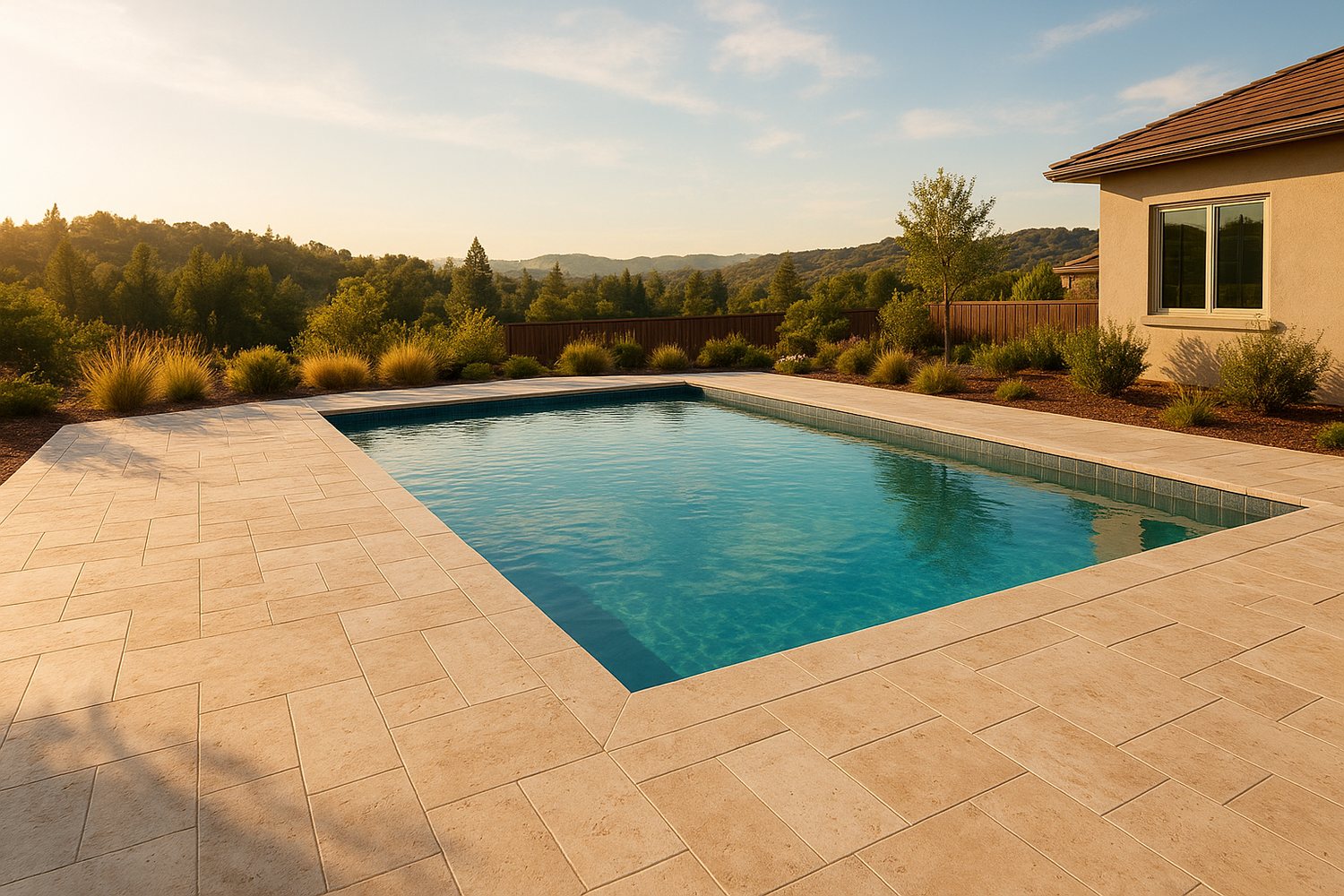
Travertine pavers are a premium natural stone option for outdoor living spaces in Rocklin, Roseville, Granite Bay, Folsom, Auburn, and nearby communities. Favored for their warmth underfoot, unique color movement, and classic texture, travertine has become a staple for upscale patios and pool decks that never go out of style. Its origins as a limestone, shaped by underground springs, give each paver a distinctive character that brings a custom look to every project.
When comparing natural and manufactured paving products, travertine pavers stand out for their ability to stay cool in the hottest summer sun—a huge benefit in our region, where July afternoons regularly top 100°F. The stone’s natural porosity helps it breathe, making it an excellent choice for barefoot pathways around pools or sun-drenched patios. Unlike concrete, which can look plain and sometimes harsh over time, travertine develops a rich ‘patina’ with age, adding to its beauty and value.
California Hardscapes believes in building projects as if they were our own—from a structurally sound base to details like proper edge treatment and long-lasting sealer. This philosophy is especially important with natural stone, where cutting corners almost always leads to future issues. By understanding your options—like tumbled vs chiseled finishes, French patterns, color selection, and sealing—you can ensure your travertine paver installation lives up to all your expectations, now and years from now.

Design & Specification Choices with Travertine Pavers
Tumbled vs. Chiseled Finishes
Tumbled travertine pavers are gently weathered for a soft, rounded edge and lightly textured surface—inviting under bare feet and easy on pool floats. A chiseled finish features a more pronounced, rustic border, adding definition to each paver but feeling slightly sharper. Your choice changes both the look and the tactile experience: tumbled is a bit more casual and foot-friendly, while chiseled lends a touch of formality or traditional Mediterranean flair.
French Pattern Layouts
French pattern refers to a repeating 4-piece set of different sizes—typically 8×8, 8×16, 16×16, and 16×24 inches—laid in an interlocking arrangement. This pattern creates a balanced, flowing look without obvious grout lines or seams, and is especially popular for large patios and pool decks. Choose a French pattern if you’re seeking visual interest with an organically random feel that showcases the natural veining of the stone.
Paver Size & Thickness
Travertine pavers commonly come in thicknesses from 1½” to 2” for vehicular or heavy-use areas. Standard sizes are 6×12, 8×8, 8×16, 16×16, and 16×24 inches. Smaller pavers can be used for tight curves or intricate borders, while larger pieces emphasize the stone’s natural variation. Thickness is especially important around pools and driveways—thicker pavers offer extra stability and durability.
Coping for Pools & Steps
Coping refers to the edge piece that transitions between your pool or step and the paver field. Travertine coping is usually bullnosed or eased-edge for comfort and safety. Matching the coping finish and color to your paver field helps achieve a cohesive look, while also ensuring water runoff doesn’t damage the installation over time. Copings can be custom-cut for complex shapes or tight radii.
Color Variations
Travertine comes in a broad range of earthy tones—ivory, walnut, gold, silver, and blends. Each batch is unique, with swirls, veins, and fossil marks. Color selection should account for your home’s exterior color, landscaping, and sun exposure. Lighter colors help keep the surface cool, while richer tones blend with Mediterranean, Tuscan, or contemporary architecture. Variation is part of travertine’s natural beauty, but sample lots should be viewed before ordering.
Sealing: Enhancing and Protecting
Travertine is porous by nature. Sealer will protect against stains, especially from pool chemicals, barbecue grease, or leaves, and can enrich the stone’s natural color if you choose an enhancing formula. Penetrating sealers preserve the original color and feel, while enhancing sealers add depth and a subtle sheen. Resealing every few years is recommended for the best appearance and longevity.
How a Lasting Travertine Paver Project is Built
A quality travertine paver installation relies on proper site preparation and disciplined construction—especially on local soils that expand, contract, and drain unpredictably. Our approach at California Hardscapes is straightforward: no corners cut, no shortcuts, never just ‘good enough.’ While minor variations exist by site conditions, these are the essential steps followed to achieve a travertine patio or pool deck that stands the test of time.
- Excavation and subgrade prep: Remove grass, roots, and loose soil to a uniform depth, factoring in paver and base material thickness, and check for proper slope for drainage.
- Install compacted base: Place 4-8 inches of compacted crushed rock (usually Class II road base), layering and packing in lifts for stability and drainage, with special attention to soft clay or DG spots.
- Set forms and edge restraint: Install wood or flexible forms to define borders and ensure straight lines and curves; edge restraint systems keep pavers secure and eliminate movement.
- Prepare reinforcement: For vehicular or heavy-use surfaces, geotextile fabric and/or a stabilized sand setting bed may be added, protecting against base settlement over time.
- Lay out pavers and coping: Starting with the coping (if pool or steps), lay pavers tightly according to the planned pattern, staggering joints as needed for strength and appearance.
- Fill joints and finish: Sweep in polymeric sand or a compatible joint filler, then compact the whole surface to lock everything in place—final checks ensure levelness and fit.
- Clean, seal, and cure: Remove debris, pressure-wash as needed, allow drying, then apply a compatible penetrating or enhancing sealer according to manufacturer instructions.
Pros & Cons: Travertine Pavers in Northern California
Strengths
- Naturally cool underfoot, even on 100°F+ summer days—outstanding for pools and sunny patios.
- Exceptional slip resistance, especially in tumbled finishes—safe for kids and bare feet.
- Unique, timeless beauty: every paver is different, creating a high-end look that never feels generic.
- Strong yet repairable—individual pavers can be replaced if damaged without disturbing the whole area.
- Does not fade like colored concrete and usually improves in character with age and exposure.
Trade-offs
- Susceptible to staining if not properly sealed or regularly maintained; acidic spills (wine, citrus) can etch the surface.
- Color, density, and surface texture may vary widely from lot to lot—sample viewing is essential.
- Requires professional installation for proper base prep and fit; DIY attempts often lead to movement, drainage or joint problems.
- Natural stone commands a higher upfront investment than concrete or manufactured pavers—best value is in long-term beauty and performance.
What Drives the Cost of Travertine Pavers?
Travertine paver projects are premium not because of the material alone, but because every aspect—stone, prep, patterning, and finishing—demands skilled labor and attention to detail. While prices may be higher than poured concrete or basic pavers, travertine delivers beauty and comfort that lasts for many years if installed properly. We don’t compete on being the cheapest, but on delivering projects built with the skill and care they deserve.
- Type, color, grade, and thickness of travertine selected—rarer colors and denser stone command higher prices.
- Complexity of pattern and layout (straight set, French pattern, curves, custom inlays, borders).
- Size and accessibility of the site—tight spaces, slopes, or poor access increase labor requirements.
- Scope of base preparation—dealing with problematic or clay soils, tree roots, drainage mitigation, or need for deeper excavation.
- Amount and intricacy of coping, stairs, and edging required to transition to other surfaces or structures.
- Sealing, cleaning, and ongoing maintenance needs—enhanced or high-performance sealers may add cost but protect your investment.
Caring for Travertine: Maintenance & Longevity
Routine maintenance for travertine pavers is straightforward: sweep regularly to remove grit, wash occasionally with clear water, and promptly clean up organic spills (leaves, berries, pet accidents) to avoid stains. Avoid harsh or acidic cleaners, which can erode the surface. For pool areas, rinse off splashed pool chemicals occasionally. Weed growth in the joints is rare with polymeric sand but can be spot-treated as needed.
Resealing intervals depend on the type of sealer used and exposure to sunlight, irrigation, and foot traffic—plan to check the effectiveness annually and reapply every 2-4 years. A well-installed, well-cared-for travertine surface can easily last decades. Its lifespan is affected by the quality of the base prep, prompt handling of drainage and root intrusion issues, and timely resealing. Over time, travertine develops a rich surface character that many homeowners prize.
Compare other options

Flagstone and natural stone patios
Explore flagstone & natural stone patios: types, installation, care, costs, and honest pros & cons from California Hardscapes in Rocklin, CA.
Explore →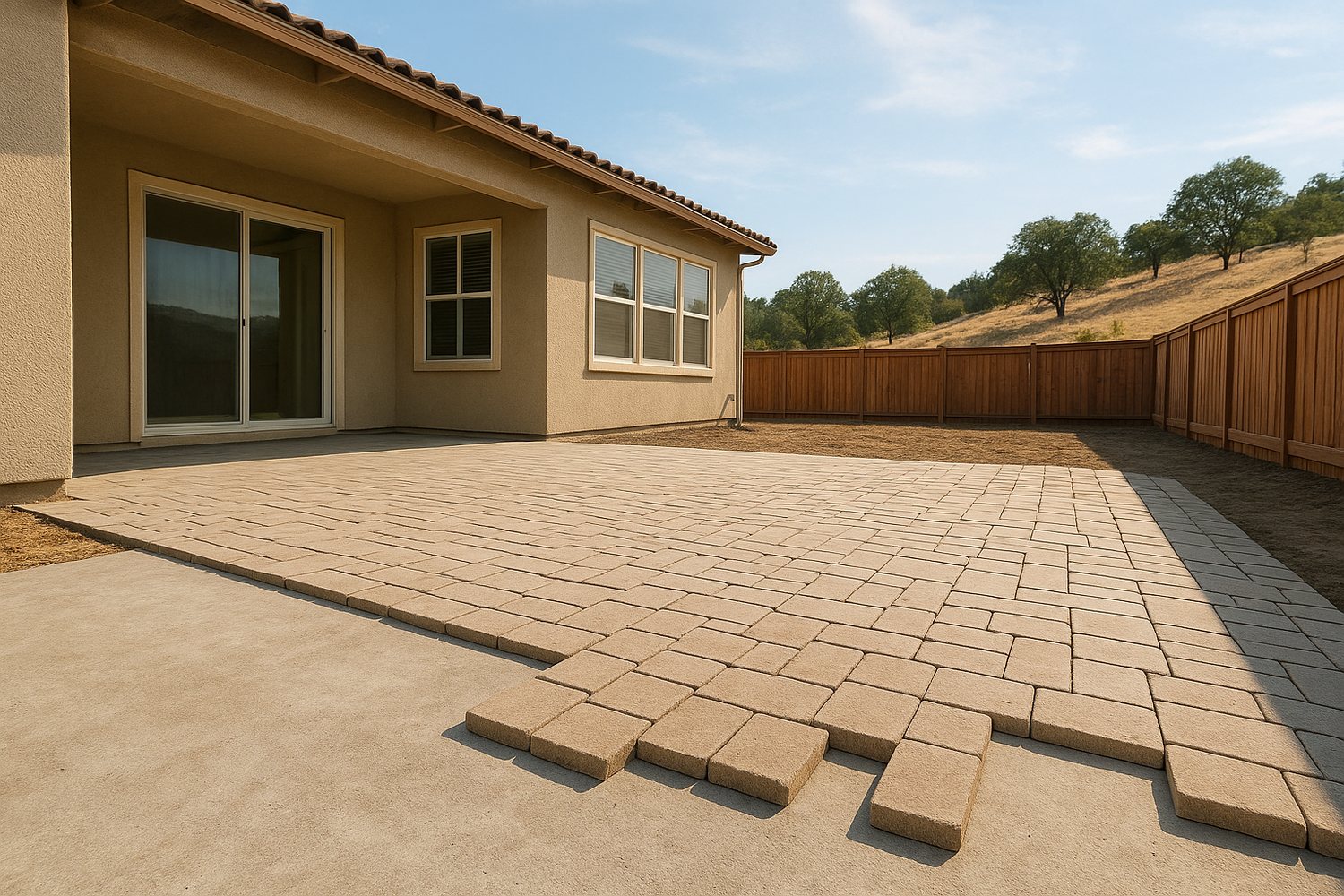
Pavers over existing concrete
Installing pavers over an existing concrete patio or walkway.
Explore →
Paver driveways
Is a paver driveway right for you? Rocklin’s trusted experts explain installation, costs, care, and design choices. Get the best driveways, done right.
Explore →Travertine Paver FAQs
How do tumbled and chiseled travertine pavers differ in feel and durability?
Tumbled travertine pavers have softened, rounded edges and a lightly textured surface that feels comfortable and safe for bare feet, especially around pools. Chiseled travertine features more defined, rustic edges that highlight each stone and can look more formal or old-world. Both types are equally durable if installed properly—your choice mainly affects look and underfoot feel. Tumbled is typically a bit more forgiving for children or seniors.
Are all travertine pavers equally cool underfoot?
Travertine generally stays cooler than concrete or porcelain—but color makes a difference. Ivory, cream, and light gold pavers reflect more sunlight and remain noticeably cooler, even during 100°F+ summer afternoons. Darker shades of gold, walnut, or silver can get warmer, but still outperform most manmade surfaces. Around pools, choosing a light color maximizes comfort for bare feet.
What is the French pattern and why is it so popular?
The French pattern is a modular layout using four different paver sizes in a repeating, interlocking design. This arrangement creates eye-catching, balanced surfaces with minimal repetitive lines—making large patios or pool decks feel organic and visually rich. French patterns showcase the natural variation in travertine particularly well and can disguise minor irregularities or slopes. It’s the top choice for many homeowners seeking a custom, high-end look.
Do travertine pavers need to be sealed? How often?
Yes—travertine’s porous nature means it absorbs water, spilled drinks, mud, and even pool chemicals, which can lead to staining or etching. A quality penetrating or enhancing sealer not only protects but can also deepen the stone’s color. Plan to inspect and reseal every 2-4 years depending on usage and exposure. Signs you need to reseal include darkening when damp, dullness, or increased staining.
How do you handle drainage and soil movement under paver patios?
In our area’s mix of expansive clay and decomposed granite soils, a stable, well-compacted crushed rock base is essential. We ensure proper slope for water runoff away from homes and structures, and install edge restraints to prevent paver shift. On problematic soils or steeper slopes, adding geotextile fabric and carefully planned drains can prevent settling and waterlogging. This is a step that should never be skipped or rushed.
What’s the typical lifespan of a travertine paver installation?
With professional base preparation, proper joint filling, and regular sealing, travertine pavers can easily last several decades. Most issues arise from shortcuts during installation—like inadequate base depth, improper drainage, or skipping the sealer. If maintained and cared for, travertine ages gracefully, developing added character and appeal as the stone matures. Individual pavers can be replaced if damaged, without tearing up the whole surface.
Do my HOA or city building officials need to review my patio or pool deck project?
Homeowners Associations in Rocklin, Roseville, Granite Bay, and nearby areas often require review for visible landscape or hardscape changes. The same may apply for city or county, especially for pool decks, grading, proximity to property lines, or new outdoor structures. Requirements vary by address—check before starting, as unpermitted work can cause costly delays. While we don’t handle permits, we advise all clients to confirm requirements early.
What maintenance can I do myself, and when should I call a professional?
Homeowners can easily sweep, rinse, and spot clean travertine pavers, as well as check for joint sand loss or weedy spots. Re-sealing is also DIY-friendly with the right product and some patience. For shifting, sinking pavers, obvious drainage problems, or coping damage, it’s best to call in a professional familiar with natural stone. Professional cleaning and sealing every few years keeps patios looking their best.
Request a Travertine Consultation
Ready to see if travertine pavers are right for your patio or pool? Email sales@californiahardscapes.com with your address, a brief description of your space, and a few photos, and we’ll help you take the next step.