Concrete Resurfacing vs. Slab Replacement: What Homeowners Should Know
Discover when resurfacing concrete is the right move versus when a full slab replacement is needed. Get region-specific tips for lasting results.
Homeowners face an important choice with aging concrete: resurface or replace? Understanding your options ensures better long-term value and aesthetics.
Understanding Concrete Resurfacing and Decorative Overlays
Resurfacing and decorative overlays are ways to upgrade existing concrete surfaces without full replacement. The process involves preparing the old surface and applying new, specialized mixtures designed for durability, traction, and visual appeal. Modern overlays can mimic stone, tile, or simply refresh worn slab finishes.
In northern California neighborhoods—such as Rocklin, Roseville, Granite Bay, Folsom, and Auburn—resurfacing is often chosen for patios, pool decks, and driveways. Our local climate and temperature swings can cause discoloration and minor surface issues over time, making overlays a suitable remedy for cosmetic improvement.
While overlays offer many design possibilities, they aren’t a cure-all. There are limitations, especially if the underlying slab is compromised. Deciding whether resurfacing or replacement fits your needs starts with evaluating the current state of your concrete.
- Overlays refresh the look without demolition
- Suitable for minor cracks, stains, weathering
- Custom finishes and colors available
For more information about resurfacing solutions and finishes, visit ourResurfacing and decorative overlayspage.
When Resurfacing Makes Sense in Our Region
Resurfacing is an excellent choice for structurally sound concrete that shows cosmetic damage like surface fading, mild cracking, or old stains. In Placer, Sacramento, and El Dorado counties, freeze-thaw cycles are milder than in cold climates, so surface deterioration is often limited to the top layer.
Well-bonded overlays can restore traction and resist pool chemicals, making them popular around patios and pool decks. Compared to a full demolition and pour, resurfacing is typically less disruptive and conserves structural features that are still performing well. It’s also a good fit for extending the life of stable driveways and walkways.
Overlay projects generally require a clean, uncontaminated, and minimally cracked slab. Foundation settling, deep cracking, or water intrusion signals deeper issues that overlays cannot address. Work with an experienced contractor to objectively assess slab condition before committing.
- Mild surface wear can be masked
- Reduces waste and project mess
- Quicker turnaround than slab replacement
Recognizing Signs That Require Full Replacement
Not all slabs are candidates for resurfacing. Widespread cracking, significant heaving or settling, and areas of crumbling concrete indicate foundational or subgrade issues that overlays cannot solve. Addressing these with overlays is throwing good money after bad.
In the greater Sacramento and foothill areas, expansive soils or poor drainage can undermine slabs, leading to instability. If you notice trip hazards, persistent water ponding, or spalling that reaches deep below the surface, it’s usually time for a full replacement, along with any needed base repairs.
Serious conditions are best evaluated by a professional with regional experience. The investment in a new slab may cost more initially but avoids repeated repairs or cosmetic fixes that ultimately fail.
- Wide or deep cracks across the slab
- Signs of soil movement or slab settling
- Surface spalling exposing aggregate
| Factor | Resurfacing/Overlay | Full Replacement |
|---|---|---|
| Structural Cracks | Not Recommended | Required |
| Cosmetic Damage | Ideal Solution | Optional |
| Project Disruption | Minimal | Significant |
| Design Flexibility | High | High |
| Lifespan (Proper Application) | 10–15 years+ | 20+ years |
Surface Preparation: The Key to Overlay Success
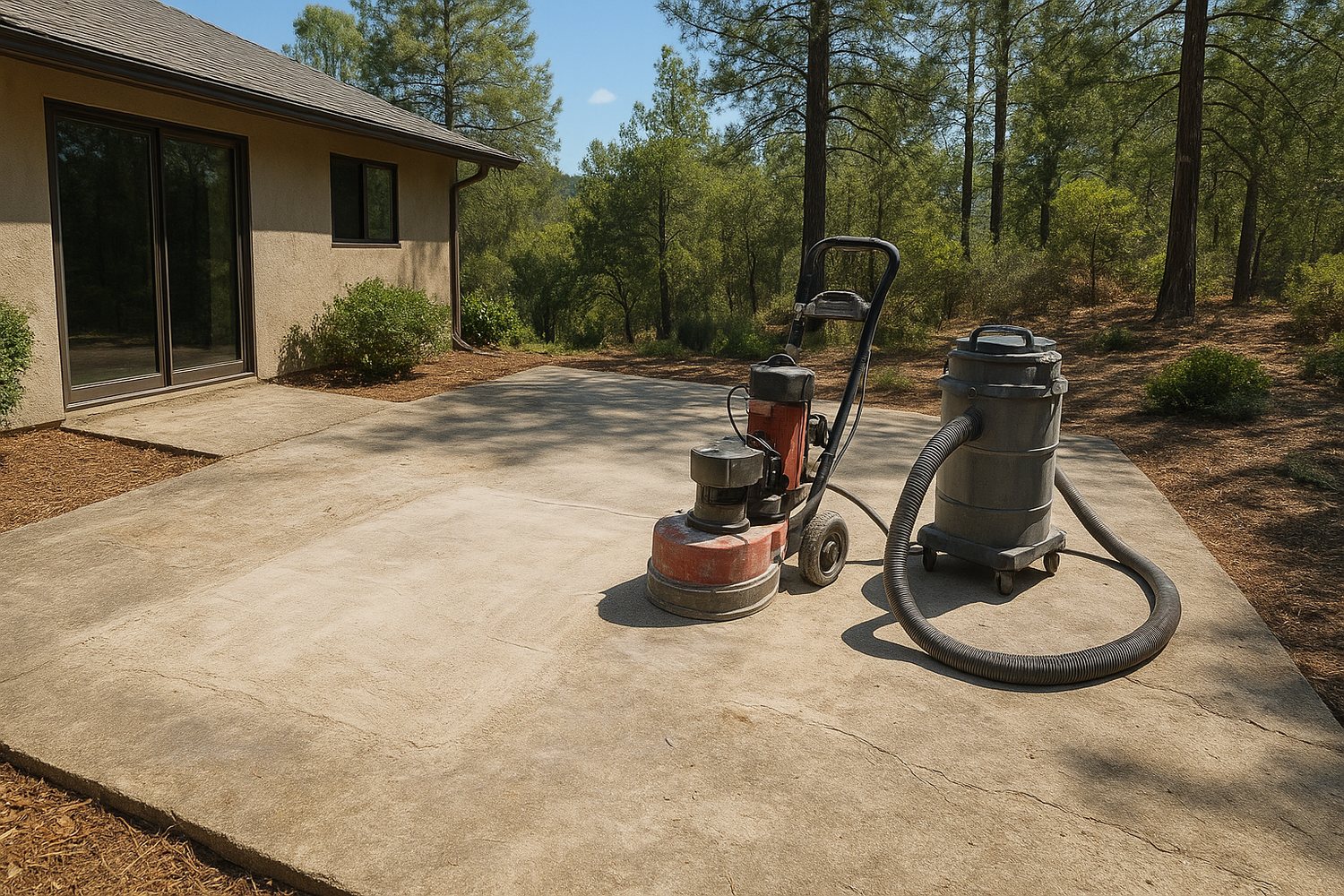
A critical step in resurfacing is preparing the base slab. Any overlay is only as strong as the bond to what’s beneath, so proper surface prep can’t be skipped. This usually involves deep cleaning, degreasing, and possibly mechanical abrasion to ensure overlays adhere long-term.
For overlays in Roseville or Granite Bay, this step also means addressing our region’s dust and plant debris. Any loose particles or organic material left behind can lead to failure. Contractors should carefully patch minor cracks and fill joints before overlay application.
California Hardscapes approaches every job with this principle in mind: quality overlays need a stable, clean, and properly profiled base. Skipping prep might save time but leads to premature peeling or cracking—especially when local weather throws heat and occasional rain into the mix.
- Mechanical grinding or power washing
- Spot-filling defects before overlay
- Strict attention to surface cleanliness
Decorative Overlay Options for Northern California Homes
Decorative overlays do more than restore function—they can completely transform outdoor living spaces. From stamped patterns to troweled textures and custom color blends, overlays deliver design flexibility suited to any style preference.
In Rocklin, Folsom, and the surrounding region, homeowners often choose overlays that emulate flagstone, slate, or modern sand finishes. Integral coloring and surface sealers boost visual appeal while increasing weather and chemical resistance, helpful for pool decks and patios.
Overlay thickness, texture type, and slip resistance can all be customized to fit outdoor kitchens, walkways, or family play areas. A knowledgeable contractor will guide you through these choices, balancing aesthetics with practical maintenance considerations.
- Stamped or smooth finishes available
- Integral or topical color systems
- High-traction options for wet spots
Curious about other ways to improve your outdoor space? See all ourConcrete options.
Regional Considerations: Weather, Soil, and Water
The Sacramento Valley and Sierra Foothills present unique challenges for concrete surfaces. Heat, sun, winter rains, and diverse soil types can each affect long-term performance. Overlays are engineered for flexibility and weather resistance, but their success depends on proper installation in our climate.
In areas with heavy clay or fluctuating water tables, settling and expansion can be a recurring challenge. Slabs that are already moving or showing uneven settling are better replaced, as overlays cannot stop ongoing subgrade movement or seal out water from below.
Ask for references from contractors familiar with local site conditions, soil behavior, and drainage concerns. Matching overlay material to regional weather and selecting a contractor with regional expertise ensures a longer-lasting result.
- Choose overlays for stable, dry areas
- Monitor slopes for drainage issues
- Consider slip resistance in shaded spots
Hiring a Contractor: What to Look For
Choosing the right contractor is as important as choosing resurfacing itself. Look for companies with proven experience in both decorative overlays and new slab installs for outdoor projects. Deep expertise ensures proper evaluation of your slab and region-specific construction techniques.
A trustworthy contractor won’t promise overlays where they aren’t suitable. They’ll explain both procedures, costs, and lifespan differences clearly. They’ll also discuss your home’s unique exposure to sun, shade, and runoff to tailor recommendations.
Ask specific questions about prep work, materials, and past experience with homes in Rocklin, Roseville, and nearby cities. Clear communication, attention to detail, and in-depth local knowledge all signal a premium, reliable contractor.
- Ask about regional experience
- Get written surface prep details
- Expect honest, practical advice
Making the Right Choice for Your Home
Ultimately, the right concrete solution balances appearance, durability, and budget. For many homeowners in Placer and Sacramento counties, overlays bridge the gap between cosmetic repairs and full-scale replacement—provided the existing slab is stable.
Carefully assess your slab’s condition before deciding. Minor wear or outdated looks can be corrected by overlays, but structural failure always means it’s time for replacement. Partnering with an experienced team gives you peace of mind and a surface built to last.
A personalized inspection is the first step to knowing what’s best for your home. When you’re ready to discuss decorative overlays or if you suspect your slab may need replacement, consult a knowledgeable professional for honest, regionally-focused recommendations.
- Look past surface looks to underlying issues
- Factor in usage: pool, patio, driveway, walk
- Invest in long-term value, not just a quick fix
If you’d like a professional assessment and tailored advice,request a consultationwith California Hardscapes.
Planning a concrete project?
Call or text 916-741-0633, or email sales@californiahardscapes.com with your address, a short description and a few photos, and we will arrange a consultation.