Planning Power and Auto-Fill for Water Features
Explore practical planning advice on powering and plumbing water features and setting up auto-fill systems for easy, reliable maintenance.
Thinking about a water feature? Before breaking ground, get familiar with the real-world considerations for power, plumbing, and auto-fill in our region. A bit of planning now goes a long way toward lasting enjoyment.
Understanding Your Site’s Needs
Every property has its own unique pressures—soil, elevation, trees, and sun exposure all influence water feature placement and function. The right spot means easier power and plumbing runs, which can save both time and effort. In areas like Rocklin or Granite Bay, gentle slopes and good light may dictate where your feature will thrive.
Proactive planning means reviewing the layout of your yard, utility locations, and access points. For homes in Roseville and Auburn, existing landscaping or pool setups might shape your choices. Knowing where electrical panels and water spigots are saves on costly rerouting or trenching.
Always consider your end goal: are you imagining a quiet pond, a gurgling fountain, or a dramatic cascade? Size and flow rates matter and affect everything downstream—from the power your pumps need, to plumbing pipe size and water use habits.
- Map utilities before choosing your spot
- Factor in trenching or boring for lines
- Match feature size to yard usage patterns
For deeper information on pumps, plumbing and electricity for water features, see ourPumps, plumbing and power for water featurespage.
Powering Water Features: What to Plan For
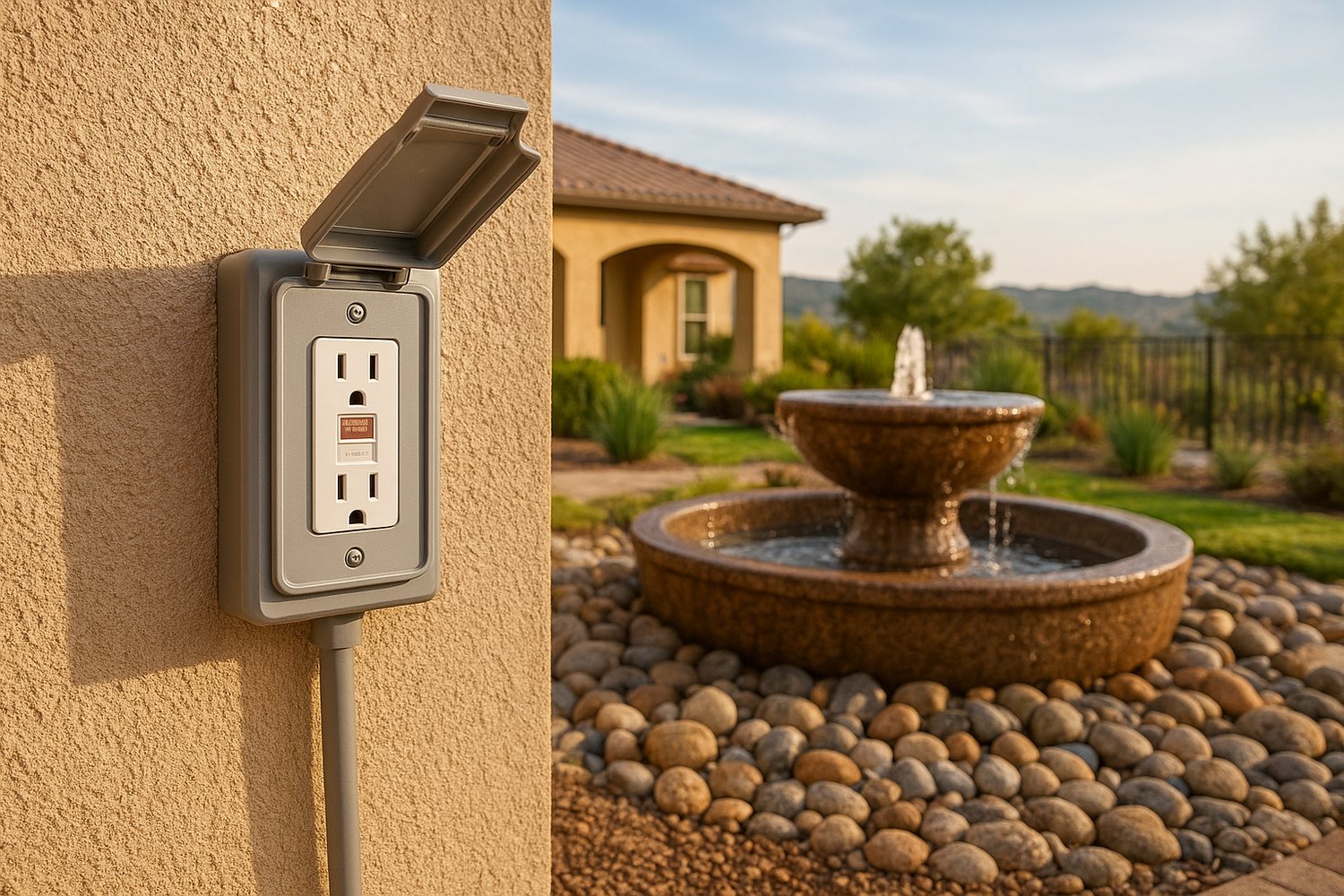
Power isn’t just about plugging in a pump. Every water feature needs safe, GFCI-protected power run by a licensed electrician. If you’re planning a new install in Folsom or El Dorado Hills, check that your panel has capacity for a dedicated circuit. If you’re running more than one pump, lighting, or auto-fill, plan for enough amperage and future add-ons.
Exterior power should always be hardwired and well-marked, never run through extension cords. For most residential fountains and pondless waterfalls, 120V service is typical, but larger features might require 240V. Consider how close the feature will be to your outdoor living zone, and whether you need extra outlets for cleaning or seasonal decorations.
Think long-term: placing controls somewhere accessible but discreet is key. Timer switches, Wi-Fi controllers, and weatherproof switch boxes are all practical choices for reliable daily use, and the right setup means less tinkering over the years.
- GFCI outlets required for safety
- Plan on weatherproof boxes
- Leave space for future upgrades
Route Plumbing with Efficiency in Mind
Plumbing is the heart of any water feature. Efficient design limits heat loss and evaporation, which is important in the hot Placer and Sacramento valley summers. Use shortest, most direct runs for both pump intake and return lines—fewer turns means less energy use and reduced chances of leaks.
Choose materials that perform well in our region’s climate. Schedule 40 PVC is popular for most features. In areas with mature roots or shifting soils like Auburn, flexible yet strong piping may be called for. Always mark your lines clearly for future servicing and avoid tree roots where possible.
Consider easy access to valves for winterizing. Frost depth is rarely a big worry here, but you’ll appreciate having shutoffs accessible for maintenance. Mixing in unions at key spots lets you change out pumps or check for debris without cutting pipe.
- Direct routes save energy and water
- PVC or flexible pipe options
- Label all underground lines
| Plumbing Material | Best Used For | Pros | Cons |
|---|---|---|---|
| Schedule 40 PVC | Most buried lines | Durable, inexpensive, easy to repair | Rigid, can crack if ground shifts |
| Flexible PVC | Curved runs, root areas | Handles bends, less prone to leaks at joints | Slightly higher cost, UV sensitive if exposed |
| Poly Tubing | Drip or small feature lines | Budget-friendly, fast to install | Prone to kinking, not for high pressure |
Auto-Fill Systems: Smart Water Management
Water features lose water to evaporation, wind, and the occasional playful pet or wildlife visitor. Auto-fill systems keep the water level just right, topping off the feature as needed. For our dry, windy summers, this means less hassle and a healthier system over time.
Install a dedicated supply line with an easy-to-reach shutoff, and be sure to use a quality backflow preventer. This is especially recommended for jurisdictions in Placer and El Dorado Counties that have stricter plumbing codes or seasonal watering restrictions. Auto-fill floats and electronic sensors are reliable for most sizes of water features.
Choose auto-fill controls that match your use. Small fountains may only need a simple float valve, while larger ponds or features with high splash benefit from active sensors and alerts. Efficiency and low maintenance help keep water features pleasurable instead of a chore.
- Reduces hands-on maintenance
- Protects pumps from running dry
- Helps comply with watering rules
Pump Selection and Sizing Tips
Choosing the right pump involves more than just flow rate. Match your pump size to the volume and desired effect—gentle bubbling, lively waterfall, or a still, reflective pond all require different specs. Look at maximum lift (head), not just gallons per hour, especially if your feature includes a rise or stairs.
Energy efficiency is a major factor in our climate and with extended summer use. Variable speed pumps make sense for larger projects. They can be dialed back for quiet times or ramped up for an entertaining display. Higher-quality, name-brand pumps can mean quieter operation and longer lifespan.
Installation access also matters. Place pumps somewhere you can reach for service, be it in-line or submersible. Counties like Sacramento periodically update equipment regulations, so double-check compliance and consider future accessory add-ons to avoid costly rework.
- Match pump to head/lift and flow needs
- Opt for energy efficient models
- Plan clear access for servicing
To explore all your water feature design and installation possibilities, visit ourWater Features overview.
Consider Weather and Seasonal Challenges
Northern California’s climate varies, but summers are always hot and dry, while winter can bring chill and heavy rain. These fluctuations impact water loss and electrical use. Installing shade structures or windbreaks around your water feature can limit evaporation and surface debris.
During winter, plan for overflow and possible clogging from leaf drop or storm debris. Features without proper drainage can get overwhelmed. Setting up overflow lines or catch basins protects both your feature and nearby patios or retaining walls from water damage.
Seasonal shutoff valves and easy-to-purge plumbing make winterization much simpler. For features with fish or plants, temperature swings and runoff management are extra considerations. Local experience pays off—work with contractors who know our regional quirks.
- Shade reduces water loss
- Plan drainage for winter rains
- Easy shutoff valves boost durability
Professional Installation: Why Experience Matters
While many homeowners enjoy DIY projects, water feature power and plumbing carry real risks. Small mistakes can mean leaks, unsafe wiring, or future headaches. Licensed, bonded, and insured contractors take care to meet local codes—something especially important in our blended residential neighborhoods.
Coordinating multiple trades—electricians, plumbers, landscapers—can be complex. Experience means fewer surprises and a smoother process. A single point of contact, like a reputable outdoor contractor, streamlines communication and keeps everyone on the same page.
Taking the time to get it right in the planning phase means minimal disruptions down the road and protects your investment. Look for teams with a strong background in pools, hardscapes, and outdoor living to ensure nothing gets overlooked from the first design sketch to the final walkthrough.
- Proper licensing ensures code compliance
- Managed projects run more smoothly
- Experience avoids costly rework
Next Steps for a Seamless Water Feature Project
If you’re mapping out a new water feature, gather info about your utilities, property layout, and maintenance expectations. The planning phase is when you can make cost-saving and hassle-saving choices with real local knowledge.
Talk through options with a professional who understands the Rocklin, Roseville, and Folsom region. Local climate, soil, and code specifics all factor into choosing the best approach. Prepare any questions about pumps, power, or plumbing specifics so you can get the clear answers you need.
A well-powered and properly plumbed water feature isn’t just beautiful—it’s easier to maintain, safer, and lasts for decades. The right advice leads to the right results, so don’t hesitate to ask for experienced input as you plan your project.
- Start with a site map and list of existing utilities
- Identify your must-haves and nice-to-have extras
- Consult a professional early for best results
If you’re ready to get expert guidance, reach out for a complimentaryconsultation with our team.
Planning a water features project?
Call or text 916-741-0633, or email sales@californiahardscapes.com with your address, a short description and a few photos, and we will arrange a consultation.