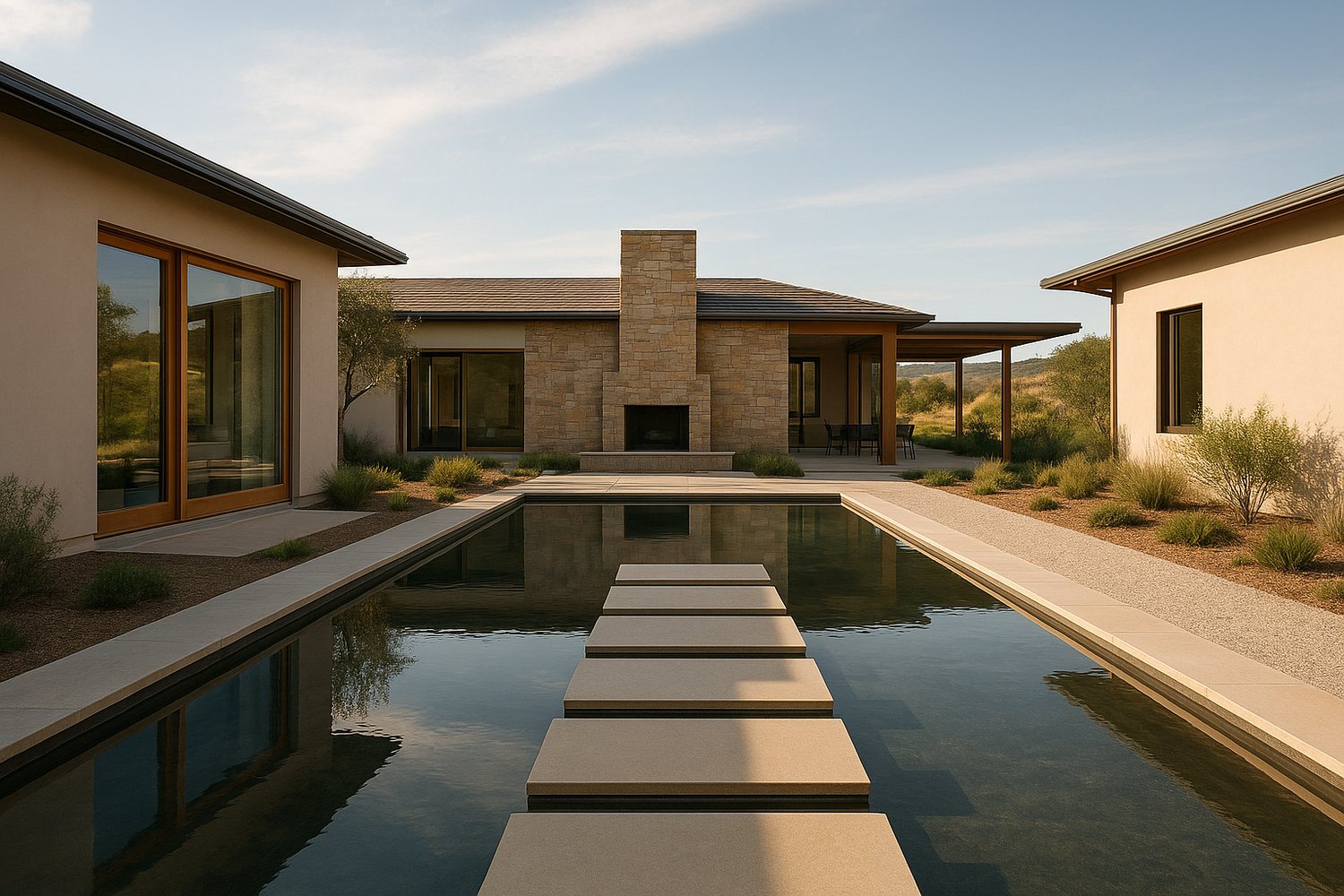
Reflecting Pools and Still Water: Keeping Water Features Clear
Maintaining clear, beautiful reflecting pools in Northern California takes knowledge and the right approach. Here’s what local homeowners need to know.
Reflecting pools bring unmatched tranquility and visual interest to any backyard. Keeping that water crystal clear in our local climate calls for practical know-how.
What Makes Reflecting Pools Unique
Reflecting pools are shallow, still bodies of water designed for visual effect and peaceful ambiance. Because the water is almost motionless, clarity is crucial. Any cloudiness or algae becomes immediately noticeable, lowering the overall impact and feel.
Unlike fountains or swimming pools, reflecting pools emphasize mirror-like surfaces. Their beauty depends on sharp reflections of the surrounding landscape or sky. The slower movement also means contaminants can settle or spread more easily if left unmanaged.
Choosing a reflecting pool is about design, but maintenance should guide your planning. Understanding local conditions in Rocklin and the surrounding counties—sun, wind, and tree debris—will help you plan an easier-to-maintain water feature.
- Still water highlights debris quickly
- Reflections magnify imperfections
- Requires unique upkeep vs. active water
Get more details about still water design and care on ourReflecting pools and still waterpage.
The Local Environment: Key Factors to Consider
Our region’s hot, dry summers, cool winters, and abundant tree pollen shape the challenges of reflecting pool upkeep. Unlike rainy climates, evaporation happens fast here—so water loss and increased concentration of nutrients can lead to algae blooms.
Winds common in Placer and Sacramento counties can blow in dust and organic matter. Even nearby lawns or flowerbeds can contribute leaves, grass, and fertilizer drift, all of which accelerate cloudiness if not managed.
The presence of oaks, pines, and other native trees adds another layer. Planning around your local microclimate and landscape features is essential—think placement, sun/shade balance, and preventative design.
- Evaporation rates affect water chemistry
- Tree pollen and debris are local headaches
- Location impacts long-term clarity
Basic Maintenance Routine for Still Water Features
Keeping still water features clear starts with a sound weekly routine. Manual skimming removes floating leaves and debris before they can sink and decompose—think of it as brushing your teeth for your water feature.
Next up: checking water level and topping up as needed. Low water promotes stagnation and increases concentrations. Use a hose or automatic fill—but avoid rapid temperature swings that can stress your pool’s balance.
Finally, monitor your water’s clarity and address cloudiness early. Familiarize yourself with early algae growth signs, and plan on a monthly inspection to catch potential problems before they become time-consuming.
- Skim surface with a net at least weekly
- Top up water to maintain level
- Do a visual clarity check regularly
| Technique | What It Does | Pro/Con | Best For |
|---|---|---|---|
| Manual Skimming | Removes surface debris | Low cost, needs attention | All pools, small features |
| Mechanical Filtration | Filters particles | Less manual work, higher install | Larger or debris-prone pools |
| UV Clarifiers | Controls algae | Low chemical use, needs power | Pools with high sunlight |
| Aquatic Plants | Absorbs nutrients | Natural look, needs care | Eco-friendly designs |
| Algaecide/Sanitizers | Prevents algae | Effective, can overdo | Intermittent algae |
Understanding Water Chemistry for Reflecting Pools
Reflecting pools need balanced water chemistry to prevent algae, cloudiness, and odor. Even though nobody swims in them, water quality matters just as much. You’ll want to test and adjust for pH, hardness, and occasionally chlorine or other sanitizers.
High sunlight common in Granite Bay, Folsom, and Auburn speeds up algae growth. Sometimes, a small dose of algaecide or low-level chlorine can help—but always use products meant for ornamental pools, and follow label instructions carefully.
Mineral content is another concern. Hard water from our local sources can cause scaling on surfaces and equipment. Investing in a simple water test kit helps you catch issues early and adjust before problems get out of hand.
- Test water monthly for pH and hardness
- Use sanitizers designed for decorative pools
- Adapt dose to sun exposure and volume
Mechanical Options: Filtration and Circulation
Some homeowners choose to add discreet circulation or filtration to their reflecting pools. These systems keep water moving enough to discourage stagnation, while maintaining the essential stillness required for sharp reflections.
The right size and type of filter depend on pool size and debris amount. Ultraviolet (UV) clarifiers can also help curb algae with minimal chemical use. Ask your builder about low-profile or hidden skimmers to preserve the look.
Bear in mind, every added system means ongoing maintenance. Clean filters per manufacturer instructions, and check pump operations seasonally. Consider backup options if power outages are common in your area.
- Filtration reduces manual cleaning
- UV clarifiers minimize chemicals
- Hidden skimmers maintain aesthetics
Explore more inspiration with our completeWater Features overview.
Natural Approaches: Plants and Fish
Integrating aquatic plants can help maintain water clarity naturally. Submerged plants absorb nutrients that algae feed on, while floating species offer shade to slow growth. Ideal plants for our region include water lilies and hardy oxygenators.
Some reflecting pools are designed to be wildlife-friendly, supporting goldfish or mosquito fish to control pests. Balance is key—a few fish help, but overstocking leads to cloudy water from excess waste.
If you go this route, select non-invasive plant and animal species recommended for Northern California. Monitor their health and trim or replant as needed to keep everything in balance.
- Plants take up nutrients, reducing algae
- Fish can help control mosquitoes
- Avoid excess nutrients from overfeeding
Common Regional Issues and Solutions
Algae blooms are the main challenge in local reflecting pools, especially during spring and summer. Start treatment at the first sign of green water—it’s much easier to manage early.
Pollen and fine dust from our windy, tree-filled neighborhoods can quickly cloud water. Use pool covers during peak shedding and right before storms to cut down on clean-up afterward.
Hard water scaling on tile or stone is also common. If you see white buildup, use a gentle scrub and check water hardness. Addressing chemistry and routine cleaning protects your surfaces year-round.
- Treat algae early for best results
- Cover pools before high winds or pollen events
- Watch for white scaling on stone and tile
Planning for Lasting Clarity and Enjoyment
The most beautiful reflecting pools are those designed with clarity in mind from the start. That means factoring in local conditions, nearby trees, sun exposure, and the time you want to spend on upkeep.
Combining smart location, mechanical supports, and periodic maintenance provides a premium, low-stress experience. Many successful homeowners build maintenance into their regular routine—small tasks, done often, make a big difference.
Whether you want a classic mirror pool to reflect the sky or a naturalistic water feature with habitat value, approaching maintenance as part of your initial planning yields long-term clarity and enjoyment.
- Tailor design to your specific yard
- Mix mechanical and natural strategies
- Routine care pays off year after year
Ready to talk about your project?Request a consultationwith California Hardscapes.
Planning a water features project?
Call or text 916-741-0633, or email sales@californiahardscapes.com with your address, a short description and a few photos, and we will arrange a consultation.