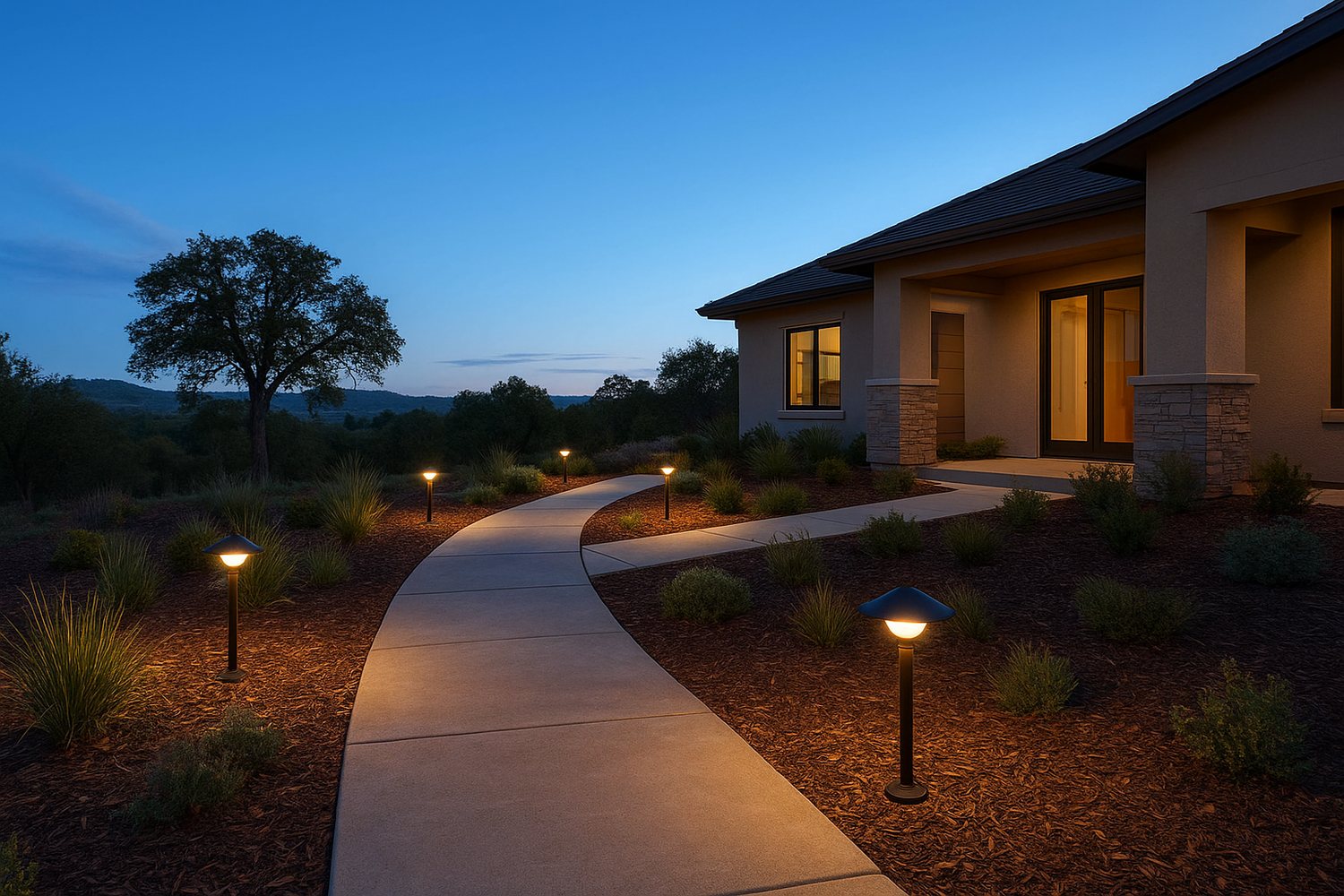
Understanding Low-Voltage LED Outdoor Lighting Systems
Discover how low-voltage LED systems work, what goes into safe, effective wiring, and how to select controls for beautiful, reliable outdoor lighting.
Low-voltage LED outdoor lighting offers safety, beauty, and efficiency for California yards. Here’s what homeowners in Rocklin, Roseville, Granite Bay, Folsom, and beyond need to know.
Why Choose Low-Voltage Outdoor Lighting?
Low-voltage LED systems have become the modern standard for outdoor lighting. By using just 12 volts instead of standard household voltage, these systems offer safer installation and operation. For families and pets, this means added peace of mind with less risk around moisture or accidental contact.
Energy efficiency is another huge advantage. LEDs use far less power than halogen or incandescent bulbs, providing crisp lighting with dramatically lower electric bills. In our region, where outdoor living spaces are used year-round, that adds up.
Flexibility also matters. Low-voltage systems can include path lights, spotlights, deck and step lights, and more—all customizable to your property’s needs. This makes them ideal for the mix of landscapes, retaining walls, and patios often found throughout Placer and Sacramento counties.
- Safer for families and pets
- Energy-efficient and cost-effective
- Versatile for many outdoor features
For a deeper overview, see our mainOutdoor Lightingservice page.
The Basics of LED Lighting Technology
Light Emitting Diodes (LEDs) create light differently than traditional bulbs, with near-instant response and impressive longevity. Most LED fixtures rated for outdoor use can last years before needing replacement, reducing ongoing maintenance.
Modern outdoor LEDs now offer a full spectrum of color temperatures, from warm and inviting to clear and bright. For homeowners, this makes it easy to highlight pathways, patios, or landscape accents just the way you want.
Unlike outdated halogen or incandescent fixtures, LEDs generate very little heat. This is important in the hot California summer, as it helps protect plants and reduces fire risk near mulch or dry landscapes.
- Longer life means less maintenance
- Cool operation safe for garden use
- Wide range of color tones available
How Low-Voltage Wiring Works
Low-voltage systems require a transformer to step down power from your home’s main supply. The transformer converts 120V to a safe 12V, which is distributed throughout your lighting network. Selecting the right size transformer ensures reliable, flicker-free operation.
Wiring for outdoor lighting must be robust and made specifically for landscape use. Direct-burial wire is typically installed a few inches below the soil line, protected from accidental cuts or weather. All connections should use waterproof wire nuts or direct-burial connectors meant for exterior use.
California’s clay soils and periodic rain can affect wiring longevity and voltage drop. A careful installer will plan wire runs to reduce voltage loss, using thicker wire for longer runs or high-capacity circuits. Taking the time at installation prevents frustrating outages later.
- Transformers make 120V power safe outdoors
- Direct-burial wire resists damage and weather
- Planning reduces voltage loss on large properties
| Control Option | Hands-On? | Automatic? | Needs Wi-Fi? | Best For |
|---|---|---|---|---|
| Manual Switch | Yes | No | No | Basic, small projects |
| Timer | No | Yes | No | Routine schedules |
| Photocell | No | Yes | No | Sunset/sunrise operation |
| Smart Controller | No | Yes | Yes | Remote and flexible use |
Control Options: Manual, Timers, and Smart Systems
Control is the key to making outdoor lighting useful, reliable, and energy efficient. Homeowners can choose from simple manual switches, timers, or advanced smart controllers to manage their system. Each has pros and cons, depending on how much automation and integration you need.
Timers let you “set and forget,” reliably turning lights on at dusk and off at a chosen hour. Photocells sense sunlight and turn on lights when it gets dark, ideal for busy homeowners across Placer, El Dorado, and Sacramento counties.
Smart controls now allow remote access via phone or tablet. Many connect with home automation systems, letting you schedule, dim, or group zones for entertaining or security. They’re excellent for larger or more complex outdoor spaces, though they often require Wi-Fi coverage outdoors.
- Manual switches: simple and reliable
- Timers/photocells: automatic convenience
- Smart systems: remote control and scheduling
Matching Fixtures to Your Landscape
Not every yard feature needs the same type of lighting. Pathways and steps benefit from soft, low fixtures that gently illuminate the walking surface without glare. Bollard or mushroom lights are a favorite for these uses.
Accent and uplighting add depth to trees, columns, or landscape walls. By aiming narrow-beam fixtures from below, you can highlight mature oaks or unique stonework, a common feature in estates around Granite Bay or Folsom.
Deck, pool, and patio lighting is different again. Here, we look for low-profile, recessed, or integrated fixtures that won’t create trip hazards and can handle splashes. With our region’s strong sun and varied weather, choosing corrosion-resistant, outdoor-rated fixtures is key.
- Path lighting: safety and navigation
- Accent/uplighting: create dramatic effects
- Deck/patio lights: functional and weatherproof
Check out the fulloverview of Outdoor Lighting optionsfor California Hardscapes clients.
Installation Details That Make a Difference
The best outdoor lighting installations rely on thoughtful planning. That means considering how your family uses the space, where power supplies are, and any potential hazards from irrigation, pets, or garden tools.
Professional-grade practices include burying or concealing wiring, sealing all connections, and testing voltage at each fixture. These steps prevent outages, corrosion, and water intrusion—especially important in our heavy rain and irrigation season.
Licensed, bonded, and insured contractors are required for outdoor electrical projects in California. This isn’t just a legal detail; it protects your home from unsafe installs and ensures all work meets strict codes for the Rocklin and Sacramento area.
- Plan around paths, gardens, and patios
- Always use weatherproof connectors and wire
- Hire licensed, bonded, insured professionals
Tips for Maintaining Your Outdoor Lighting
Outdoor lighting is tough by design, but still benefits from seasonal checks. Dust, leaves, and hard water can build up on lenses, making lights appear dim. A wipe-down with a damp cloth restores brightness and preserves curb appeal.
Check that all fixtures stay upright and clear of plant overgrowth, especially after heavy rains or wind. It’s easy for landscape changes to block or obscure well-placed lights as shrubs grow or mulch shifts.
Annually, inspect connections and replace bulbs as needed. LEDs rarely fail early, but periodic examination helps you spot any wiring or voltage issues before they cause outages. For smart systems, confirm your controls and Wi-Fi stay connected after router upgrades or power outages.
- Clean lenses regularly
- Keep fixtures clear of plants and debris
- Check controls and connections yearly
What to Ask Your Outdoor Lighting Contractor
Communication matters as much as technical skill. Ask contractors about their approach to planning, fixture selection, and code compliance. Reliable contractors prioritize not just looks but safety and ease of maintenance.
Discuss transformer sizing and wiring plans up front—these decisions affect system expandability and long-term reliability. Don’t hesitate to ask what brand or model fixtures are specified and why; not all “outdoor-rated” lights are equal for our climate.
Lastly, clarify who pulls any permits and manages inspections. Licensed professionals handle these details and provide documentation on safety and operation. The goal: a durable, trouble-free outdoor lighting system tailored for your home’s needs.
- Verify licensing and insurance
- Ask about fixture specs and warranties
- Review transformer, wiring, and control options
Ready to discuss your landscape lighting project?Request a consultation with Marty here.
Planning an outdoor lighting project?
Call or text 916-741-0633, or email sales@californiahardscapes.com with your address, a short description and a few photos, and we will arrange a consultation.