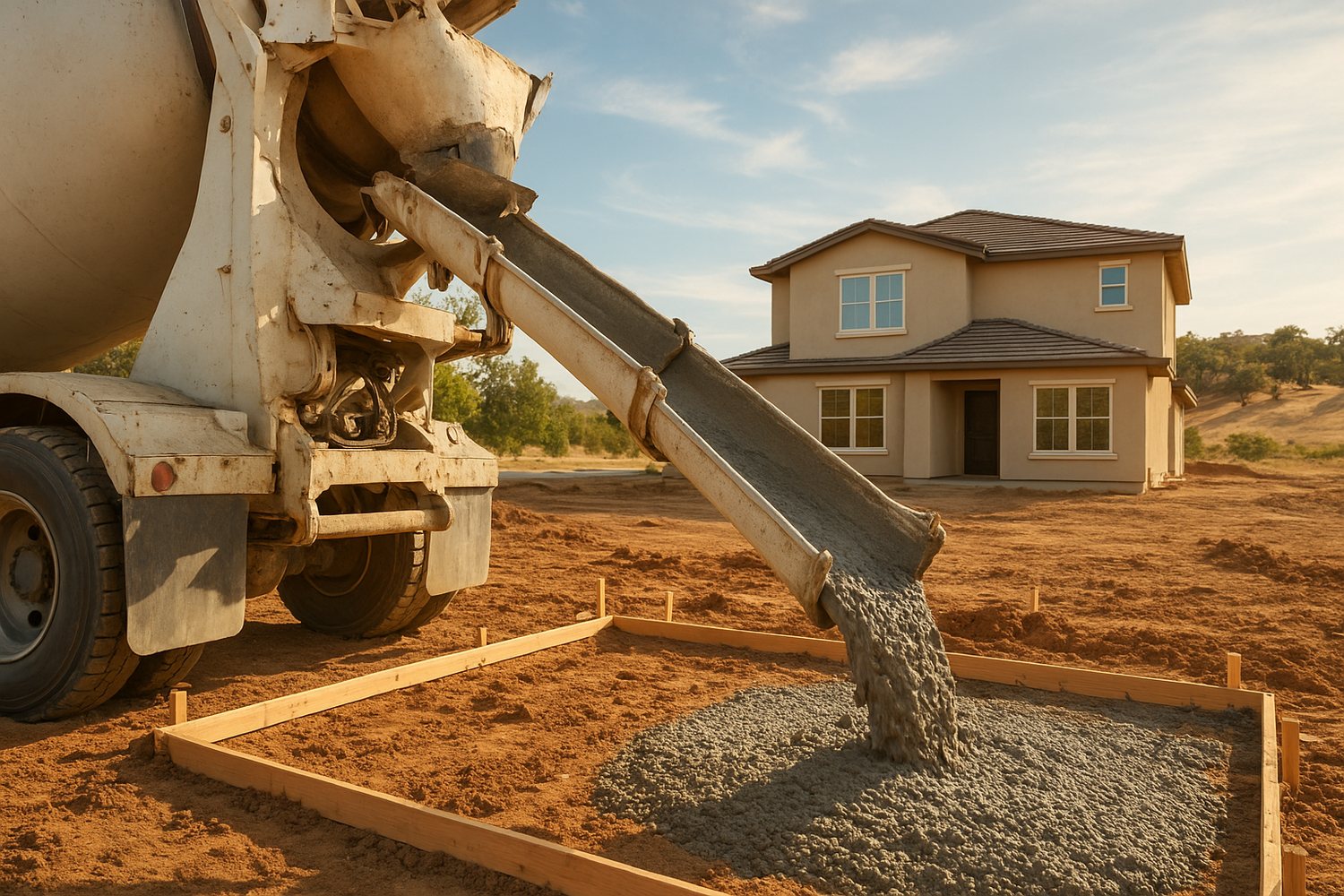
Ready-Mix Concrete Basics: PSI, Slump & Aggregate Explained
Get plain-spoken advice on ready-mix concrete: learn what PSI, slump, and aggregate mean for your outdoor projects in Placer County and nearby areas.
Choosing the right concrete for your patio, driveway, or pool deck shouldn’t be guesswork. Understand what matters: PSI, slump, and aggregate—all key to lasting results.
What Is Ready-Mix Concrete?
Ready-mix concrete is a precisely batched mixture delivered to your site, ready to pour. It’s a workhorse material for patios, driveways, retaining walls, and pool decks. Local homeowners benefit from its consistency and time savings—it’s a smarter step up from mixing by hand or guessing at blends at the hardware store.
Because it’s mixed at a plant, quality control is built in. You get exactly what you specify, whether that’s a smooth patio finish or the strength needed for a retaining wall. Ask about local suppliers who understand California’s climate and soil, as subtle tweaks can matter in Rocklin, Folsom, or Auburn.
Ready-mix takes away uncertainty. Contractors and reliable suppliers tune the recipe for the job, factoring in weather, project use, and even the truck’s travel time. That means less waste, less mess, and better results across Placer, Sacramento, and El Dorado communities.
- Delivered pre-mixed and ready to pour
- Consistent quality for every yard ordered
- Adapted to Northern California weather
For even more detailed explanations of concrete specs, visit ourReady-mix concrete basicspage.
What Does PSI Mean in Concrete?
PSI stands for ‘pounds per square inch’—it measures a concrete’s compressive strength. Homeowners will see numbers like 2,500, 3,000 or 4,000 PSI on their plans. The right PSI keeps your slab strong and crack-resistant, whether you’re parking a car or building a pool deck.
Stronger isn’t always better. Using concrete with a PSI too high for the job can waste money and complicate finishing work. For common outdoor living spaces in Rocklin, Roseville, and beyond, 3,000–4,000 PSI typically strikes a practical balance of durability and workability.
PSI is the first question any knowledgeable contractor should ask. Experienced management like Marty at California Hardscapes draws on decades of local know-how to match the right PSI to your needs, ensuring your investment stands the test of time and the local climate.
- PSI = compressive strength
- Lower PSI is suitable for sidewalks
- Higher PSI required for driveways, heavy loads
Slump: Consistency That Matters
Slump is the measure of how fluid, or workable, concrete is. Measured in inches, a higher slump means wetter, easier-to-spread concrete; a lower slump is stiffer and holds shape well. The right slump means easier finishing, better coverage, and fewer surface problems later.
Different projects call for different slumps. Flatwork like patios usually uses a moderate 4–5-inch slump—enough to flow, but not puddle. Too wet, and your slab might crack or dust; too dry, and it’s tough to finish, especially in summer heat around Granite Bay and Folsom.
Professional crews choose slump carefully. They might adjust on site based on temperature or if extra workability is needed, but always with an eye toward durability. The goal: concrete that pours smoothly, cures evenly, and holds up for years in our region’s sun and storms.
- Slump is measured in inches
- Affects how concrete spreads and finishes
- Best slump varies by project type
| Project Type | Typical PSI | Recommended Slump | Aggregate Size | Comments |
|---|---|---|---|---|
| Patio/Walkway | 3,000–3,500 | 4–5 inches | 3/4 inch | Smooth finish, moderate strength |
| Driveway | 3,500–4,000 | 3–4 inches | 3/4 inch | Handles vehicle loads |
| Pool Deck | 3,500–4,000+ | 4–5 inches | Fine blend | Slip resistance, smoother edge finishing |
| Retaining Wall | 3,500–5,000 | Low (2–3 inches) | 3/4 inch | Extra strength, less flow |
| Steps/Porch | 3,000–4,000 | 3–4 inches | Varies | Shape retention important |
Aggregate Choices: What’s Inside the Mix?
Aggregate is the sand, gravel, or crushed rock blended into concrete. It’s what gives ready-mix its backbone, filling space between the cement paste and boosting strength and durability. Aggregate size and type can change the way concrete looks and performs.
In our area, most standard mixes use 3/4-inch gravel. This size spreads well and provides good strength for walkways, driveways, and patios. Finer aggregate, or added sand, can be chosen for smoother finishes (great around pools), while larger or special aggregate may help with drainage or a textured look.
Your material choice should consider aesthetics and local conditions. Granite Bay, Auburn, and nearby soils can influence which aggregate works best. A local team with decades of material experience will help you decide so your hardscape matches both your needs and your neighborhood.
- Aggregate types: gravel, crushed stone, sand
- Standard: 3/4-inch gravel for strength & workability
- Fine aggregates create smoother finishes
Comparing Key Concrete Properties
Understanding how PSI, slump, and aggregate interact helps you avoid mistakes and get the performance you expect. Here’s a quick comparison table, specific to Northern California project types, showing how these factors typically combine.
This overview can guide you when discussing details with your contractor or supplier. But every project can have unique needs—weather, soil, and usage all play a part. Don’t hesitate to ask for local recommendations based on your goals.
California Hardscapes brings hands-on experience in balancing all three factors. Use this as a starting point for informed conversations—then customize the mix that’s right for your outdoor living project.
See ourMaterials optionsoverview to explore everything you can choose for your Northern California project.
Why Local Materials and Know-How Matter
Ready-mix isn’t one-size-fits-all—especially in areas like Rocklin or Auburn where soils, slopes, and weather can challenge a generic mix. Using sand and aggregate from local suppliers helps ensure compatibility with the earth it’s poured on. Plus, concrete that sets well in summer heat might need different water ratios or admixtures than mixes for a shaded backyard.
When contractors source regionally, you benefit from materials that have proven their worth in nearby driveways and patios. Slump, PSI, and aggregate selections are always tuned with an eye toward local codes, freeze-thaw cycles, and the realities of Placer County backyards.
A seasoned crew, with decades in the trenches, can make all the difference. They spot potential issues before the truck rolls up and know how to adapt on the fly. That’s how Marty’s approach at California Hardscapes puts every job on firmer ground—literally.
- Local aggregate blends suit local soils
- Adapting mix to weather avoids curing issues
- Regional experience = fewer surprises
Concrete Specs for Real-World Projects
For patios, a 3,000–3,500 PSI mix with a moderate 4–5-inch slump typically offers the best results—strong but workable. Driveways benefit from 3,500–4,000 PSI mixes, often with a slightly stiffer slump to handle car traffic and avoid rutting. If you’re building retaining walls or pool decks, higher PSI and careful aggregate choice matter even more for durability.
Local sun, shade, and soil movement all play into the best mix. What works for a simple walkway in shady Auburn might not be right for a full-sun pool surround in Folsom. Lean on your contractor’s regional expertise—the right mix is matched to your site’s particulars.
Never hesitate to ask questions and compare options. Concrete is a permanent investment, so clarity now means fewer headaches years down the road. Whether it’s strength, finish, or blend, getting the specs right is just as important as skilled finishing.
- Patios: 3,000–3,500 PSI, 4–5" slump
- Driveways: 3,500–4,000 PSI, stiffer mix
- Pool decks/retaining walls: high PSI, custom aggregate
What to Ask Your Contractor or Supplier
Don’t leave your project blend up to chance. Always ask your contractor about the specific PSI, slump, and aggregate planned for your job. Ask how those specs fit your site and usage—driveways, patios, and pool decks all have their own best mixes here in Placer, Sacramento, and El Dorado Counties.
Request details on where materials are sourced from, especially aggregate. Local sourcing can make or break long-term durability and finish quality. If something sounds generic or off the shelf, dig deeper—a reputable team is always open about their material choices.
Marty at California Hardscapes encourages open conversation. The more you know, the better your project will perform and age. From the first call to the final pour, your team should be ready to walk you through these details, so your investment starts off strong.
- Ask for PSI, slump, and aggregate details
- Clarify why each spec is chosen
- Confirm local material sourcing
Ready for advice on your project?Request a consultationwith our experienced team today.
Planning a materials project?
Call or text 916-741-0633, or email sales@californiahardscapes.com with your address, a short description and a few photos, and we will arrange a consultation.