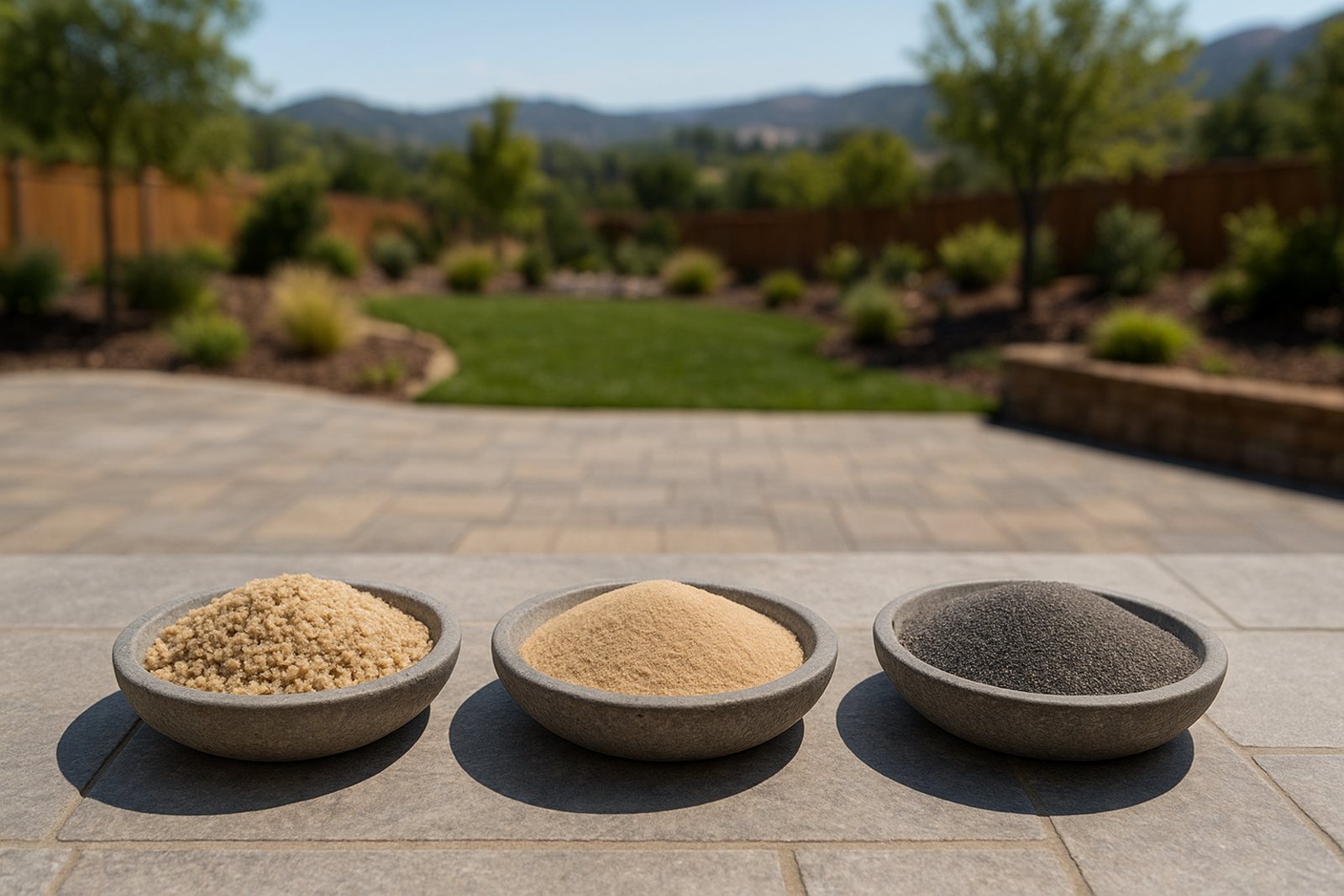
Bedding vs Joint vs Polymeric Sand: Choosing Sand for Hardscapes
Not all sand is the same. Here’s how bedding, joint, and polymeric sand stack up for patios and pavers in our region—so you can make a confident choice.
Sand plays several crucial roles in hardscape projects. As a homeowner in Rocklin, Roseville, or nearby, understanding your sand options means better, longer-lasting patios or walkways.
Why Sand Choice Matters for Local Hardscapes
In a climate with hot summers, mild winters, and the occasional pounding rain, sand matters more than most people realize. The right sand helps create strong, low-maintenance patios, driveways, and walkways that last. But using the wrong type can lead to cracks, weeds, or shifting pavers over time.
Not all sand is built to handle drought, clay, and the rich plant life of Placer, Sacramento, and El Dorado counties. We see plenty of projects where sand choice either makes or breaks the job. It’s about structure, drainage, and keeping everything locked in place.
Whether you’re planning a backyard retreat or a simple path, understanding bedding sand, joint sand, and polymeric sand is a practical first step. Each serves a different role, and real performance depends on matching the right sand to your specific application.
Learn more about our offerings on theSand for hardscapespage.
What is Bedding Sand?
Bedding sand forms the vital layer between your compacted base and the pavers themselves. Think of it like a cushion—offering both flexibility and stability. Around Rocklin and neighboring towns, this layer helps manage tiny shifts in the ground from heavy rain or our strong, dry summers.
The sand must be clean, with consistent coarse particles. We prefer concrete sand or coarse sand—not masonry or play sand. This ensures solid drainage and less risk of settling or shifting later. Proper installation matters: typically it’s screeded to a uniform thickness of about an inch.
Bedding sand makes the whole project easier to adjust and aligns the final surface perfectly. Skimping here often leads to lumpy or uneven spots that frustrate homeowners and complicate maintenance down the line.
- Settles just enough for paver adjustment
- Encourages drainage away from your patio or walk
- Shouldn’t be substituted with fine sands
Understanding Joint Sand
Joint sand fills the spaces or ‘joints’ between individual pavers, helping lock them together and distribute loads evenly. This is different from bedding sand: joint sand keeps the surface stable and deters weed growth, but doesn’t provide the foundation.
In our local soils, heavy clay or hard-pan under a patio can make it easy for sand to erode during intense winter storms. Using the right joint sand—commonly dry, angular, kiln-dried sand—avoids rapid washout, ant infestations, and shifting.
Joint sand has to be kept dry during installation, and swept carefully into every joint for maximum lock-up. Regular maintenance is needed to keep joints topped off, especially in high-traffic areas or after strong weather.
- Locks pavers laterally, preventing spread
- Can be topped up or brushed in over time
- Not a substitute for proper base installation
| Type | Main Use | Key Benefits | Common Mistakes | Local Advice |
|---|---|---|---|---|
| Bedding Sand | Under pavers | Levels base, supports drainage | Layer too thick/thin, using fine sand | Use coarse sand, set to 1" thick |
| Joint Sand | Between pavers | Locks, resists shifting | Wrong sand type, underfilled joints | Choose kiln-dried, angular sand |
| Polymeric Sand | Between pavers (advanced) | Weed resistance, less washout | Incomplete joint fill, poor watering | Best for driveways or high-traffic patios |
Polymeric Sand: The Next Generation
Polymeric sand is not just regular sand—it’s mixed with binders that create a semi-rigid joint once water is applied. This technology offers extra weed resistance, stands up to heavy pressure washing, and reduces wash-out in our seasonal storms.
For homeowners who want low maintenance and clean lines, polymeric sand makes sense. Installation is fussier: surfaces must be dry and clean, and precise watering triggers the proper chemical cure without leaving haze or residue.
Polymeric sand can cost more up front and needs a little extra care at install. But it wins out where long-term stability and weed prevention matter, especially on driveways or high-traffic patios where sand loss is a common issue.
- Resists weeds and insects better than plain joint sand
- Hardens to limit shifting and sand loss
- Requires careful, deliberate installation
Comparing Bedding, Joint, and Polymeric Sand
Choosing the right sand means understanding how each type performs. Bedding sand provides the critical base under pavers, joint sand locks pavers together, and polymeric sand advances weed and washout resistance with special binding agents.
Use bedding sand for underneath; joint sand (or polymeric) for between the pavers; never substitute one for the other. Here in our region, seasonal extremes and clay soil make your choices even more important—one failure can shorten your patio’s life.
See the chart below to make sense of where each sand fits and what it does best for typical patios, walkways, and driveways built in Placer and nearby counties.
See all available options on ourMaterialsoverview.
Common Installation Mistakes and Easy Fixes
A good hardscape isn’t just about materials—it’s how you use them that matters. A frequent error is confusing sand types or using too much (or too little) in each layer. Bedding sand that’s too thick or thin causes uneven pavers, while the wrong joint sand leads to rapid washout.
Another misstep is not compacting and leveling bedding sand before placing pavers. This results in weak spots that settle over time. Meanwhile, failing to sweep joint or polymeric sand completely into the paver gaps can leave loose stones or room for weed seeds.
Before your next project, spend a few extra minutes ensuring sand is applied in the appropriate way. Neighborhood soils vary, but a level hand and precise technique always pay off in this region.
- Match sand to its purpose—never substitute
- Compact bedding sand before laying pavers
- Fully sweep joint or polymeric sand into every joint
Regional Tips for Placer, Sacramento, and El Dorado Counties
Our local soils—from Auburn’s red clay to the sandy pockets around Granite Bay—affect which sand performs best. A coarser bedding sand resists compaction and stays put beneath your patio in wet winters and scorching summers.
Joint sand in this region should always be angular and kiln-dried to withstand winter runoff and hot, dry spells. Polymeric sand is especially useful for driveways or sloping sites where water flow could erode conventional joint sand.
Ask your contractor how they tailor their sand choices for your yard’s microclimate. Experienced teams will factor in everything from soil composition to drainage patterns and even shade cover from mature oaks and pines.
Deciding What’s Right for Your Project
Selecting sand for hardscapes doesn’t need to be confusing, but it’s worth paying attention. For patios and walkways across Rocklin, Roseville, Folsom, and beyond, start with a well-leveled bedding sand layer, carefully chosen joint sand, and consider polymeric sand where maintenance or weeds are a concern.
The right decision depends on foot traffic, exposure, soil type, and the results you want for the long haul. Don’t hesitate to ask seasoned professionals for their honest recommendations—especially with long California summers and shifting soils to consider.
A great-looking, long-lasting hardscape hinges on details like sand. Invest a little time upfront for results that look sharp and stay true through the seasons here in our region.
Ready to discuss your project?Request a consultationwith our team today.
Planning a materials project?
Call or text 916-741-0633, or email sales@californiahardscapes.com with your address, a short description and a few photos, and we will arrange a consultation.