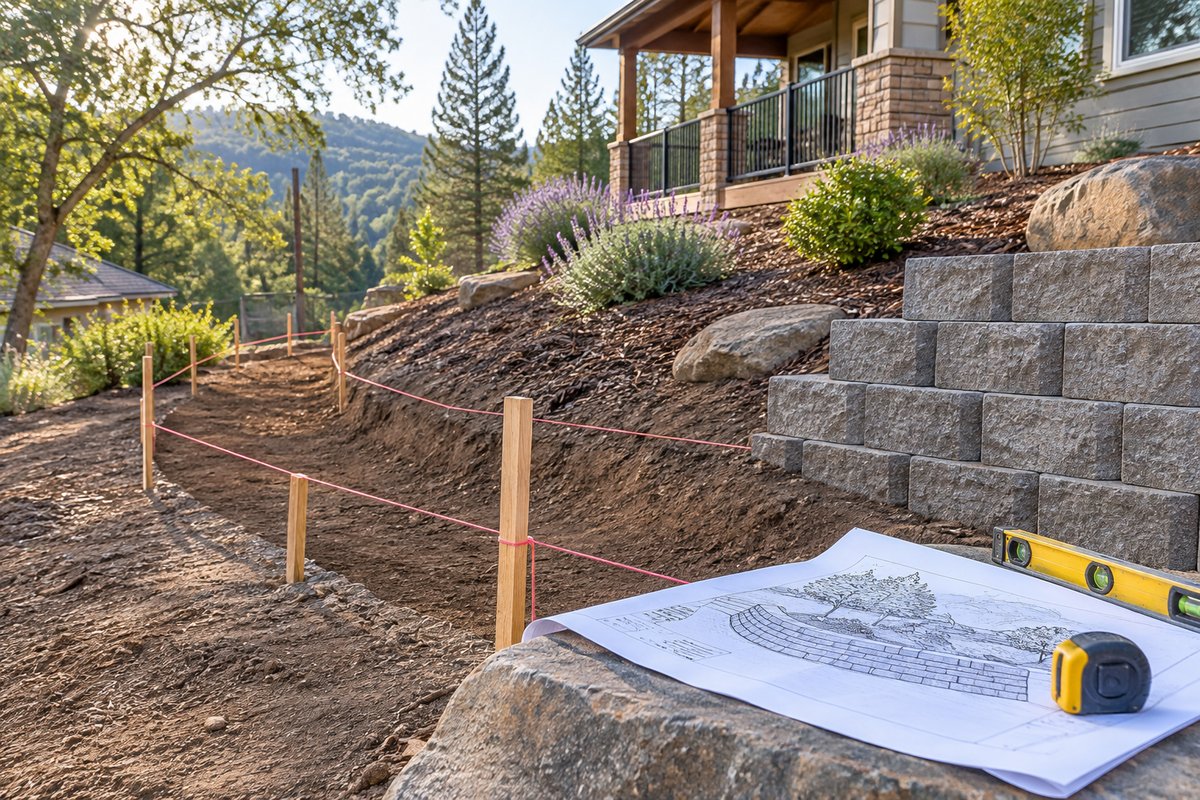
Planning Your North Auburn Retaining Wall: A Practical Homeowner Guide
Build your North Auburn retaining wall the right way. From local rules to timing and materials, this guide walks homeowners through smart preparation for block, boulder, stone and engineered walls.
Understanding What Makes North Auburn Unique for Retaining Walls
North Auburn, CA offers a distinct blend of soil conditions, slopes, and climate that presents unique challenges for retaining wall projects. Homeowners here benefit from understanding their property’s natural grade, drainage paths, and local codes before breaking ground on any new structure or upgrade. With the region’s dramatic summer heat and powerful winter rains, every retaining wall must be built to last—and that starts with careful planning and the right materials suited for North Auburn’s environment.
Whether your lot has rolling hills, steep inclines, or a mix of both, your approach may lean toward functional engineered walls, stone veneer for visual impact, or a blend of stacked stone and block for rugged longevity. Each material and design brings unique benefits, which is why it’s critical to match them to your property’s specific conditions. Retaining Walls come in many forms, from segmental block systems to natural boulder, poured concrete, and gabion solutions, all of which must be thoughtfully selected for both appearance and performance.
Planning is also about understanding local codes and site-specific needs; North Auburn sits at the meeting place of Placer County regulations, HOA requirements, and microclimates that demand strategic choices for slope, wall height, and drainage methods. Homeowners who invest time up front not only get a result that looks good, but also one that stands up to time and the elements.
Navigating Permits, HOA Approval, and Utility Marking
Before any dirt is turned, North Auburn homeowners should prepare for the regulatory landscape. Most retaining wall projects—especially those over three feet tall or serving a structural purpose—trigger city or county permits. If you’re part of an HOA, you’ll need their written approval, along with a clear, detailed plan of the work to be submitted in advance. It pays to start these conversations early, as approval processes can take time and may require design changes or additional documentation.
Underground utilities run throughout North Auburn’s neighborhoods, making it essential to contact 811 before any digging. Utility marking is not only a legal requirement, but a critical safety practice, protecting your property and everyone working on it. Gas, water, cable, and power lines can run close to intended wall sites—even in areas that seem clear. Scheduling this step will help keep your project on track without costly surprises or dangerous situations.
Keep in mind that a retaining wall contractor must coordinate with you on site access, timing, and document requirements. But some steps—such as securing permit sign-off or HOA approval—will require your direct participation or signature. Always confirm the specifics for North Auburn with the city, county, and any applicable HOA regulations—these vary by property type and intended wall use, and requirements can change after major weather events or policy updates.
Soil, Slope, and Drainage: The Foundation of Every Wall
No two spots in North Auburn have exactly the same soil and slope, and that diversity shapes every wall design. Native soils in this region often include compacted clay or decomposed granite, both of which challenge wall stability and drainage. Walls on clay-heavy lots demand extra focus on water management, as clay retains moisture that can cause shifting or hydrostatic pressure behind the wall. Decomposed granite drains quickly but can create erosion at the wall base if flow isn’t directed properly.
Slope matters too. Steeper properties often call for engineered retaining walls or multi-level terraced retaining walls to stabilize the grade and manage runoff. On lots with gentler slopes, a single line of block retaining wall or a natural boulder wall may suffice for both utility and aesthetics. Proper design always includes a plan for adequate drainage, whether it’s weep holes, gravel backfill, or dedicated drainage pipes behind the wall.
Expert evaluation of your soil and slope is step one, but you can gather initial clues by observing your yard after a winter storm or watering session. Pay attention to where water pools or runoff carries soil—these are signs of where stronger walls or enhanced drainage will be important for safety and durability.
Dealing With North Auburn’s Extreme Weather: Heat & Rain
Strong seasonal swings are a hallmark of North Auburn, with extended summers frequently topping 100°F and soaking rains between late fall and early spring. Both conditions push retaining walls to their limits, so proactive planning ensures long-term performance. Heat can dry out soils and lead to soil shrinkage next to a wall, possibly causing cracks or undermining support. Winters, by contrast, bring saturation and hydrostatic pressure, increasing the risk of wall movement if water isn’t properly drained away.
That’s why every wall—be it a poured concrete wall, gabion wall, or stacked stone system—must be specified not just for visual appeal, but maximum strength and thoughtful water remediation. Consider water-wise landscaping and neighboring trees that can impact root pressure or drop needles that may clog drains behind the wall. Protecting your investment against sun, wind, and rain begins at the planning stage.
For up-to-date seasonal weather forecasts and to anticipate project challenges tied to rain or heat waves, local homeowners should regularly check the National Weather Service for North Auburn. Scheduling work during drier periods and prepping for storms reduces stress and helps keep the area safe for any site visits or work required.
Project Timing: When Is the Best Time to Build?
In North Auburn, timing is a central part of a successful retaining wall project. Summer’s dry conditions provide the best window for excavation and wall building, with less risk of rain delays or muddy access issues. However, these months can also see intense afternoon heat—something to consider for contractor health and material performance, especially for concrete pours and mortar work. Early spring and late fall can work as well, provided forecasts are watched closely for rainfall and night-time temperatures are not dipping too low.
Poor timing can affect everything from the efficiency of retaining wall construction to the curing of materials. Schedule utility marking and get your permit and HOA submissions done well in advance; any holdups in paperwork can delay your start by weeks. Monitor the National Weather Service forecast as your project window approaches. If heavy storms are predicted and your wall requires excavation, it may be best to postpone until drier days to protect both the site and foundation integrity.
Discuss your preferred schedule and any local events or seasonal access considerations—such as fire restrictions or school schedules—with your retaining wall contractor. Advance planning pays off in less stress and results that align with your needs for both form and function.
Choosing Materials: Block, Boulder, Stone, and More
Material selection should blend structural needs, site realities, and North Auburn’s character. For most property lines or structural situations, segmental block retaining walls offer a durable, clean-lined look with predictable engineering properties. For a more natural or informal appearance, particularly on sloped lots, boulder retaining walls provide organic shapes and lasting strength. Poured concrete walls support custom shapes, smooth finishes or modern aesthetics, ideal for tight urban lots or large single-height installations.
Specialty materials such as gabion walls create striking architectural features and perform well in areas prone to high drainage needs or visible run-off. For driveways or entrances, driveway and front yard walls offer a cohesive look with the right balance of curb appeal and vehicle protection. For landscape beds and garden features, raised planter walls integrate utility with the beauty of stone or block finishes, suiting everything from vegetable boxes to terraced native plant beds.
View material options as more than just looks; they impact everything from wall longevity to maintenance. Consult a retaining wall contractor who’s familiar with North Auburn’s soils and codes to make sure your chosen system is up to the job in both form and function.
Coordinating Retaining Walls With the Rest of Your Landscape
A retaining wall rarely stands alone—it shapes and is shaped by the patios, walkways, plantings, and drainage systems around it. A holistic approach is best: plan your wall project with an eye for how it will work alongside patios, steps, and garden features. Early planning also avoids costly rework should you want to add a second wall, garden path, or outdoor entertainment area after your wall is up.
Layered, terraced retaining walls work particularly well for North Auburn lots with steep yard transitions, creating flat, usable lawn or planting areas where sloped ground once limited access. Walls built with integrated drainage and tough, locally-appropriate plants hold up better through years of heavy sun and rain. Raised planters beside or atop taller walls can help break up the scale, add green interest, and improve overall site drainage.
Connecting all these elements from the start lets you budget and phase your entire yard transformation, ensuring continuity in style, materials, and permitting. Reach out to professionals who will guide you through options and anticipate how today’s wall will impact tomorrow’s landscape vision.
FAQ: Planning Retaining Walls in North Auburn, CA
Which approvals do I need for a new retaining wall?
In North Auburn, most structural retaining walls—especially those above a certain height—require a city or county permit. Homeowners in an HOA must also get HOA approval before any work starts. Always check with the local city office and your HOA guidelines, as rules can vary between neighborhoods and over time.
How do soil and drainage affect my retaining wall?
Clay, granite soils and varying slopes across North Auburn affect how water moves around your property and thus the type of wall needed. Good drainage is not optional: it prevents wall movement, bulging, or failure over time. Each wall should be designed for your property’s unique conditions for long-lasting success.
When should construction be scheduled?
The ideal time for a retaining wall build is during the dry season—usually late spring through early autumn—when soil conditions are more predictable and fewer rain delays occur. Permit and utility marking should be arranged well before your planned start date.
- National Weather Service — Forecasts and severe weather alerts for planning your build
Ready to Plan With Confidence?
Retaining walls are a lasting improvement to your North Auburn property—but only when planned and built with the climate, soil, and regulations in mind. California Hardscapes, led by Marty with decades in concrete and construction, offers design-to-finish service for retaining walls, terracing, and landscape integration. Start smart, finish with excellence, and secure quality workmanship from licensed, bonded, and insured contractors.
Planning a project in North Auburn, CA?
Call or text 916-741-0633, or email sales@californiahardscapes.com with your address, a short description and a few photos, and we will arrange a consultation.