Backyard Artificial Turf: A Complete Homeowner’s Guide
Thinking about replacing your water-hungry lawn? Here’s everything you need to know about backyard artificial turf from a quality, no-corners-cut perspective.
Why Consider Artificial Turf for Your Backyard?
Best for: Best for homeowners who want a vibrant, low-maintenance backyard lawn without the headaches of watering, mowing, or seasonal die-back.
Traditional lawns in Rocklin, Roseville, Granite Bay, Folsom, Auburn and neighboring counties demand time, money, and thousands of gallons of water every season. Artificial turf lawns have moved well beyond their old, shiny plastic look, offering an option that stands up beautifully against scorching summers and wet winters. Installed right, modern turf mimics premium sod, both visually and to the touch, delivering reliable green year-round—even under shaded oaks or on slopes where real lawn struggles.
We don’t compete on being the cheapest. We compete on quality, integrity, and results that exceed expectations. Our approach is straightforward: artificial turf isn’t for everyone, but for many, it gives back hours each week and delivers consistent good looks for years. Every backyard project is constructed as if it were our own property, with full attention to drainage, base stability, materials, and edge details.
Understanding both the technical aspects and natural trade-offs is key to satisfaction with artificial grass. On this page, we break down sub-types, how pro crews build turf lawns that stand the test of time, considerations unique to our region (from red clay soil to HOA review), and honest trade-offs. Whether you’re solving mud, brown spots, or just want a lush look without the upkeep, you’ll find the facts here—no corners cut.

Design Choices for Backyard Artificial Turf
Blade Shapes (Fiber Profile)
Artificial turf fibers come in a range of shapes: W-shaped, C-shaped, S-blade, diamond, and flat. Premium W- and C-shaped blades help blades spring upright after foot traffic, avoiding matting over time, while flat blades tend to flatten quickly but can feel softer. The blade profile you choose affects how real the lawn looks and how it holds up to backyard play or pets.
Pile Height
Pile height describes how tall the grass blades are, measured from backing to tip. For backyard lawns, 1.5” to 1.75” gives a realistic and comfortable result; longer piles (over 2”) look lush initially but may flatten quickly, showing wear. Shorter piles drain and clean up easily, ideal for pets and heavy foot traffic areas.
Color Blends & Thatch Layer
Blending several blade colors—olive, lime, and field green—plus a subtle brown or tan thatch layer mimics the healthy, varied look of natural California grasses. High-quality turf always has a stitched thatch underneath to scatter light and add depth, avoiding a fake, reflective sheen.
Base Material
The base beneath your turf impacts drainage, longevity, and stability. We typically use a compacted, free-draining blend of 3/4" crushed rock and decomposed granite. Locally, the right mix is crucial to prevent heaving and puddling—especially in clay soils or backyard areas with soft subgrade.
Seams and Edges
Careful seaming (where two turf rolls join) and the choice of edging are make-or-break details. Invisible seams require precise trimming and double-taping. For edges, sturdy composite bender board, aluminum edging, or paver borders prevent turf lifting and protect against pets, kids, and lawn equipment.
Drainage Enhancement
Proper drainage keeps your lawn usable after storms and protects your base from mud and moss. Some installations include a weed barrier plus specialty drain mat beneath the base for challenging slopes or next to patios prone to water runoff. Well-drained turf performs year-round, instead of turning soggy or mossy each winter.
How a High-Quality Backyard Turf Lawn Is Built
The visible turf is just the surface layer of a carefully constructed system. Each step, from digging out old grass to jointing and compacting the base, impacts your new lawn’s look, feel, and lifespan. Here’s our methodical, no-shortcuts process for backyard turf:
- Remove the existing sod and 3–5 inches of soil, including roots and debris, making sure to account for blending grade with adjacent patios and walkways.
- Excavate and set a compacted crushed stone and decomposed granite base, usually 3–4 inches deep, for drainage and stability in our local soils. Compaction is completed in layers with plate compactors.
- Install edging such as composite bender board, aluminum, or paver restraints flush to finished grade, forming smooth curves or straight lines to match your landscape design.
- Lay a geotextile weed barrier, then roll out turf. Reinforce seams with commercial-grade seam tape and adhesive, matching directional grain for invisible joins.
- Trim turf edges precisely and anchor with landscape spikes every 6–12 inches to prevent future lifting or curling at perimeters and around trees or hardscape features.
- Spread and brush-in infill material (crushed sand or non-toxic coated granules) across the turf blades for stability, weight, and a natural upright blade look. Multiple passes ensure even distribution.
- Clean up edges, ensure all joints and seams are tight, rinse the lawn, and brush fibers upright. Review grading and confirm surface drains freely toward garden beds or storm drains as needed.
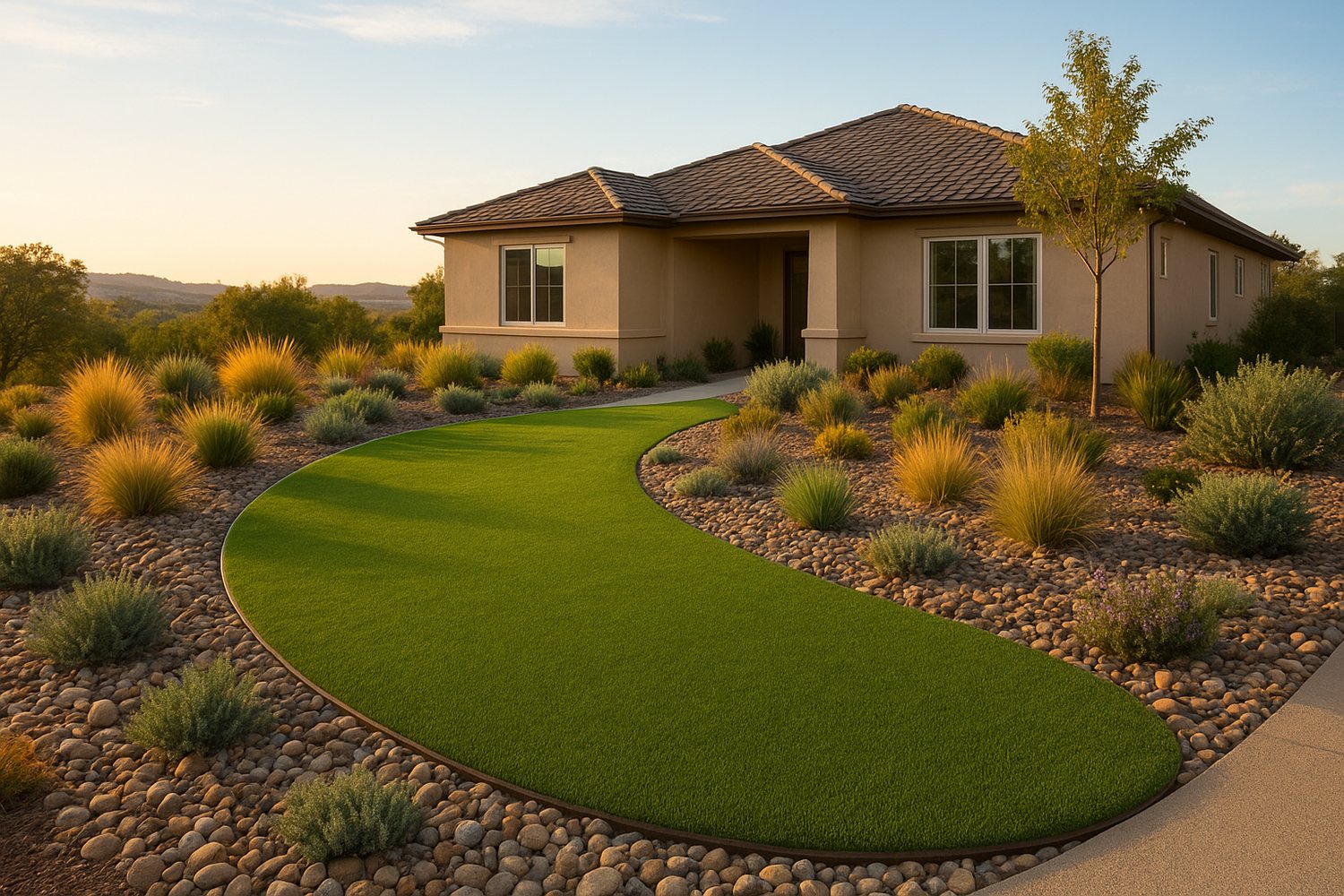
Pros & Cons of Backyard Artificial Turf Lawns
Strengths
- Year-round green with no mowing, fertilizing, or sprinkler repairs.
- Reduces water bills and landscaping labor—key in drought-prone California regions.
- Works in full sun, shade, sloped yards, and areas with heavy oak tree roots.
- Stays mud-free, making it foot- and pet-friendly after local rainstorms.
- Consistent curb appeal, especially when natural lawns go dormant or brown.
Trade-offs
- Surface temperature can get hot in direct midsummer sun, especially with dark colors or thick infill.
- Upfront installation costs are higher than reseeding or basic sod, though long-term savings offset this for many owners.
- Not self-cooling, so may require occasional rinsing to flush pet odors or reduce dust.
- Requires occasional infill top-up and power brushing for best looks—no truly maintenance-free option exists.
What Affects Backyard Turf Lawn Cost?
Artificial turf involves more than just rolling out new grass—site prep, drainage, base quality, shape, access, and specialty finishing all affect the bottom line. While there’s no one-size-fits-all price tag, understanding the key cost factors helps set expectations and guides good decisions, especially if you’re comparing bids. We’re always upfront: shortcuts in base, edging, or site grading may show up years later as puddles, divots, and wrinkles.
- Square footage: Larger or irregular-shaped areas take more material and labor per foot.
- Site access: Tight side yards, gates, or lots of steps increase labor for excavation and material delivery.
- Base removal and preparation: Removing old sod, roots, and leveling out slopes, especially in hard clay or areas with large tree roots.
- Edging style: Bender board is less expensive than natural stone or paver borders, which require more material and precision.
- Type and blend of turf: Multi-tone, high-resilience brands with stitched-in thatch and longer warranties add to material cost but boost realism and longevity.
- Drainage modifications: Installing sub-drains, specialty mats, or enhanced sub-bases for clay or high water table soils adds cost but protects your investment.
Maintenance & Longevity of Backyard Artificial Turf
Artificial turf needs minimal maintenance compared to living grass, but it isn’t zero. Routine tasks include blowing or hand-removing leaves, brushing up flattened areas, and occasional rinsing to clear off dust or scents—especially in homes with pets. Expect to top up infill every few years, and power-brush traffic paths or play zones as needed. Weed encroachment at seams or edges should be checked each spring and fall.
Lifespan depends on UV exposure, infill condition, traffic, and the initial grade and prep. Most premium turfs last 10–15 years with proper care before replacement is worth considering. Local resealing of joints or seam reinforcement may be needed if you notice movement, but a well-built project will hold tight. Flatter pile styles usually outlast super-long blades. Avoid burning from grills or fire pits: melted spots are not repairable.
Compare other options

Front yard artificial turf
Explore front yard artificial turf in Rocklin, Roseville & nearby: turf blends, borders, HOA reviews, design options, installation steps, honest pros & cons.
Explore →
Side yard and small-space turf
Artificial turf for side yards, narrow strips and small spaces.
Explore →
Turf maintenance and repair
Turf maintenance and repair Rocklin homeowners need: brushing, cleaning, infill, seam repairs and lifespan tips from California Hardscapes.
Explore →Frequently Asked Questions: Backyard Artificial Turf Lawns
Will artificial turf get too hot to walk on in the summer?
Turf can warm up much more than natural grass in direct sunlight, especially in mid-afternoon during California’s hottest months. White or light infill, reflective blade shapes, and partial shade can help keep surface temperatures lower. While it may be uncomfortable for bare feet in peak summer, watering the surface briefly or providing shade can improve comfort when needed.
How well does turf drain after heavy rain?
Quality installations drain almost as fast as natural soil, provided your sub-base is properly graded and compacted with free-draining rock and decomposed granite. Turf backings contain thousands of small holes for water to pass through. In poorly drained clay areas, extra base or French drains may be needed to avoid puddles or soggy areas after storms.
What about kids and pets—will the turf hold up?
Modern artificial turfs designed for backyards resist wear from kids, running dogs, and daily play. Heavy or repeated high-impact use may require more frequent brushing or infill top-up to keep blades standing tall and seams tight. Pet owners can easily rinse off accidents, and a solid base keeps your turf from developing low spots or odors over time.
Will weeds grow up through my artificial turf lawn?
When installed with a professional-grade weed barrier and proper compaction, weed growth beneath is rare. Occasional weeds or grass may sprout at seams or the very edges where dust or seed accumulates. Periodic hand pulling or a safe, targeted treatment will keep these minor enough not to detract from the lawn’s appearance.
Does artificial turf qualify for local water rebates?
Some cities and water districts offer rebates for replacing irrigated lawn with synthetic turf, especially in drought-impacted areas. Requirements and rebate amounts vary widely by address and agency. Always check with your local utility or city before starting—you may need a pre-installation inspection or paperwork for eligibility.
Can tree roots or settling damage my turf in the future?
Mature oak and other tree roots can eventually heave any lawn, real or artificial. Building a thicker, well-compacted base and avoiding cutting roots too close to trunks will reduce settlement risk. Occasional re-leveling or re-compacting may be needed after several years, especially in yards with heavy roots or fresh fill soil.
Do I need to get HOA or city approval before installing turf?
Many neighborhoods, HOAs, or city/county offices require review and approval—sometimes with specific requirements for artificial turf type, edging, and visible seams. Check your CC&Rs and city ordinances first, and prepare a sample or description for review if requested. Requirements can add to timelines, so allow extra lead time when planning a project.
How long before the area is ready for use after installation?
Most backyard turf lawns are ready for light use the same or next day after finishing. Full compaction and settling continue for several days, so hold off on heavy furniture, backyard parties, or playsets for about a week. Wait 48–72 hours before placing planter pots, trampolines, or grills on the new turf to avoid early indentations.
Request a Backyard Turf Consultation
Ready to explore options or get specific advice? Email sales@californiahardscapes.com with your address, a short description of your project, and a few photos. We’ll help you plan a turf lawn that’s right for your home.