Artificial Turf Solutions for Side Yards & Small Spaces
Turn muddy or weedy side yards and tight spaces into beautiful, low-maintenance areas with expertly installed artificial turf. Perfect for Rocklin, Roseville, Granite Bay, Folsom, Auburn, and surrounding communities.
Is Artificial Turf Right for Your Side Yard?
Best for: Homeowners with narrow, hard-to-maintain strips or small areas looking for a durable, attractive, low-upkeep solution.
Side yards and narrow strips often become neglected spaces, plagued by mud in winter and stubborn weeds the rest of the year. Planting grass rarely works: these spaces tend to be too shady, too compacted, or simply too narrow for healthy real turf. With limited sunlight and frequent foot traffic, it’s easy for side yards to become eyesores—or worse, problem areas draining toward your foundation.
Artificial turf offers a way to reclaim these difficult areas. A well-installed turf strip transforms messy soil into a clean, green, usable path or play space, no matter how limited the sunlight or how tough the traffic. Quality materials and real-world experience ensure drainage works as it should, avoiding water problems and protecting your home’s foundation.
Not all turf installations—and not all companies—are equal, especially in challenging spots like side yards with tight access or drainage concerns. At California Hardscapes, we don’t compete on being the cheapest. We compete on quality, integrity, and results that exceed expectations. We build every job as though it was our own property, with no shortcuts—just correct drainage, smart design, and detailing to make sure your investment works for years to come.

Turf Options & Design Choices for Small Spaces
Stepping Stones in Turf
Integrating stepping stones—either concrete, natural stone, or pavers—into artificial turf provides a stable walking path and visual appeal. Properly installed, stones sit flush or slightly above the turf so they never trap water and won’t shift. Choose patterns from simple straight lines to offset, meandering, or contemporary designs to complement your home’s style and the space’s best use.
Border Materials
Edge restraint is critical. Choices include concrete mow-strips, steel edging, composite bender board, or brick. Borders keep your turf edges crisp, prevent shifting, and help define transitions to mulch, gravel, or beds. Each has its own look and maintenance level; we’ll recommend what holds up best for your specific soil type, shade, and exposure.
Turf Pile Height and Density
Shorter, denser pile turfs are best for narrow, high-traffic strips while longer, softer piles suit little-used accent areas. Higher density products resist matting from foot traffic and pet activity but may cost more and require specialized infill. We show samples so you can see and feel what fits your needs, balancing comfort, appearance, and wear.
Drainage Underlayment
Good drainage is non-negotiable next to a foundation or fence. We use a graded, compacted crushed-rock base with optional drainage matting for problem soils or areas with tight slope tolerances. In clay-heavy side yards, an added layer of sand or drainage grid may be included to direct water efficiently without ponding or erosion.
Color & Texture
Today’s artificial turf comes in various shades of green, with realistic thatch and slight color variation. Some blends include tan, olive, or grey strands for a more natural look that matches local lawns. Choose a finish that complements your home, lighting, and the effect you want—subtle, clean, or lush.
Access and Panel Sizing
In tight side yards, access for equipment and material delivery is crucial. We plan panel sizes, seam placement, and staging to fit the space and minimize visible seams. Where access is extremely limited, hand tools and smaller turf rolls may be needed for a neat result without damaging fencing or landscaping.
How We Build Small-Space Turf Systems
A successful side yard or small-space turf installation begins with a plan tailored to the unique challenges of your property—access limits, drainage, roots, and foundations. Every project is personally managed to deliver a fit and finish you’ll appreciate for years. Here’s how a professional, quality-minded team approaches your turf project:
- Subgrade Preparation: We carefully remove existing grass, weeds, and soil to the proper depth, ensuring the slope moves water away from your foundation. All debris and roots are cleared, and we inspect for utilities by calling 811 before digging.
- Base Installation: Multiple inches of compacted crushed rock (usually Class II base) is installed and precisely graded. This provides a stable, draining platform to prevent settlement, rutting, or washing out under the turf.
- Edging & Forms: Permanent edge restraints (concrete, steel, or composite) are set along turf perimeters and around stepping stone placements. This defines turf boundaries and holds everything in place, preventing migration or lifting.
- Turf Layout & Cutting: Turf is dry-laid, measured, and carefully cut to fit around edges and any stepping stones. For tight spaces with obstacles, seams are planned to minimize their visibility and maximize longevity.
- Seaming & Securing: Professional glue or seam tape joins turf sections; infill is applied where specified. The turf is pinned or nailed down along edges and heavier-traffic zones to avoid buckling or movement.
- Stepping Stone Placement: Stones are set in a bed of compacted sand or gravel through precisely cut turf openings, ensuring each stone sits flush with the turf surface for clean lines and safe, comfortable footing.
- Infill & Grooming: Infill sand or rubber granules are brushed into the turf to add weight, maintain blade position, and improve drainage. The final surface is groomed and edges checked for stability and a finished, seamless look.
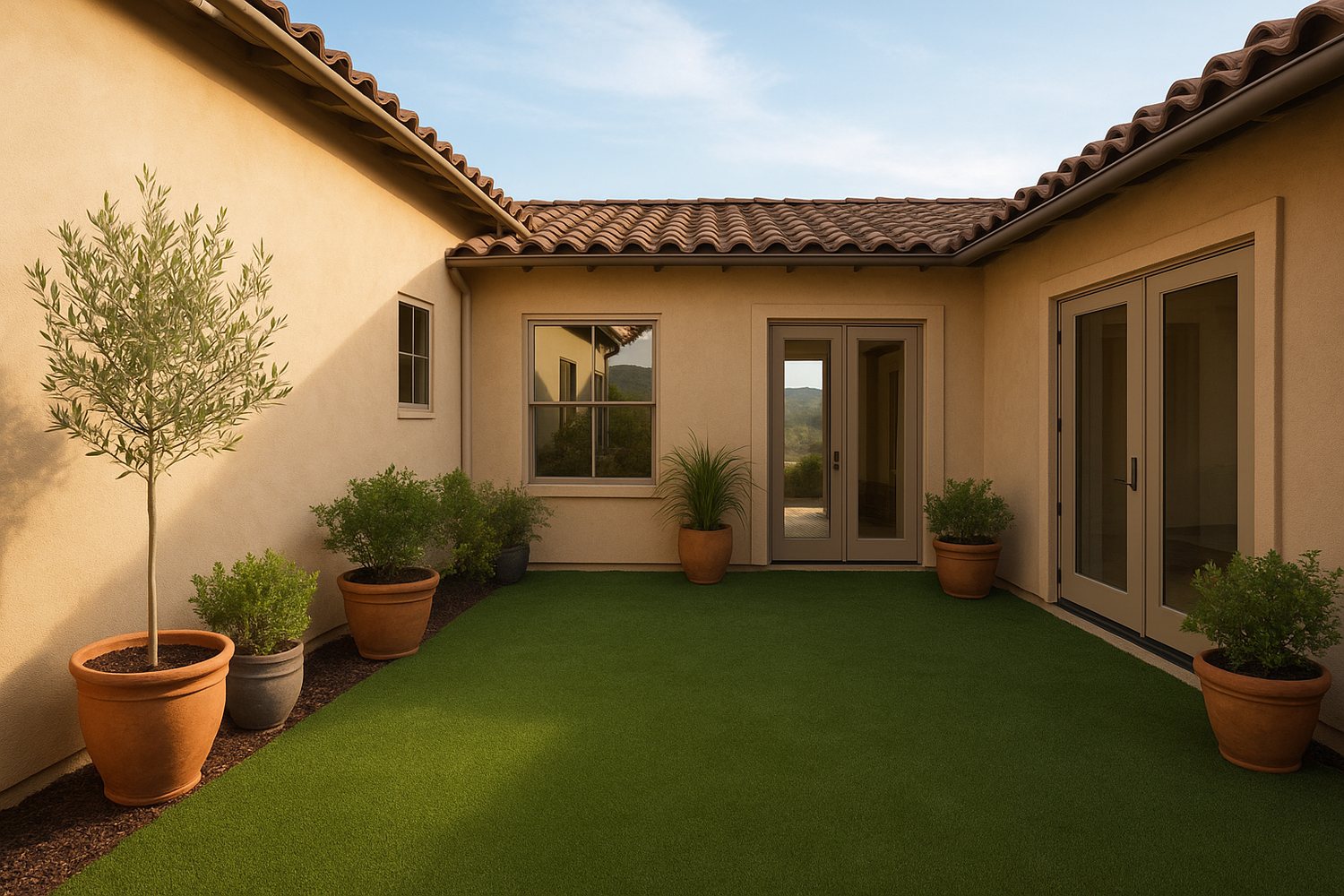
The Honest Pros and Cons of Turf in Small Spaces
Strengths
- No more mud, weeds, mowing, or irrigation needed—side yards stay clean and usable year-round.
- Improved drainage around your foundation thanks to engineered base and slope.
- Perfect footing with stepping stones plus non-slip, family- and pet-friendly surfaces.
- Consistent curb appeal: turf stays green despite heavy shade, dog traffic, or poor soil.
- Durable and long-lasting when installed correctly and with quality edge restraint.
Trade-offs
- Initial cost is higher than basic sod or gravel due to preparation and material quality.
- Surface heat: Artificial turf can become hot in direct summer sun, especially near south-facing walls.
- Some HOAs or city codes restrict artificial turf visibility; always check before starting.
- Debris or leaves can accumulate and require regular cleanup, especially near trees or fences.
Planning Costs for Side Yard Turf
Installing quality artificial turf in a side yard or small space involves more than just the cost of materials—preparation, drainage, access, and custom fitting all factor in. While it’s an investment compared to basic lawn or gravel, the benefits of durability, lower ongoing maintenance, and reliable appearance often outweigh the difference. True value comes from getting the details right from the start: drainage, edge restraint, and making sure the result complements your home rather than looking like an afterthought.
- Size and shape of the space; tight, irregular areas require more labor than large rectangles.
- Drainage needs: Extra base materials, grading, or drain tiles for clay or wet sites.
- Choice of turf product: Pile height, density, and color impact price and performance.
- Type of edge restraint: Concrete and steel edges cost more but outlast plastic bender board.
- Stepping stone quantity and material: Natural stone, concrete, or pavers add to the project.
- Accessibility: Limited access for equipment increases hand labor and installation time.
Caring for Your Turf Side Yard
Artificial turf in small spaces is low-maintenance: clear leaves and debris with a leaf blower or stiff broom, especially in fall or after storms. Clean up spills and pet waste promptly with water and mild soap if needed. For driveways or heavy footpaths, infill may need occasional top-up, and seams should be checked every few years for signs of lifting.
Turf lifespan averages from 10 to 20 years depending on product quality, exposure, and use. Resealing seams or replenishing infill may be needed every 5–8 years in high-traffic or shaded spots. Hot summers, tree debris, and foot traffic gradually wear materials, but quality turf and base systems hold up better—investment in prep pays off over time.
Compare other options

Turf with pavers and stepping stones
Explore turf with pavers & stepping stones in Rocklin. Learn design options, installation steps, pros, cons & care from California Hardscapes.
Explore →
Turf replacement and upgrades
Is your artificial turf worn, matted or flooding? Learn about expert turf replacement, drainage fixes, and base upgrades from Rocklin's local contractors.
Explore →
Pet-friendly artificial turf
Pet-friendly artificial turf Rocklin dog owners can trust: drainage, odor control, durability, installation and care for yards and dog runs.
Explore →Frequently Asked Questions About Side Yard & Small-Space Turf
Will artificial turf hurt my home’s drainage near the foundation?
No, not if installed properly. The sub-base is engineered to slope water away from your home and foundation, often draining better than compacted clay or poorly installed sod. It’s critical that your installer understands local soil and runoff patterns; shortcuts can put your home at risk, so don’t settle for a one-size-fits-all approach.
Can I put artificial turf around large tree roots or close to fences?
Yes, with careful planning. Around oak or pine roots, we use shallower base profiles and cut turf to fit, protecting roots and ensuring the surface stays level. Along fences, edge restraint is especially important. Turf can be tailored to odd shapes and obstacles, but experience is key to avoiding future bumps or gaps.
Does artificial turf get hot in sunny side yards?
Yes, artificial turf surfaces can feel much warmer than natural grass in direct sun, especially near walls or concrete. Midday temperatures can make turf uncomfortable for barefoot play, though it cools quickly in shade or evening. Lighter-colored turf, shade planning, or using stepping stones can help reduce heat buildup in the hottest spots.
How do you handle pet waste on turf?
Pet waste is easily cleaned from artificial turf; solid waste is picked up, and liquids drain through the base. Occasional rinsing with a hose and mild soap (if needed) keeps things fresh. Specialized infill options help with odors. Pet-friendly drainage and regular cleanup ensure your turf area stays sanitary and odor-free.
Can turf be installed with poor access or in very narrow strips?
Yes, but it takes more planning and labor. Inaccessible areas require hand tools, smaller turf rolls, and careful material staging. The results are just as neat if the team is experienced. Sometimes temporary fencing or obstacle removal is necessary and planned in advance.
How long does side yard turf last?
With quality installation and routine maintenance, artificial turf generally lasts 10–20 years. Lifespan depends on the quality of the turf material, how heavily the area is used, and maintenance practices—clearing debris and topping up infill as needed help extend its life. UV exposure and pet activity may shorten lifespan in tough spots.
Are weeds or pests a problem in turf strips?
Weeds are much less common than with real grass but can pop up near edges or seams if there’s poor edging or skipped weed barrier. Occasional weed pulling or spot spray handles them. Turf is not a food source for pests like gophers, and a solid base layer usually deters burrowing critters.
Is artificial turf allowed by local HOAs or city ordinances?
Rules vary widely by neighborhood and city. Some HOAs or municipalities regulate where artificial turf is visible from the street, edge treatments, and color. Always check with your HOA or city planning office before installation. We help identify options that meet most local guidelines, but getting written approval is the homeowner’s responsibility.
Request Your Side Yard Turf Consultation
Email sales@californiahardscapes.com with your address, a brief description of your space, and a few photos to start a conversation about transforming your side yard or small area with quality turf.