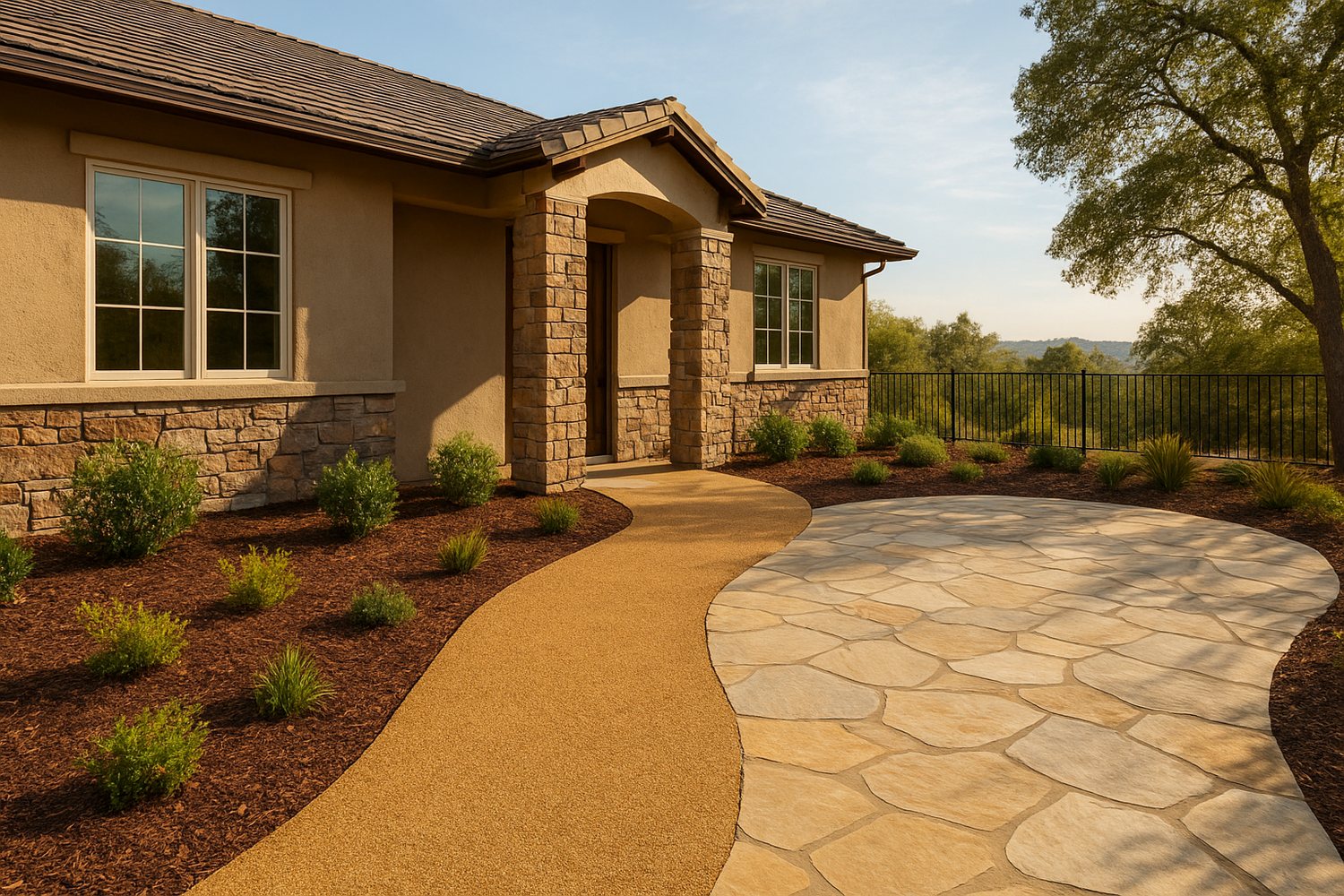
Where Decomposed Granite Works Best in Outdoor Design
Decomposed granite shines in the landscapes of Rocklin, Roseville, Granite Bay, Folsom, Auburn, and nearby communities. Learn exactly where DG works best.
Decomposed granite—commonly known as DG—offers both natural beauty and flexibility in landscape and hardscape design. If you’re considering DG for your outdoor project in Placer, Sacramento, or El Dorado counties, it helps to know where this material truly shines.
What Is Decomposed Granite?
Decomposed granite is a material formed from the natural weathering and breaking down of solid granite rock into gravel-sized particles and finer dust. Its warm, earthy palette and compactable nature make it a perennial favorite for landscape projects in Northern California. The finished surface can range from loose to stabilized, depending on intended use and installation technique.
DG is available in several color blends, often featuring gold, tan, or gray hues that blend effortlessly into the local ecosystem. Suppliers in the Rocklin and Roseville area source high-quality DG to ensure consistent color and durability. Know that actual colors can vary slightly, so viewing samples before committing is a smart move.
Homeowners in Placer, Sacramento, and El Dorado counties value DG for its permeability, which allows water to filter through while minimizing runoff. This makes decomposed granite a sensible alternative to concrete or asphalt in water-conscious landscapes. Proper installation is essential for longevity and usability.
For even more detailed answers, see our fullDecomposed granite (DG) guidepage.
Top DG Uses in Northern California Landscapes
Decomposed granite is as versatile as it is attractive. Its compactability and earthy style fit perfectly in the region’s blend of traditional and contemporary landscapes. Typical uses include walkways, patios, garden paths, seating areas, and even driveways. Each application taps into DG’s unique mix of stability and permeability.
For garden paths, DG provides a comfortable surface with rustic charm. Homeowners often choose it for informal settings where a natural transition between home and garden is wanted. When compacted and stabilized, it serves well for patios and outdoor rooms where a relaxed ambiance is preferred over hard-edged concrete or pavers.
In areas with seasonal rain, DG’s drainage benefits make it a smarter choice than solid surfaces. Its application for driveway aprons or as a soft border for lawns can help reduce pooling and mud issues. The flexibility of DG means you can achieve an organic look while maintaining function.
Where Decomposed Granite Works Best—And Where It Doesn’t
DG truly shines in low-to-moderate traffic areas where a casual, organic look is desired. It’s an ideal surface for footpaths, secondary patio zones, meditation spaces, or around fire pits. These are areas where comfort, permeability, and informal style outweigh the need for full structural strength.
Not all uses are equal, though. In steep slopes, DG can wash away during heavy storms unless well-contained by edging or integrated with stabilizers. It is also less suited as a main driveway surface for daily automotive use in this region due to local rain and clay soils.
Avoid using decomposed granite directly under large trees or in locations sharply prone to heavy standing water. For areas with active play or heavy furniture, consider reinforced solutions or combine DG with pavers or concrete bands for added durability. The best results come from matching material to site conditions and intended use.
| Aspect | DG | Concrete | Natural Stone | Mulch |
|---|---|---|---|---|
| Appearance | Earthy, granular | Smooth, uniform | Varied, textured | Organic, loose |
| Water Permeability | High | Low | Medium | High |
| Cost (Installed) | Low–Medium | Medium–High | High | Low |
| Ideal Use | Paths, patios | Driveways, patios | Patios, accents | Beds, mulch rings |
| Maintenance | Low | Low | Medium | Medium–High |
Key Installation Techniques for Lasting Results
Good preparation separates great DG installations from mediocre ones. Start by excavating to a proper depth—generally three to four inches. Always use a strong, weed-resistant fabric underneath to inhibit weeds and improve stability. Gradually build up in layers, compacting each pass. For patios and main paths, stabilizing agents or binders can greatly improve adhesion and longevity.
Edging options include metal, bender board, or natural stone. These keep DG contained during rain and irrigation cycles. Install edging flush with the finished surface for a clean look and to resist migration into lawns or planting beds.
In our local region, an additional tip: schedule work when the weather is dry but not overly hot to optimize compaction. After installation, lightly moisten and compact the surface again. A small investment in quality prep pays off with years of easier maintenance.
- Site prep: Excavate 3–4 inches
- Weed barrier: Use professional fabric
- Edging: Install to retain shape and minimize washout
- Stabilizer: Consider for patios and main paths
Design Pairings: Where DG’s Style Shines
DG pairs beautifully with other landscape materials. In Rocklin, Roseville, and Folsom homes, mixing DG with natural stone or concrete borders creates definition and visual texture without sacrificing a relaxed, organic atmosphere. Consider using boulders or low masonry walls as both retaining features and style companions.
Mulch and ornamental grass plantings work well beside DG walkways, creating seamless transitions between hard and soft landscape zones. In patio areas, DG set next to concrete squares or stepping stones offers an informal twist to modern outdoor living spaces.
Outdoor lighting is another smart pairing, improving both the appearance and usability of DG paths at night. Use low-profile path lights or integrated lighting to softly highlight DG’s natural color and help guide visitors in the evening.
- Natural stone borders: Frame DG paths and patios
- Planting beds: Integrate perennials, grasses, or succulents
- Lighting: Low-voltage to showcase color and improve safety
To compare all your materials choices, visit ourMaterials overviewfor homeowners.
Regional Conditions: Why DG Is Popular Here
Decomposed granite’s rise in the greater Sacramento and foothills region owes much to its climatic adaptability. The material stays cooler than traditional asphalt or concrete, making it pleasant underfoot on warm days in Auburn, Granite Bay, and beyond.
Our Mediterranean-style rainfall—with distinct dry and wet seasons—makes DG’s permeability especially valuable. Properly installed, it handles winter rains by allowing water to filter through, reducing puddles and runoff. This can make a notable difference compared to solid-surface patios.
Regional authority requirements for permeable surfaces are another reason DG is chosen. Whether for compliance or simply to mirror regional aesthetics, DG’s earth-toned look and practical benefits align perfectly with the area’s landscapes and building preferences.
Upkeep and Maintenance—What to Expect
DG is low-maintenance relative to many paving or hardscaping materials, but even the best installations need occasional attention. Sweeping or gentle leaf blowing keeps leaves and debris from compacting into the surface, while periodic raking restores a smooth, even look.
Over time, high-traffic spots may become loose or slightly rutted. These areas can often be repaired by loosening, adding a bit more DG, lightly moistening, and then compacting again. For stabilized DG surfaces, repairs follow a similar process but may require fresh stabilizer.
After major rain, check for any washouts at edges or seams. Make sure the edging remains secure. Investing a little bit of care each season ensures your DG paths or patio continue to perform and look their best.
- Sweep or blow leaves regularly
- Rake to maintain level surface
- Check edging after storms
Is Decomposed Granite Right for Your Project?
Choosing decomposed granite is a practical, aesthetic decision for many homeowners in our region. The right fit comes down to your goals, site conditions, and maintenance expectations. DG excels for footpaths, relaxed patios, garden transitions, and permeable areas, but less so for vehicular or intense activity zones.
Consulting with a team experienced in Northern California climates and soils is the best way to plan for success. Experience in excavation, grading, material selection, and drainage will ensure the results stand up to the region’s weather patterns and your family’s lifestyle.
If you’re curious about using decomposed granite for your next project, a consultation can help clarify options and address site-specific questions. At California Hardscapes, our approach combines proven construction expertise with regional insight, helping you make decisions that add both value and comfort to your home.
Thinking about DG or other materials?Request a consultationto discuss your unique project.
Planning a materials project?
Call or text 916-741-0633, or email sales@californiahardscapes.com with your address, a short description and a few photos, and we will arrange a consultation.