Decomposed Granite: Natural, Stabilized or Resin-Bound?
Compare natural, stabilized, and resin-bound decomposed granite (DG) for your yard or patio in the Rocklin area. Make the right material choice with confidence.
Choosing the right type of decomposed granite is about more than looks. Here’s a trustworthy rundown specific to our Sacramento foothills region.
What Is Decomposed Granite?
Decomposed granite, or DG, is granite rock broken down by weathering into small gravel-sized particles and silt. Its earthy color and versatile texture make it a popular material for pathways, patios, and garden borders in Northern California landscapes.
DG blends well with local scenery, suits both modern and traditional homes, and is well-suited to our climate in Placer, Sacramento and El Dorado counties. Depending on the process and binder used, DG can be supplied in natural, stabilized, or resin-bound forms.
Understanding the differences between these forms is key when planning a practical, durable outdoor surface. Each performs differently in terms of firmness, permeability, maintenance, and cost—especially with the seasonal swings our region experiences.
For complete info, see our mainDecomposed granite (DG) guide.
Natural DG: Time-Tested Simplicity
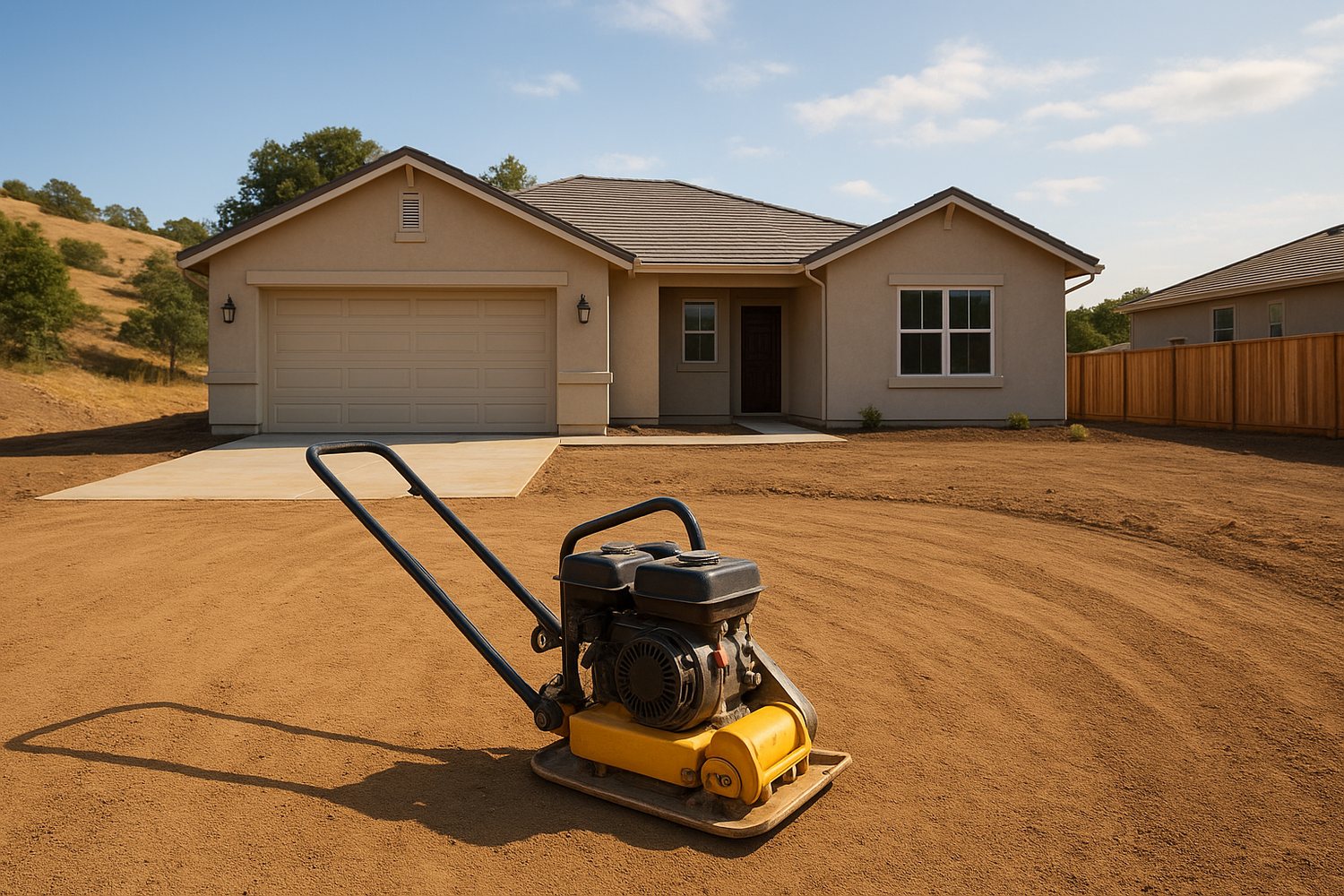
Natural DG is simply loose, compacted granite fines without any additives. Installation involves grading, compacting, watering, and repeated rolling to achieve a firm surface. It’s a time-tested, affordable choice for informal spaces, softening garden edges, or creating rustic walking paths.
This option drains well to handle winter rains, but can loosen during heavy storms or under heavy foot traffic. Occasional raking and refilling are normal for high-use areas or after wind events. Natural DG is generally not recommended where a consistently firm, ADA-accessible, or low-maintenance walking surface is needed.
Homeowners who want a warm, decomposed granite appearance at the lowest cost—and who are comfortable with some upkeep—often select natural DG for firepit areas, dog runs, and utility zones.
Stabilized DG: Reliable and Versatile
Stabilized DG uses a natural binder mixed into the granite fines before compaction. The binder locks particles together, helping the surface resist washouts, rutting, and dust. This makes it a favorite for patios, walkways, and public spaces where a bit more firmness is wanted.
Stabilized DG stands up better to both foot and bicycle traffic than natural DG. It’s still permeable, minimizing puddles during rainy Rocklin or Granite Bay winters. Occasional touch-ups may be needed in high-traffic spots, but overall maintenance is lighter than with untreated DG.
If you seek a comfortable walking surface that still maintains a natural look—and are interested in something both eco-friendly and serviceable—stabilized DG often hits the sweet spot for family yards, park paths, and light driveway use.
| Property | Natural DG | Stabilized DG | Resin-Bound DG |
|---|---|---|---|
| Firmness | Loose | Moderate | Hard/Stable |
| Maintenance | High | Moderate | Low |
| Permeability | Excellent | Excellent | Good |
| Best Uses | Casual paths, gardens | Main paths, patios | Entryways, ADA-accessible, sloped areas |
| Durability | Low | Medium | High |
Resin-Bound DG: Next-Level Durability
Resin-bound DG is blended with a strong polyurethane or similar resin, giving the surface much greater cohesion and durability. The result is a smooth, hard surface that’s firm underfoot while preserving the natural granite appeal.
Of the three forms, resin-bound DG is the least prone to washouts or dust and holds up well under wheelchairs, bikes, or regular vehicle traffic. It’s often chosen where accessibility standards or minimal maintenance are important or where high weather or usage stress is expected.
Some homeowners choose resin-bound DG for front walks, high-use patios, or sloped areas prone to erosion. It is less permeable than other DG types, but drains water well compared to traditional concrete.
Comparing Installation and Performance
Installation requirements and outcomes vary across these DG options. Natural DG is the quickest and simplest to install, but benefits from occasional replenishing. Stabilized DG involves more prep and mixing, but rewards with added resilience and less frequent maintenance.
Resin-bound DG requires professional-grade tools and skill for proper mixing and troweling to achieve evenness and optimal durability. It’s generally more time- and labor-intensive to install.
Selecting the right DG variant for your Rocklin, Roseville, or Folsom home hinges on how your space is used and how much effort you want to put into maintenance.
- Natural DG: basic compaction, most DIY-friendly
- Stabilized DG: requires binder, moderate prep
- Resin-bound DG: pro installation, longest lasting
Or, review all ourMaterials optionsfor patios, paths, and landscaping.
How Local Climate Shapes Your Decision
Our regional pattern of wet winters followed by hot, dry summers means water movement, dust, and temperature swings play a big role. Natural DG does well in light-use spots but may need attention after heavy rainfall or wind in open spaces.
In neighborhoods from Auburn to Elk Grove, stabilized DG is often a strong all-around choice—balancing resilience in our rainy season with enough permeability for puddle-free surfaces through spring and fall.
Resin-bound DG stands out where you want a premium finish and minimal mess—perfect for patios and walkways close to doors or places where loose material isn’t ideal. All DG types keep their color and break down slowly when sourced and installed properly.
- Natural DG: may need topping off after winter
- Stabilized DG: fewer dust/mud issues year-round
- Resin-bound DG: performs best on slopes or entryways
Maintenance Considerations for Each DG Type
Natural DG is the most flexible but also the most hands-on. Expect raking, topping off, and the occasional weed growth. It’s not a set-and-forget surface, especially after big storms.
Stabilized DG limits dust and weed issues but may still show light wear in high-traffic areas. Simple patching or a fresh top layer is usually enough to address these spots. Periodic sweeping and occasional power washing keep things tidy.
Resin-bound DG takes the least maintenance—a big plus near pools or outdoor kitchens. Standard cleaning is often all that’s necessary, with rare checks for surface cracking or edge lift over time.
- Natural DG: Regular raking, refilling
- Stabilized DG: Occasional patching, sweeping
- Resin-bound DG: Most low-maintenance
Matching DG Type to Your Outdoor Project
Think about your needs and traffic: will your DG path see lots of feet, wheels, or the occasional backyard gathering? Natural DG is perfect for a secondary path or firepit surround. Stabilized DG is a strong choice for main walks, patios, or family entertainment zones.
Those investing in front yard curb appeal, ADA accessibility, or durable, long-lasting surfaces near an outdoor kitchen often find resin-bound DG worthwhile. For sloped areas or where drainage is a concern, stabilized or resin-bound DG can help prevent washout and slippery conditions.
Speaking with an experienced contractor can help you assess which DG type fits your vision, use, and the area’s specific sun, shade, and weather exposure. The right choice brings both beauty and function to your outdoor space.
- Natural DG: best for informal, light-use spots
- Stabilized DG: suits primary paths, patios
- Resin-bound DG: ideal for high-use, premium locations
Ready for local insight?Request a consultationto discuss the best surface for your home.
Planning a materials project?
Call or text 916-741-0633, or email sales@californiahardscapes.com with your address, a short description and a few photos, and we will arrange a consultation.