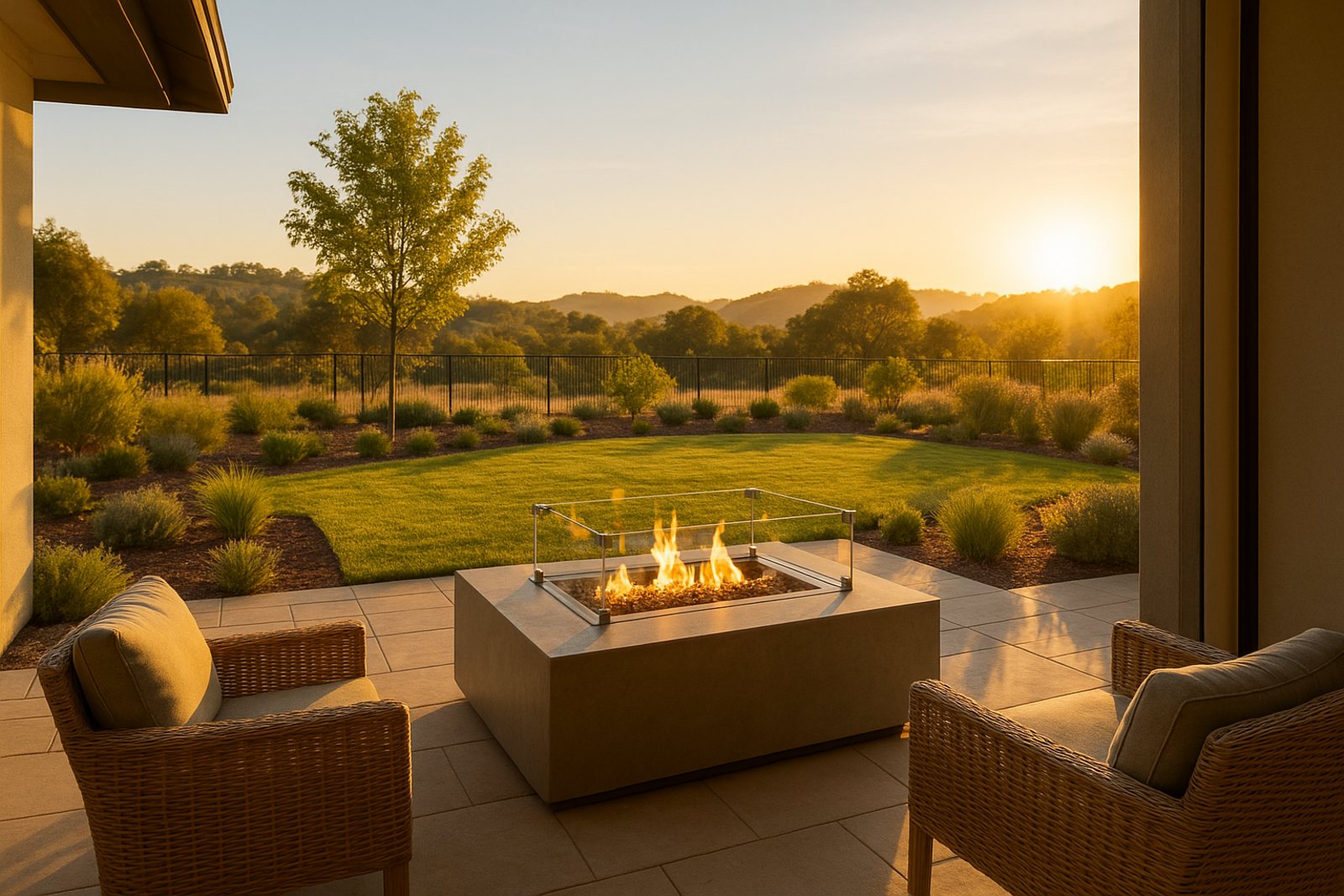
Fire Tables & Fire Bowls: What Homeowners Need to Know
Learn the basics of fire tables and fire bowls—from gas line planning to ignition and dealing with afternoon winds—for California’s unique backyard spaces.
A fire table or fire bowl elevates outdoor living, but safe, reliable performance depends on knowing the fundamentals. Here’s how to get it right in our region.
Fire Features in Northern California Backyards
Backyards in Rocklin, Roseville and surrounding communities are shaped by weather, terrain, and local utility codes. Adding a fire table or fire bowl can extend your outdoor season, but your installation must fit local conditions. Hot, dry summers and the possibility of strong valley winds require careful planning.
Fire features are available in a range of styles and heat outputs. Some homeowners want gentle ambiance for patios, while others prefer a robust flame for warmth on chilly evenings. Each choice affects the technical setup—especially when it comes to gas supply and burner configuration.
Worry-free fire features begin with matching your choice to your yard’s space, wind exposure, and how you want to use it. Understanding the basics before you build helps you avoid common headaches and ensures you get years of safe, enjoyable evenings around the fire.
- Hot, dry climate impacts fire safety requirements
- Winds affect flame performance and placement
- Matching feature to space ensures best results
For more details about available models and technical tips, see ourFire tables and fire bowlspage.
Gas Lines: The Backbone of Your Fire Feature
Choosing between natural gas and propane is the first decision. In most Placer and Sacramento neighborhoods, natural gas lines are accessible, but all fire features need a properly sized, dedicated line. This ensures safe operation and maximum flame output—cutting corners on line size or length leads to weak flames and aggravating shut-offs.
For new gas lines, routing is planned to avoid roots, concrete, and existing hardscapes. The shortest, straightest path is best. In older yards, line extensions need careful mapping to prevent surprises such as insufficient gas pressure or costly reroutes later.
Regulations also affect your gas line choices. In our area, all outdoor gas installations should comply with California building codes and local utility rules. Permitting requirements vary, so always check with your provider and use experienced, licensed contractors for any new installation or modification.
- Natural gas is preferred for permanent fixtures
- Propane offers flexibility for portable features
- Correct line sizing is critical for safety and flame quality
Burner Choices: More Than Just Looks
The heart of any fire table or fire bowl is the burner. Options include traditional ring designs for soft, even flames, or linear, star, and pan burners for modern, dramatic presentations. Each burner type influences both appearance and performance, especially under windy valley conditions.
Burner material matters—stainless steel is durable and holds up against outdoor moisture and heat cycles. Brass burners offer longevity and reliable ignition, but at a higher cost. Inexpensive steel can corrode quickly, especially if exposure to irrigation or rain is unavoidable.
Output capacity, measured in BTUs, should be matched to your needs and gas supply. Oversized burners may fizzle with undersized gas lines. Undersized burners will disappoint when you need warmth. Pay close attention to both, and don’t hesitate to ask your installer to explain these technical details before you decide.
- Burner type affects look and heat distribution
- Materials impact lifespan and maintenance
- Output must match gas line capacity
| Feature | Natural Gas | Propane | Wind Protection | Ignition Type |
|---|---|---|---|---|
| Plumbing | Permanent line required | Tank or line | N/A | Varies; consult installer |
| Installation Cost | Higher (trenching, code) | Lower (portable) | Wind guards add modestly | Manual is most affordable |
| Maintenance | Low (if protected) | Refill tanks | Clean glass guards | Periodic electrical checks |
| Performance | Consistent | May vary by tank | Improves flame stability | Manual/electronic options |
| Best For | Permanent patios | Temporary or mobile use | Breezy yards | User preference & routine |
Ignition Systems: Convenience Meets Safety
Ignition systems on fire features range from simple match-lit setups to sophisticated electronic start and remote-control models. Each system brings trade-offs for cost, convenience, and maintenance—especially important in the local outdoor environment.
Manual ignition is reliable, cost-effective, and time-tested but may inconvenience some homeowners on windy days or during evening gatherings. Electronic or battery-powered ignition brings the luxury of push-button control, but depends on protected circuitry and regular upkeep.
Regardless of which ignition you choose, always consider local climate: wind, moisture, and dust can shorten the life of electronic components. Your installation team should help you locate protected spots for controls or recommend weather-rated systems suited to the Northern California climate.
- Manual ignition is simple but hands-on
- Electronic ignition adds convenience
- Weather exposure impacts system reliability
Table: Fire Feature Basics at a Glance
Here’s a quick comparison of key choices when planning a fire table or fire bowl. Weighing these options helps you request the right solution for your space and budget.
Consider consulting a local professional for advice tailored to your exact installation and code requirements. Experience in the region is vital: wind, dryness, and soil types vary widely.
Choosing wisely at the outset prevents frustration later—and ensures your fire feature enhances, rather than complicates, your outdoor living experience.
- Select options with local use in mind
- Consult on code, wind and gas considerations
- Smart choices deliver long-term enjoyment
Looking for more ideas? Explore the full range on ourOutdoor Livinghub.
Wind: The Invisible Design Factor
Valley and foothill communities regularly see breezy afternoons and evening gusts. Where you place your fire table or fire bowl—and what model you choose—can make all the difference. Poor placements lead to small, windblown flames, or worse—unreliable ignition.
Burner protection is also important. Wind guards or glass surrounds can keep the flame steady and safety features functioning. These add-ons are especially helpful in wide-open patios or decks with little landscape windbreak.
Work with your contractor to identify the dominant wind direction on your lot. Plan for a location with some shelter, and consider wind-rated features. This way, your fire feature works when you actually want to use it—not just on calm nights.
- Wind reduces flame size and reliability
- Glass wind guards improve performance
- Placement and design go hand-in-hand
Practical Safety and Maintenance Tips
Fire features should always be installed away from flammable structures, overhangs, and dry landscaping. Check clearances for every element, from the burner to seating and planters. This is especially critical in dry seasons common to our region.
Routine maintenance keeps your system trouble-free. Clean out debris, check for leaks or corrosion, and inspect ignition and burner parts regularly. In wind-prone areas, additional cleaning and visual checks are wise after storms or high-pollen events.
Finally, store necessary tools and covers nearby. Quick access to shutoff valves and covers makes it easier to secure your feature during wind events or when not in use—protecting your investment and peace of mind.
- Maintain clearance from combustibles
- Inspect for leaks and debris regularly
- Keep shutoff tools and covers handy
Decision-Making for Lasting Enjoyment
A thoughtfully planned fire table or fire bowl can become the highlight of your outdoor space—if the right technical steps are taken. Prioritize local expertise: Northern California’s mix of wind, dry weather, and strict codes calls for experience at every step.
Ask questions about gas line sizing, burner and ignition types, and how weather factors into design. The best decision is an informed one, backed by practical, regional know-how. Don’t settle for generic solutions: what works in coastal or mountain areas rarely suits the valley.
When every detail is considered, you’ll enjoy a fire feature that welcomes friends and family for years, with minimal hassle. Take your time and choose wisely for safety, comfort, and a truly premium experience.
- Local climate affects all technical choices
- Insist on clear explanations and local references
- An informed approach ensures year-round enjoyment
Ready to discuss your project?Request a consultationwith our team by email.
Planning an outdoor living project?
Call or text 916-741-0633, or email sales@californiahardscapes.com with your address, a short description and a few photos, and we will arrange a consultation.